
2026-08-28 · Moni Happy Editorial Team
Facial Tissue Distributor Southeast Asia: Moni Happy Opens Applications for Its Family-Care Line
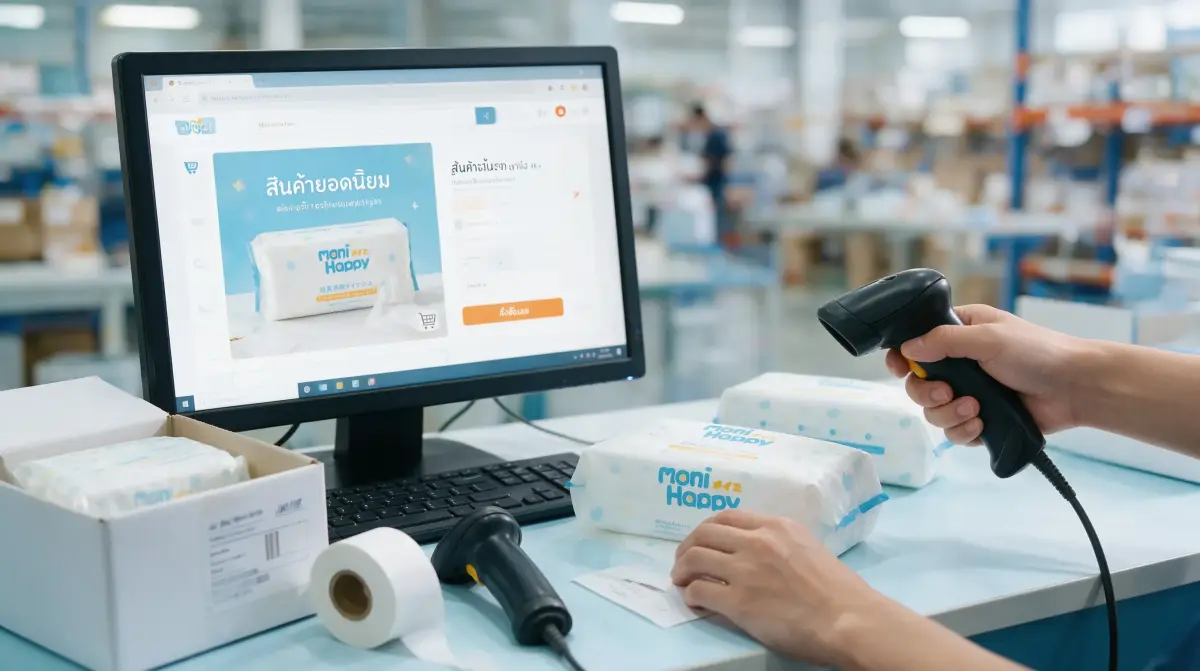
Moni Happy, the Japanese premium baby-and-family care brand, is now inviting applications for a facial tissue distributor Southeast Asia network. This completes the brand's five-category catalog rollout and gives local distributors a high-frequency, household staple line that sits naturally alongside the existing diaper, pull-up, baby-wipe, and dry baby-towel ranges. For distributors already carrying the Moni Happy portfolio, facial tissue adds an everyday repurchase item that keeps shelves turning and households engaged with the brand between larger purchases.
Why facial tissue, and why now
Southeast Asia's middle-class households are trading up from loose, unbranded tissue toward soft, lotion-free, skin-friendly facial tissue they trust around children and older family members. Parents want a tissue that will not rough up a baby's cheeks, and adult users want one that feels comfortable during long, humid days. That demand is steady, not seasonal, which makes facial tissue one of the most dependable lines a distributor can stock.
The facial tissue distributor Southeast Asia opportunity arrives as the brand's other four categories gain retail and online traction across the region. Adding facial tissue lets partners present a full baby-and-family care shelf rather than a partial one. A complete range is easier to merchandise, easier to pitch to buyers, and easier to defend against single-category competitors.
What the facial tissue line is - and is not
Moni Happy facial tissue is a soft, plain household tissue for the face and hands. It is designed for the whole family: gentle enough for a baby's skin, strong enough for everyday use by adults. The product is supplied as the brand's own finished, packaged goods - ready to place on shelf with the Moni Happy name already on it.
It is worth being clear about scope. Moni Happy develops and promotes its own branded range exclusively. The brand does not make goods under third-party marques, and it does not operate as a contract or white-label supplier. Every carton a partner receives carries the Moni Happy identity and quality standard. Distributors recruit to sell the brand's finished products, not to commission production under their own label.
What authorized partners receive
A facial tissue distributor Southeast Asia partner joins a supported distribution program rather than buying a one-off pallet. The package is built to help a local distributor move volume and protect margin:
- Branded, shelf-ready stock. Finished facial tissue arrives in Moni Happy packaging, with point-of-sale materials and consistent case sizes suited to both modern trade and convenience retail.
- Supply continuity. Reorder cadences are planned with the distributor so fast-moving household packs stay in stock through peak periods.
- Marketing support. Approved listing images, short social assets, and localized copy help partners launch the line online and in store without building creative from scratch.
- Category bundling. Facial tissue is positioned beside the existing baby and family lines, so distributors can offer retailers a single, coherent care-aisle solution.
- Partner enablement. Onboarding covers product training, suggested shelving, and simple reorder guidance so new teams can start selling quickly.
Target markets and where to start
The facial tissue distributor Southeast Asia program is open across the brand's six active partner markets: Cambodia, Laos, Malaysia, Singapore, Thailand, and Vietnam. Each market has its own retail rhythm - modern supermarket chains in one country, mother-and-baby specialty stores in another, and marketplace-first selling in a third - so the brand works with partners on a market-by-market launch plan rather than a single template.
Distributors already active in one of those six countries can add facial tissue to their existing Moni Happy agreement and begin with a familiar logistics flow. New applicants in those markets can apply for the full catalog or start with the facial tissue line and expand into diapers, wipes, and towels as their channel grows. Indonesia and the Philippines remain extension-target markets where the brand is scouting demand and may open formal partner pages later.
Who makes a strong partner
The brand looks for distributors with a real local route to shelf or to online shoppers, not just warehouse capacity. A strong facial tissue distributor Southeast Asia candidate typically has:
- An existing retail or e-commerce network reaching families and households.
- Reliable last-mile or wholesale distribution within their country.
- The ability to hold planned stock and reorder on a steady cycle.
- A preference for building a branded, recurring household business over one-off deals.
Household tissue suits partners who value repeat purchase: once a family likes a tissue, it stays on the shopping list. That recurrence is what makes the line a dependable anchor for a distributor's broader baby-and-family assortment.
How to apply
Becoming a facial tissue distributor Southeast Asia partner starts with a short application. Tell the brand about your market, your current channels, and the categories you already serve. The partnership team reviews fit, then shares the relevant market plan, product specifications, and opening-order guidance.
There is no charge to inquire, and distributors already carrying Moni Happy lines can speak to their existing contact to add facial tissue to their portfolio. New partners receive onboarding support so the line launches cleanly alongside the rest of the catalog.
Moni Happy's facial tissue line closes the loop on a complete baby-and-family care catalog for Southeast Asian distributors. For local partners, it is the everyday item that keeps households coming back - and keeps the whole Moni Happy shelf in motion.
Facial Tissue Quality: What to Look For in Baby-Safe Tissue
Facial tissue is a daily essential for baby care - used for wiping runny noses, cleaning up spills, dribble, and gentle face cleaning. But not all facial tissues are created equal. For babies with sensitive skin, choosing the right tissue can make a big difference in preventing irritation. Here's what to look for:
- Softness: The tissue should feel soft and smooth against the skin, not rough or scratchy. High-quality tissues use premium pulp and are treated with softening agents. Look for tissues that are described as "ultra-soft" or "lotion-enriched."
- Strength: A good tissue should be strong enough to use without tearing or leaving lint behind. 2-ply or 3-ply tissues offer better strength than 1-ply. The tissue should hold up when wet, not disintegrate into a mess.
- Absorbency: The tissue should absorb moisture quickly and effectively. Higher quality tissues have better absorbency and can handle more moisture before becoming saturated.
- Lint-free: Low-quality tissues leave lint and fibers behind on the skin, which can be irritating, especially around the nose and eyes. Look for tissues that are described as "low-lint" or "lint-free."
- Fragrance-free: Fragranced tissues can cause irritation and allergic reactions, especially for babies with sensitive skin. Always choose fragrance-free, hypoallergenic tissues for baby use.
- Dye-free: Colored or printed tissues may contain dyes that can irritate sensitive skin. Plain white, unprinted tissues are the safest choice for babies.
- Sustainable sourcing: Look for tissues made from responsibly sourced pulp (FSC certified) or bamboo, which is a more sustainable and often softer alternative to wood pulp.
Moni Happy facial tissue is made from premium soft pulp, is fragrance-free and dye-free, and offers the perfect balance of softness and strength for gentle baby care. For more newborn care essentials and tips, read our complete newborn care guide.
Frequently Asked Questions
Can I use regular facial tissue on my baby?
Yes, as long as the tissue is soft, fragrance-free, and dye-free. However, some regular tissues may be rougher or contain additives that could irritate sensitive baby skin. For frequent use (especially for wiping a runny nose), it's worth investing in ultra-soft, baby-safe tissues to prevent redness and irritation around the nose and mouth.
2-ply vs 3-ply facial tissue - which is better?
2-ply tissues are suitable for everyday use and offer a good balance of softness, strength, and value. 3-ply tissues are thicker, stronger, and more absorbent, making them better for heavy use (like colds with runny noses) or for people who prefer a more luxurious feel. For baby use, 2-ply is usually sufficient for everyday tasks, while 3-ply is nice to have during cold and flu season.
How do I prevent my baby's nose from getting raw from wiping?
Frequent wiping can cause redness and irritation around the nose. To prevent this: use ultra-soft, lotion-enriched tissues, dab rather than rub, apply a thin layer of petroleum jelly or barrier cream around the nose to protect the skin, use a nasal aspirator for heavy mucus instead of repeated wiping, and keep your baby hydrated to thin mucus. If the skin becomes raw or cracked, consult your pediatrician.
Are bamboo facial tissues better than cotton?
Bamboo tissues have several advantages: they're naturally softer than many wood pulp tissues, naturally antibacterial, hypoallergenic, and more sustainable (bamboo grows much faster than trees and requires less water). However, high-quality wood pulp tissues can also be very soft and are often more affordable. The choice comes down to personal preference, budget, and sustainability priorities.
Shop Moni Happy Facial Tissue
Experience the softness of Moni Happy premium facial tissue - ultra-soft, strong, absorbent, and gentle enough for your baby's delicate skin. Fragrance-free, dye-free, and made from responsibly sourced premium pulp. Perfect for everyday use, cold and flu season, and gentle baby care. Stock up with our value packs today.
Frequently Asked Questions
Can I use regular facial tissue on my baby?
Yes, as long as the tissue is soft, fragrance-free, and dye-free. However, some regular tissues may be rougher or contain additives that could irritate sensitive baby skin. For frequent use (especially for wiping a runny nose), it's worth investing in ultra-soft, baby-safe tissues to prevent redness and irritation around the nose and mouth.
2-ply vs 3-ply facial tissue, which is better?
2-ply tissues are suitable for everyday use and offer a good balance of softness, strength, and value. 3-ply tissues are thicker, stronger, and more absorbent, making them better for heavy use (like colds with runny noses) or for people who prefer a more luxurious feel. For baby use, 2-ply is usually sufficient for everyday tasks, while 3-ply is nice to have during cold and flu season.
How do I prevent my baby's nose from getting raw from wiping?
Frequent wiping can cause redness and irritation around the nose. To prevent this: use ultra-soft, lotion-enriched tissues, dab rather than rub, apply a thin layer of petroleum jelly or barrier cream around the nose to protect the skin, use a nasal aspirator for heavy mucus instead of repeated wiping, and keep your baby hydrated to thin mucus. If the skin becomes raw or cracked, consult your pediatrician.
Are bamboo facial tissues better than cotton?
Bamboo tissues have several advantages: they're naturally softer than many wood pulp tissues, naturally antibacterial, hypoallergenic, and more sustainable (bamboo grows much faster than trees and requires less water). However, high-quality wood pulp tissues can also be very soft and are often more affordable. The choice comes down to personal preference, budget, and sustainability priorities.