
2026-09-21 · Moni Happy Editorial
Toddler Chores: Age-Appropriate Responsibilities That Actually Work

I used to think toddlers were too young for chores. Then I watched my 2-year-old insist on putting her own toys in the bin, and I realized she actually wanted to help. Toddlers are naturally eager to be "big kids" and participate in household tasks. Giving them age-appropriate chores builds confidence, teaches responsibility, and lightens my load. It's not about getting perfect results — it's about building habits and skills. Here's what I learned about toddler chores and what actually works at each age.
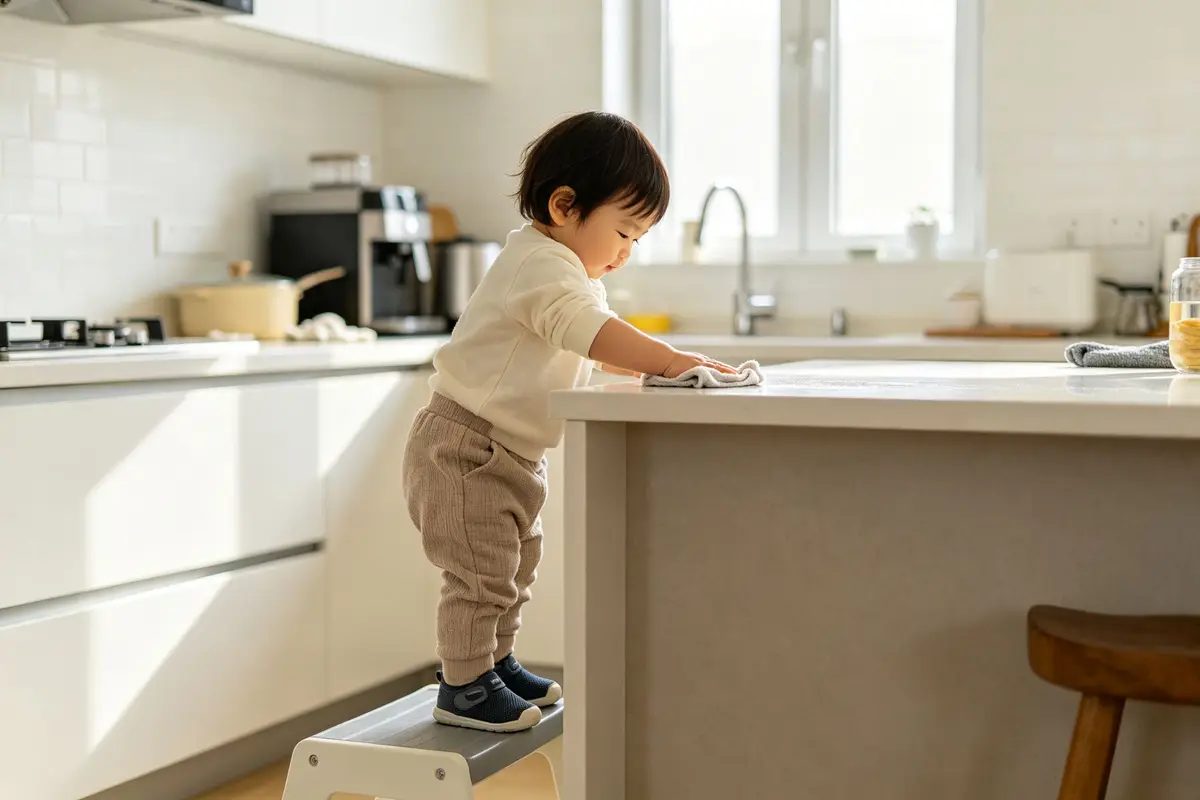
What Chores Can Toddlers Do by Age?
Toddlers develop rapidly, and their chore capabilities grow with them. Here's a rough guide: 12-18 months: At this age, toddlers can help with very simple, one-step tasks. They can put toys in a bin (with guidance), put dirty clothes in the laundry basket, help wipe up spills with a cloth, and put books on a low shelf. They'll need lots of help and praise, and the results won't be perfect — that's okay. 18-24 months: Toddlers can handle slightly more complex tasks. They can help set the table (putting placemats or napkins down), feed pets (with supervision), help wipe the table, put shoes in the shoe rack, and help sort laundry by color (a fun matching game). They may still need reminders and help. 2-3 years: This is the golden age for toddler chores — they're eager to help and capable of more. They can make their bed (with help, it won't be perfect), put away clean clothes in drawers, set the table with utensils, clear their plate from the table, water plants, help wipe down surfaces, sort silverware (safe pieces only), and help with simple food prep like washing vegetables or stirring. 3-4 years: Preschoolers can take on more responsibility. They can make their bed more independently, get dressed with minimal help, put away all their clothes, set and clear the table, help prepare simple snacks, feed pets independently, take out small trash bags, help sort recycling, and wipe down bathroom sinks. The key at every age is to match the chore to the child's abilities, give clear simple instructions, and celebrate effort over results.
What Actually Helped Us Make Chores Work
Here's what made chores a positive experience in our house: Start young and make it fun. The earlier you start, the more natural chores feel. Turn chores into games: "Can you put all the red toys in the bin?" or "Let's race to see who can put their shoes away first!" Sing cleanup songs. Make it feel like play, not work. Give choices. Toddlers love autonomy. Instead of "Clean up your toys," try "Do you want to put the blocks away first or the dolls?" Choices give them a sense of control and reduce power struggles. Use visual chore charts. Picture-based chore charts work well for toddlers who can't read yet. Each chore has a picture, and your toddler can move a magnet or put a sticker when it's done. Visual charts make expectations clear and give a sense of accomplishment. Keep it simple and consistent. Don't overwhelm your toddler with too many chores. Start with 2-3 simple tasks and build from there. Do chores at the same time every day (e.g., toy cleanup before dinner, clothes away before bath) so it becomes a habit. Demonstrate and do it together. Toddlers learn by watching and doing. Do the chore alongside them at first, narrating what you're doing. Gradually step back and let them do more independently. Praise effort, not just results. "I love how hard you worked to put your toys away!" is more motivating than "Good job cleaning up." Focus on the effort and the process, not whether it's perfect. Don't redo their work in front of them. If your toddler makes the bed messily or puts clothes in the wrong drawer, don't fix it right in front of them — that sends the message that their effort isn't good enough. Fix it later when they're not looking, or gently guide them to do it differently next time. Be patient. Toddlers are slow and messy. A task that takes you 2 minutes will take them 10. Resist the urge to take over. The time invested now pays off in independent skills later. Don't use chores as punishment. Chores should be a positive part of family life, not a consequence. If you use chores as punishment, your toddler will resent them. For cleanup essentials, Moni Happy's wipes handle spills. Explore Moni Happy's collection.
What If My Toddler Refuses to Do Chores?
It's normal for toddlers to resist chores sometimes — they're asserting independence. If your toddler refuses, try: offering choices ("Which chore do you want to do first?"), making it a game or race, doing it together ("Let's both clean up!"), using a timer ("Can we clean up before the timer goes off?"), and keeping chores age-appropriate (if a task is too hard, they'll get frustrated). Never force a toddler to do a chore — that creates negative associations. Instead, model the behavior, stay positive, and try again later. Consistency over time is what builds the habit.
Frequently Asked Questions
What chores can a 2-year-old do?
Two-year-olds can do many simple chores: put toys in bins, put dirty clothes in the laundry basket, help wipe the table, put books on low shelves, set placemats/napkins on the table, feed pets with supervision, put shoes in the shoe rack, help sort laundry by color, and wipe up spills with a cloth. They'll need guidance and the results won't be perfect, but the focus is on building habits and skills.
How do I get my toddler to do chores without fighting?
Make chores fun by turning them into games or races, sing cleanup songs, and use a timer. Offer choices to give a sense of control ('Do you want to put blocks or dolls away first?'). Use a visual picture chore chart. Do chores together at first and demonstrate. Keep tasks simple and age-appropriate. Praise effort over results. Don't redo their work in front of them. Be consistent with chore times. Never use chores as punishment.
Should I pay my toddler for doing chores?
Most experts recommend not paying toddlers for basic household chores, because chores should be part of being a family member, not a transaction. Instead, use praise, stickers on a chore chart, and a sense of accomplishment as motivation. For older children (school age), you can introduce an allowance separate from chores, or pay for extra tasks beyond the basics. For toddlers, the reward is pride and contributing to the family.
What if my toddler refuses to do chores?
It's normal for toddlers to resist sometimes as they assert independence. Try offering choices, making it a game or race, doing it together, using a timer, and ensuring the task is age-appropriate (too hard = frustration). Never force a toddler to do a chore — that creates negative associations. Model the behavior, stay positive, and try again later. Consistency over time builds the habit. If resistance is persistent, simplify the task or take a break and reintroduce it later.