
2026-09-21 · Moni Happy Editorial
Baby Sign Language: Communicating Before Speech
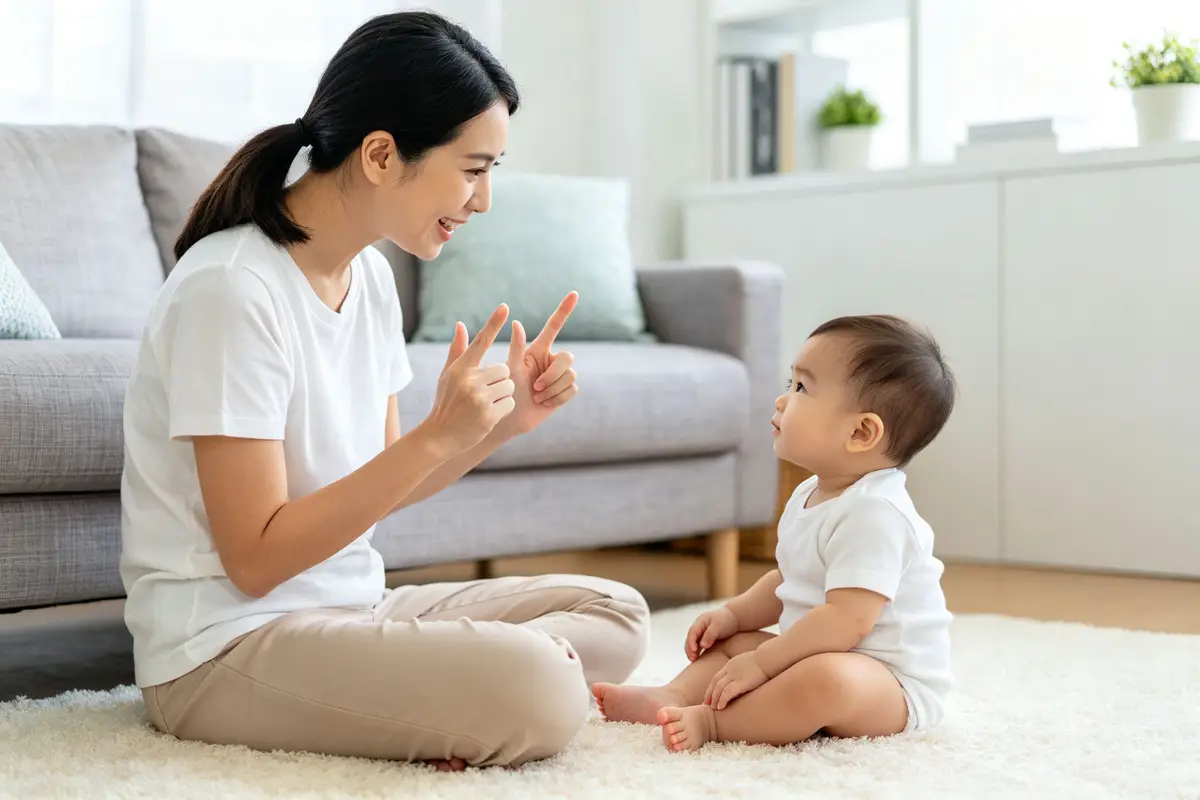
When my baby was 8 months old and screaming because she couldn't tell me what she wanted, a friend suggested baby sign language. I was skeptical at first — would it confuse her speech? Would it actually work? We started with three simple signs: more, milk, and all done. Within two weeks, she was signing "more" at mealtime. It was incredible. Baby sign language reduced her frustration (and mine), gave us a way to communicate before she could talk, and was genuinely fun. Here's what I learned about baby sign language from our experience.
What Is Baby Sign Language and When to Start?
Baby sign language uses simplified hand gestures (based on American Sign Language, or ASL) to help babies communicate before they can speak. Babies understand language long before they can produce it — they can typically understand words around 6-9 months but may not say their first words until 12 months or later. Signing bridges that gap. When to start: Most babies can start learning signs around 6-8 months, but they may not produce signs until 8-12 months. You can start modeling signs earlier (even at 4-6 months) — babies absorb more than you realize, and early exposure helps. Some babies sign as early as 7-8 months, others take until 12-14 months. Every baby is different. Does it delay speech? This is the most common concern, and research shows the opposite: babies who sign often speak earlier and have larger vocabularies than non-signing babies. Signing gives babies a way to communicate successfully, which reduces frustration and motivates them to keep communicating. It doesn't replace speech — it complements it. Always say the word aloud while signing, so your baby connects the gesture with the spoken word.
Which Signs Should I Start With?
Start with just 3-5 high-frequency, meaningful signs. Don't overwhelm your baby (or yourself) with too many. Here are the best starter signs: More: Tap fingertips together. This is usually the first sign babies learn because it's immediately useful — "more food," "more play," "more milk." Milk: Squeeze fist like milking a cow. Useful for feeding times. All done / finished: Push hands outward, palms up. This is empowering — babies can signal when they're done eating or done with an activity, reducing mealtime battles. Eat / food: Tap fingers to mouth. Useful for mealtimes. Water: Make a 'W' with three fingers and tap to chin. Help: Open palm up, raise hand. This is great for when baby needs assistance. Mom / Dad: Tap thumb to chin (mom) or forehead (dad). Dog / cat: For animal lovers — pat leg for dog, stroke cheek for cat. Book: Open hands like a book. Bath: Make fists and rub chest. Once your baby masters these 3-5, you can gradually add more. Follow your baby's interests — if they love balls, teach "ball." If they love being outside, teach "outside." The key is consistency: use the sign every time you say the word, in context.
What Actually Helped Us Teach Baby Signs
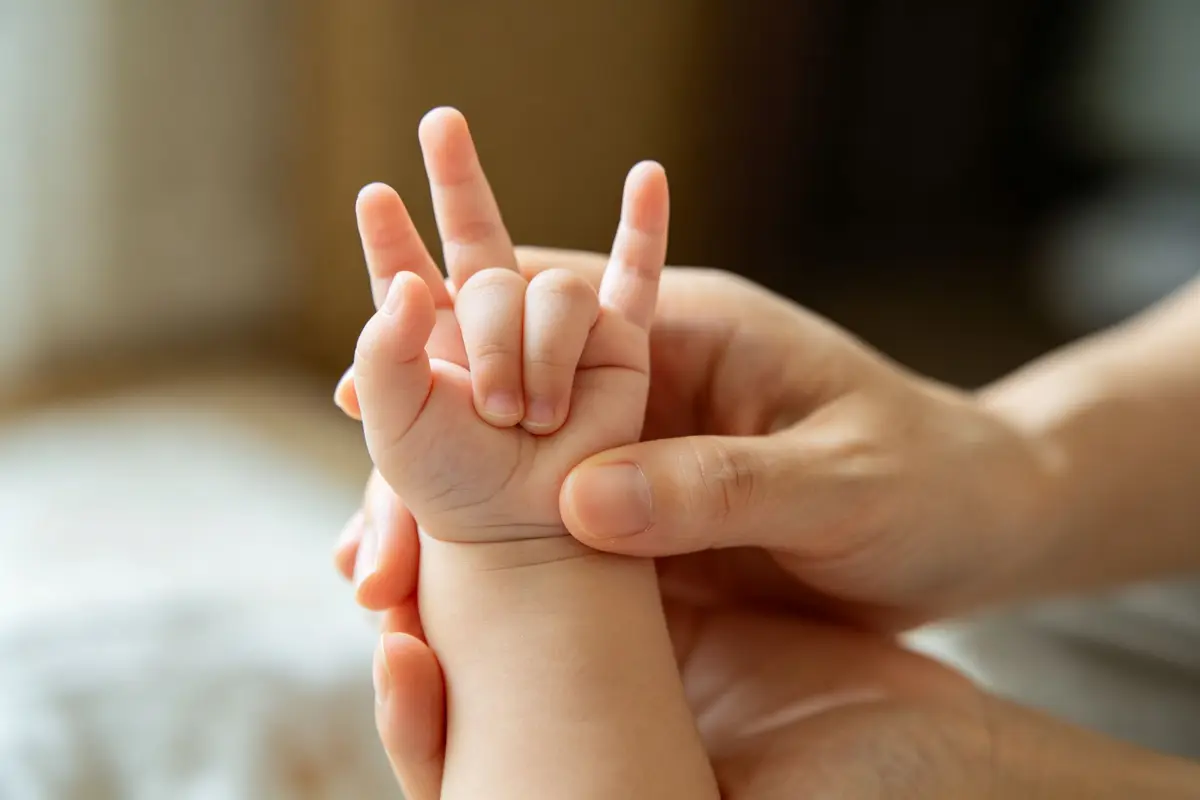
Here's what worked for our family: Start small and be consistent. Pick 3-5 signs and use them every single time in context. Consistency is more important than quantity. If you only sign "more" occasionally, your baby won't pick it up. If you sign it every time you offer more food, they'll get it. Say the word while signing. Always speak the word aloud as you make the sign. This helps your baby connect the gesture with the spoken word and supports language development. Get on their level. Make eye contact and sign at your baby's eye level so they can see your hands clearly. Hold their hands and gently guide them through the sign at first — hand-over-hand help can accelerate learning. Reinforce immediately. When your baby makes a sign (even an approximation), respond immediately and enthusiastically. If they sign "more," give more right away and say "More! You signed more! Great job!" This positive reinforcement teaches them that signing works. Accept approximations. Your baby's first signs won't be perfect. They might clap instead of tapping fingertips for "more," or use a simplified version. Accept and respond to any attempt — they'll refine the sign over time. Make it fun. Sign during play, songs, and routines. Sign "more" during peekaboo, "all done" when a song ends, "bath" at bathtime. The more natural and fun it is, the more your baby will engage. Involve all caregivers. Make sure partners, grandparents, and daycare providers know the signs and use them consistently. If only one person signs, it's confusing for the baby. Be patient. It can take weeks or even months for a baby to produce their first sign. Keep modeling even if they don't seem to be getting it — they're absorbing it. The first sign is always exciting, and once they realize signing works, they'll pick up new signs quickly. For baby care essentials, Moni Happy's diapers and wipes support daily routines. Explore Moni Happy's collection.
What If My Baby Doesn't Sign?
Not all babies take to signing, and that's okay. Some babies prefer to communicate through pointing, vocalizations, or gestures. If your baby doesn't seem interested in signing after several weeks of consistent modeling, don't force it. You can keep modeling casually or take a break and try again later. Signing is a tool, not a requirement. What matters is that you're communicating with your baby in whatever way works for both of you. If you have concerns about your baby's communication or language development, talk to your pediatrician — they can assess whether a referral to a speech-language pathologist is needed.
Frequently Asked Questions
When should I start teaching my baby sign language?
You can start modeling signs as early as 4-6 months, though most babies won't produce signs until 8-12 months. Start with 3-5 high-frequency signs like 'more,' 'milk,' and 'all done.' Some babies sign as early as 7-8 months, others take until 12-14 months. Every baby is different. Early exposure helps even if they don't sign back immediately — they're absorbing it.
Does baby sign language delay speech?
No, research shows the opposite — babies who sign often speak earlier and have larger vocabularies than non-signing babies. Signing gives babies a successful way to communicate, which reduces frustration and motivates continued communication. It complements rather than replaces speech. Always say the word aloud while signing so your baby connects the gesture with the spoken word.
What are the best first signs to teach my baby?
Start with 3-5 high-frequency, meaningful signs: 'more' (tap fingertips together — usually the first sign learned), 'milk' (squeeze fist), 'all done/finished' (push hands outward), 'eat/food' (tap fingers to mouth), and 'water' (tap 'W' to chin). Once mastered, add signs based on your baby's interests — 'dog,' 'book,' 'bath,' 'help.' Use the sign every time you say the word, in context.
How do I get my baby to actually sign back?
Be consistent — use the sign every time in context. Say the word aloud while signing. Get on eye level and use hand-over-hand guidance at first. Reinforce immediately when they make any attempt (even an approximation) — respond enthusiastically and give what they asked for. Accept imperfect signs; they'll refine over time. Make it fun during play and routines. Involve all caregivers. Be patient — it can take weeks or months for the first sign, but once they realize signing works, they'll pick up new signs quickly.