
2026-08-20 · Moni Happy Editorial Team
Indonesia Baby Products Local Manufacturing: Supply Chain & Investment Guide
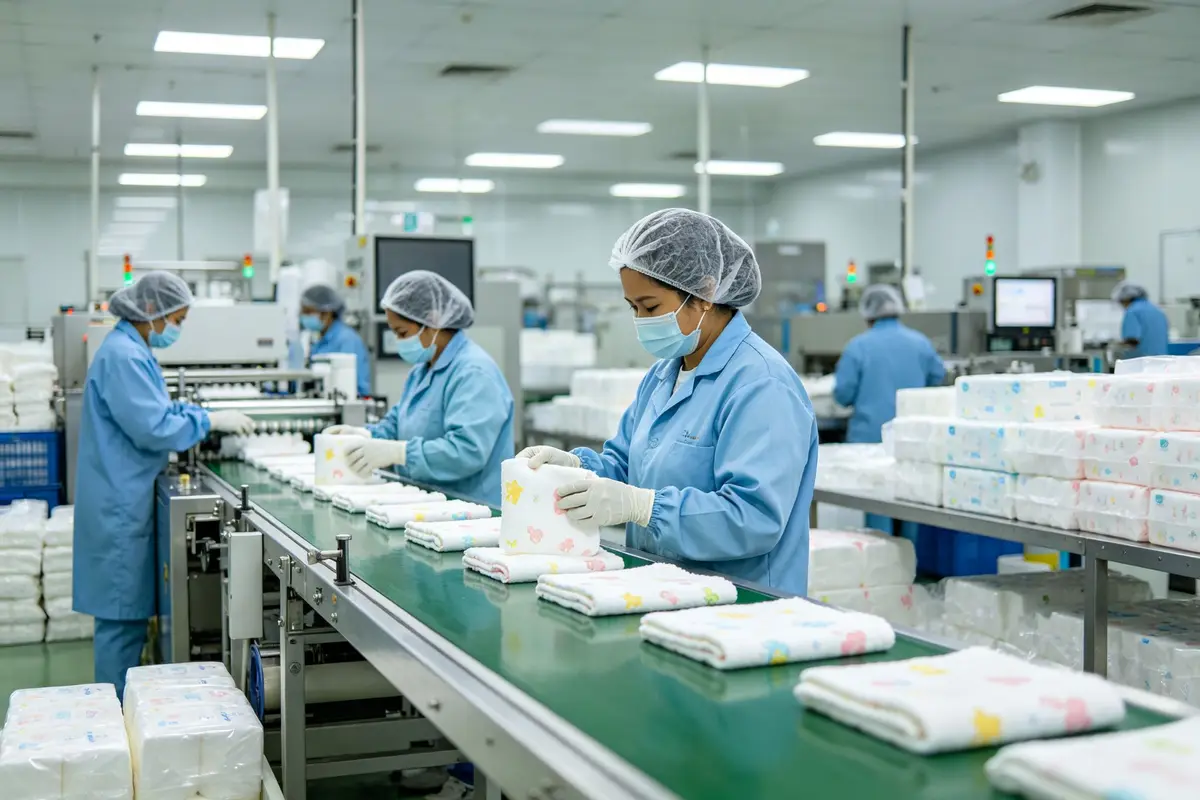
Local Manufacturing: Indonesia's Baby Care Transformation
Indonesia's baby products market is undergoing a significant transformation as local manufacturing becomes an increasingly important strategy for brands looking to succeed in Southeast Asia's largest economy. With a population of over 270 million, a growing middle class, and a government actively promoting industrialization and local content, Indonesia offers compelling opportunities for brands that invest in local production. For baby product brands—particularly in the high-volume diaper and wipes categories—local manufacturing can provide significant competitive advantages in terms of cost, speed, and market access.
The shift toward local manufacturing in Indonesia's baby products sector is being driven by several factors: rising import costs and logistics challenges, government policies promoting local content and industrialization, growing consumer preference for locally produced products, and the need for greater supply chain resilience in an increasingly volatile global environment. For brands that can successfully navigate the complexities of local manufacturing, the rewards are significant: lower costs, faster time to market, better customization, and stronger relationships with retailers and consumers.
The Current State of Baby Product Manufacturing in Indonesia
Indonesia's baby product manufacturing sector is growing but still developing, with significant variation across product categories. Diapers and wipes are the most established categories, with both local and international brands operating production facilities in the country. Other categories, such as baby skincare, feeding products, and nursery furniture, are less commonly manufactured locally, with many products still being imported.
Diaper Manufacturing: Indonesia has a well-established diaper manufacturing sector, with several major players operating production facilities. International brands like Unicharm (MamyPoko/Moony), Procter & Gamble (Pampers), and Kao (Merries) have manufacturing facilities in Indonesia, serving both the domestic market and export markets. Local brands like Sweety (Ultrajaya) and Goon (Daisho) also operate their own manufacturing facilities or work with contract manufacturers. Diaper manufacturing requires significant investment in specialized equipment, including diaper converting machines, absorbent core production lines, and packaging equipment. The majority of diaper manufacturing facilities are located in Java, particularly in the Jakarta-Bandung-Surabaya corridor, where infrastructure and supply chains are most developed.
Wipes Manufacturing: Wipes manufacturing is also well-established in Indonesia, with a mix of large-scale manufacturers and smaller contract manufacturers. Wipes manufacturing is generally less capital-intensive than diaper manufacturing, requiring wipes converting machines, mixing and formulation equipment, and packaging lines. This lower barrier to entry has led to a more fragmented manufacturing landscape, with many small and medium-sized manufacturers serving both branded and private label customers. Indonesia's wipes manufacturers range from large, modern facilities with international quality certifications to smaller, less sophisticated operations. Quality can vary significantly across manufacturers, so brands need to carefully vet potential manufacturing partners.
Raw Material Supply Chain: While Indonesia has made progress in developing its baby product manufacturing sector, the industry still relies heavily on imported raw materials. Key imported materials include superabsorbent polymers (SAP), high-quality nonwoven fabrics (particularly spunbond and meltblown), specialty adhesives, and packaging materials. Local suppliers exist for some materials, such as fluff pulp, basic nonwoven fabrics, and packaging, but the quality and consistency of local materials may not meet the requirements of premium products. The Indonesian government is actively promoting the development of local raw material supply chains through incentives and local content requirements, but it will take time for the local supply base to mature.
Manufacturing Hubs: The majority of baby product manufacturing in Indonesia is concentrated in Java, the country's most populous and economically developed island. Key manufacturing hubs include: (1) Jabodetabek (Jakarta, Bogor, Depok, Tangerang, Bekasi)—the largest manufacturing hub, with excellent infrastructure and access to the Jakarta port and airport; (2) Bandung and surrounding areas in West Java—known for its textile and nonwoven fabric industry, which supports wipes and diaper manufacturing; (3) Surabaya and surrounding areas in East Java—Indonesia's second-largest manufacturing hub, with good port access and a growing industrial sector; (4) Karawang and Cikarang—industrial estates in West Java that are home to many manufacturing facilities, including baby product factories. Outside of Java, manufacturing is more limited, though there are some facilities in Sumatra and Sulawesi.
Advantages of Local Manufacturing
Local manufacturing offers several significant advantages for baby product brands operating in Indonesia. Understanding these advantages is essential for evaluating whether local manufacturing is the right strategy for a particular brand or product category.
Cost Efficiency: One of the most significant advantages of local manufacturing is cost efficiency. By producing locally, brands can avoid import duties (which can range from 5-15% for baby products), reduce logistics costs (including international shipping, insurance, and customs clearance), and minimize inventory carrying costs (due to shorter lead times). These cost savings can be substantial, particularly for high-volume, low-margin products like diapers and wipes. Local manufacturing also allows brands to be more competitive on price, which is critical in Indonesia's price-sensitive mass market.
Faster Time to Market: Local manufacturing significantly reduces lead times, allowing brands to respond more quickly to market demand and changes in consumer preferences. With imported products, lead times can be 2-3 months or more, including production, shipping, and customs clearance. With local manufacturing, lead times can be reduced to 1-2 weeks, allowing brands to maintain lower inventory levels while still ensuring product availability. This is particularly important for promotional activities, where brands need to ensure sufficient inventory to meet increased demand, and for new product launches, where speed to market can be a competitive advantage.
Market Access and Retailer Preference: Locally manufactured products often have an advantage in gaining access to retail channels, particularly in modern trade. Many retailers in Indonesia have local content requirements or preferences, and they may be more willing to stock locally manufactured products due to better availability, faster replenishment, and lower risk of supply chain disruptions. Local manufacturing also allows brands to build stronger relationships with retailers, as they can offer better service, more flexible ordering, and faster response to retailer needs. For mass market products that require broad distribution, local manufacturing is often a prerequisite for success.
Customization and Localization: Local manufacturing allows brands to customize products to meet the specific needs and preferences of Indonesian consumers. This includes adjusting product features, packaging, sizing, and formulations to suit local tastes and requirements. For example, diaper brands may adjust absorbency levels to suit the Indonesian climate, or wipes brands may adjust moisture content and fragrance to suit local preferences. Local manufacturing also allows brands to respond more quickly to consumer feedback and market trends, making product improvements and innovations in a fraction of the time required for imported products.
Government Incentives: The Indonesian government offers a range of incentives to encourage local manufacturing, particularly in priority sectors like consumer goods and baby products. These incentives include tax holidays (for new investments in certain sectors), tax allowances (for investment in labor-intensive industries), import duty exemptions (for machinery and raw materials used in export production), and simplified licensing procedures. The government also has local content requirements for certain products, which can give locally manufactured products a competitive advantage. Brands that invest in local manufacturing may also benefit from government support programs, including training, infrastructure development, and export promotion.
Supply Chain Resilience: In an increasingly volatile global environment, supply chain resilience is a critical consideration for brands. Local manufacturing reduces dependence on global supply chains, which can be disrupted by events like pandemics, trade disputes, natural disasters, and shipping delays. By producing locally, brands can ensure more stable supply, reduce the risk of stockouts, and maintain better control over quality and production schedules. This is particularly important for essential baby products like diapers and wipes, where product availability is critical for consumer satisfaction and brand loyalty.
Challenges and Considerations
While local manufacturing offers significant advantages, it also presents challenges that brands must carefully consider and navigate. Understanding these challenges is essential for making informed decisions about whether and how to invest in local manufacturing.
Capital Investment: Setting up a manufacturing facility in Indonesia requires significant capital investment, including costs for land, construction, machinery, equipment, and working capital. For diaper manufacturing, the investment can be particularly high, as specialized converting machines can cost millions of dollars. For smaller brands or those new to the Indonesian market, the capital requirement may be prohibitive. Contract manufacturing or partnership with an existing manufacturer can be a lower-risk alternative to building a wholly-owned facility, allowing brands to benefit from local manufacturing without the upfront capital investment.
Raw Material Dependence: As noted earlier, Indonesia's baby product manufacturing sector still relies heavily on imported raw materials, particularly high-quality SAP, nonwoven fabrics, and specialty chemicals. This dependence on imports can offset some of the cost advantages of local manufacturing, as brands still need to pay for international shipping, import duties, and customs clearance for raw materials. It also creates supply chain risks, as disruptions in global raw material markets can affect local production. Brands should carefully evaluate the local raw material supply base and consider strategies for developing local suppliers or negotiating favorable import terms for critical materials.
Quality Consistency: Ensuring consistent quality in local manufacturing can be a challenge, particularly when working with contract manufacturers or less experienced local suppliers. Quality standards in Indonesia's manufacturing sector vary significantly, and brands need to implement robust quality control processes to ensure that products meet their specifications. This may include investing in quality control personnel, testing equipment, and quality management systems. For premium products, where quality is a key differentiator, brands may need to invest more heavily in quality assurance or work with manufacturers that have international quality certifications (such as ISO 9001 or GMP).
Regulatory Complexity: Navigating Indonesia's regulatory environment can be complex and time-consuming, particularly for foreign brands. Manufacturing licenses, environmental permits, labor regulations, product certifications, and tax compliance all require careful attention and local expertise. The regulatory environment can also be subject to change, as the government introduces new policies and requirements. Brands should work with experienced local legal and regulatory advisors to ensure full compliance and to stay abreast of regulatory changes. Building good relationships with government agencies and industry associations can also help brands navigate the regulatory landscape more effectively.
Labor and Human Resources: While Indonesia has a large and relatively low-cost labor force, finding and retaining skilled workers—particularly in technical and management roles—can be a challenge. The manufacturing sector competes with other industries for skilled labor, and turnover can be high, particularly in areas with many manufacturing facilities. Brands need to invest in training and development programs to build a skilled workforce, and they need to offer competitive compensation and benefits to retain key employees. Labor relations and compliance with labor regulations are also important considerations, as Indonesia has strong labor laws and active labor unions.
Infrastructure and Logistics: While Indonesia's infrastructure has improved significantly in recent years, it can still be a challenge, particularly outside of major urban areas. Transportation networks, port facilities, and utility infrastructure (electricity, water, telecommunications) can vary significantly across regions. For manufacturing facilities, reliable infrastructure is critical for efficient operations and timely delivery. Brands should carefully evaluate the infrastructure at potential manufacturing locations and consider the costs and logistics of transporting raw materials and finished products. Investing in backup power generation, water treatment, and other infrastructure may be necessary in some locations.
Market Entry and Investment Strategies
For brands considering local manufacturing in Indonesia, there are several market entry and investment strategies to consider, each with its own advantages and challenges. The right strategy depends on the brand's size, resources, market objectives, and risk tolerance.
Contract Manufacturing: Contract manufacturing is the lowest-risk and lowest-capital option for brands that want to benefit from local production without investing in their own facility. Under a contract manufacturing arrangement, the brand partners with an existing manufacturer that produces products under the brand's name and specifications. This allows the brand to avoid capital investment, reduce time to market, and focus on marketing and distribution. However, contract manufacturing also has disadvantages: less control over quality and production schedules, potential confidentiality concerns, and dependence on the manufacturer's capacity and capabilities. For brands considering contract manufacturing, it is essential to carefully vet potential partners, visit their facilities, and establish clear quality standards and contractual terms.
Joint Venture or Partnership: A joint venture or strategic partnership with a local manufacturer or distributor is another option for brands that want to benefit from local expertise and resources while sharing the investment and risk. Under a joint venture, the brand and local partner establish a separate entity that owns and operates the manufacturing facility. This allows the brand to leverage the partner's local knowledge, relationships, and resources, while the partner benefits from the brand's technology, products, and market access. Joint ventures can be complex to structure and manage, and they require a high degree of trust and alignment between partners. Brands should carefully evaluate potential partners and structure the joint venture to ensure clear roles, responsibilities, and decision-making processes.
Wholly-Owned Manufacturing Facility: For larger brands with significant resources and long-term commitment to the Indonesian market, building a wholly-owned manufacturing facility may be the best option. This provides the greatest control over quality, production, and intellectual property, and it allows the brand to optimize the facility for its specific products and processes. A wholly-owned facility also sends a strong signal of commitment to the Indonesian market, which can help build relationships with retailers, government agencies, and consumers. However, this option requires the highest capital investment and carries the greatest risk. Brands considering a wholly-owned facility should conduct thorough feasibility studies, including market analysis, financial modeling, and risk assessment, before committing to the investment.
Phased Investment Approach: Many brands adopt a phased investment approach, starting with contract manufacturing to test the market and build volume, then transitioning to a joint venture or wholly-owned facility as the business grows. This approach allows brands to minimize upfront investment and risk while still benefiting from local manufacturing. It also gives brands time to learn about the local market, build relationships, and develop the capabilities needed to operate a manufacturing facility. When volume reaches a level that justifies the investment, the brand can then consider more substantial investment in local production. This phased approach is often the most practical and lowest-risk strategy for brands entering the Indonesian market.
Future Outlook and Opportunities
The future of baby product manufacturing in Indonesia looks promising, with several trends likely to drive growth and investment in the coming years:
Government Support for Industrialization: The Indonesian government is actively promoting industrialization and local manufacturing through its "Making Indonesia 4.0" initiative and other policy programs. The government has identified consumer goods, including baby products, as a priority sector, and it is offering incentives, infrastructure development, and regulatory reform to attract investment. As these policies take effect, the environment for local manufacturing is likely to improve, making Indonesia an even more attractive destination for baby product manufacturing investment.
Development of Local Supply Chains: The Indonesian government and private sector are investing in the development of local raw material supply chains, including nonwoven fabrics, absorbent polymers, and packaging materials. As the local supply base matures, brands will have more options for sourcing raw materials locally, reducing dependence on imports and further improving the cost competitiveness of local manufacturing. This is likely to make local manufacturing even more attractive for baby product brands in the coming years.
Growing Domestic Market: Indonesia's domestic baby products market is expected to continue growing, driven by population growth, urbanization, and rising disposable incomes. As the market grows, the volume required to justify local manufacturing investment will be more easily achieved, making local manufacturing feasible for more brands. The growing middle class and premium segment also create opportunities for manufacturers that can produce high-quality, premium products locally.
Export Opportunities: Indonesia's strategic location in Southeast Asia and its membership in the ASEAN Free Trade Area (AFTA) make it an attractive manufacturing hub for export to other Southeast Asian markets. As manufacturing capabilities and quality standards improve, Indonesian-made baby products are likely to become more competitive in export markets. Brands that manufacture in Indonesia may be able to serve not only the domestic market but also the broader Southeast Asian region, improving the economies of scale and return on investment for local manufacturing.
For baby product brands, the decision to invest in local manufacturing in Indonesia is a strategic one that requires careful consideration of the advantages, challenges, and alternatives. For brands with significant volume and long-term commitment to the Indonesian market, local manufacturing can provide substantial competitive advantages in terms of cost, speed, and market access. For smaller brands or those new to the market, contract manufacturing or a phased investment approach may be a more practical starting point. Regardless of the approach, brands that invest in understanding the local manufacturing landscape and building strong capabilities and relationships will be well-positioned to succeed in Indonesia's dynamic and growing baby products market.
Frequently Asked Questions
Why is local manufacturing important for baby products in Indonesia?
Local manufacturing offers several key advantages for baby product brands in Indonesia: (1) Cost efficiency—avoiding import duties and reducing logistics costs; (2) Faster time to market—shorter lead times and better inventory management; (3) Market access—local products may be preferred by retailers and consumers; (4) Customization—ability to tailor products to local consumer preferences; (5) Government incentives—tax holidays and investment incentives for local manufacturing; (6) Supply chain resilience—reduced dependence on imports and global supply chain disruptions.
What is the current state of baby product manufacturing in Indonesia?
Indonesia has a growing but still developing baby product manufacturing sector. Diapers and wipes are the most commonly manufactured baby products, with both local and international brands operating production facilities in the country. Major manufacturing hubs are located in Java, particularly in the Jakarta-Bandung-Surabaya corridor, where infrastructure and supply chains are most developed. However, the manufacturing sector still relies heavily on imported raw materials, particularly high-quality absorbent polymers, nonwoven fabrics, and specialty chemicals. The government is actively promoting local manufacturing through incentives and local content requirements.
What regulatory requirements apply to baby product manufacturing in Indonesia?
Baby product manufacturing in Indonesia is subject to various regulatory requirements: (1) Business registration and manufacturing licenses (IUI); (2) Product safety standards and certifications (SNI standards where applicable); (3) Environmental permits and compliance with environmental regulations; (4) Labor regulations and occupational health and safety standards; (5) For products making therapeutic claims, registration with the National Agency of Drug and Food Control (BPOM); (6) Halal certification requirements for products targeting Muslim consumers; (7) Import regulations for raw materials and machinery; (8) Tax compliance and customs requirements. Brands should work with local legal and regulatory advisors to ensure full compliance.
What are the key considerations for brands considering local manufacturing in Indonesia?
Key considerations include: (1) Location—choose a location with good infrastructure, access to labor, and proximity to supply chains and markets; (2) Raw material sourcing—evaluate the availability and cost of local raw materials vs. imports; (3) Labor—assess the availability of skilled labor and labor costs; (4) Infrastructure—evaluate transportation, utilities, and logistics infrastructure; (5) Regulatory environment—understand the licensing, tax, and compliance requirements; (6) Investment incentives—research available tax holidays and investment incentives; (7) Partnership options—consider whether to build a wholly-owned facility, partner with a local manufacturer, or use contract manufacturing; (8) Market demand—ensure there is sufficient market demand to justify the investment.