
2026-08-31 · Moni Happy Editorial Team
Supply Chain Localization Accelerates in Southeast Asia's Diaper Industry
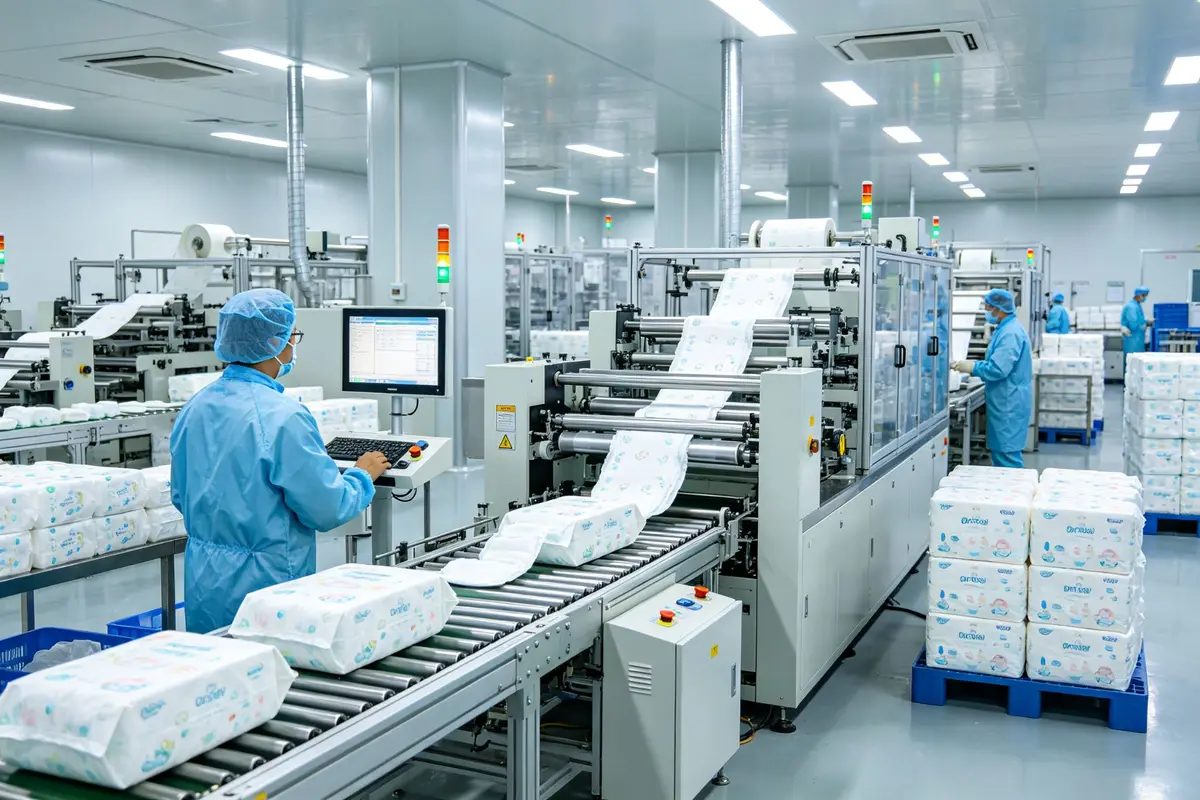
Supply Chain Localization Accelerates in Southeast Asia's Diaper Industry
The global baby diaper industry has long relied on complex, cross-border supply chains—raw materials sourced from one country, manufactured in another, packaged in a third, and distributed across dozens more. But a confluence of factors—pandemic disruptions, trade tensions, rising logistics costs, and growing regional demand—is driving a fundamental shift toward supply chain localization across Southeast Asia's diaper industry.
Why Localization Now?
The push toward supply chain localization in Southeast Asia's diaper industry is being driven by several interconnected factors:
- Pandemic lessons: The COVID-19 pandemic exposed the vulnerabilities of global supply chains, with border closures, port congestion, and shipping delays causing widespread product shortages. Diaper manufacturers and retailers learned the hard way that relying on distant suppliers for essential baby products carries significant risk.
- Rising logistics costs: International shipping costs have remained elevated since the pandemic, eroding the cost advantage of importing finished goods or raw materials from distant markets. For bulky products like diapers, transportation costs represent a significant portion of the total cost, making local production increasingly attractive.
- Regional demand growth: Southeast Asia's baby diaper market is one of the fastest-growing in the world, with rising middle classes, increasing urbanization, and growing diaper penetration rates. Manufacturing closer to the point of consumption reduces lead times, improves responsiveness to market changes, and lowers inventory costs.
- Trade policy shifts: Changing trade policies, tariffs, and regional trade agreements (such as RCEP) are making regional manufacturing more attractive. The Regional Comprehensive Economic Partnership, which includes all ten ASEAN member states, has reduced trade barriers and created a more integrated regional market.
- Quality and customization: Local manufacturing allows brands to tailor products to regional preferences and climatic conditions. For example, diapers designed for Southeast Asia's hot and humid climate require different breathability and absorption characteristics than those designed for temperate markets.
The Localization Landscape
Supply chain localization in Southeast Asia's diaper industry takes several forms:
- Local manufacturing: International and regional brands are establishing or expanding manufacturing facilities within Southeast Asia. Countries like Thailand, Indonesia, Vietnam, and Malaysia have attracted significant investment in diaper manufacturing due to their strategic location, growing domestic markets, and competitive labor costs.
- Regional raw material sourcing: While some specialized raw materials (like superabsorbent polymers from Japan) still need to be imported, manufacturers are increasingly sourcing non-woven fabrics, packaging materials, and other components from regional suppliers, reducing dependence on distant sources.
- Regional distribution hubs: Companies are establishing regional distribution centers in strategic locations like Singapore, Bangkok, and Jakarta to serve multiple markets more efficiently, reducing delivery times and inventory costs.
- Local packaging and customization: Brands are localizing packaging, labeling, and product formulations to meet regional regulatory requirements, language preferences, and cultural considerations, including halal certification for Muslim-majority markets.
Country-Specific Developments
Thailand: Thailand has emerged as a regional manufacturing hub for baby diapers, with several international and local brands operating production facilities. The country's strategic location in mainland Southeast Asia, well-developed infrastructure, and skilled workforce make it an attractive base for serving the ASEAN market. Thai manufacturers are also investing in automation and smart manufacturing technologies to improve efficiency and quality.
Indonesia: As Southeast Asia's largest market, Indonesia has attracted significant investment in local diaper manufacturing. Both international brands and local players have established production facilities to serve the domestic market and export to neighboring countries. Indonesia's large population, growing middle class, and abundant natural resources (including palm oil, used in some diaper components) make it a key player in the regional supply chain.
Vietnam: Vietnam has become an increasingly attractive manufacturing destination, with several diaper manufacturers establishing or expanding operations in the country. Vietnam's young, skilled workforce, competitive labor costs, and favorable investment policies have made it a preferred alternative to China for many manufacturers. The country's strategic location on the Pacific Rim also provides easy access to both Asian and global markets.
Malaysia: Malaysia has a well-developed manufacturing sector and is home to several diaper production facilities. The country's strong halal certification ecosystem, multilingual workforce, and strategic location make it an attractive base for serving the Muslim-majority markets of Southeast Asia. Malaysian manufacturers are also investing in eco-friendly and sustainable production technologies.
Challenges and Considerations
While supply chain localization offers significant benefits, it also presents challenges:
- Capital investment: Establishing local manufacturing facilities requires significant capital investment in machinery, infrastructure, and workforce training. Smaller brands may struggle to justify the investment without sufficient volume.
- Raw material dependencies: Despite localization efforts, some critical raw materials—particularly high-quality superabsorbent polymers (SAP) and certain non-woven fabrics—are still primarily sourced from Japan, South Korea, and China. Full supply chain independence remains a long-term goal rather than an immediate reality.
- Quality consistency: Maintaining consistent quality across local manufacturing facilities requires robust quality control systems, trained personnel, and regular audits. Brands must ensure that locally produced products meet the same international standards as imported goods.
- Regulatory complexity: Operating manufacturing facilities across multiple Southeast Asian countries means navigating different regulatory environments, labor laws, tax regimes, and product certification requirements. This complexity can offset some of the cost savings from localization.
- Scale and efficiency: Local manufacturing facilities must achieve sufficient scale to be cost-competitive. In smaller markets, production volumes may not justify a dedicated facility, requiring brands to serve multiple markets from a single regional hub.
The Road Ahead
Supply chain localization in Southeast Asia's diaper industry is not a temporary trend—it's a fundamental restructuring of how baby care products are manufactured and distributed in the region. As demand continues to grow, logistics costs remain elevated, and regional integration deepens, the shift toward local and regional manufacturing will only accelerate.
For brands like Moni Happy, the key is to strike the right balance between local responsiveness and global quality standards. By combining Japanese craftsmanship and quality control with regional manufacturing and distribution, brands can deliver products that are both internationally certified and locally relevant—meeting the unique needs of Southeast Asian parents while maintaining the safety and quality standards they expect.
The future of the Southeast Asian diaper industry belongs to brands that can navigate this complex supply chain landscape, leveraging localization for speed and cost efficiency while maintaining global standards for quality, safety, and innovation. Moni Happy's premium diaper range and sensitive-skin wipes represent this balance, combining international quality with tropical-specific formulation for the Southeast Asian market.