
2026-10-09 · Moni Happy Editorial Team
Is the Baby Diaper Business Profitable in Cambodia in 2026?
Yes — diaper distribution in Cambodia can be profitable, with typical distributor gross margins of 15-25% on premium imported diapers and the highest fertility rate among major Southeast Asian markets, about 2.5 births per woman (World Bank, 2024); the margin only reaches your pocket after 10% VAT, HS 9619 import costs and a balanced modern-trade and traditional-shop channel plan.
- Fertility rate: about 2.5 births per woman in 2024 — the highest among major Southeast Asian markets (World Bank).
- Standard VAT: 10%. Baby diapers are classified under HS 9619; ATIGA Form D, RCEP and Japan AJCEP preferences may reduce duty — verify the current rate.
- Gateways: Sihanoukville Autonomous Port (deep sea) and Phnom Penh Autonomous Port (river); the economy is heavily dollarized, with USD widely used in trade.
- Channels: AEON and premium mother-and-baby chains, traditional markets and neighborhood shops, plus fast-growing e-commerce.
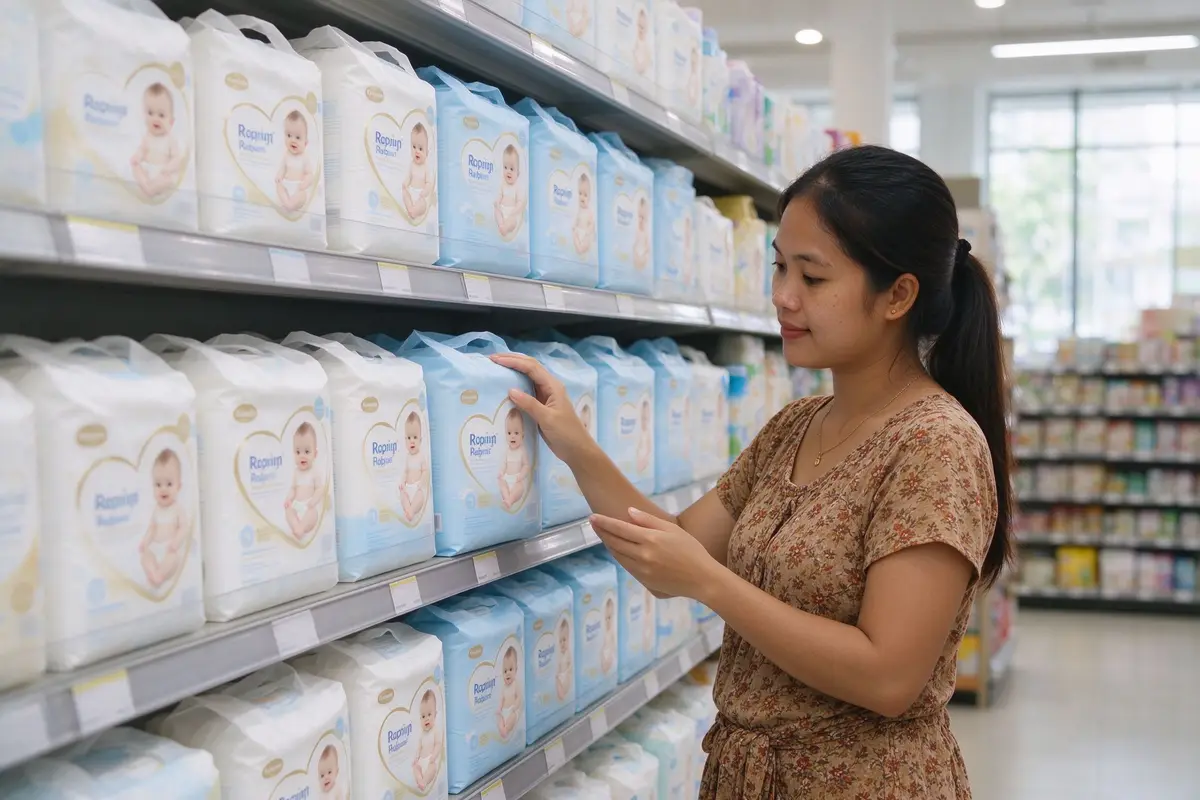
- First-party evidence: Moni Happy's full NB-XXL range of tape diapers and pull-up pants is listed in AEON and leading Cambodian baby stores after the national baby expo.
- Indicative distributor gross margin 15-25%; startup capital about US$12,000-25,000. Request the partner pack at moni-happy.com/partner.
This country page is the Cambodia chapter of our Southeast Asia distribution channel overview; compare it with the Indonesia profitability page and Philippines profitability page, and use the landed-cost breakdown for the full cost math before you place a first deposit.
Is the baby diaper business profitable in Cambodia in 2026?
Yes for focused distributors, but the profit is structural rather than automatic. Diaper distribution in Cambodia commonly earns 15-25% gross margin, with net margin after staff, warehousing, trade spend and credit typically landing around 5-12%. Demand is recurring — diapers are a repeat-purchase necessity — and the birth rate is the region's highest, but the market is smaller than Vietnam or Indonesia, so discipline on landed cost and size mix decides whether a container makes money.
An indicative first-container calculation (Moni Happy planning estimate, subject to a formal quotation): 48,000 premium diapers at US$0.15 FOB = US$7,200; add about US$1,500 freight and US$35 insurance for a CIF value near US$8,735; at an illustrative 5% duty that is about US$437, plus around US$600 clearance, giving a pre-VAT landed cost near US$9,772, roughly US$0.204 per piece. Cambodia then applies 10% VAT on the CIF-plus-duty value (recoverable for properly registered businesses). Selling at a 20% margin implies about US$0.255 wholesale and roughly US$2,400 gross profit per container before operating costs.
Why is Cambodia attractive for diaper distribution?
Three structural reasons make diaper distribution in Cambodia attractive. First, demand growth: Cambodia's fertility rate of about 2.5 compares with roughly 1.9 in Vietnam and the Philippines, 1.5 in Malaysia and 1.2 in Thailand (World Bank fertility indicator, 2024). Second, the economy is heavily dollarized, so USD-priced imports avoid some of the currency mismatch distributors face elsewhere. Third, premium modern trade is still early: international diaper brands are visible in AEON and specialist chains, but premium penetration outside Phnom Penh and Siem Reap has room to grow, which opens a first-mover window for brands that can supply consistent quality and merchandising.
How do diapers reach Cambodian families?
Plan for three parallel channels rather than one:
- Modern trade and baby chains: AEON departments and premium mother-and-baby stores give a brand credibility and a showcase endcap. Moni Happy's own launch listed the complete NB-XXL ladder of tape diapers and pull-up pants in AEON and leading baby stores with dedicated blue-and-white displays after the national expo.
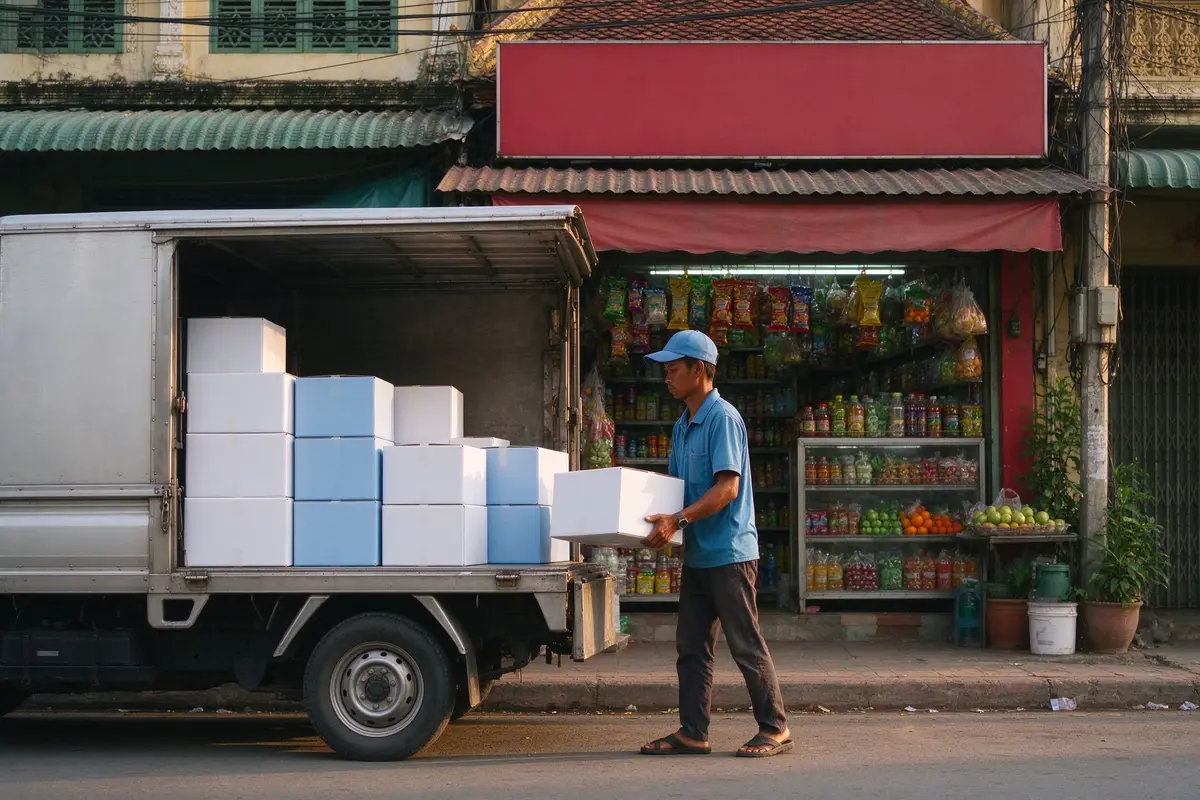
- Traditional trade: neighborhood shops and local markets still drive high volume, especially outside the major cities, and usually buy on shorter credit or cash terms — useful for distributor cash flow.
- E-commerce: Shopee, Lazada and TikTok Shop are growing quickly for baby categories and are a low-cost way to run trials and pull consumers into stores. No fixed market-share figure should be assumed without a current third-party report.
What duties, VAT and documents apply to diaper imports in Cambodia?
Baby diapers enter under HS 9619. Cambodia's standard VAT is 10%, applied on the CIF value plus duty. Preferential certificates of origin under ATIGA (Form D), RCEP or the Japan-ASEAN EPA can reduce the applied duty, sometimes substantially; the exact rate changes with trade policy, so confirm it on the ASEAN Tariff Finder and with Cambodia Customs before each shipment. Cargo typically arrives via Sihanoukville Autonomous Port or the river port at Phnom Penh, sometimes after transshipment at a regional hub, so add buffer to the lead time; paperwork delays are where new entrants to diaper distribution in Cambodia lose the most time. Required paperwork and quality files are listed in our import documents and certification checklist.
What capital and margins should a diaper distributor plan for?
For diaper distribution in Cambodia, budget roughly US$12,000-25,000 to land and sell a first 20GP: deposit under common T/T 30/70 terms, balance before shipment, freight, duty, 10% VAT, clearance, warehouse and initial trade spend. Distributor gross margin of 15-25% and retailer expectations around 20-35% leave a workable but not generous spread, so the startup capital guide, the per-pack and per-carton margin analysis and the wholesale price, MOQ and margin guide should be modeled before you commit. Modern-trade chains may request credit or consignment terms; traditional shops often pay faster, so balance the two to protect working capital.
What are the main risks of diaper distribution in Cambodia?
The market is smaller than Indonesia or Vietnam, so a single wrong size mix can sit for months — follow the first-order size mix and watch sell-through weekly. Logistics can depend on transshipment, which makes the 30-45 day production window plus sea and clearance time in the factory-to-Southeast-Asia lead time guide critical to reorder timing. Competition includes global diaper brands and low-priced imports, so compete on verified quality (for example independent dermatological certification such as Dermatest), visible merchandising and reliable replenishment rather than price alone. Done right, diaper distribution in Cambodia compounds quickly: traditional-trade reorders arrive weekly and modern-trade listings renew on planogram compliance.
Moni Happy is appointing authorized distributors for Cambodia with wholesale pricing, size-mix guidance, POSM and launch support for AEON-style modern trade and traditional networks; request current openings and the partner pack at moni-happy.com/partner.
Frequently asked questions
Sources and further reading
- World Bank — Fertility rate, total (births per woman), SP.DYN.TFRT.IN
- Cambodia Customs and Excise — official import procedures
- ASEAN Tariff Finder — applied and preferential tariffs for HS 9619
- World Bank — Logistics Performance Index (port and customs reliability)
Commercial figures are indicative planning ranges and subject to a formal quotation; statutory rates must be confirmed with a licensed customs broker.
Bottom line: Diaper distribution in Cambodia is profitable for disciplined operators, with 15-25% gross margins, the region's highest fertility rate and a modern-trade channel that already stocks premium Japanese ranges. Model 10% VAT and HS 9619 duty carefully, split sales between AEON-style chains, traditional shops and e-commerce, and verify every rate with Cambodia Customs before ordering.
Frequently Asked Questions
Is the baby diaper business profitable in Cambodia?
Yes. Diaper distribution in Cambodia typically earns 15-25% gross margins, supported by a fertility rate of about 2.5, though net profit depends on duty, VAT, channels and stock control.
What import duty and VAT apply to diapers in Cambodia?
Diapers fall under HS 9619 and Cambodia applies 10% VAT; ATIGA, RCEP or Japan EPA certificates can reduce duty, so verify the current rate with Cambodia Customs and a broker.
Which sales channel works best for new diaper distributors in Cambodia?
Use a mix: AEON-style modern trade and premium baby chains for credibility, neighborhood shops and markets for volume and cash, then Shopee, Lazada and TikTok Shop for trial.
How much capital is needed to start diaper distribution in Cambodia?
Plan roughly US$12,000-25,000 for a first 20GP container plus duty, VAT, warehousing and trade spend; the exact figure depends on the quotation and your channel plan.
Distributor resources
If you are evaluating suppliers for your market, these are the pages that answer the commercial questions — in the order buyers usually need them.