
2026-11-02 · Moni Happy
Which baby care category adds the most shelf profit after diaper wholesale?
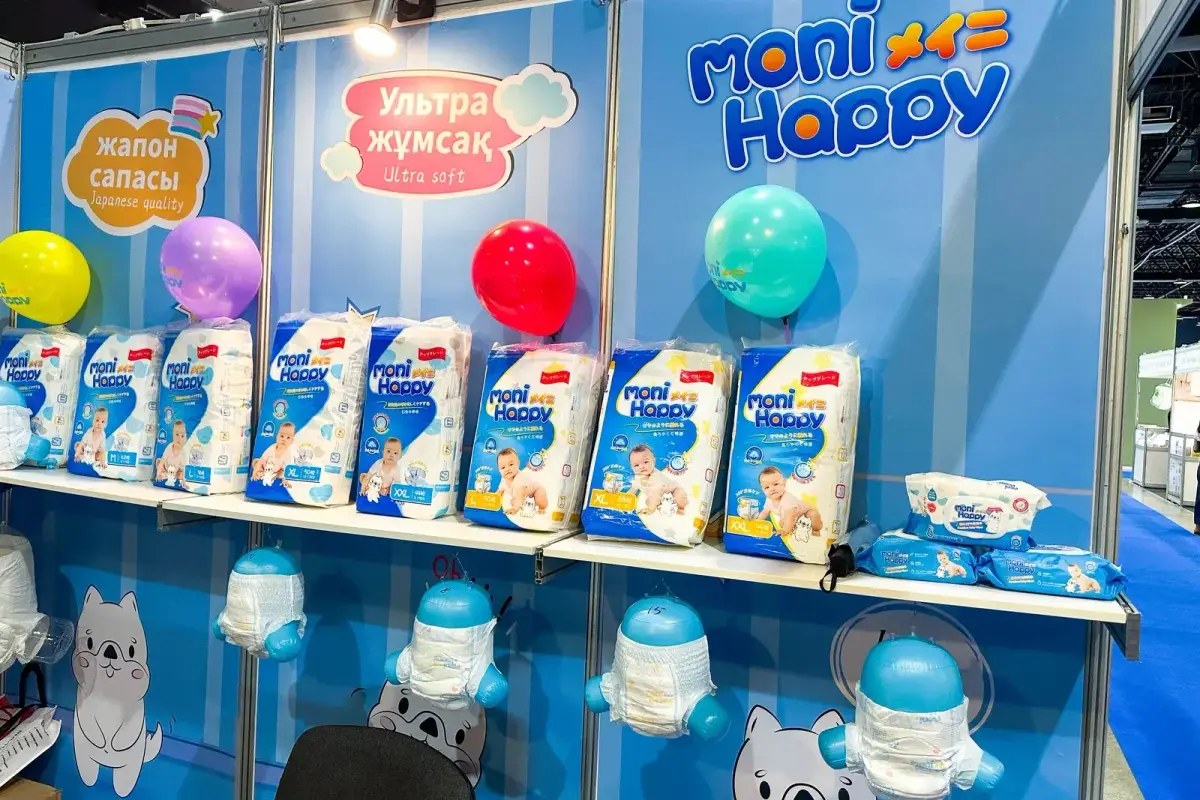
Wet wipes add the most shelf profit for a distributor that already runs a diaper line, because a wipes pack rides along with the same basket and turns faster than any other light baby care category. Cotton towels carry the highest margin rate per carton and facial tissue brings the most predictable repeat purchase, but neither is pulled into the trolley by a diaper pack the way wipes are.
That answer only holds if you measure shelf profit correctly. Most buyers compare margin percentages, which is the wrong instrument here: diapers are a low-rate, high-velocity, high-cash category, and the light categories are the reverse. The comparison has to be run per facing per month, on the cash actually tied up in stock.
What does shelf profit actually measure in a baby care range?
It measures gross profit generated by one facing of product in one month, after the cash locked in that facing is taken into account. Two categories can report identical gross margin rates and still differ by a factor of two in profit per metre of shelf, because turn rate and carton cube are doing most of the work.
Three variables drive the result: the gross profit in dollars per selling unit, the number of times that unit turns per year, and the shelf width one facing occupies. A category that wins on percentage but loses on shelf width can still lose on profit per month. This is why the light categories are worth a second look even though nobody walks into a store to buy a facial tissue.
Why does margin percentage mislead when you compare diapers with tissues?
Because the ticket sizes are not in the same order of magnitude. A diaper carton absorbs several times the working capital of a tissue carton, so the same percentage rate produces a different dollar result and a very different inventory exposure.
Distributor margins on diaper wholesale lines generally sit in the mid-teens to mid-twenties, and that range has to fund freight, warehousing and credit. Facial tissue and cotton towels can carry a higher rate on a much smaller ticket, which reads well on a slide and poorly on a profit and loss statement if the shelf slot is not productive. The useful number is gross margin return on inventory investment: gross profit per year divided by the average stock value at cost. Run that for every line before you argue about percentages.
How do I calculate profit per facing per month?
Multiply gross profit per unit by annual unit turn, divide by twelve, then divide by the shelf width of one facing. The result is a dollar figure per metre per month that you can compare across categories without further adjustment.
A worked example, using clearly hypothetical planning figures rather than a quotation: a diaper pack with a landed cost of USD 6.60 and a shelf width of 0.28 m turns twelve times a year at USD 1.60 gross profit. That is USD 1.60 times twelve, divided by twelve months, divided by 0.28 m, or roughly USD 5.70 per metre per month. A wipes soft pack at USD 1.10 landed, USD 0.50 gross profit and 0.11 m of shelf turns nine times and returns about USD 3.40 per metre per month. Tickets, turns and widths here are illustrative; real figures come with a formal quotation.
Which category wins on each of the four measures that matter?
No single category wins everything, which is why the answer depends on where your business is already strong. Diapers win cash per facing and basket attachment; wipes win attachment per metre of shelf; cotton towels win margin rate; facial tissue wins purchase frequency.
- Cash per facing: diapers, by a wide margin, because the ticket is large.
- Basket attachment: wipes, because the shopper buying diapers is already buying the use case.
- Margin rate: cotton towels, where a light, low-cost carton carries a higher percentage than any diaper line.
- Repeat frequency: facial tissue, bought every few weeks by nearly every household.
For a distributor whose diaper wholesale business already covers the fixed cost of a warehouse and a sales team, the marginal profit is what matters, and marginal profit favours the category that needs no new customer. That is wipes.
How does carton cube change which categories you can afford to stock?
Cube, not weight, usually decides how much capital a light category consumes. Facial tissue and cotton towels are bulky relative to value, so a container fills on volume long before it reaches a weight limit, and the storage cost per dollar of sales is higher than for diapers.
A 20GP of diapers carries roughly 48,000 pieces, which is a dense, high-value load. A 20GP of facial tissue fills with far fewer dollars of goods, so the same freight cost lands on a smaller sales base. Buyers who compare landed cost per carton without comparing landed cost per cubic metre end up with a warehouse full of cheap cartons and no cash. Price the storage, not just the goods.
Which category should I add second, and which third?
Add wet wipes second, cotton towels third, and facial tissue only once you have a channel that can move volume through a household shopper rather than a baby shopper. That sequence follows attachment first, margin second, and traffic last.
- Wet wipes: four to six SKUs, one fragrance-free newborn pack, one larger pack, one value pack. Lowest learning cost, fastest feedback.
- Cotton towels: two to three SKUs in the dry spunlace format, positioned as a face and hand towel rather than a bath towel. Highest rate of margin, slowest velocity.
- Facial tissue: enter only with a pack architecture built for the channel you are selling into, because the category is space-hungry and price-transparent.
Does the ranking change between Malaysia, Singapore, Thailand and Vietnam?
The order stays the same, but the pack that wins changes by market. Rent per square metre is the variable that moves the answer fastest, and rent differs sharply across the four.
In Singapore, high rent pushes stores toward smaller packs and higher price points per unit of shelf, which favours premium wipes and compact cotton towel packs. In Malaysia, mid-price large packs dominate and the value tier does the volume. In Thailand, convenience store footfall rewards single-serve and small multi-packs. In Vietnam, community and online group buying rewards bundle sizes that a group leader can split, which is a different pack logic from a supermarket shelf.
How do I test a new category without over-committing capital?
Take one pallet, give it ninety days, and judge it on rate of sale per facing rather than on total sell-in. A pallet is enough to read a category and cheap enough to abandon.
Set the test up with four numbers written down in advance: units sold per facing per week, reorder rate from the same outlets, return rate, and days of stock cover at the end of the period. If rate of sale per facing beats the diaper line it is replacing, expand. If it does not, the category is not wrong, the pack or the price point is. Either way you have spent one pallet rather than one container learning it. Category entry support, sample packs and first order terms are handled through the distributor application route.
Bottom line. Wet wipes add the most shelf profit to an existing diaper wholesale business because they need no new customer, and cotton towels add the most margin per carton for distributors willing to carry a slower line. Run the comparison per facing per month on cash invested, not on margin percentage, and test each new category on one pallet before you commit a container. The category economics behind this sit alongside the volume and price logic in the wholesale price, MOQ and margin guide.
Frequently asked questions
Which category really adds the most profit if I already sell diapers?
Wet wipes, in most cases. The shopper is already in your category, the pack is light, and the turn rate on a wipes facing is generally higher than on a cotton towel or facial tissue facing of the same width.
Should I drop facial tissue because the margin is thin per unit?
No. Facial tissue is a frequency purchase that pulls households into the store, and frequency is what makes the rest of the shelf work. Just do not give it prime space at eye level.
How many SKUs of a new category should a first order cover?
Two to six. Enough to read a price ladder, few enough to keep the working capital small. Expand only after ninety days of rate-of-sale data from the same outlets.
Do these economics hold for cotton towels sold as dry wipes?
Yes, with one adjustment: the dry spunlace sheet is bought on touch and price per sheet rather than on absorbency, so pack count and sheet size drive the sale more than the material story does.
Sources and further reading
- Euromonitor International — Baby and Child-Specific Products (category definitions and channel structure, accessed 2026).
- Statista — Baby Care market outlook (segment definitions used for shelf comparisons, accessed 2026).
- ASEAN Tariff Finder (duty treatment by HS code for diaper, tissue and nonwoven imports, accessed 2026).
For the channel map these categories sell through, start with the Southeast Asia distribution channel guide, and for onboarding terms see the partner programme.
Frequently Asked Questions
Which baby care category adds the most shelf profit after diapers?
Wet wipes, in most cases. The shopper buying diapers is already buying the use case, the pack is light, and a wipes facing generally turns faster than a cotton towel or facial tissue facing of the same width.
Is margin percentage a good way to compare categories?
No. Diapers carry a lower rate on a much larger ticket, so the same percentage produces a different dollar result and a different inventory exposure. Compare gross margin return on inventory instead.
How much shelf does a diaper pack take compared with wipes?
A diaper pack typically needs around 0.25 to 0.30 m of shelf width, while a wipes soft pack needs around 0.10 to 0.12 m. That ratio is what makes per-metre comparisons differ from per-unit comparisons.
How long should a new category test run before I commit a container?
Ninety days on one pallet is enough to read rate of sale per facing, reorder rate and returns. Expand only if the new line beats the diaper line it is replacing on profit per metre.
Distributor resources
If you are evaluating suppliers for your market, these are the pages that answer the commercial questions — in the order buyers usually need them.