
2026-10-09 · Moni Happy Editorial Team
How Do I Become a Baby Diaper Distributor in Southeast Asia?
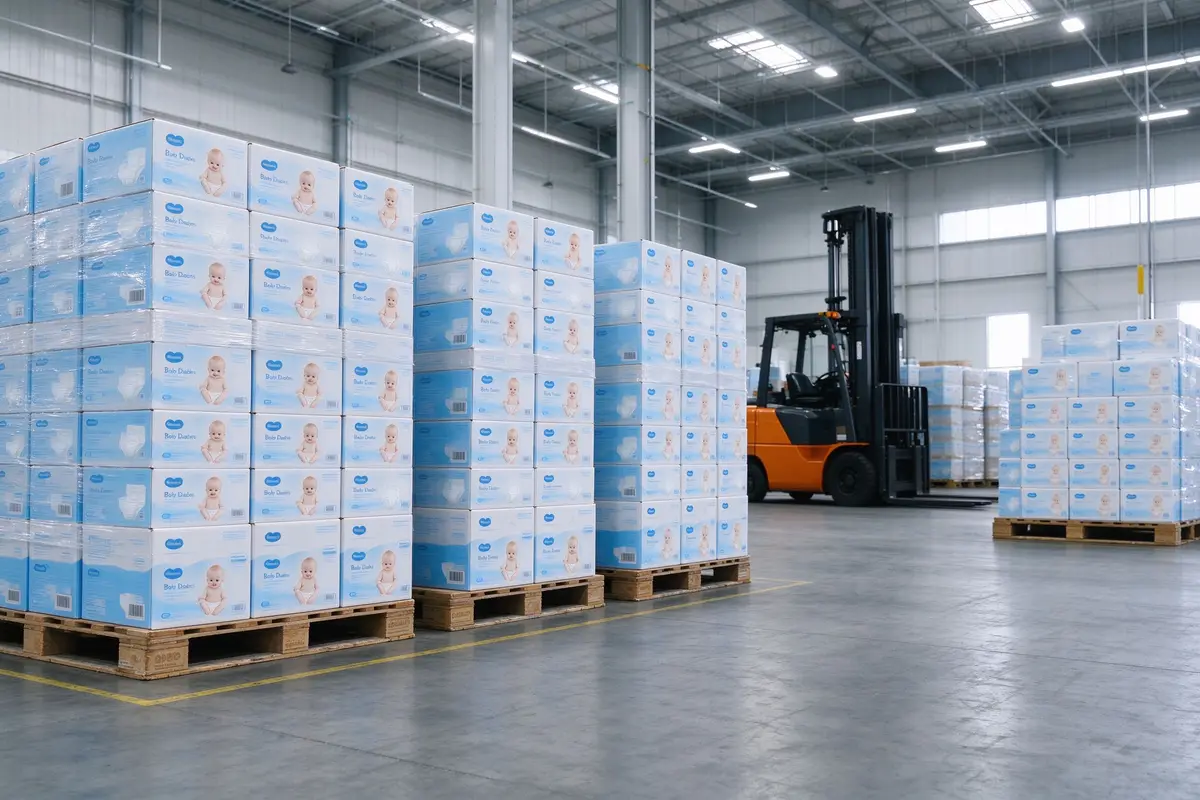
Key takeaway. To become a baby diaper distributor in Southeast Asia you need three things: a registered local entity, import clearance for the product, and a distribution agreement with a brand that will support you after the first shipment. Everything else — how much capital, how long it takes, what the margins are — depends on your market, your channel, and the brand you pick, so we do not publish generic numbers here. Ask a brand for their commercial framework and compare at least three.

Most distributors who struggle in this region do not fail on the product. They fail on the two things nobody warned them about: the registration step nobody owns, and the credit they extend to retailers in the first quarter. This guide walks through what actually determines whether this works for you, and what to ask any brand before you sign.
How Much Capital Do I Need to Start?
We are deliberately not going to put a capital figure here, and that is a considered choice rather than a missing one.
A capital number quoted by a distributor is nearly always copied from somewhere else, and it is wrong for your market within a month. Capital in this category is driven by four things, and you can work out your own figure from these before talking to anyone:
1. Which product lines you take, and how many of them. The single biggest driver. A range of absorbent-core products carries far more working capital than wipes and tissue, because SKUs multiply by size and the slower lines sit in your warehouse. If you are testing a market, starting with the wet-care lines is a genuinely different capital commitment from starting with diapers.
2. How many sizes you stock per line. Every size is a separate SKU with its own reorder point. Carrying fewer sizes with deeper cover in each is usually cheaper than carrying the full size curve shallow.
3. Your import and clearance cycle. You need working capital committed from the moment you pay until the goods clear and are sellable — not just the goods cost. Longer clearance means more cash tied up per container.
4. Your retailer payment terms. In this region, credit is the most common cause of a distributor running out of cash while holding full stock. Decide your credit policy before your first order, not after.
When a brand gives you a figure, check what it includes: goods only, or goods plus freight, duty and clearance? A factory MOQ and a delivered-landed MOQ are different numbers, and the second is the one that actually determines whether you are capital-constrained.
What Are the Steps to Become a Distributor?
The sequence below is broadly the same across the region. The specifics — which registration, which authority, how long — are what you must confirm locally rather than read online.
Step 1 — Register a local business entity. The form depends on the country and on whether you are a company or an individual. Common forms include a local limited company, a private limited company, or a sole proprietorship. This is your single most important first step: without an entity, you cannot open a bank account, import under your own name, or sign a distribution agreement.
Step 2 — Identify and contact brands directly. Contact manufacturers and brand owners rather than trading houses where you can. Regional baby and child-care trade shows are where these relationships are usually built, but direct contact works and is faster.
Step 3 — Negotiate the distribution agreement. This is where territory, minimum order, exclusivity, marketing support and payment terms are agreed. The thing to be careful about here is what your purchase obligations actually are — some agreements impose a non-cancellable annual commitment, which is a very different risk from a per-order minimum. Read that clause before anything else.
Step 4 — Secure warehousing and local logistics. Baby products are bulky relative to their value, so storage cost per container is a real margin factor. Decide whether you hold stock yourself or use a third-party warehouse before you price your first order.
Step 5 — Register the products with the local authority. This is the step that gets skipped and it is the one that stops shipments. The authority differs by country — for example a national food and drug administration in one market, a local health ministry in another. Confirm with your local agent what registration or notification applies to your specific product category, and who owns that filing. This is not something a brand can do for you, and it is not something to discover at the port.
Step 6 — Place the first order and receive the shipment. Ocean freight from East Asia to Southeast Asia is measured in weeks rather than months, but the transit schedule changes. Get the current figure from your forwarder, together with what documentation the destination requires.
Step 7 — Onboard your first retailers. Start with independent baby stores and pharmacies rather than the chains. Chains will ask for terms you are not ready to give in month one, and a small base of independent accounts is what lets you prove the sell-through before the big conversations.
What Margins Can a Diaper Distributor Expect?
We are not going to quote a margin range, and this is the question where you should be most sceptical of anyone who answers it quickly — including us.
Actual margin in this category is not a property of the product. It is the result of four things, and only one of them is the product:
1. The brand's own pricing structure. Whether the brand sells direct to you, through a distributor, or through a multi-layer channel chain decides how much margin exists at your level. A brand with an established channel in your market will not open a new distributor at a margin that undercuts its existing partner — and that is not a negotiation you win by asking harder.
2. Your channel. Modern trade, pharmacy, e-commerce and traditional trade each carry different cost structures. The same bag of the same product earns differently depending on how it reaches the shelf.
3. Landed cost, not ex-works cost. Freight, duty, clearance, warehousing and retail credit are all margin. Two distributors with the same ex-works price can end up with completely different real margins because their landed cost and credit terms differ.
4. Your own overhead. A distributor running a small team and lean overheads does not need a higher gross margin to be profitable than one running a large organisation.
So the only meaningful way to compare offers is to ask each brand for the same four figures: ex-works price, minimum order quantity, payment terms, and who pays for freight. A quote that gives you one without the others is not comparable, however attractive the headline price looks.
One more thing worth knowing: we do not offer OEM, ODM or private-label manufacturing. If you are comparing offers for this category, an OEM quote and a distribution quote are different products and should not be lined up against each other as if they were the same thing.
What Are the Biggest Risks and Pitfalls?
The risks below are not company-specific — they are the ones that catch new distributors in this region across categories.
Risk 1 — Over-ordering on the first shipment. The most common and most expensive mistake. The instinct to "load up and get a better price" fights against the fact that diaper sizes turn over at different speeds in different markets. Order the opening shipment against what you can realistically sell through, and ask the brand for guidance on size mix rather than guessing.
Risk 2 — Ignoring product registration. Unregistered or improperly notified product can be held or refused at the border, and you carry the cost of the delay, the demurrage and the relaunch. Start this early, because it is the step that is never on the critical path until suddenly it is.
Risk 3 — Extending too much credit to retailers. Set a credit limit per account and a maximum credit period before you need them. A full warehouse and a book of late-paying accounts is how a healthy stock position becomes a cash-flow failure.
Risk 4 — Depending on a single channel. If one pharmacy chain or one marketplace is most of your volume, you have a buyer relationship, not a distribution business.
Risk 5 — Brand relationships that end at the first shipment. Check whether the brand supports you with product knowledge, training and material for your sales team, not just supply. A supplier that only answers the order desk will not help you sell to a buyer who is comparing you against three other brands.
Two further practical points before you commit: agree territory and exclusivity in writing before you invest, and make sure you understand whether the agreement is exclusive, non-exclusive, or exclusive by category — those three mean very different things and are easy to misread.
Bottom line. This is a workable distribution category, but it is a working capital and relationship business, not a resale margin. The distributors who succeed treat the brand as a partner who supplies product knowledge, documentation and channel support — and they negotiate the four commercial figures (ex-works price, MOQ, payment terms, freight responsibility) on every brand before choosing. Where you want those figures for a specific market, the Moni Happy partner program works through them market by market rather than publishing a generic number that would not apply to you.
Distributor resources
If you are evaluating suppliers for your market, these are the pages that answer the commercial questions — in the order buyers usually need them.