
2026-09-04 · Moni Happy Editorial Team
Southeast Asia Baby Care Distribution Channels: Complete Market Guide 2026
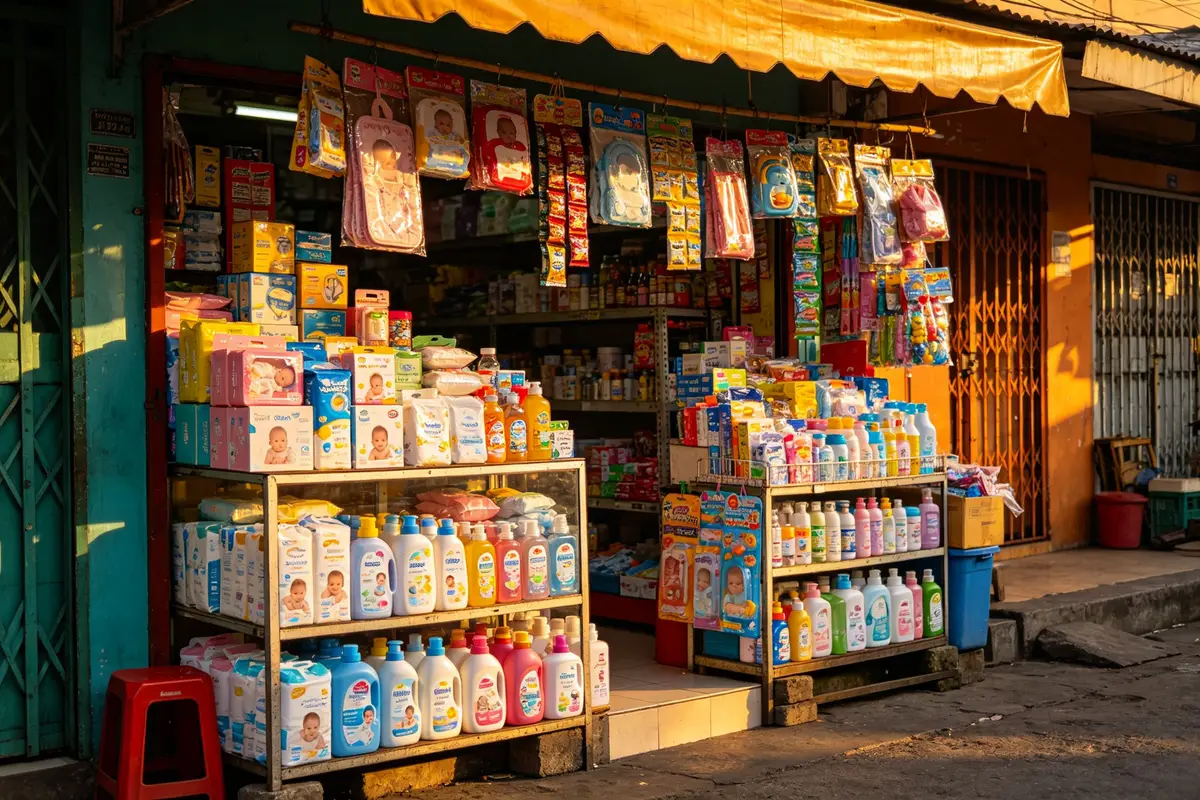
The Southeast Asian baby care market is one of the fastest-growing consumer goods sectors in the Asia-Pacific region, yet its distribution landscape remains uniquely fragmented and structurally different from mature markets in China, Europe, or North America. For brands and investors seeking to understand how to shop baby care products Southeast Asia or how to enter this complex market, a deep analysis of the region's multi-channel distribution ecosystem is essential. This article provides a comprehensive overview of the Southeast Asian baby care distribution landscape, from traditional neighborhood stores to cutting-edge social commerce platforms, and offers strategic insights for premium brand entry.
Market Overview: A Region of Scale and Complexity
Southeast Asia's baby care market—encWe are not going to quote a market size or growth rate for this category: published estimates for this market differ by an order of magnitude depending on the source and on whether the scope is diapers only or all baby care, and we cannot stand behind any of them. What is not in dispute is the direction of travel — demand in this category is growing in the markets we already ship to. If you need a sized market for a specific country, we will help you build the estimate from figures you can verify rather than quote you one.3% from 2024. The region's six largest economies—Indonesia, the Philippines, Vietnam, Thailand, Malaysia, and Singapore—collectively represent over 600 million consumers, with approximately 65 million children under the age of 5.
Several demographic and economic factors underpin this growth: a sustained birth rate in Indonesia (16.6 per 1,000) and the Philippines (18.Public estimates for this market differ widely by source and by scope, so we do not quote a market size or a growth rate here. What we can speak to is the direction, and we would rather help you size one market from figures you can verify than publish a number we cannot source. Additionally, the post-pandemic period has accelerated the adoption of e-commerce and heightened consumer focus on hygiene, safety, and product authenticity.
However, the market's scale is matched by its complexity. Southeast Asia is not a single market but a collection of diverse economies, each with distinct regulatory environments, consumer preferences, income levels, and distribution infrastructures. Singapore represents a mature, high-income market with modern retail and e-commerce penetration rates comparable to Western Europe. Indonesia and the Philippines, by contrast, are vast archipelagos with fragmented logistics, lower per-capita incomes, and distribution ecosystems still dominated by traditional trade. This diversity means that a one-size-fits-all distribution strategy is destined to fail; success requires a nuanced, market-by-market approach.
Southeast Asia's Dominant Distribution Landscape: Traditional Trade Reigns
The defining characteristic of Southeast Asia's baby care distribution landscape is the enduring dominance of traditional trade—the network of small, independent, family-owned stores that serve as the primary retail touchpoint for the majority of consumers. Across the region, traditional trade accounts for approximately 60-75% of fast-moving consumer goods (FMCG) sales, a figure that has remained remarkably stable even as e-commerce has grown. This stands in stark contrast to China, where modern trade and e-commerce now dominate, or to mature Western markets where large retail chains control the majority of distribution.
The traditional trade share varies significantly by country. The Philippines has the highest traditional trade penetration in the region, with small independent stores accounting for an estimated 70-75% of FMCG volume. Indonesia follows closely at 65-70%, driven by its archipelagic geography and the prevalence of warung (small family shops) and kelontong (neighborhood stores). Vietnam and Thailand sit in the middle, with traditional trade representing approximately 55-60% of sales. Malaysia is more modernized at 40-45%, while Singapore is the outlier with traditional trade representing less than 15% of FMCG sales.
This traditional trade dominance has profound implications for baby care brands. It means that reaching the mass market requires navigating complex, multi-layered distribution networks involving national distributors, regional wholesalers, sub-distributors, and ultimately individual store owners. It also means that packaging, pricing, and product assortment must be tailored to the realities of small-store retail: smaller pack sizes, lower price points, simpler merchandising, and packaging that can withstand the often basic storage conditions of neighborhood stores.
Traditional Trade: The Sari-Sari Store Narrative
To understand traditional trade in Southeast Asia, one must understand the sari-sari store—a Filipino term that has become a regional archetype for the neighborhood convenience store. Sari-sari (meaning "variety" in Tagalog) stores are small, often home-based shops that line virtually every residential street in the Philippines, with analogous formats across the region: warung and kelontong in Indonesia, kedai runcit in Malaysia, chai ched in Thailand, and tạp hóa in Vietnam.
These stores are more than retail outlets—they are community institutions. The typical sari-sari store is operated by a family member (often a mother or grandmother) who knows every customer by name, understands their purchasing habits, and often extends informal credit (the "palista" system of running tabs). The store owner wields significant influence over what products are stocked and recommended; for many consumers, the store owner's endorsement carries more weight than advertising or brand reputation. This "last-mile influencer" dynamic is a uniquely Southeast Asian phenomenon that brands ignore at their peril.
For baby care products, sari-sari stores serve a critical function. They are often the only accessible retail option for families in rural areas or dense urban neighborhoods where large supermarkets are distant or inconvenient. They stock essential baby care items—diapers (often sold individually or in small packs), baby wipes, talcum powder, baby soap, and basic medicines—in formats and price points suited to daily or weekly purchasing rather than bulk stock-up trips. In the Philippines alone, there are an estimated 1.1 million sari-sari stores, collectively accounting for approximately 35% of total FMCG retail sales.
The traditional trade ecosystem operates through a layered distribution structure. National distributors (often called "principal distributors") purchase directly from manufacturers and distribute to regional wholesalers, who in turn supply sub-distributors or "consolidators," who then deliver to individual stores. This multi-tiered structure means that products can pass through 3-5 intermediaries before reaching the end consumer, with each layer adding margin. For premium baby care brands, this presents both a challenge (price escalation and margin compression) and an opportunity (building relationships with key distributors who control access to vast store networks). Successful brands invest in distributor training, merchandising support, and incentive programs to ensure their products are stocked, displayed, and recommended at the point of sale.
Pharmacies and Modern Retail: The Trusted and the Organized
Beyond traditional trade, two organized retail channels play increasingly important roles in the Southeast Asian baby care market: pharmacies and modern retail (supermarkets, hypermarkets, and specialty baby stores).
Pharmacies occupy a unique and trusted position in the baby care ecosystem. Chains such as Mercury Drug and Watsons in the Philippines, Guardian and Watsons across Malaysia, Singapore, Indonesia, and Thailand, Boots in Thailand, and Guardian and Watsons in Vietnam serve as destinations for "trust-based" baby care purchases. Parents who are uncertain about which baby skincare, feeding, or health product to choose often rely on pharmacists' recommendations, viewing pharmacies as authoritative sources of information rather than mere retail outlets. This trust premium makes pharmacies an ideal channel for premium, dermatologically tested, or medicated baby care products.
The pharmacy channel is evolving rapidly. Leading chains are expanding their baby care assortments beyond traditional medicines and basic toiletries to include premium skincare, feeding accessories, and even organic and natural baby products. Watsons, for example, has aggressively expanded its "Baby Care" sections across Southeast Asia, dedicating increased shelf space to premium and niche brands. Mercury Drug in the Philippines, with over 1,000 stores nationwide, remains the single most influential pharmacy channel for baby care products, and securing distribution there is often a prerequisite for national brand awareness. Pharmacies also benefit from a structural advantage: they are open late (many operate 24/7), are located in high-traffic areas, and carry an implicit health endorsement that mass retailers cannot match.
Modern retail—encompassing supermarkets (FairPrice in Singapore, Giant and Cold Storage in Malaysia, Lotus's and Big C in Thailand, Indomaret and Alfamart in Indonesia), hypermarkets (SM Supermarkets and Robinsons in the Philippines, AEON across the region), and specialty baby stores (Mothercare, Pupsik Studio, Baby Company)—represents the most organized and brand-friendly channel. Modern retail offers consistent pricing, centralized distribution, professional merchandising, and the ability to execute promotional campaigns and product launches at scale. For premium baby care brands, modern retail is often the entry point into a new market, providing a controlled environment to build brand awareness and demonstrate product quality before expanding into traditional trade.
Specialty baby stores occupy a valuable niche, particularly for higher-priced and imported products. Mothercare, with stores across Singapore, Malaysia, Thailand, and Indonesia, offers a curated selection of international baby care brands and provides a "destination shopping" experience for expectant and new parents. Local specialty chains like Pupsik Studio in Singapore and Baby Company in the Philippines cater to discerning parents seeking premium and imported products. These stores often provide expert advice, product demonstrations, and loyalty programs that foster strong customer relationships—making them ideal partners for premium brands seeking to build long-term consumer loyalty.
E-Commerce and Social Commerce: The COD-Driven Revolution
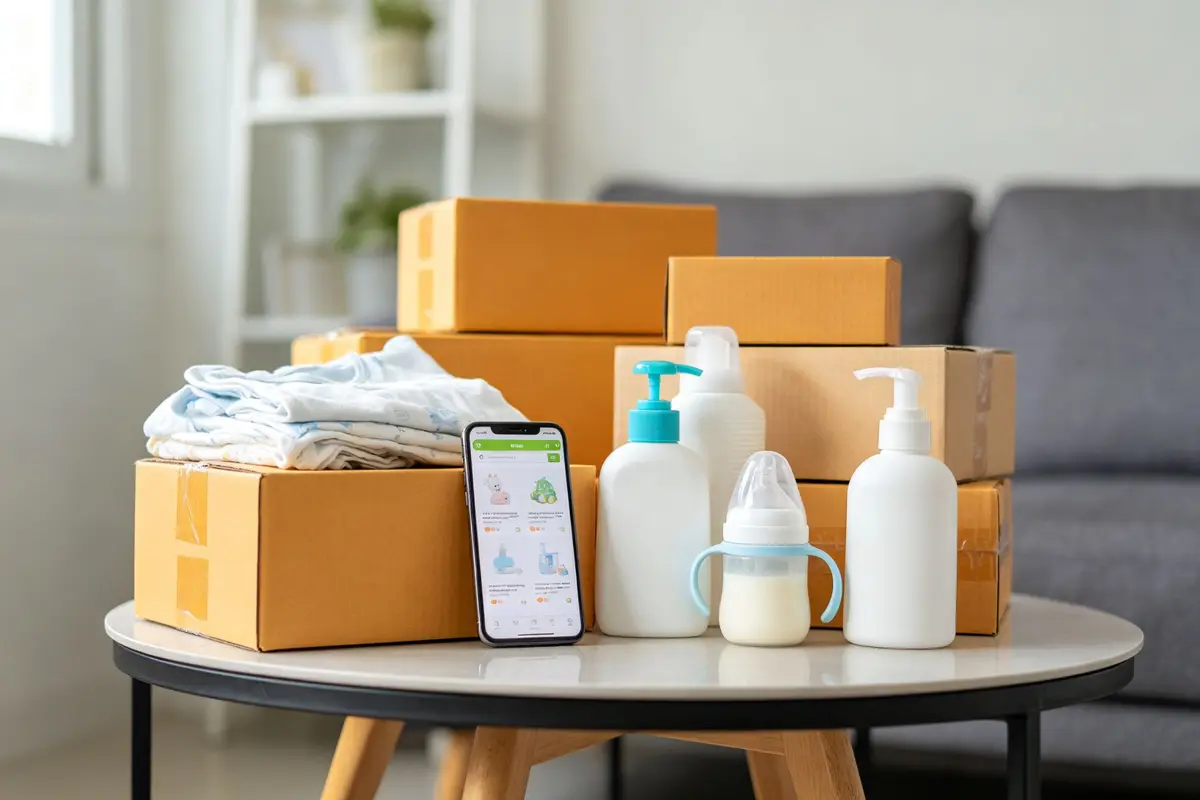
No analysis of Southeast Asian baby care distribution would be complete without examining the explosive growth of e-commerce and, more recently, social commerce. The region's e-commerce market has grown from approximately $32 billion in 2019 to over $100 billion in 2024, with baby care products consistently ranking among the top-performing categories. Platforms including Shopee, Lazada, Tokopedia (Indonesia), and TikTok Shop now serve as primary shopping destinations for millions of parents, offering convenience, competitive pricing, and an ever-expanding product selection.
The defining feature of Southeast Asian e-commerce is the prevalence of Cash on Delivery (COD) as a payment method. Across the region, COD accounts for approximately 30-60% of e-commerce transactions, with the highest rates in Indonesia (50-60%) and the Philippines (45-55%) and the lowest in Singapore (less than 10%). COD's dominance reflects structural realities: low credit card penetration (less than 5% of adults in Indonesia and the Philippines), limited trust in online payment security, and a cultural preference for physical cash transactions. For baby care brands, COD is both an opportunity (it lowers the barrier to online purchasing for first-time e-commerce users) and a challenge (it carries higher return rates—often 15-25%—and requires robust logistics and cash-handling infrastructure).
Social commerce represents the next frontier of Southeast Asian baby care retail.Public estimates for this market differ widely by source and by scope, so we do not quote a market size or a growth rate here. What we can speak to is the direction, and we would rather help you size one market from figures you can verify than publish a number we cannot source. The platform's unique model—combining short-form video content, live streaming, and in-app checkout—has proven particularly effective for baby care products, where demonstrations, testimonials, and expert advice drive purchase decisions. Live commerce sessions featuring pediatricians, dermatologists, or experienced mothers discussing baby skincare, feeding, or health topics regularly generate six-figure sales in a single broadcast. Facebook and Instagram also remain significant social commerce channels, particularly through community groups (Facebook "Mom Groups" are among the most active and influential online communities in the region) and Instagram Shopping.
For brands, the e-commerce and social commerce landscape requires a distinct set of capabilities: platform-specific store operations, search and category optimization, sponsored advertising management, live stream production, KOL/KOC (Key Opinion Leader/Key Opinion Consumer) partnerships, review and rating management, and COD-optimized logistics. The most successful baby care brands in Southeast Asia treat e-commerce not as a secondary sales channel but as a core component of their go-to-market strategy, investing in dedicated teams and infrastructure to capture the region's rapidly growing digital consumer base.
Premium Brand Entry Strategy: Navigating the Multi-Channel Maze
For premium baby care brands seeking to enter or expand in Southeast Asia, the fragmented distribution landscape presents both significant challenges and substantial opportunities. A successful entry strategy must account for the region's channel diversity, consumer trust dynamics, and structural realities. Based on analysis of successful premium brand entries across the region, the following strategic framework emerges:
1. Channel prioritization by market maturity. Premium brands should not attempt to launch simultaneously across all channels and markets. Instead, adopt a phased approach: begin in Singapore and/or urban Malaysia (where modern retail and e-commerce infrastructure are mature, consumer purchasing power is high, and brand-building is more efficient), then expand to urban centers in Thailand, the Philippines, and Indonesia, and finally penetrate traditional trade networks as brand awareness and scale allow.
2. Lead with pharmacy and e-commerce for trust building. Premium baby care products—especially skincare, health, and feeding categories—benefit enormously from the trust endorsement of pharmacies and the educational capabilities of e-commerce content. Launching through Guardian, Watsons, or Mercury Drug provides immediate credibility and access to consumers who actively seek expert advice. Simultaneously, establishing flagship stores on Shopee and Lazada, combined with a TikTok Shop content strategy, allows brands to tell their product story, showcase certifications (Dermatest, hypoallergenic, organic), and build consumer communities at scale.
3. Price architecture and pack size localization. Premium positioning does not mean premium pricing at all touchpoints. In Southeast Asia, successful premium brands offer a tiered price architecture: full-size premium products for pharmacy and modern retail, and smaller, more affordable "trial packs" or sachets for traditional trade and e-commerce COD orders. This approach allows brands to maintain premium positioning while making products accessible to price-sensitive consumers who may be trying the brand for the first time. Packaging must also be localized: bilingual labeling (English + local language), tropical-climate-appropriate formulations (lighter, more breathable textures for high humidity), and compliance with each country's regulatory requirements (Indonesia's BPOM, Thailand's FDA, the Philippines' FDA, Vietnam's DAV).
4. Build distributor partnerships for traditional trade penetration. When the brand is ready to enter traditional trade, selecting the right national distributor is critical. The best distributors bring not just logistics and store coverage, but also merchandising teams, retailer relationships, and market intelligence. Brands should invest in distributor training programs, point-of-sale materials, and sales incentives to ensure their products are properly displayed and recommended at the sari-sari/warung level. For brands seeking distribution partnerships in Southeast Asia, platforms like Moni Happy offer established distributor networks and market entry support across the region's key markets.
5. Content and influencer strategy for social commerce. Premium brands must invest in a robust content and influencer strategy tailored to Southeast Asian platforms. This includes partnering with pediatricians and dermatologists for expert-endorsed content, engaging micro-influencers (10K-100K followers) who have high engagement rates within local mom communities, and producing live commerce content that educates as well as sells. Brands that offer premium baby care products with clear differentiation (organic ingredients, dermatological certifications, innovative packaging) are best positioned to succeed in the content-driven social commerce environment, where product story and consumer trust drive conversion.
Future Outlook: Convergence, Digitalization, and Premiumization
Looking ahead to 2028-2030, three major trends will reshape the Southeast Asian baby care distribution landscape:
1. Traditional trade digitalization. The region's millions of sari-sari stores, warung, and kelontong are beginning to digitize. Platforms such as GrowSari (Philippines), Gudang Ada (Indonesia), and Telio (Vietnam) are enabling small stores to order inventory digitally, access credit, and manage their businesses through mobile apps. This digitalization will gradually streamline the multi-layered distribution chain, improve inventory visibility, and create new opportunities for brands to reach traditional trade stores more efficiently. While traditional trade will remain dominant for the foreseeable future, its operations will become increasingly data-driven and connected.
2. Social commerce's continued disruption. TikTok Shop's rapid growth is just the beginning. As social media platforms (TikTok, Instagram, Facebook, YouTube) deepen their commerce capabilities, and as live streaming becomes the default shopping format for many categories, the boundary between content and commerce will continue to blur. Baby care brands that build strong content ecosystems, influencer networks, and live commerce capabilities will capture disproportionate market share. The rise of AI-powered personalization and shoppable video will further accelerate this trend, creating new formats for product discovery and purchase.
3. Premium and organic segment outperformance. The premium and organic baby care segments will continue to grow at rates significantly above the market average. Rising middle-class incomes, increasing parental health consciousness, growing awareness of chemical exposure risks, and the influence of social media content driving aspiration will fuel demand for premium, natural, and certified baby care products. This premiumization trend will benefit brands that can authentically communicate quality, safety, and efficacy through trusted channels (pharmacies, expert endorsements, transparent e-commerce content) and that invest in the certifications and clinical backing that discerning Southeast Asian parents increasingly demand.
In conclusion, the Southeast Asian baby care distribution landscape is a complex, multi-channel ecosystem in which traditional trade, pharmacies, modern retail, e-commerce, and social commerce each play essential and complementary roles. For premium brands, success requires not choosing one channel over another, but developing a nuanced, phased, market-specific strategy that leverages the unique strengths of each channel while building the trust, accessibility, and brand equity that drive long-term growth in one of the world's most dynamic consumer markets.
Article Summary
The Southeast Asian baby care market ($18.Public estimates for this market differ widely by source and by scope, so we do not quote a market size or a growth rate here. What we can speak to is the direction, and we would rather help you size one market from figures you can verify than publish a number we cannot source. Traditional neighborhood stores (sari-sari in the Philippines, warung/kelontong in Indonesia, kedai runcit in Malaysia) serve as community institutions with store owners acting as trusted "last-mile influencers," operating through multi-layered distributor networks. Pharmacies (Mercury Drug, Watsons, Guardian) occupy a trust-premium position ideal for premium products, while modern retail (supermarkets, hypermarkets, specialty stores like Mothercare) offers organized, brand-friendly distribution. E-commerce (Shopee, Lazada, Tokopedia) and social commerce (TikTok Shop) are growing rapidly, defined by high COD prevalence (30-60% of transactions) and content-driven live commerce. Premium brand entry requires phased market prioritization (Singapore/Malaysia first), pharmacy + e-commerce lead for trust building, localized pricing and pack sizes, strategic distributor partnerships for traditional trade, and robust content/influencer strategies. Future trends include traditional trade digitalization, social commerce disruption, and premium/organic segment outperformance. For brands seeking distribution, Moni Happy offers partnership opportunities and premium baby care products across Southeast Asia.
Frequently Asked Questions
What are the main distribution channels for baby care products in Southeast Asia?
Southeast Asia's baby care distribution landscape comprises five primary channels, each with distinct characteristics and market roles: (1) Traditional trade — the dominant channel, accounting for 60-75% of FMCG sales across the region. It includes small neighborhood stores (sari-sari in the Philippines, warung/kelontong in Indonesia, kedai runcit in Malaysia, chai ched in Thailand, tạp hóa in Vietnam) that serve as community institutions with trusted store owners who influence purchasing decisions. (2) Pharmacies — including Mercury Drug and Watsons in the Philippines, Guardian and Watsons across Malaysia/Singapore/Indonesia/Thailand, and Boots in Thailand. Pharmacies occupy a trust-premium position, with pharmacists' recommendations carrying significant weight for baby care purchases. (3) Modern retail — supermarkets (FairPrice, Giant, Lotus's, Indomaret/Alfamart), hypermarkets (SM Supermarkets, AEON), and specialty baby stores (Mothercare, Pupsik Studio, Baby Company) offering organized distribution and brand-friendly environments. (4) E-commerce — Shopee, Lazada, and Tokopedia serving as primary online shopping destinations with growing baby care category sales. (5) Social commerce — TikTok Shop (the fastest-growing channel), Facebook/Instagram shopping, and live commerce platforms combining content with in-app checkout. The relative importance of each channel varies by country: the Philippines and Indonesia are traditional-trade-heavy, Singapore is dominated by modern retail and e-commerce, while Thailand, Vietnam, and Malaysia fall in between.
Why is Cash on Delivery (COD) so prevalent in Southeast Asian e-commerce and how does it affect baby care brands?
Cash on Delivery (COD) accounts for approximately 30-60% of e-commerce transactions across Southeast Asia, with the highest rates in Indonesia (50-60%) and the Philippines (45-55%), and the lowest in Singapore (under 10%). COD's dominance reflects several structural factors: low credit card penetration (less than 5% of adults in Indonesia and the Philippines), limited consumer trust in online payment security, a cultural preference for physical cash transactions, and the fact that many first-time e-commerce users are more comfortable paying upon receipt rather than prepaying online. For baby care brands, COD presents both opportunities and challenges. On the opportunity side, COD significantly lowers the barrier to online purchasing, enabling brands to reach consumers who do not have credit cards or bank accounts and who would otherwise not shop online. This is particularly valuable for baby care products, which have high repeat purchase potential—once a consumer tries a product via COD and is satisfied, they may continue purchasing and potentially transition to digital payment methods. On the challenge side, COD carries significantly higher return rates (typically 15-25%, compared to 5-10% for prepaid orders), as consumers have less commitment to the purchase when they haven't paid upfront. COD also requires robust logistics infrastructure for cash collection, reconciliation, and handling, which adds operational complexity and cost. Brands selling via COD must carefully manage their logistics partnerships, set clear return policies, and potentially price products slightly higher to account for return-related costs. Successful brands use COD as a customer acquisition tool, then invest in post-purchase engagement (SMS, WhatsApp, loyalty programs) to convert COD customers into prepaid, repeat buyers over time.
What is the best market entry strategy for premium baby care brands entering Southeast Asia?
The optimal market entry strategy for premium baby care brands in Southeast Asia is a phased, channel-specific approach tailored to each market's maturity and distribution landscape. Based on analysis of successful premium brand entries, the recommended framework includes five key elements: (1) Phased market prioritization — Begin with Singapore and/or urban Malaysia, where modern retail and e-commerce infrastructure are mature, consumer purchasing power is high, and brand-building is more efficient. Use these markets as a launchpad to build brand equity, refine product-market fit, and generate case studies before expanding to larger but more complex markets like the Philippines, Indonesia, Vietnam, and Thailand. (2) Pharmacy + e-commerce lead — Launch through pharmacy chains (Guardian, Watsons, Mercury Drug) to leverage the trust premium associated with pharmacist recommendations, which is especially valuable for premium skincare, health, and feeding products. Simultaneously establish flagship stores on Shopee and Lazada, combined with a TikTok Shop content strategy, to tell the brand story, showcase certifications (Dermatest, hypoallergenic, organic), and build consumer communities at scale. (3) Localized pricing and packaging — Offer tiered price architecture: full-size premium products for pharmacy and modern retail, and smaller, affordable trial packs or sachets for traditional trade and COD e-commerce orders. Localize packaging with bilingual labeling (English + local language), tropical-climate-appropriate formulations, and compliance with each country's regulatory requirements (Indonesia's BPOM, Thailand's FDA, Philippines' FDA, Vietnam's DAV). (4) Strategic distributor partnerships — When ready for traditional trade, select national distributors with strong store networks, merchandising capabilities, and retailer relationships. Invest in distributor training, point-of-sale materials, and sales incentives to ensure proper display and recommendation at the neighborhood store level. (5) Content and influencer strategy — Invest in pediatrician/dermatologist expert endorsements, micro-influencer partnerships within local mom communities, and live commerce content that educates as well as sells. The most successful premium brands treat content as a core growth driver, not a marketing afterthought. Throughout the entry process, brands should prioritize building consumer trust through transparency, certifications, and authentic engagement—this is the foundation for long-term success in Southeast Asia's relationship-driven consumer market.
How important are traditional neighborhood stores (sari-sari/warung) for baby care brands and how do brands reach them?
Traditional neighborhood stores are critically important for baby care brands in Southeast Asia, particularly for mass-market reach. These stores—known as sari-sari in the Philippines, warung and kelontong in Indonesia, kedai runcit in Malaysia, chai ched in Thailand, and tạp hóa in Vietnam—collectively account for 60-75% of FMCG sales across the region. In the Philippines alone, there are approximately 1.1 million sari-sari stores, contributing about 35% of total FMCG retail sales. Their importance stems from several factors: they are often the only accessible retail option in rural areas and dense urban neighborhoods; they serve as community institutions where store owners know customers by name and often extend informal credit; and the store owner's recommendation carries significant influence over purchasing decisions, functioning as a 'last-mile influencer' that advertising cannot easily replicate. For baby care products, these stores stock essential items like diapers (often sold individually), baby wipes, powder, soap, and basic medicines in small, affordable pack sizes suited to daily or weekly purchasing. Reaching these stores requires navigating a multi-layered distribution network: national distributors purchase from manufacturers and supply regional wholesalers, who distribute to sub-distributors or consolidators, who deliver to individual stores. Products can pass through 3-5 intermediaries before reaching consumers. Brands that succeed in traditional trade invest in: (1) selecting strong national distributors with established store networks and merchandising teams; (2) distributor training programs to ensure proper product knowledge and representation; (3) point-of-sale materials (shelf talkers, posters, display racks) tailored to small-store environments; (4) sales incentives and volume rebates for distributors and store owners; (5) smaller pack sizes and lower price points appropriate for the channel; and (6) regular field visits and merchandising audits to ensure products are stocked and displayed correctly. For premium baby care brands, traditional trade is typically a later-stage channel (entered after building brand awareness through pharmacy and e-commerce), but it is essential for achieving national scale and reaching the mass market. Emerging digital platforms like GrowSari (Philippines) and Gudang Ada (Indonesia) are beginning to streamline traditional trade ordering, potentially making it easier for brands to reach these stores more efficiently in the future.
Distributor resources
If you are evaluating suppliers for your market, these are the pages that answer the commercial questions — in the order buyers usually need them.