
2026-11-11 · Moni Happy
What Thai label details block a diaper wholesale shipment at the border?
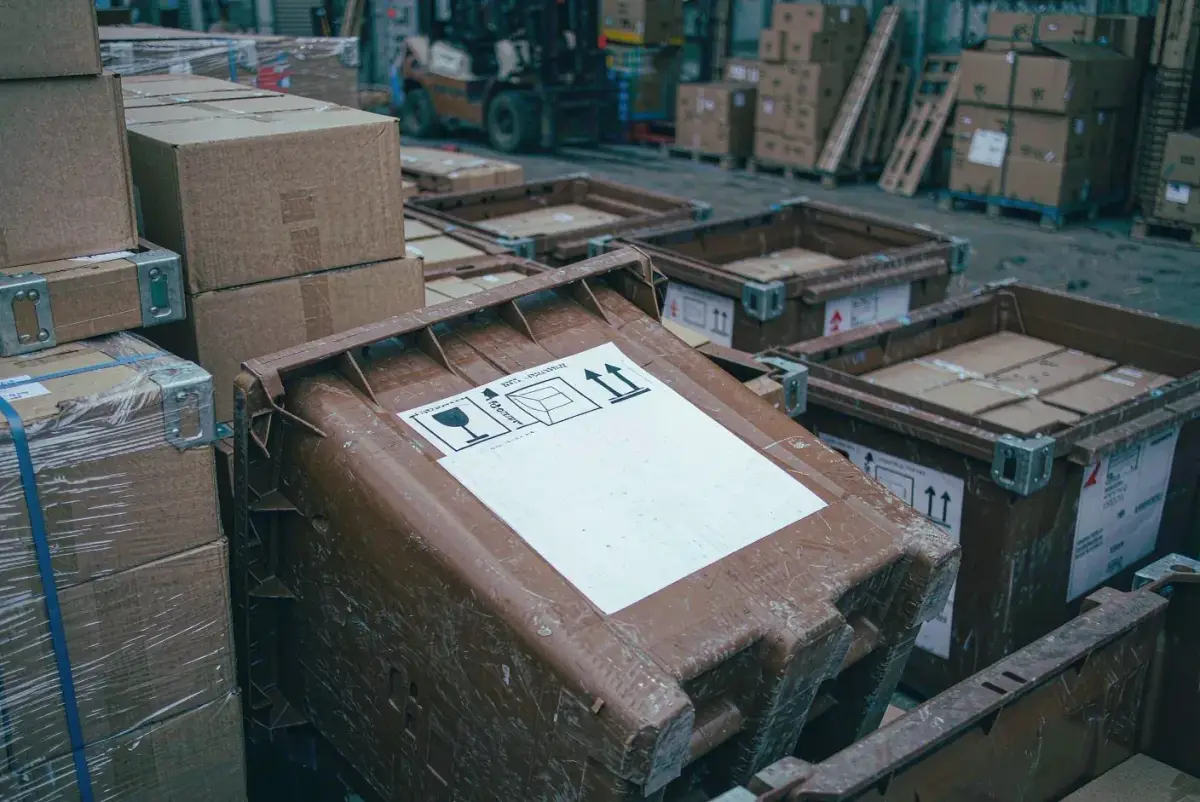
More diaper wholesale containers are delayed in Thailand by label detail than by duty. The label has to be in Thai, name the importer of record exactly as registered, carry the net quantity, country of origin and the production and expiry dates, and sit on the panel the inspection expects. Get one of those wrong and the container is released into a warehouse that cannot sell it, which is a worse outcome than a hold at the port.
The reason this catches first-time importers is timing. Duty is decided on the day the goods arrive, by a code that your broker confirms. The label is decided months earlier, by whoever approved the artwork, and it is usually approved by someone looking at a design file rather than at a regulation. By the time the cartons are printed, the cost of being wrong is a full print run.
Which label items does the inspection check first?
The Thai-language product description, the net quantity, and the name and address of the importer - in that order, because those three are the fastest to verify against the file.
Thai consumer protection rules require prepackaged goods to carry a label in Thai with the essential particulars, and the practical reading list for a diaper carton or pack looks like this:
- Product name and type in Thai, matching the description on the invoice rather than a marketing name.
- Net quantity in the units the market uses, stated clearly enough to be read at arm's length.
- Importer name and address - the registered entity, not a brand owner or a regional office.
- Country of origin, consistent with the origin claimed on the preferential certificate.
- Production and expiry dates, in the format the market expects, and legible after shrink wrapping.
- Warnings or usage notes where the product needs them, in Thai and at a size that survives printing on a soft pack.
Two of these are commonly wrong on a first shipment: the importer name, because the brand owner assumes their own name belongs there, and the dates, because the plant prints the format it uses for other destinations.
Who is the importer of record, and why does it decide the label?
The entity registered to clear the goods, and the label has to carry that entity's name because the product will be sold under their responsibility.
There are three arrangements in practice, and each has a different label. The distributor imports in its own name, which is the cleanest: the label carries the distributor, the duty is claimed by the distributor and the VAT credit belongs to the distributor. The supplier sells on delivered-duty terms through a local agent, in which case the agent is the importer and the label carries the agent - and the distributor has no VAT credit to claim. Or the goods are cleared under a forwarder's licence, which is common on a first shipment and is the arrangement most likely to produce a label that names nobody in particular.
The decision has to be made before the artwork is signed off, because changing the importer later means reprinting. It also has consequences beyond the label: the import VAT credit, the ability to claim preferential duty, and the ability to register the product where registration is required all sit with the importer of record, not with the brand. That same entity is the one that files the ACFTA Form E.
Should the Thai panel be printed at the plant or applied later?
Printed at the plant, once, after the wording has been checked by someone who reads Thai and knows the regulation.
The economics are one-sided. Printing the Thai panel into the artwork costs a plate change and a proof cycle. Applying labels after arrival costs labour per carton, a second handling step, a real risk of labels on the wrong panel or over the seam, and a delay between release and first sale. On a container of roughly 48,000 pieces the labour alone is a meaningful number, and it is spent to save a much smaller artwork cost.
There is a middle route worth knowing about for a first trial order: ship with a blank or generic outer carton, and apply the Thai label in a licensed warehouse before the goods move to trade. It works, it is legal if the goods are labelled before sale, and it is a reasonable way to test a market without committing to a print run. It is not a way to run a business, because the cost per carton never falls.
Does a diaper need Thai FDA registration before it can be imported?
That depends on classification, and classification is the first question to settle - not the last.
Absorbent hygiene products sit in different regulatory buckets in different ASEAN markets, and the label requirements follow the bucket. Some are treated as controlled items with a notification or registration step; others are treated as general consumer goods where the label and the general product safety rules do the work. The classification depends on the product's stated use and on how the regulator has treated comparable products, which is why it is worth a written question to the Thai FDA and to your importer rather than an assumption drawn from another market.
Two practical consequences follow. First, ask the question before the artwork, because the answer can change the label content. Second, ask it in writing and keep the reply in the shipment file, because a broker's verbal opinion is not something you can show an inspector two years later. If the answer is that a notification is required, the timeline becomes a planning input rather than a surprise.
What else travels with the container?
The document set that proves the goods are what the label says, and the certificate that decides the duty rate.
- Commercial invoice and packing list, with descriptions that match the label and the carton markings.
- Bill of lading, with the consignee matching the importer of record.
- ACFTA Form E - the certificate of origin under the ASEAN-China framework that supports a preferential rate for Chinese-origin goods. A claim without the ACFTA Form E is a claim abandoned.
- Test reports or a certificate of analysis, which the importer may need for its own file and which a tender or a pharmacy chain will ask for later.
- Insurance and the freight documents, because the customs value is normally built on the CIF value rather than on the goods alone.
Import VAT is charged at clearance on that value, at the standard rate, and it is recoverable by a VAT-registered importer through the return rather than at the border. That makes it a cash timing item, not a cost - but only if the importer of record is the entity that can claim it, which brings the question back to the label.
Why do first shipments fail on label detail rather than on price?
Because the label is approved by people who are not looking at the regulation, at a point when nobody has yet asked who the importer is.
A first order moves through a sequence: specification, artwork, print, production, shipment, clearance. The regulatory question belongs at the start of that sequence, but it usually arrives at the end, when a broker asks for the Thai label and someone opens a design file for the first time. By then the honest options are reprint, relabel or sell nothing, and all three are expensive.
The fix is procedural and cheap: one page in the order file that names the importer of record, states the classification position, lists the Thai label items and records who approved the Thai wording. A diaper wholesale programme that has that page runs its second container without thinking about labels at all.
If you are preparing a first shipment into Thailand and want the label and the document set checked against the market before the print run, our partner team can walk through it with you: Thailand partner programme or request the import checklist.
Frequently asked questions
Can the Thai label be a sticker over the English one?
Yes, provided the sticker is durable, does not obscure required information and is applied before the goods are offered for sale. What it cannot do is cover the batch or expiry information, or peel off in a humid warehouse, so specify the adhesive and test it on the actual pack surface.
Does the carton need a Thai label as well as the pack?
The pack is what the consumer sees and what the rules target. The carton still needs markings that match the invoice and the packing list, and many importers add the Thai importer details on the carton as well so that the goods can be traced at any point in the chain.
What if the expiry date format differs between the plant and the market?
Print the format the market reads, and state the convention on the artwork so the plant does not default to its own. A date that is ambiguous between day and month is a labelling defect even when the underlying date is correct.
Can a shipment be split across two importers to spread the duty?
It can be, but each consignment then needs its own documents and its own compliant label naming the correct importer. Splitting a container to use two licences usually costs more in relabelling and paperwork than it saves, and it complicates any later product registration.
Sources and further reading
- Thai Food and Drug Administration, Ministry of Public Health - product classification and notification guidance for imported goods. en.fda.moph.go.th
- The Customs Department of Thailand - import procedures, valuation and the documents required at clearance. en.customs.go.th
- ASEAN Tariff Finder - preferential rates and the certificate of origin required under the ASEAN-China framework. tariff-finder.asean.org
Bottom line: duty is a code, but the label is a decision, and it is made months before the vessel sails. Settle who the importer of record is, confirm the classification in writing, print the Thai panel at the plant with a native reader's sign-off, and keep the origin certificate with the file. That is the whole difference between a container that clears and one that clears into a warehouse it cannot leave - and a partner programme that plans for it is cheaper than a reprint.
Frequently Asked Questions
Can the Thai label be applied after the container arrives?
Legally the goods must carry a compliant label when they are offered for sale, but the practical question is where the relabelling happens and who pays. Sticking labels at the port or in a warehouse adds labour, risks scuffed packs and delays release, and it is far cheaper to print the Thai panel at the plant once the wording is agreed.
Does every diaper product need Thai FDA approval before import?
That depends on how the product is classified, and classification is the question to settle first rather than to assume. Some absorbent hygiene products are treated as controlled items and others as general consumer goods, so confirm the position for your specific product with the Thai FDA and your importer before the artwork is printed.
What happens if the label names a different importer than the one clearing the goods?
The shipment can be released and then blocked at the point of sale, which is worse, because the goods are already in the country and the relabelling cost is now yours. The name on the label has to match the entity registered as the importer, so agree who that is before the first print run.
Is the label the same for every pack size in a range?
The wording can be, but the net quantity and, on many ranges, the size band cannot. Each pack size needs its own label panel with the correct net quantity, and a range that shares one artwork across five sizes will have four of them wrong.
Distributor resources
If you are evaluating suppliers for your market, these are the pages that answer the commercial questions — in the order buyers usually need them.
