
2026-11-06 · Moni Happy
Which wet wipes substrate should a wipes wholesale buyer lock in for humid markets?
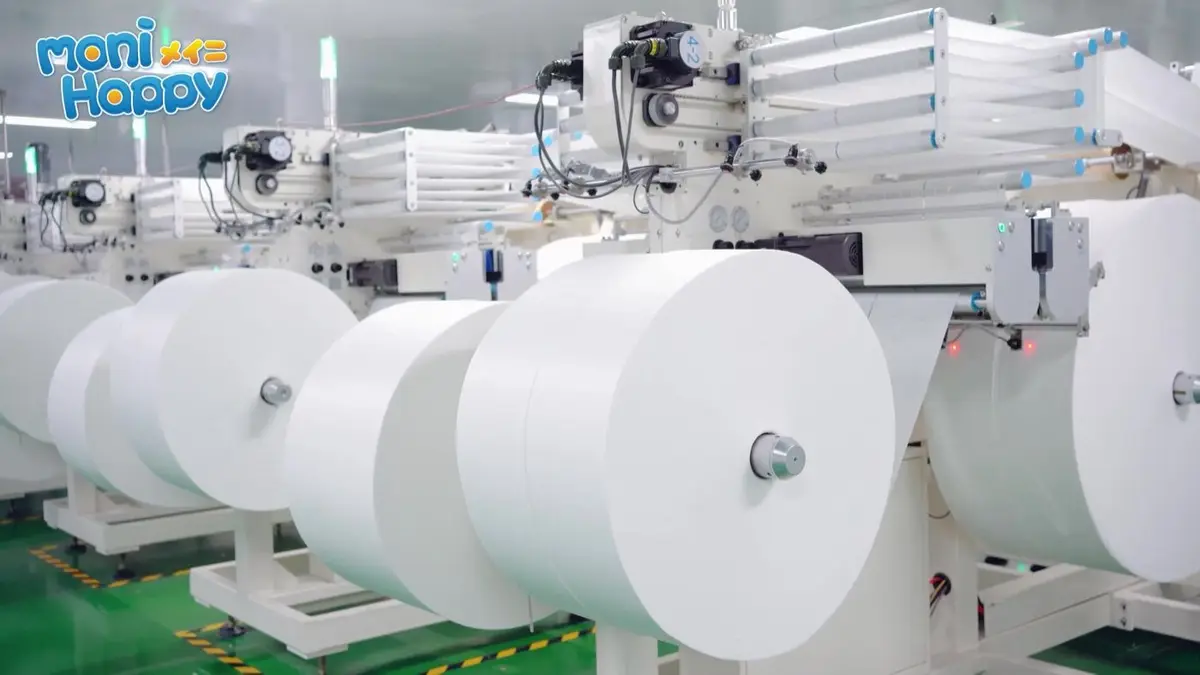
For humid Southeast Asian markets, lock in a 45-55 gsm spunlace with a viscose-rich blend and a film pack with a working resealable lid. That combination survives a warm warehouse, a tropical shelf and a parent opening the pack one-handed. Airlaid and high-polyester blends feel substantial in a sample and disappoint in month three.
Substrate is the least negotiated and most consequential line in a wipes wholesale specification. Buyers spend their attention on the water claim, the preservative question and the print on the pack, then accept whatever nonwoven the supplier lists. Most of the complaints that follow trace back to that one unexamined line.
Which wet wipes substrate should a wipes wholesale buyer lock in?
Spunlace, at 45-55 gsm, with a viscose share high enough to keep the sheet soft when saturated. For a 99% water formulation this is the only substrate that reliably combines wet strength, low lint and a clean release from the fold. In a wipes wholesale range it is also the safest single choice, because one web can serve baby, hand and surface packs without a second approval cycle.
The alternatives each solve a different problem. Airlaid gives loft and absorbency and suits dry or lightly wetted formats. Carded and thermal-bonded webs are cheaper per square metre and suit household cleaning. Neither behaves well in a baby pack that a parent pulls a single sheet from two hundred times.
What does GSM actually change in a wet wipe?
Three things a buyer can feel through the pack: thickness, wet strength and weight.
- Thickness: the sheet reads as premium or thin before it is even opened.
- Wet strength: low-GSM sheets tear at the perforation when pulled from a soft pack.
- Weight and freight: a 60 gsm sheet carries roughly half again the fibre of a 40 gsm sheet, and the container pays for it.
A 50 gsm sheet is the usual compromise: enough body to feel like a baby product, light enough that a 20GP still carries a sensible number of packs. Moving from 50 to 60 gsm is easy to approve in a meeting and hard to recover at the shelf, because the retail price rarely moves with it.
Why does the fibre blend matter more in humid markets?
Viscose absorbs and releases moisture readily, which is what makes a wipe feel wet and soft. Polyester adds strength and keeps the web from collapsing, but it does not hold water the same way and it raises the lint risk when the blend swings too far toward synthetic.
A common baby-wipe blend sits near half viscose and half polyester. The exact ratio should be written into the purchase order, not left to the supplier's standard sheet, because a silent shift toward polyester is one of the cheapest ways for a production line to protect its margin and one of the fastest ways for a distributor to receive a different product than the one that was approved.
Where a market asks for a biodegradable or plant-based story, 100% viscose is available and should be quoted as a separate line with its own price and its own strength data. Do not assume the standard blend can be described as biodegradable.
How much does the substrate add to landed cost?
Substrate and pack film are usually the two largest cost lines in a 99% water wipe, ahead of the liquid itself. A change of 5 gsm across a full container moves landed cost by a few cents per pack, which sounds trivial until it meets a 15-25% gross margin.
That is why the specification conversation and the price conversation have to happen together on any wipes wholesale order. A supplier quoting a lower piece price on a thinner sheet has not offered a better deal; it has offered a different product. Compare quotations on gsm, blend, sheet size and pack count before comparing the price at the bottom of the page.
Which substrate faults appear after three months in a warm warehouse?
Not the ones buyers test for at approval.
- Lint: a synthetic-heavy web sheds fibre onto the sheet surface, visible as a white haze on a dark changing mat.
- Seal creep: moisture migrates to the pack seal and softens the film edge, so the lid stops reseating.
- Uneven wet-out: a web with poor absorbency leaves dry patches at the top of the stack while the bottom sheets sit wet.
- Perforation drift: sheets tear mid-panel instead of at the perforation once the fibre orientation shifts.
None of these show up in a same-day sample. They show up in a store room at 34°C after a quarter, which is why an approval protocol that includes an aged sample matters more than a lab report on the day of the meeting.
What should the purchase order specify about the substrate?
Eight lines, all of them testable.
- Substrate type and construction: spunlace, hydroentangled.
- Basis weight in gsm, with a tolerance band.
- Fibre blend as a percentage range.
- Sheet size in millimetres, cut or perforated.
- Wet tensile strength in both directions.
- Lint rating against an agreed method.
- Absorbency and wet-out time.
- Roll or pack format, core size and splice allowance.
Where the buyer has no laboratory, the specification still has a purpose: it converts a complaint into a measurable deviation. A supplier cannot argue that a sheet "feels normal" against a stated gsm tolerance.
How do you approve a substrate without a laboratory?
Three tests, done on wet sheets rather than dry ones, will separate most submissions.
The rub test: wipe a wet sheet ten times across a black surface and look for fibre. The pull test: lift a wet sheet by one corner and see whether it deforms before the perforation gives. The squeeze test: press a folded wet sheet between two fingers and check that moisture spreads evenly rather than pooling at the fold.
Run all three on a pack that has spent four weeks in a warm room. Suppliers who are confident in their web will not object to the delay; suppliers who are not will usually offer a discount instead, which is the answer to a different question. Buyers who want the full specification checklist alongside packaging and labelling can request it through the partner programme, and the category overview sits on our wet wipes page.
Frequently asked questions
Is 99% water compatible with any substrate?
No. A 99% water formulation has very little to buffer the web, so the substrate has to carry the strength on its own. Thin or synthetic-heavy webs that perform in a lotion format often fail in a water format.
Should the pack be film or a rigid tub?
Film with a resealable lid dominates in Southeast Asia on cost and shelf efficiency. Tubs hold moisture better and suit nursery use, but they cost more per sheet and take shelf space that small stores rarely have.
How does substrate choice affect the shelf claim?
It limits what can honestly be printed. A blend cannot be described as plant-based, and a wet strength figure has to survive the pack format. Claims should be written after the specification is fixed, not before.
Does a heavier sheet reduce the number of packs per container?
Yes, and that is the hidden cost of a gsm upgrade. Fewer packs per 20GP means a higher landed cost per pack even at the same piece price, which is why the two numbers should always be reviewed together.
Sources and further reading
- EDANA — nonwoven definitions and test methods for hydroentangled webs.
- INDA — Association of the Nonwoven Fabrics Industry technical resources.
- ISO standards catalogue — tensile and absorbency test standards cited in supply specifications.
- Dermatest — independent skin compatibility testing referenced in finished-product claims.
Bottom line
Specify a 45-55 gsm spunlace with a stated viscose blend and a film pack that reseals, then approve it on an aged sample rather than a fresh one. Substrate decisions are cheap to make before the purchase order and expensive to correct afterwards.
Write gsm, blend, sheet size and lint into the order, and compare quotations on specification before price. Current wipes specifications and pack formats are available through the partner enquiry form.
Frequently Asked Questions
Which substrate is standard for baby wet wipes?
Spunlace, also called hydroentangled nonwoven, is the standard for baby wet wipes. It gives the wet strength and low lint that a parent notices on the first wipe, and it accepts a 99% water formulation without falling apart.
What GSM should a wipes wholesale buyer specify?
45-55 gsm covers most of the market. Below 40 gsm the sheet feels thin once wet and complaints rise; above 60 gsm the pack becomes heavy and the extra fibre rarely converts into a higher shelf price.
Does a higher GSM always mean a better wipe?
No. GSM adds fibre and cost, but perceived thickness also comes from embossing, sheet fold and how much lotion the sheet carries. A well-embossed 50 gsm sheet often feels better than a flat 60 gsm one.
Why do wipes dry out in humid markets?
Usually the pack rather than the substrate. A film with a weak resealable lid, or a pack stored where temperature swings daily, loses moisture at the seal. Substrate choice affects how obvious that loss becomes, not whether it happens.
Distributor resources
If you are evaluating suppliers for your market, these are the pages that answer the commercial questions — in the order buyers usually need them.
