
2026-11-17 · Moni Happy
Why does a diaper wholesale distributor price Sabah above Kuala Lumpur?
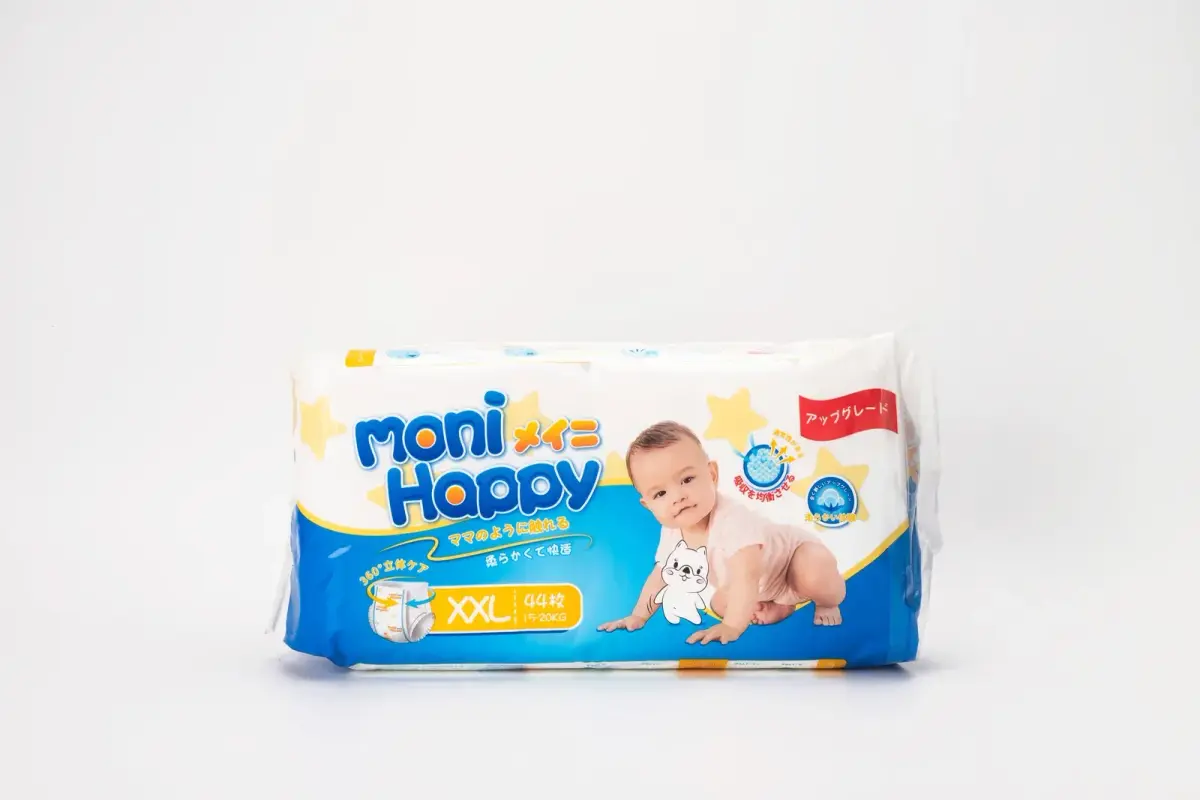
A 20GP of 48,000 diapers that lands at RM 36,300 in Port Klang becomes roughly RM 40,000 by the time it reaches a Kota Kinabalu warehouse, and the gap is nearly all domestic freight. The international leg is identical. What changes is one more sea crossing, a sailing schedule of two to three departures a week, and a buyer base that cannot take a full container in one drop. Distributors who quote Sabah at peninsula prices lose money on every box; distributors who quote a flat 20% premium lose the account to someone who did the arithmetic. The number sits between 8% and 12%, and it moves with pack count.
How big is the gap between Kota Kinabalu and the Klang Valley?
Eight to twelve percent at shelf price, and about nine percent at landed cost.
Work from the box. A 20GP of tape diapers carries 48,000 pieces. At $0.18 landed that is $8,640, or about RM 36,300 at RM 4.20 to the dollar. Everything after that is domestic: terminal handling at Port Klang, the feeder or domestic vessel to Kota Kinabalu or Sepanggar Bay, terminal handling again, and haulage at both ends. Add 7 to 10 sen per piece and the landed number becomes RM 0.83 to RM 0.86. A retailer buying at RM 0.84 and selling a 40-piece pack at RM 34.90 has a gross margin that already includes the sea leg. Take the same RM 0.84 into Kuching or Sandakan and add another 200 to 400km of road, and the number moves again. Sabah and Sarawak are not one market for pricing purposes, which is the first thing a peninsula distributor gets wrong.
What does the domestic leg cost per piece?
Seven to ten sen on a full box, and close to double that on a half box.
An illustrative breakdown for one 20GP, Port Klang to Kota Kinabalu: domestic ocean freight RM 2,200 to RM 3,200, terminal handling at both ports RM 400 to RM 700, haulage to the Klang port RM 350 to RM 500, haulage from Sepanggar Bay to a Kota Kinabalu warehouse RM 300 to RM 500. Total RM 3,250 to RM 4,900. Divide by 48,000 pieces and the result is RM 0.068 to RM 0.102 per piece. Note what happens when the same cost is spread over half a container: the per-piece freight doubles while the terminal handling barely moves, because a box is a box. That single mechanic explains most of the price gap that buyers describe as "Sabah is expensive".
Why does pack count matter more on this route?
Because the domestic leg is charged per box and per kilo, twice.
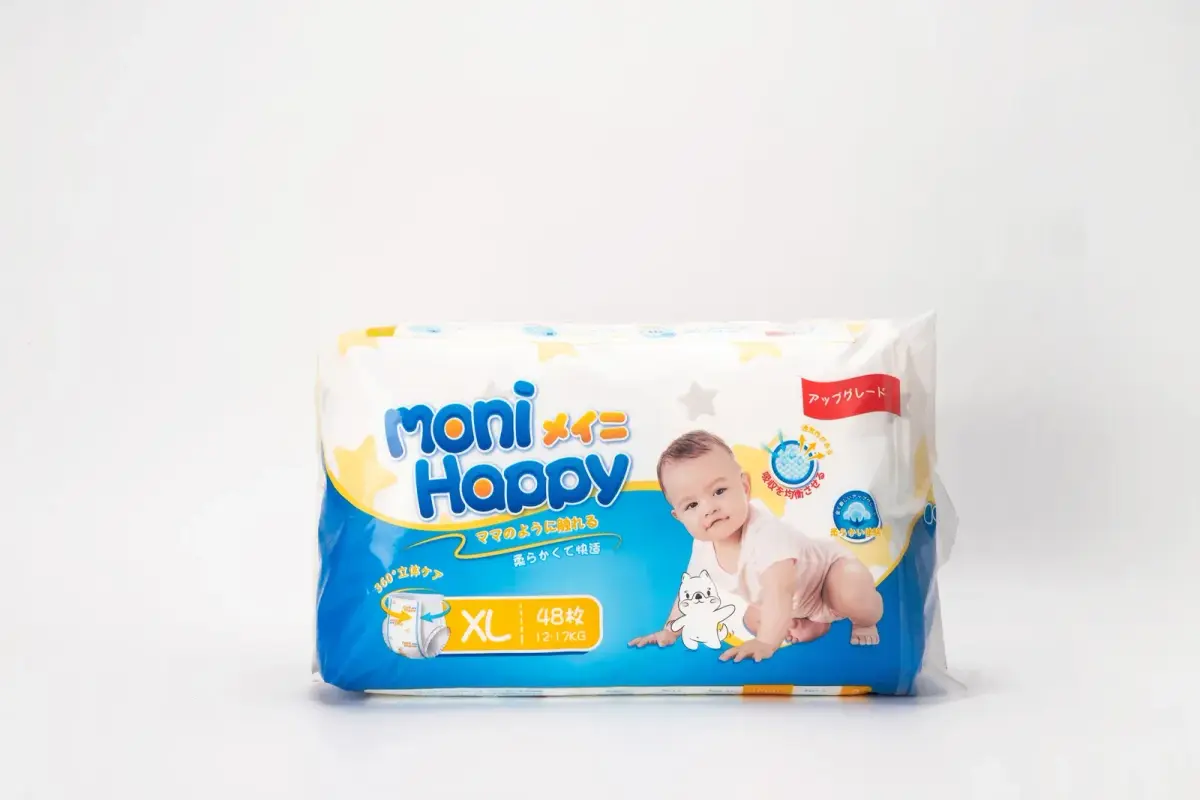
A carton of 48-piece XL packs weighs more than a carton of 44-piece XXL packs at the same carton count, and the haulage leg at both ends is priced on weight and volume together. Move from a 40-piece to a 60-piece pack and the cartons per container fall, so the fixed domestic cost spreads over fewer units. The optimum on this route is not the pack that sells best in Kuala Lumpur; it is the pack that fills a carton close to its weight limit at the count the local shelf can absorb. Run the arithmetic per carton, not per piece, when comparing pack formats for East Malaysia. A distributor who moves from 40-piece to 52-piece packs on the same carton footprint typically cuts domestic cost per piece by 8 to 12 sen band, which is more than the entire freight saving from a cheaper supplier.
Which formats change on the east side?
Bigger packs and fewer SKUs, for reasons that are about storage rather than taste.
Kota Kinabalu and Kuching warehouses are smaller per account than a Klang Valley distributor's, and the rent per square metre is higher. A retailer with 40 square metres of backroom cannot hold five sizes across two pack formats, so the line narrows to three sizes and one format. That is an opportunity for a supplier who can deliver a mixed pallet rather than a single-size pallet. It is a problem for a distributor whose price list assumes full-pallet quantities per size, because the MOQ logic and the freight logic pull in opposite directions here. Offer a three-size mixed pallet with a fixed carton count per size, and the account can hold stock without holding the wrong stock. Our tape diaper range ships in mixed pallets on request, subject to formal quotation.
How should a first Sabah order be sized?
One size band, two pack counts, one container, and a named second drop before the first ships.
- Pick the two sizes that cover 6 to 14kg, which is where most of the volume sits in a market with a young age structure.
- Fill 70% of the container with the leading size and 30% with the second, so the shelf has a reason to give you two facings.
- Fix the second drop date before the first container is booked, because a single container into East Malaysia rarely justifies the setup cost of opening the account.
- Quote the price per piece with the domestic leg visible as a separate line, so the buyer can see why Sabah differs from Klang.
A first order that arrives with five sizes in equal quantity looks balanced on paper and stalls on the shelf, because the slow sizes take the racking and the fast size sells out twice before the next sailing.
What payment terms fit this route?
Shorter than the peninsula, and split at the domestic leg.
The import leg runs on T/T 30/70 like any other diaper wholesale order: 30% with the purchase order, 70% against the bill of lading. The domestic leg is where East Malaysian buyers ask for help, because the cash cycle includes a 7 to 10 day sailing plus 14 to 21 days of retailer credit. A workable structure is to invoice the goods on 30 days and the domestic freight on prepayment, so the freight is never financed by the supplier. Distributors who roll the freight into a 45-day goods invoice are lending money at their own cost for a service they do not control. On this route, freight delays are normal and arguing about who pays for a missed sailing is a waste of a quarter.
How do you avoid the half-container trap?
By pricing the freight per piece at the volume you actually ship, not at the volume you wish you shipped.
A half container of 24,000 pieces carries the same RM 3,250 to RM 4,900 domestic cost, which becomes RM 0.135 to RM 0.204 per piece. That is 18% to 27% of a RM 0.756 landed cost, and no shelf price absorbs it. Three ways out. Consolidate two buyers into one box and split the freight by carton count. Hold a stock position in Kota Kinabalu and replenish by the pallet rather than by the container. Or accept a narrower range so the box fills with the two sizes that sell. What does not work is shipping half a box at full-box pricing and discovering the loss three months later in the margin report. Any diaper wholesale plan for East Malaysia should start with the freight table, not the price list. To build one for Sabah or Sarawak, request pricing and free samples, subject to formal quotation, and we will run the per-carton arithmetic with you.
Frequently asked questions
Is Labuan priced like Sabah?
Close to it, with an extra handling step and a smaller average order, so the per-piece freight is usually a little higher than Kota Kinabalu.
Do East Malaysian retailers accept a 20% premium?
They accept the arithmetic, not the number. Show the freight per carton and the premium becomes a cost line rather than a margin grab.
Can a peninsula distributor serve Sabah from a Klang warehouse?
Only on large repeat orders. Below one container a month, the freight per piece and the 7 to 10 day lead time make local stockholding cheaper.
Which port should a first Sabah shipment use?
Kota Kinabalu via Sepanggar Bay for west coast coverage, Sandakan or Tawau for the east coast, because road haulage across Sabah costs more than the sea leg.
Sources and further reading
- Ministry of Transport Malaysia, port and shipping policy including domestic shipping services, mot.gov.my.
- Department of Statistics Malaysia, population and live birth estimates by state, dosm.gov.my.
- Royal Malaysian Customs Department, sales and service tax guidance for goods, customs.gov.my.
Bottom line: Sabah is not a premium market, it is a freight market. Nine percent at landed cost, 8% to 12% at shelf, and double on a half container. Quote the domestic leg as its own line, fill cartons close to their weight limit, and fix the second drop before the first box sails. The distributor who does that keeps the account when the next supplier quotes peninsula prices.
Frequently Asked Questions
Is Labuan priced like Sabah?
Close to it, with an extra handling step and a smaller average order, so the per-piece freight is usually a little higher than Kota Kinabalu.
Do East Malaysian retailers accept a 20% premium?
They accept the arithmetic, not the number. Show the freight per carton and the premium becomes a cost line rather than a margin grab.
Can a peninsula distributor serve Sabah from a Klang warehouse?
Only on large repeat orders. Below one container a month, the freight per piece and the 7 to 10 day lead time make local stockholding cheaper.
Which port should a first Sabah shipment use?
Kota Kinabalu via Sepanggar Bay for west coast coverage, Sandakan or Tawau for the east coast, because road haulage across Sabah costs more than the sea leg.
Distributor resources
If you are evaluating suppliers for your market, these are the pages that answer the commercial questions — in the order buyers usually need them.
