
2026-08-31 · Moni Happy Editorial Team
Baby Bath Safety: Water Temperature, Products & Common Mistakes to Avoid
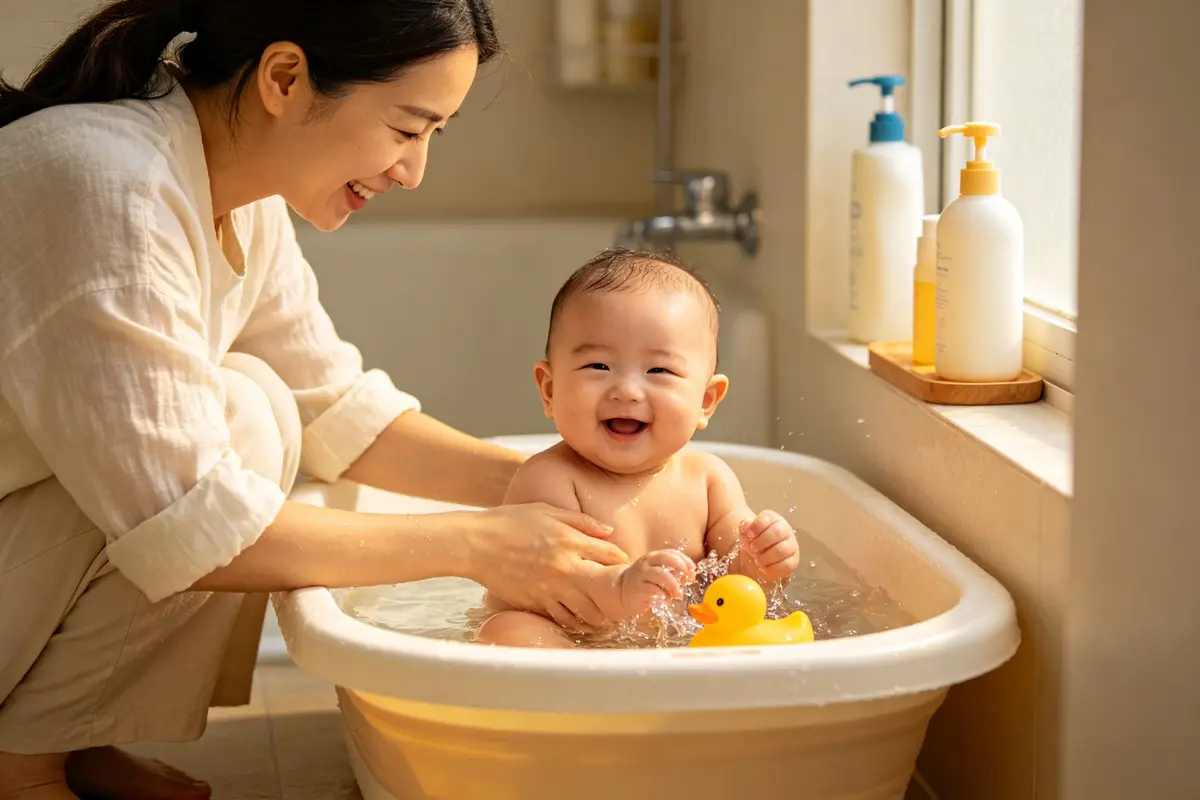
Baby bath time: water temperature, products, and the mistakes I made with my first
My first baby's first bath was a comedy of errors. The water was too hot, then too cold. I forgot the towel. She screamed the entire time. I was convinced I was going to drop her. By the third baby (okay, second), I had it down to a 10-minute routine that everyone actually enjoyed.
Bath time should be a calm, bonding experience—not a stressful race against cooling water and slippery babies. This guide covers everything from water temperature to products to safety rules, plus the mistakes I made so you don't have to.
How often should I bathe my baby?
Less than you think. Newborns don't get dirty—they spit up and have diaper accidents, but they don't sweat or play in the mud. The AAP recommends 2-3 baths per week for newborns and young babies. More frequent bathing can dry out their delicate skin, especially in dry climates or winter.
Here's the breakdown by age:
- 0-4 weeks (umbilical cord stump still attached): Sponge baths only. Don't submerge baby in water until the cord stump falls off and the area is fully healed (usually 1-2 weeks after birth). Clean baby with a damp washcloth, focusing on the diaper area, skin folds, and behind the ears.
- 1-6 months: 2-3 tub baths per week. On non-bath days, a quick wipe-down with a warm cloth in the diaper area and skin folds is enough.
- 6-12 months: 2-3 times per week is still fine, but many babies this age love bath time and you can increase to 3-4 times if they enjoy it. Just watch for dry skin.
- 12 months+: As baby becomes more mobile and messy (eating solids, crawling on the floor), you can increase to 3-4 times per week or even daily if needed. But daily bathing isn't necessary unless they're actually dirty.
Between baths, clean the diaper area at every change, wipe behind the ears and in neck folds daily, and clean tiny fingers and toes (they get surprisingly grubby). Moni Happy baby wipes are perfect for these quick cleanups between baths.
What's the right water temperature for a baby bath?
This is the #1 thing I got wrong at first. I thought "warm" meant "like a hot tub." It doesn't. Baby's skin is much thinner and more sensitive than adult skin, so water that feels comfortably warm to you can be too hot for baby.
The ideal bath water temperature is 37-38°C (98.6-100.4°F)—about body temperature. Here's how to get it right:
- Use a bath thermometer: This is the most reliable method. A simple floating bath thermometer costs $5-10 and takes the guesswork out. I kept mine on the edge of the tub for the first year.
- The elbow test: If you don't have a thermometer, dip your elbow or the inside of your wrist into the water (not your hand—your hands are more tolerant of heat). It should feel warm, not hot. If it feels even slightly too warm, add cold water.
- Fill the tub before putting baby in: Run the water, check the temperature, then turn off the tap before placing baby in the tub. This prevents accidental scalding from temperature fluctuations while baby is in the water.
- Cold water first, then hot: When filling the tub, run cold water first, then add hot water to reach the right temperature. This way, if you get distracted, the water won't be scalding hot.
- Check the water heater: Set your home water heater to no higher than 49°C (120°F). This prevents tap water from being hot enough to cause a serious burn instantly.
How much water? For newborns, just 2-3 inches (5-8 cm) is enough—you want to be able to support baby's head and shoulders above water. For older babies who can sit up, 5-10 cm is fine. Never fill the tub more than waist-deep for a sitting baby.
What products do I actually need for baby bath time?
The baby bath aisle is overwhelming. Here's what you actually need and what's marketing:
Essentials:
- Baby bathtub or insert: For the first 6 months, a baby bathtub or a sling insert that fits in the adult tub makes bath time much easier and safer. Look for one with a non-slip surface and a drain plug. Once baby can sit independently (around 6-8 months), you can transition to the regular tub with a non-slip mat.
- Soft washcloths: 2-3 soft cotton or muslin washcloths. One for washing, one for rinsing, one for emergencies. Keep them within arm's reach before you start the bath.
- Mild baby cleanser: For the first month, plain water is enough. After that, a mild, fragrance-free, pH-balanced baby body wash is fine. Use it sparingly—a pea-sized amount is enough for the whole body. Too much soap dries out baby's skin.
- Baby shampoo (if needed): Many baby body washes double as shampoo. If you use a separate shampoo, choose a tear-free, mild formula. Baby doesn't need shampoo every bath—2-3 times a week is plenty for newborns with fine hair.
- Hooded baby towel: A hooded towel helps keep baby's head warm after the bath and makes wrapping easier. Look for a soft, absorbent cotton or bamboo towel.
- Diaper and clothes: Lay out a clean diaper, onesie, and pajamas before you start the bath. You don't want to leave a wet, cold baby unattended to grab clothes.
- Bath thermometer: As mentioned above, worth every penny.
Nice to have but not essential:
- Bath toys: Not needed for newborns. Around 6 months, a few simple bath toys (rubber duck, stacking cups, bath books) make bath time more fun. Rinse and dry them after each use to prevent mold.
- Baby lotion: If baby has dry skin, a fragrance-free baby lotion applied right after the bath (while skin is still slightly damp) helps lock in moisture. Not needed if baby's skin is normal.
- Bath rinse cup: A plastic cup with a soft rim for rinsing hair. A regular cup works too, but the soft-rim ones are gentler on baby's forehead.
Skip:
- Bath seats/rings: These are not safety devices—they're just aids. Babies can tip them over or slip out. The AAP warns against relying on them. Always keep one hand on baby.
- Scented bath products: Fragrances can irritate baby's sensitive skin and cause allergic reactions. Stick to fragrance-free, hypoallergenic products.
- Bath oils/bubbles (for newborns): Bath oils can make the tub slippery and are unnecessary for newborns. Bubble bath can irritate the urinary tract, especially in baby girls. Wait until baby is older (12+ months) and use sparingly.
- Baby powder: The AAP recommends against baby powder (talcum or cornstarch) because the fine particles can be inhaled and cause respiratory issues. If you want to keep diaper area dry, use a zinc oxide diaper cream instead.
The step-by-step baby bath routine that actually works
After many chaotic baths, I settled on this routine. It takes 10-15 minutes and everyone stays calm:
- Prepare everything first: Lay out the towel, diaper, clothes, washcloth, cleanser, and thermometer within arm's reach. Turn on the heater or close windows to keep the room warm (around 24-26°C/75-78°F). Put a non-slip mat in the tub or use a baby bathtub.
- Fill the tub and check temperature: Run warm water to 2-3 inches deep. Check with a thermometer (37-38°C) or your elbow. Turn off the tap.
- Undress baby except for the diaper: Undress baby on a changing mat or towel next to the tub. Keep the diaper on until the last second to avoid surprise showers.
- Lower baby into the water slowly: Support baby's head and neck with one arm (your forearm under their shoulders, hand holding their upper arm or shoulder). Use your other hand to guide their feet in first, then lower their body. Talk to baby in a calm voice—they can sense if you're nervous.
- Wash from cleanest to dirtiest: Start with the face (plain water only—no soap on the face), then hair, then body, then diaper area last. Use the washcloth with a tiny amount of cleanser for the body. Rinse with clean water.
- Keep one hand on baby at all times: This is non-negotiable. Even if baby is in a baby bathtub or bath seat, never take your hand off them. If you need to reach for something, take baby with you or wait until you're done.
- Lift baby out and wrap immediately: When bath time is over (5-10 minutes is plenty for newborns), lift baby out with both hands supporting the head and body, and wrap immediately in the hooded towel. Pat dry—don't rub, especially on sensitive skin. Pay attention to skin folds (neck, armpits, thighs, behind ears) where moisture can get trapped.
- Diaper, lotion, and pajamas: Apply lotion if needed (while skin is still slightly damp), put on a clean diaper, and dress in warm pajamas. A quick feed after the bath helps baby relax and sleep.
Bath safety rules that could save your baby's life
These aren't suggestions. These are rules:
- Never leave baby unattended in the bath—not even for a second. Drowning can happen in as little as 2-3 cm (1 inch) of water and in less than 30 seconds. If the doorbell rings or the phone rings, ignore it. If you absolutely must leave, wrap baby in a towel and take them with you.
- Always keep one hand on baby. Even in a baby bathtub or bath seat. Bath seats are not safety devices—babies can and do slip out of them.
- Check water temperature before putting baby in. Use a thermometer or the elbow test. Set your water heater to max 49°C/120°F.
- Never put baby in a running bath. Always fill the tub first, check the temperature, turn off the tap, then put baby in. Water temperature can fluctuate suddenly while the tap is running.
- Empty the tub immediately after the bath. Don't leave standing water where a toddler could return and fall in. Even a few inches of water is dangerous for a young child.
- Keep electrical appliances away from the tub. Hair dryers, curling irons, radios—anything electric should be far from the bathtub and ideally unplugged. Water and electricity don't mix.
- Use a non-slip mat. Once baby is bathing in the regular tub, a non-slip mat on the bottom prevents slips. Also put a non-slip rug on the floor outside the tub to prevent falls when getting in and out.
- Don't let older siblings supervise bath time. Even a well-meaning older child can't be relied upon to watch a baby in the bath. Adult supervision only.
Quick summary: baby bath essentials
- Frequency: 2-3 baths/week for newborns and young babies. Sponge baths only until the umbilical cord stump falls off. More frequent baths can dry out skin.
- Water temp: 37-38°C (98.6-100.4°F), about body temperature. Use a thermometer or elbow test. Set water heater to max 49°C/120°F. Water depth: 2-3 inches for newborns.
- Products: Baby bathtub, soft washcloths, mild fragrance-free cleanser, hooded towel, diaper/clothes laid out beforehand, bath thermometer. Skip scented products, bath seats as safety devices, baby powder, and newborn bubble bath.
- Routine: Prepare everything first → fill tub and check temp → undress baby → lower in feet first with head supported → wash face → hair → body → diaper area → lift out and wrap → pat dry → diaper/lotion/pajamas.
- Safety (non-negotiable): Never leave baby unattended, keep one hand on baby always, check temp before putting baby in, never put baby in running water, empty tub immediately, keep electrical appliances away, use non-slip mat, adult supervision only.
- Remember: Bath time gets easier. The first few baths are stressful for everyone, but within a few weeks it becomes a calm, enjoyable routine. Take a deep breath—you've got this.
Bath time was one of my favorite routines with both kids once I stopped stressing about doing it "perfectly." It's 10 minutes of warm water, silly songs, and skin-to-skin contact that both of you will remember. Keep it simple, keep it safe, and enjoy the giggles.
For more on newborn care, check out our guide to newborn umbilical cord care and the complete newborn care guide.
Frequently Asked Questions
What are the most important baby safety tips for the home?
Key home safety tips include: put your baby to sleep on their back in a crib with a firm mattress and no loose bedding, pillows, or stuffed animals; install smoke and carbon monoxide detectors; cover electrical outlets; secure heavy furniture and TVs to the wall; use safety gates at the top and bottom of stairs; keep small objects, choking hazards, and toxic substances out of reach; and never leave your baby unattended on a high surface like a changing table or bed.
How do I baby-proof each room?
In the nursery: secure the dresser, use cordless window coverings, and keep the crib bare. In the bathroom: set the water heater to 120°F (49°C), use toilet locks, and store medications and cleaning products out of reach. In the kitchen: use stove knob covers, keep sharp objects and hot items away from edges, and use cabinet locks. In the living room: anchor furniture, cover sharp corners, and secure window blind cords. Do a room-by-room crawl at your baby's eye level to spot hazards.
Is it safe to use secondhand baby gear?
Some secondhand gear is safe, but always check for recalls and expiration dates. Car seats should never be used if they're expired, were in a crash, or are missing parts — when in doubt, buy new. Cribs should meet current safety standards (no drop-side rails, slats no more than 2 3/8 inches apart). High chairs, strollers, and play yards are generally safe secondhand if they're clean, intact, and not recalled. Always clean secondhand items thoroughly before use.
What should be in my baby first aid kit?
A basic baby first aid kit should include: infant acetaminophen (and ibuprofen for 6 months+), digital thermometer, nasal aspirator, saline drops, tweezers, bandages in various sizes, antiseptic wipes, gauze pads, medical tape, scissors with rounded tips, a bulb syringe, oral medicine syringe, instant cold pack, and a first aid guide. Keep the kit in a designated place that's out of children's reach but easily accessible to adults. Check expiration dates regularly and replace items as needed.
Frequently Asked Questions
How often should I bathe my newborn?
The American Academy of Pediatrics recommends 2-3 baths per week for newborns and young babies. More frequent bathing can dry out their delicate skin. Until the umbilical cord stump falls off (usually 1-2 weeks after birth), give sponge baths only—don't submerge baby in water. On non-bath days, a quick wipe-down with a warm cloth in the diaper area, skin folds, and behind the ears is sufficient. As baby becomes more mobile and messy after 6-12 months, you can increase to 3-4 baths per week if needed.
What is the correct water temperature for a baby bath?
The ideal bath water temperature for babies is 37-38°C (98.6-100.4°F), approximately body temperature. Baby's skin is much thinner and more sensitive than adult skin, so water that feels comfortably warm to you can be too hot for baby. The most reliable method is a floating bath thermometer ($5-10). If you don't have one, use the elbow test—dip your elbow or inner wrist (not your hand) into the water; it should feel warm, not hot. Always fill the tub and check the temperature before putting baby in, and set your home water heater to no higher than 49°C (120°F) to prevent scalding.
What baby bath products do I actually need?
Essentials include: a baby bathtub or sling insert (for the first 6 months), 2-3 soft cotton/muslin washcloths, a mild fragrance-free pH-balanced baby cleanser (plain water is enough for the first month), a hooded absorbent towel, a clean diaper and clothes laid out beforehand, and a bath thermometer. Nice-to-haves include simple bath toys (after 6 months), fragrance-free baby lotion (for dry skin), and a rinse cup. Skip: bath seats/rings as safety devices (AAP warns they're not reliable), scented products (can irritate skin), baby powder (inhalation risk), and bubble bath for newborns (urinary tract irritation).
What are the most important baby bath safety rules?
The non-negotiable safety rules are: 1) Never leave baby unattended in the bath—not even for a second. Drowning can happen in 1 inch of water in under 30 seconds. 2) Always keep one hand on baby, even in a baby bathtub or bath seat. 3) Check water temperature (37-38°C) before putting baby in; use a thermometer or elbow test. 4) Never put baby in a running bath—fill first, turn off tap, then place baby in. 5) Empty the tub immediately after the bath to prevent toddler drowning. 6) Keep all electrical appliances away from the tub. 7) Use a non-slip mat in the tub and on the floor outside. 8) Only adult supervision—never rely on older siblings to watch a baby in the bath.