
2026-08-29 · Moni Happy Editorial Team
Baby Clothing Guide for Hot Weather: What to Dress Newborn in SEA
Newborn Clothing Essentials: The Complete Checklist
Preparing your newborn's wardrobe can feel overwhelming, especially for first-time parents. In Southeast Asia's tropical climate, the key is choosing lightweight, breathable fabrics that keep your baby cool and comfortable while protecting their delicate skin. You don't need as many clothes as you might think - newborns grow quickly, and many outfits will only fit for a few weeks.
Here's a practical checklist of newborn clothing essentials for the first 3 months:
- 5-7 onesies (short-sleeved) - the most versatile item, perfect for hot weather
- 3-4 rompers or sleepsuits - for cooler days or air-conditioned rooms
- 2-3 pairs of soft pants - easy to pull on and off for diaper changes
- 4-5 muslin swaddle blankets - essential for swaddling, nursing cover, and sun protection
- 2-3 lightweight hats - for sun protection when outdoors
- 3-4 pairs of mittens - to prevent scratching (though many babies prefer no mittens in hot weather)
- 2-3 cardigans or light jackets - for air-conditioned malls or cooler evenings
- 5-7 pairs of socks - optional in hot weather, but useful for cooler spaces
Remember that newborns typically wear one more layer than an adult would in the same temperature. In Southeast Asia, this usually means a single lightweight onesie is enough indoors. When going outside in the sun, add a hat and keep your baby in the shade as much as possible.
Best Fabrics for Baby Clothes in Hot Humid Weather
Choosing the right fabric is crucial for your baby's comfort in tropical climates. The best fabrics are lightweight, breathable, moisture-wicking, and gentle on sensitive newborn skin. Here are the top fabric choices:
1. 100% Cotton
Cotton is the gold standard for baby clothing. It's soft, breathable, absorbent, and gentle on sensitive skin. Look for "combed cotton" or "organic cotton" for extra softness. Cotton allows air to circulate, helping to keep your baby cool in hot weather. It's also easy to wash and durable enough for frequent laundering.
2. Muslin Cotton
Muslin is an ultra-lightweight, loosely woven cotton fabric that's perfect for tropical climates. It's incredibly breathable and allows maximum air circulation. Muslin swaddle blankets are a must-have for newborns - they're lightweight enough for hot weather but still provide the snug feeling that helps babies sleep. Muslin also gets softer with every wash.
3. Bamboo Viscose
Bamboo fabric is naturally breathable, moisture-wicking, and temperature-regulating. It's softer than cotton and has natural antibacterial properties. Bamboo fabric is excellent for babies with sensitive skin or eczema. It's also more sustainable than conventional cotton. Look for "Oeko-Tex certified" bamboo fabrics to ensure they're free from harmful chemicals.
4. Linen
Linen is one of the most breathable fabrics available. It's lightweight, moisture-wicking, and gets softer with every wash. Linen is perfect for very hot weather, though it does wrinkle easily. Linen-cotton blends offer the best of both worlds - the breathability of linen with the softness and durability of cotton.
Fabrics to avoid: Synthetic fabrics like polyester, nylon, and acrylic are not breathable and can trap heat and moisture against your baby's skin, causing discomfort and increasing the risk of heat rash. Also avoid fabrics with heavy chemical treatments, flame retardants, or harsh dyes, as these can irritate sensitive newborn skin.
What to Dress Newborn During the Day (25-35℃)
In Southeast Asia's typical daytime temperatures of 25-35℃, the goal is to keep your baby cool while protecting their delicate skin from the sun. Here's a guide to daytime dressing based on temperature:
Hot Weather (30-35℃)
On very hot days, less is more. A simple short-sleeved onesie (also called a bodysuit or romper) is usually all your baby needs indoors. Choose the lightest, most breathable fabric you can find. If you're going outside, add a wide-brimmed sun hat and keep your baby in the shade. Avoid socks and mittens in very hot weather - they can cause overheating. Use a muslin blanket for shade or as a light cover if you're in an air-conditioned space.
Warm Weather (27-30℃)
At this temperature, a short-sleeved onesie is still ideal. You may want to add lightweight pants if you're in an air-conditioned building or if there's a breeze. Muslin swaddle blankets are perfect for this temperature range - they provide just enough warmth without overheating. Always check your baby's neck or back of the neck to gauge their temperature - if it feels warm and sweaty, they may be too hot.
Cooler Weather (25-27℃)
On slightly cooler days or in heavily air-conditioned spaces, you can add a thin long-sleeved onesie or a lightweight cardigan over a short-sleeved onesie. A sleepsuit or romper with feet can be comfortable for this temperature range. Always remember that it's easier to add or remove layers than to change your baby's entire outfit. Keep a lightweight cardigan or muslin blanket handy for temperature changes.
How to check if your baby is too hot or too cold: The best way to gauge your baby's temperature is to feel the back of their neck or their chest. These areas should feel warm, not hot or cold. Hands and feet are often cooler than the rest of the body, so don't rely on them as an accurate temperature gauge. Signs that your baby is too hot include: sweating, damp hair, flushed cheeks, heat rash, and rapid breathing. Signs that they're too cold include: cool hands and feet, pale skin, and shivering.
Nighttime Outfits: Aircon Room Temperature Guide
Nighttime dressing can be tricky, especially when you're using air conditioning. The ideal room temperature for a sleeping baby is between 20-22℃ (68-72℉), but many Southeast Asian homes keep the air conditioning colder or warmer than this. Here's a guide to nighttime dressing based on room temperature:
Cold Aircon (18-20℃)
If your air conditioning is set very cold, your baby will need warmer sleepwear. A long-sleeved sleepsuit or romper made of cotton or bamboo is ideal. Add a lightweight sleeping bag (TOG 1.0) for extra warmth. Avoid loose blankets in the crib - they increase the risk of SIDS. A sleeping bag is a safer alternative that keeps your baby warm without the risk of covering their face.
Moderate Aircon (20-24℃)
At this temperature, a long-sleeved or short-sleeved sleepsuit is usually sufficient. You can add a very lightweight sleeping bag (TOG 0.5) if your baby seems cool. Muslin swaddle blankets are perfect for this range - they're lightweight enough to prevent overheating but provide enough warmth for comfortable sleep. If you're swaddling, make sure the swaddle is not too tight around the hips and legs, and stop swaddling once your baby shows signs of rolling over (usually around 3-4 months).
Warm Room / No Aircon (24-28℃)
In a warm room without air conditioning, a simple short-sleeved onesie is usually all your baby needs for sleep. You can use a very lightweight muslin blanket for swaddling if your baby likes the snug feeling, but be careful not to overwrap. A fan can help circulate air and keep your baby cool, but make sure it's not blowing directly on them. Always place your baby on their back to sleep, on a firm mattress with no loose bedding, pillows, or stuffed animals in the crib.
Safe sleep reminders: Always place your baby on their back to sleep. Use a firm, flat sleep surface. Keep the crib free of loose blankets, pillows, bumper pads, and stuffed animals. Consider using a wearable blanket or sleeping bag instead of loose blankets. Avoid overheating - dress your baby in no more than one layer more than an adult would wear to be comfortable. Room-sharing (keeping your baby's crib in your room) is recommended for the first 6-12 months to reduce the risk of SIDS.
How to Layer Baby Clothes for Changing Temperatures
Layering is the key to keeping your baby comfortable in Southeast Asia's variable temperatures - from hot outdoors to cold air-conditioned malls. The principle is simple: start with a base layer, add or remove layers as needed, and always have a lightweight layer handy for sudden temperature changes.
The Base Layer
Start with a lightweight, breathable onesie as your base layer. This is the layer that stays on regardless of temperature. Choose short-sleeved for hot weather and long-sleeved for cooler weather. The base layer should be made of the softest, most breathable fabric you can find - cotton, muslin, or bamboo are all excellent choices.
The Middle Layer
Add a middle layer when you need extra warmth. This can be a lightweight cardigan, a thin pair of pants, or a muslin blanket. The middle layer should be easy to put on and take off, as you'll likely be adding and removing it throughout the day. Avoid thick or bulky middle layers - they can cause overheating and are difficult to adjust quickly.
The Outer Layer
The outer layer is for protection from the elements - sun, wind, or rain. For sun protection, use a wide-brimmed hat and keep your baby in the shade. For wind or light rain, a lightweight windbreaker or rain cover can be useful. In Southeast Asia, you'll rarely need a heavy outer layer, but it's good to have a lightweight jacket or blanket for air-conditioned spaces or cooler evenings.
Layering tips for Southeast Asia: Always carry a lightweight cardigan or muslin blanket when going out - malls, restaurants, and cars often have very cold air conditioning. Dress your baby in clothes that are easy to take off for diaper changes - onesies with snaps at the crotch are ideal. Avoid clothes with lots of buttons, zippers, or complicated closures - they're difficult to manage when your baby is fussy or you're in a hurry. Remember that it's always better to be slightly underdressed than overdressed - you can always add a layer, but overheating can be dangerous for newborns.
Sun Protection: Hats, UV Clothing & Outdoor Tips
Sun protection is essential for newborns, especially in Southeast Asia's strong tropical sun. Newborn skin is extremely delicate and burns easily - even on cloudy days. Here's how to protect your baby from the sun:
Wide-Brimmed Hats
A wide-brimmed hat is one of the best sun protection items for your baby. Look for a hat with a brim that covers the face, ears, and back of the neck. Choose a lightweight, breathable fabric like cotton or muslin. A hat with a chin strap is ideal - it stays on better and is less likely to be pulled off by your baby. Avoid hats with tight elastic bands - they can leave marks on your baby's delicate skin.
UV-Protective Clothing
UV-protective clothing (UPF 50+) provides excellent sun protection without the need for sunscreen. Look for lightweight, breathable clothing with a UPF rating of 50+ - this blocks 98% of UV rays. Long-sleeved rash guards or swim shirts are perfect for water activities. For everyday use, lightweight long-sleeved shirts and pants made of tightly woven fabric provide good sun protection. Remember that wet fabric provides less UV protection than dry fabric.
Sunscreen for Babies
For babies under 6 months, the American Academy of Pediatrics recommends avoiding sunscreen altogether and relying on shade and protective clothing instead. If you must use sunscreen on a baby under 6 months (for example, if shade is not available), use a minimal amount of mineral-based sunscreen (zinc oxide or titanium dioxide) on small areas like the face and back of the hands. For babies over 6 months, use a broad-spectrum, water-resistant sunscreen with SPF 30 or higher. Apply 15-30 minutes before going outside and reapply every 2 hours or after swimming or sweating.
General Sun Safety Tips
- Avoid going outside during peak sun hours (10 AM to 4 PM) when possible
- Use a stroller with a sun canopy or attach a muslin blanket for shade
- Keep your baby in the shade as much as possible - use trees, umbrellas, or building overhangs
- Never leave your baby in a parked car - temperatures can rise dangerously high in minutes
- Check your baby's skin regularly for signs of sunburn - redness, warmth, or blistering
- If your baby gets sunburned, apply cool compresses and give extra fluids. Consult your pediatrician if the burn is severe or if your baby develops a fever.
Baby Clothing Sizes: NB, 0-3M, 3-6M Explained
Baby clothing sizes can be confusing, especially for first-time parents. Different brands use different sizing systems, and babies grow at different rates. Here's a general guide to baby clothing sizes:
Newborn (NB) Size
Newborn size is designed for babies weighing 2.5-4 kg (5-8 lbs) and measuring 45-50 cm (18-20 inches) in length. Most full-term babies fit into newborn size for the first 2-4 weeks, but some larger babies may skip newborn size entirely and go straight to 0-3 months. It's a good idea to have a few newborn outfits on hand, but don't buy too many - your baby will outgrow them quickly.
0-3 Months Size
0-3 months size is designed for babies weighing 4-6 kg (8-12.5 lbs) and measuring 50-60 cm (20-24 inches). Most babies wear this size from about 2 weeks to 3 months of age. This is the size you'll use the most in the first few months, so it's worth having a good selection. Remember that babies grow quickly - if an outfit fits snugly, it's probably time to move up to the next size, even if your baby hasn't reached the upper weight limit yet.
3-6 Months Size
3-6 months size is designed for babies weighing 6-8 kg (12.5-17 lbs) and measuring 60-67 cm (24-26.5 inches). Most babies wear this size from about 3 to 6 months of age. At this age, babies are more active - rolling, grabbing, and putting everything in their mouths - so choose clothes that are durable and easy to move in. Avoid clothes with small buttons or decorations that could be a choking hazard.
Sizing tips: Always check the specific brand's size chart - sizes vary significantly between brands. When in doubt, size up - babies grow quickly, and slightly large clothes are more comfortable than too-tight clothes. Look for clothes with adjustable features like snap closures, elastic waistbands, and fold-over cuffs that can grow with your baby. Remember that weight is a better indicator of size than age - some babies are larger or smaller than average, and that's perfectly normal.
How Many Baby Clothes Do You Actually Need?
It's easy to go overboard when buying baby clothes - they're so tiny and cute! But the truth is, newborns don't need nearly as many clothes as you might think. They grow quickly, and many outfits will only be worn a few times before being outgrown. Here's a practical guide to how many clothes you actually need for the first 3 months:
- Onesies (short-sleeved): 7-10 - you'll use these every day, and they need frequent washing
- Onesies (long-sleeved): 3-5 - for cooler days or air-conditioned spaces
- Rompers/sleepsuits: 3-4 - for nighttime and cooler days
- Pants: 3-4 - easy to mix and match with onesies
- Swaddle blankets (muslin): 4-5 - essential for swaddling, nursing cover, and shade
- Hats: 2-3 - one for sun, one for warmth, one spare
- Socks: 4-5 pairs - optional in hot weather, but useful for cooler spaces
- Cardigans/light jackets: 2 - for air-conditioned spaces or cooler evenings
- Going-out outfits: 2-3 - for special occasions or photos
Remember that newborns spit up, have diaper leaks, and get messy frequently - so you'll be doing laundry often. It's better to have fewer high-quality clothes that you love than a closet full of outfits that never get worn. Start with the basics and add more as needed - you'll quickly learn what works for your baby and your lifestyle. Consider borrowing or accepting hand-me-downs for the first few months - babies grow so fast that many clothes are barely worn before being outgrown.
Washing & Caring for Newborn Clothes
Proper washing and care of newborn clothes is important for your baby's skin health and the longevity of the clothes. Newborn skin is delicate and sensitive, so it's important to use gentle, fragrance-free detergents and avoid harsh chemicals. Here's a guide to washing and caring for newborn clothes:
Before First Use
Always wash new baby clothes before your baby wears them for the first time. New clothes may contain residual chemicals from manufacturing, dyes, or sizing treatments that can irritate sensitive skin. Wash all clothes, blankets, and bedding separately from adult clothes for the first few months. Use a gentle, fragrance-free, hypoallergenic detergent specifically designed for babies or sensitive skin.
Washing Tips
- Use warm water (30-40℃) for most baby clothes - hot water can shrink fabrics and fade colors
- Use a gentle, fragrance-free detergent - avoid fabric softeners and dryer sheets, as they can leave a residue that irritates skin
- Wash baby clothes separately from adult clothes, especially for the first 6 months
- Fasten snaps and zippers before washing to prevent snagging
- Wash stains as soon as possible - soak in cold water before washing for best results
- Use a gentle cycle or hand-wash setting for delicate items
- Avoid bleach - it can damage fabrics and irritate skin. Use oxygen-based bleach (hydrogen peroxide) for tough stains if needed
Drying & Storage
Line drying is best for baby clothes - it's gentle on fabrics, saves energy, and the sun has natural antibacterial properties. If you use a dryer, use a low heat setting and remove clothes promptly to prevent wrinkles and shrinkage. Avoid dryer sheets - they can leave a chemical residue on clothes. Store clean baby clothes in a clean, dry place. Use drawer dividers or organizers to keep sizes and types separate. Avoid storing clothes in plastic bags or airtight containers for long periods - they can trap moisture and cause mildew. Instead, use breathable fabric storage bags or cardboard boxes.
Baby Clothing Mistakes to Avoid in Southeast Asia
New parents often make common clothing mistakes, especially in tropical climates. Here are the most common mistakes to avoid:
- Overdressing your baby - This is the most common mistake. New parents often bundle babies up too much, thinking they're cold. In hot weather, a single lightweight onesie is usually enough. Overdressing can cause overheating, heat rash, and even increase the risk of SIDS.
- Buying too many newborn-size clothes - Newborns grow incredibly fast, and many babies only wear newborn size for 1-2 weeks. Buy a few newborn outfits, but focus on 0-3 month size, which will last longer.
- Choosing synthetic fabrics - Polyester, nylon, and other synthetic fabrics are not breathable and can trap heat and moisture against your baby's skin. Stick to natural fibers like cotton, muslin, bamboo, and linen.
- Using scented detergents or fabric softeners - These can leave a chemical residue on clothes that irritates sensitive newborn skin. Use fragrance-free, hypoallergenic detergents and skip the fabric softener.
- Clothes with complicated closures - Buttons, zippers, and ties can be difficult to manage when your baby is fussy or you're in a hurry. Choose clothes with snap closures, especially at the crotch for easy diaper changes.
- Not having a spare outfit when going out - Babies spit up, have diaper leaks, and get messy at the most inconvenient times. Always carry at least one spare outfit and extra diapers when going out.
- Using loose blankets in the crib - Loose blankets increase the risk of SIDS. Use a wearable blanket or sleeping bag instead, or swaddle your baby safely with a muslin blanket.
- Forgetting sun protection - Southeast Asia's sun is strong, and newborn skin burns easily. Always use a wide-brimmed hat and keep your baby in the shade when outdoors.
Choosing the right diaper is also an important part of your baby's comfort and clothing routine. Moni Happy baby diapers feature an ultra-thin 0.1cm breathable core and 3D cloud-soft topsheet, keeping your baby's skin dry and comfortable even in hot weather. For quick cleanups during outfit changes, keep Moni Happy baby wet wipes handy - made with 99% pure water, they're gentle enough for newborn skin.
Can my baby sleep in just a diaper?
In very hot weather (above 28℃), yes - your baby can sleep in just a diaper. Use a fan to circulate air (not blowing directly on the baby) and keep the room well-ventilated. If the room is air-conditioned, add a lightweight sleepsuit or wearable blanket. Always follow safe sleep guidelines: back to sleep, firm flat surface, no loose bedding.
For more comprehensive newborn care guidance, read our complete newborn care guide covering feeding, diapering, bathing, sleep, and development. And for a calming bedtime routine, our step-by-step newborn bathing guide can help establish a relaxing pre-sleep ritual.
Frequently Asked Questions
How often should I bathe my newborn?
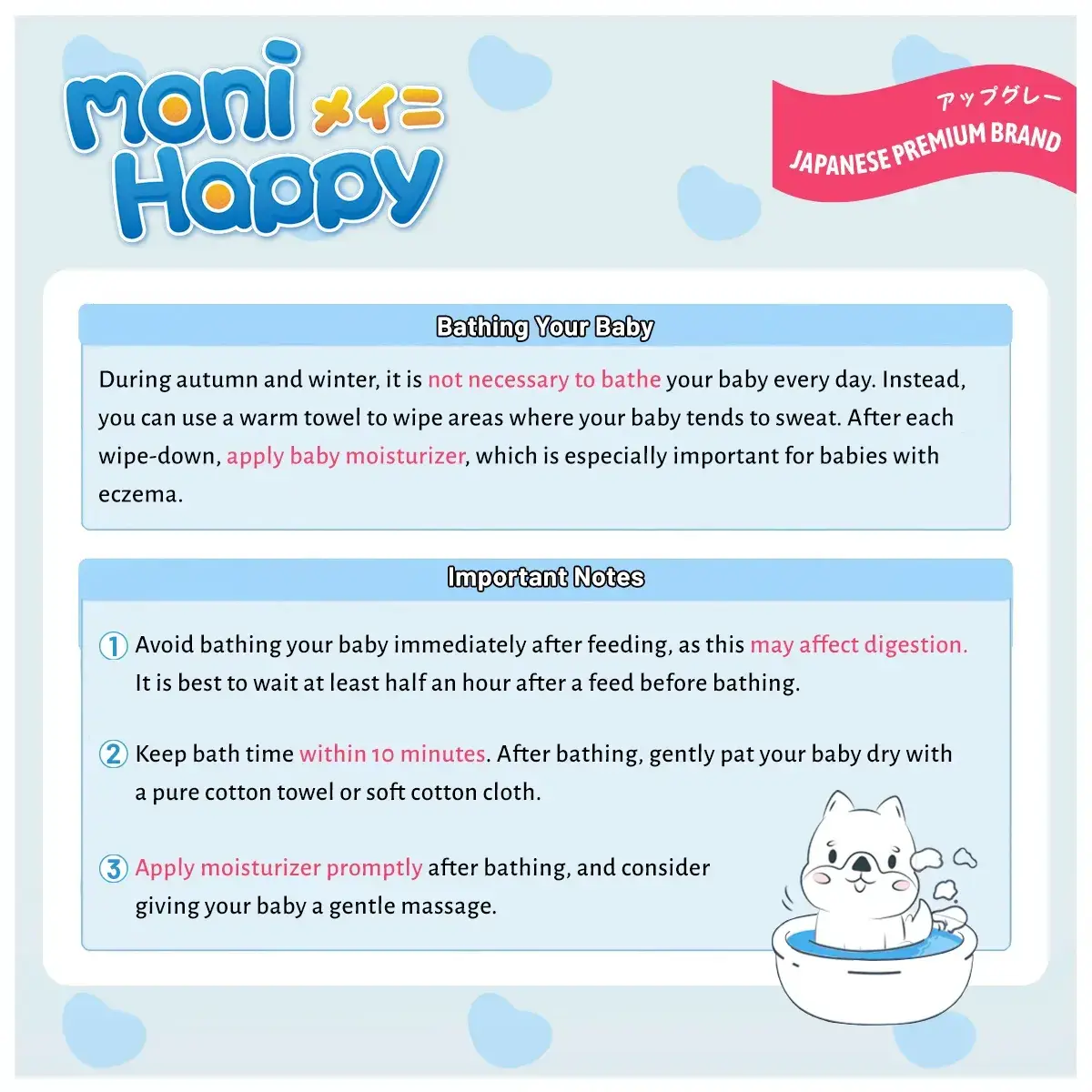
Newborns don't need a bath every day — 2-3 times a week is sufficient, as too much bathing can dry out their delicate skin. Between baths, clean your baby's face, neck folds, diaper area, and hands with a warm, damp washcloth as needed. Once your baby is more active and getting into messes, you can increase bathing to every other day or daily if needed, but always use a gentle, fragrance-free baby cleanser.
What's the best water temperature for a baby bath?
The ideal bath water temperature is around 100°F (38°C) — about body temperature. Always test the water with your elbow or a bath thermometer before putting your baby in, as your hands aren't as sensitive to temperature. Keep the bath short (5-10 minutes) to prevent chilling and skin dryness. Never leave your baby alone in the bath, even for a second — have everything you need within arm's reach before you start.
How do I care for my baby's skin?
Baby skin is thinner and more sensitive than adult skin, so keep it simple. Use fragrance-free, hypoallergenic baby products for cleansing and moisturizing. Pat the skin dry gently after bathing (don't rub) and apply a gentle moisturizer within 3 minutes to lock in moisture. Dress your baby in breathable, soft fabrics like cotton, and avoid overdressing. In hot, humid climates, watch for heat rash — keep skin cool and dry, and use lightweight clothing.
When should I start using baby products like lotion and shampoo?
For the first few weeks, plain warm water is all you need for cleansing your newborn. Once the umbilical cord stump falls off and the skin is healed (usually 1-2 weeks), you can start using a gentle, fragrance-free baby cleanser and shampoo. Apply lotion only if your baby's skin seems dry — not all babies need it. Always choose products specifically formulated for babies, as adult products may contain harsh ingredients that can irritate sensitive skin.
Frequently Asked Questions
How many layers should my baby wear in hot weather?
In hot weather (above 27C), a single lightweight onesie is usually all your baby needs indoors. Add a hat for sun protection when outdoors. Remember that babies should wear one more layer than an adult would be comfortable in.
Should I wash new baby clothes before wearing?
Yes, always wash new baby clothes before first use. New clothes may contain residual chemicals from manufacturing, dyes, or sizing treatments that can irritate sensitive newborn skin. Use a gentle, fragrance-free detergent and wash separately from adult clothes.
What is the best fabric for baby clothes in tropical climates?
100% cotton is the best all-around choice. Muslin cotton is even more lightweight and breathable, perfect for very hot weather. Bamboo viscose is also excellent, softer than cotton, naturally antibacterial, and temperature-regulating. Avoid synthetic fabrics like polyester.
How do I know if my baby is too hot or too cold?
Feel the back of your baby's neck or their chest. These should feel warm, not hot or cold. Hands and feet are often cooler and not an accurate gauge. Signs of overheating include sweating, damp hair, flushed cheeks, heat rash, and rapid breathing.
Can my baby sleep in just a diaper?
In very hot weather (above 28C), yes, your baby can sleep in just a diaper. Use a fan to circulate air (not blowing directly on the baby) and keep the room well-ventilated. If the room is air-conditioned, add a lightweight sleepsuit or wearable blanket. Always follow safe sleep guidelines.