
2026-09-18 · Moni Happy Editorial
Baby Eczema: What It Is and What Actually Helps
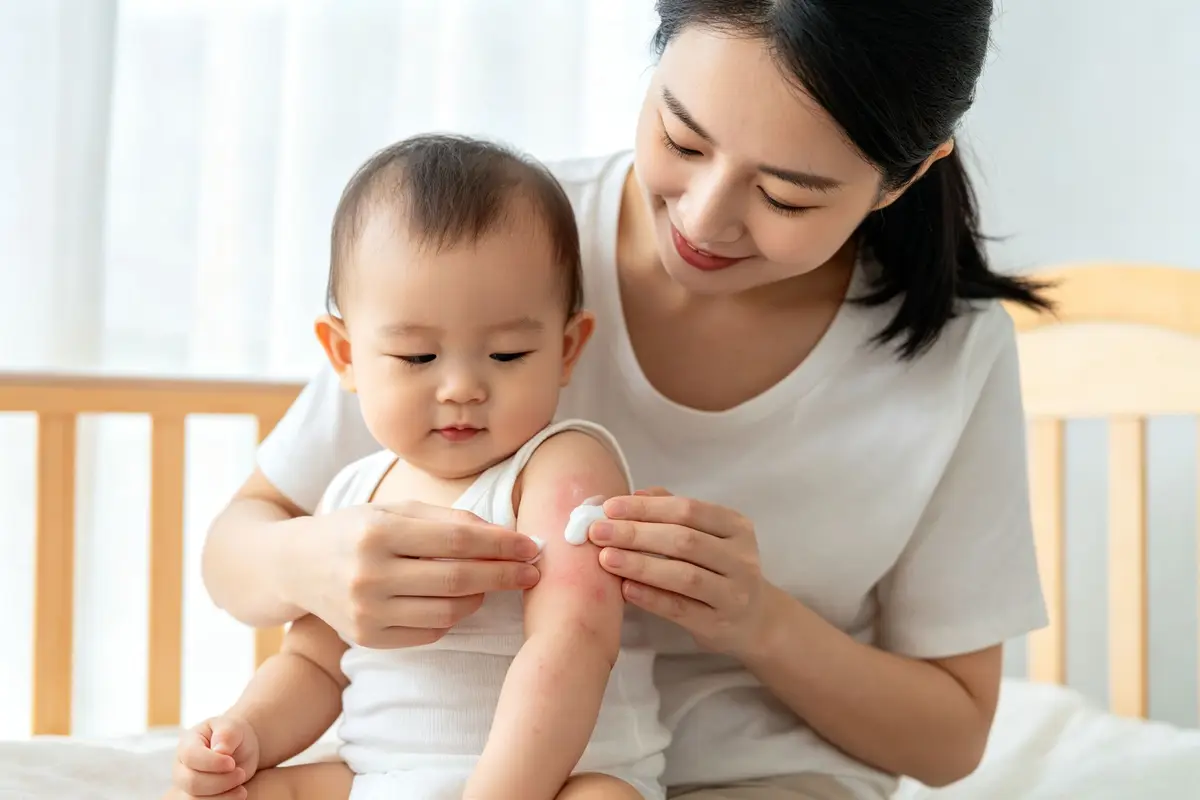
My baby's first eczema flare-up showed up as dry, red patches on her cheeks at 3 months. I had no idea what it was at first — I thought it was just dry skin. But it spread to her arms, her legs, and the backs of her knees, and she started scratching in her sleep. After many doctor visits and trial-and-error, I found a routine that actually works. Here's what I've learned about baby eczema.
What Is Baby Eczema?
Eczema (atopic dermatitis) is a chronic skin condition that makes the skin dry, itchy, and inflamed. It affects about 10-20% of children, usually starting in the first few months of life. It's not contagious and it's not caused by bad hygiene. In fact, over-bathing and harsh soaps can make it worse. Eczema appears as red, itchy patches on the cheeks, scalp, arms, legs, and the folds of elbows and knees. In severe cases, the skin can crack, ooze, or bleed. The exact cause is unknown, but it's linked to genetics, a damaged skin barrier, and environmental triggers like dry air, harsh fabrics, certain foods, and stress. Many babies outgrow eczema as they get older, but some continue to have it through childhood.
What Actually Helps: Our Eczema Routine
After months of trial and error, here's what works for us: Moisturize, moisturize, moisturize. This is the single most important thing. Use a thick, fragrance-free cream or ointment (not a thin lotion) at least twice a day — after every bath and as needed during the day. Apply within 3 minutes of bathing to lock in moisture. Short, lukewarm baths. Keep baths to 5-10 minutes in lukewarm water. Hot water dries out skin. Use a gentle, fragrance-free cleanser only where needed. Pat dry gently — don't rub. Dress in soft, breathable fabrics. Choose 100% cotton. Avoid wool, synthetic fabrics, and scratchy tags. Wash clothes with fragrance-free detergent. Regular laundry detergents and fabric softeners can trigger flares. For clean, gentle care, Moni Happy's tissues are soft on sensitive skin. Keep nails short. Trim your baby's nails regularly to reduce skin damage from scratching. For gentle daily care, soft Moni Happy's wipes are made with sensitive skin in mind. Use prescribed medications. For flares, your doctor may prescribe a mild topical steroid cream. Use it exactly as directed.
When to See the Doctor
Most baby eczema can be managed at home, but call your pediatrician if: the eczema is oozing, bleeding, or crusting (signs of infection); it's covering a large area; it's interfering with sleep; over-the-counter moisturizers aren't helping; or you suspect a food trigger. For a complete range of gentle baby care products, explore Moni Happy's collection.
Frequently Asked Questions
What is baby eczema?
Baby eczema (atopic dermatitis) is a chronic skin condition causing dry, red, itchy patches on the cheeks, scalp, arms, legs, and skin folds. It affects 10-20% of children and usually starts in the first months. It is not contagious and not caused by poor hygiene.
How do I treat baby eczema at home?
Moisturize at least twice daily with a thick, fragrance-free cream within 3 minutes of bathing. Keep baths short (5-10 min) and lukewarm. Dress in soft cotton, wash clothes with fragrance-free detergent, keep nails short, and identify triggers. Use prescribed mild steroids for flares.
What triggers baby eczema?
Common triggers include dry air, hot baths, harsh soaps or fragranced products, wool and synthetic fabrics, certain foods, sweat, dust, and stress. Keep a diary of flares to identify your baby's specific triggers.
When should I see a doctor about baby eczema?
See a doctor if eczema is oozing, bleeding, or crusting (signs of infection), covers a large area, interferes with sleep, doesn't improve with moisturizer, or you suspect a food allergy.