
2026-09-03 · Moni Happy Editorial Team
Baby Fever: A Mom's Guide to Taking Temperature, When to Worry & How to Help
Baby Fever: A Mom's Guide to Taking Temperature, When to Worry & How to Help
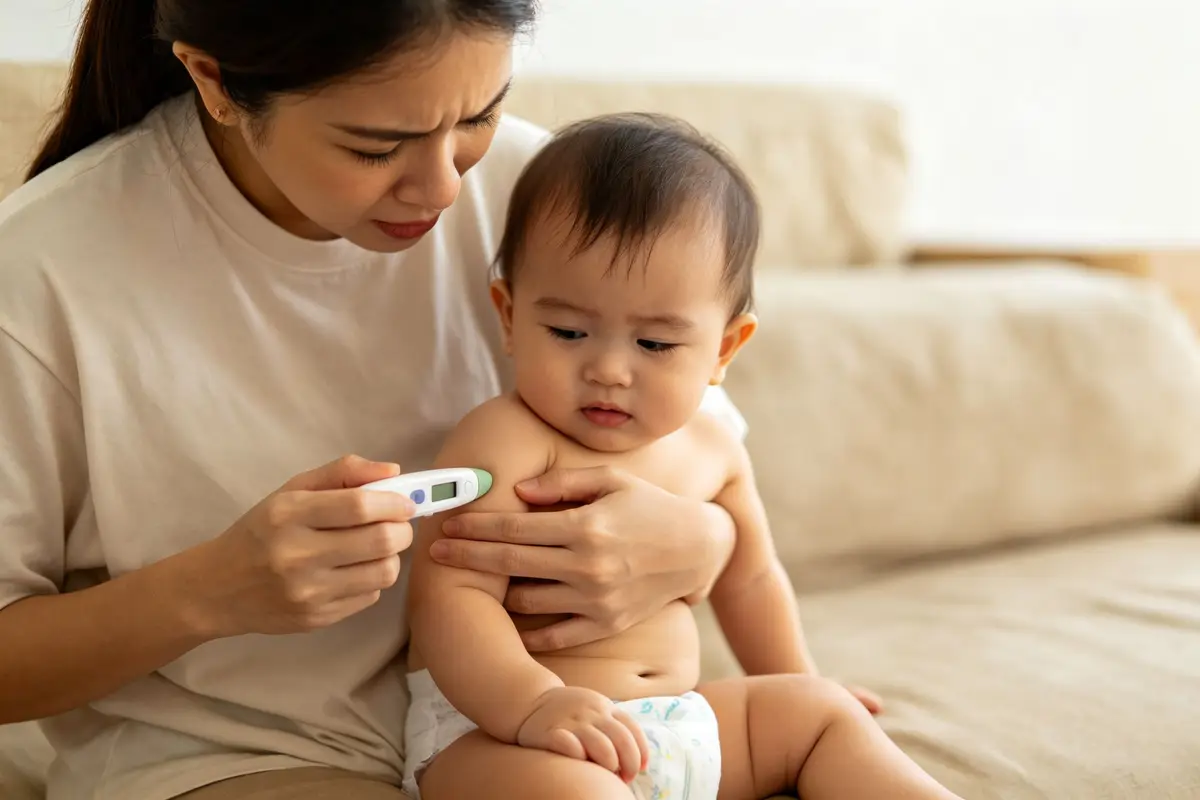
The first time my baby had a fever, I panicked. It was 2 a.m., her forehead was burning up, and I was standing in the nursery holding a thermometer like it was a foreign object. Was 38 degrees serious? Should I wake her to give medicine? Should I rush to the emergency room? Every parent has been there—that moment of sheer panic when your baby's temperature spikes and you're not sure what to do. After three kids and countless fevers, I've learned that baby fever is one of the most common reasons parents call the pediatrician, and most of the time, it's not an emergency. But knowing when to worry and how to help your baby feel better is crucial. Here's everything I've learned about baby fever, from taking temperature correctly to when to call the doctor.
What Is a Baby Fever, Exactly?
A fever is not an illness—it's a sign that the body is fighting off an infection. When your baby's immune system detects a virus or bacteria, it raises the body's temperature to help kill the invader. A fever is actually a positive sign that your baby's immune system is working. But it can still be scary for parents, especially when your baby is too young to tell you what hurts.
The definition of a fever depends on how you take the temperature:
- Rectal temperature (most accurate for babies under 3 months): 38.0°C (100.4°F) or higher is considered a fever
- Armpit (axillary) temperature: 37.5°C (99.5°F) or higher is considered a fever
- Ear (tympanic) temperature: 38.0°C (100.4°F) or higher is considered a fever (not recommended for babies under 6 months, as ear canals are too small for accurate readings)
- Forehead (temporal artery) temperature: 38.0°C (100.4°F) or higher is considered a fever
Normal baby temperature ranges from 36.5°C to 37.5°C (97.7°F to 99.5°F). A baby's temperature can fluctuate throughout the day—it's usually lower in the morning and higher in the late afternoon and evening. It can also rise after crying, feeding, or being bundled up too warmly. That's why it's important to take your baby's temperature when they're calm and not overly bundled.
It's also important to note that a low-grade fever (37.5°C to 38.3°C / 99.5°F to 101°F) is not necessarily a cause for alarm in older babies. The body often raises its temperature slightly to fight off mild infections. What matters more than the number on the thermometer is how your baby looks and behaves, and their age.
How to Take Your Baby's Temperature Correctly
Taking a baby's temperature correctly is harder than it sounds, and the method you use depends on your baby's age. Here's what I've learned from my pediatrician and from years of practice:
For babies under 3 months: A rectal temperature is the gold standard. It's the most accurate method for newborns and young infants. To take a rectal temperature:
- Wash your hands and the thermometer with soap and water
- Turn on the digital thermometer and coat the tip with a small amount of petroleum jelly or water-based lubricant
- Lay your baby on their back and bend their legs toward their chest (like changing a diaper)
- Gently insert the thermometer tip about 1-2 centimeters (1/2 to 1 inch) into the rectum—never force it
- Hold the thermometer in place until it beeps (usually 10-30 seconds)
- Remove the thermometer, read the temperature, and clean the thermometer thoroughly
I know taking a rectal temperature sounds intimidating, but it's quick and doesn't hurt your baby. My pediatrician told me it's the only method she trusts for babies under 3 months, because an inaccurate reading could mean missing a serious infection in a newborn.
For babies 3 months to 3 years: You can use a rectal temperature (still most accurate), an ear thermometer (if your baby is at least 6 months and you pull the ear back and down to straighten the ear canal), or an armpit temperature (least accurate but easiest). I found that once my babies were old enough to sit still, an ear thermometer was the quickest and easiest method. Just make sure to pull the ear back and down before inserting the probe, and aim the probe toward the opposite eye to get an accurate reading.
Tips for accurate temperature readings:
- Always use a digital thermometer—never use a glass mercury thermometer (risk of breakage and mercury exposure)
- Wait at least 15 minutes after bathing, feeding, or being outside in hot/cold weather before taking a temperature
- Don't take the temperature right after your baby has been crying heavily—wait until they've calmed down
- For armpit readings, make sure the thermometer is placed directly in the armpit crease with the arm held firmly against the body
- Clean the thermometer with soap and water or rubbing alcohol between uses
- Label one thermometer "rectal" and one "oral/armpit" to avoid cross-contamination
When to Worry: Age-Based Guidelines
The most important factor in determining whether a baby fever is serious is your baby's age. A fever in a newborn is very different from a fever in a 1-year-old. Here are the age-based guidelines my pediatrician gave me:
Babies under 3 months old: This is the highest-risk group. If your baby is under 3 months and has a rectal temperature of 38.0°C (100.4°F) or higher, call your pediatrician immediately or go to the emergency room. Newborns have immature immune systems, and a fever can be the only sign of a serious bacterial infection like meningitis, a urinary tract infection, or sepsis. Don't give your baby any fever-reducing medicine before calling the doctor, because it can mask the fever and make diagnosis harder. Even if your baby seems fine otherwise, a fever in a newborn needs prompt medical evaluation.
Babies 3 to 6 months old: If your baby is 3-6 months and has a rectal temperature of 38.3°C (101°F) or higher, call your pediatrician. If the fever is lower but your baby seems unwell (lethargic, not feeding, irritable), call anyway. At this age, babies are still more vulnerable to serious infections, and it's better to be safe than sorry.
Babies 6 to 12 months old: If your baby is 6-12 months and has a fever of 38.9°C (102°F) or higher, call your pediatrician. If the fever is lower but lasts more than 24-48 hours, or if your baby seems very unwell, call your doctor. At this age, most fevers are caused by viral infections and will resolve on their own, but you should still monitor your baby closely.
Babies over 12 months old: For toddlers over 1 year, a fever of 39.4°C (103°F) or higher warrants a call to the pediatrician. Lower fevers that last more than 3 days, or fevers accompanied by concerning symptoms, should also be evaluated. At this age, you can usually manage a mild fever at home as long as your child is drinking, playing, and acting like themselves.
Remember: these are general guidelines. Every baby is different, and you know your baby best. If something feels wrong—even if the temperature is below the threshold—trust your instincts and call your pediatrician. It's always better to be safe than sorry, and your doctor would rather see a healthy baby than miss something serious.
Red Flags: When to Seek Immediate Medical Attention
Regardless of your baby's age or the temperature reading, certain symptoms accompanying a baby fever require immediate medical attention. Call your pediatrician or go to the emergency room right away if your baby has any of these red flags:
- Difficulty breathing or rapid breathing: If your baby is breathing fast, wheezing, grunting, or has flaring nostrils or retractions (skin pulling in between the ribs or below the sternum), seek help immediately. These can be signs of pneumonia, bronchiolitis, or another serious respiratory infection.
- Lethargy or difficulty waking: If your baby is unusually sleepy, hard to wake, or not responding to you normally, this is a red flag. A baby with a fever who is listless, floppy, or not making eye contact needs immediate evaluation.
- Signs of dehydration: Dehydration can develop quickly in babies with fever. Signs include: fewer than 4-6 wet diapers in 24 hours (for babies under 6 months) or fewer than 3-4 wet diapers (for older babies), no tears when crying, dry mouth and lips, sunken soft spot (fontanelle) on the head, sunken eyes, and decreased activity. If you notice any of these, seek medical attention promptly.
- Febrile seizure: A febrile seizure is a convulsion caused by a rapid rise in body temperature. It can be terrifying to witness—your baby may stiffen, shake, roll their eyes, or lose consciousness. Most febrile seizures last less than 5 minutes and don't cause lasting harm, but you should still call your pediatrician or go to the ER after a seizure to have your baby evaluated. During a seizure, place your baby on their side on a flat surface, remove nearby objects, and time the seizure. Never put anything in their mouth.
- Persistent vomiting or diarrhea: If your baby is vomiting repeatedly or has frequent watery diarrhea along with a fever, they're at risk for dehydration. Call your pediatrician, especially if your baby can't keep any fluids down.
- Rash or skin changes: A fever accompanied by a rash can be a sign of a more serious infection. Look for a rash that doesn't fade when you press on it (petechiae or purpura), a widespread red rash, or a rash that looks like bruising. Also watch for blue-tinged lips, tongue, or skin, which can indicate low oxygen.
- Refusal to feed or drink: If your baby refuses to breastfeed, take a bottle, or drink any fluids for an extended period, they're at risk for dehydration. Call your pediatrician.
- Fever that doesn't respond to medicine: If you've given the correct dose of acetaminophen or ibuprofen and the fever doesn't come down at all, or if it keeps going back up immediately, call your doctor.
- Fever lasting more than 24-72 hours: The duration depends on age—for babies under 3 months, any fever needs immediate attention; for 3-6 months, fever lasting more than 24 hours; for 6-12 months, more than 48 hours; for over 12 months, more than 72 hours. A prolonged fever may indicate a bacterial infection that needs antibiotics.
- Stiff neck or severe headache: If your baby has a stiff neck (resists having their head bent forward), cries when you touch their neck, or seems to have a severe headache, this can be a sign of meningitis and requires immediate emergency care.
- Pulling at the ear: While not always an emergency, a fever with ear-pulling can indicate an ear infection that needs evaluation. Call your pediatrician to schedule an appointment.
- Crying that can't be consoled: If your baby is crying inconsolably, especially with a high-pitched or weak cry, this can be a sign of serious illness. Trust your instincts—if the cry sounds different from normal, seek help.
How to Help Your Baby Feel Better
Most baby fevers are caused by viral infections and will resolve on their own within 2-3 days. While you wait for the fever to pass, here's what you can do to help your baby feel more comfortable:
1. Give fever-reducing medicine (if appropriate):
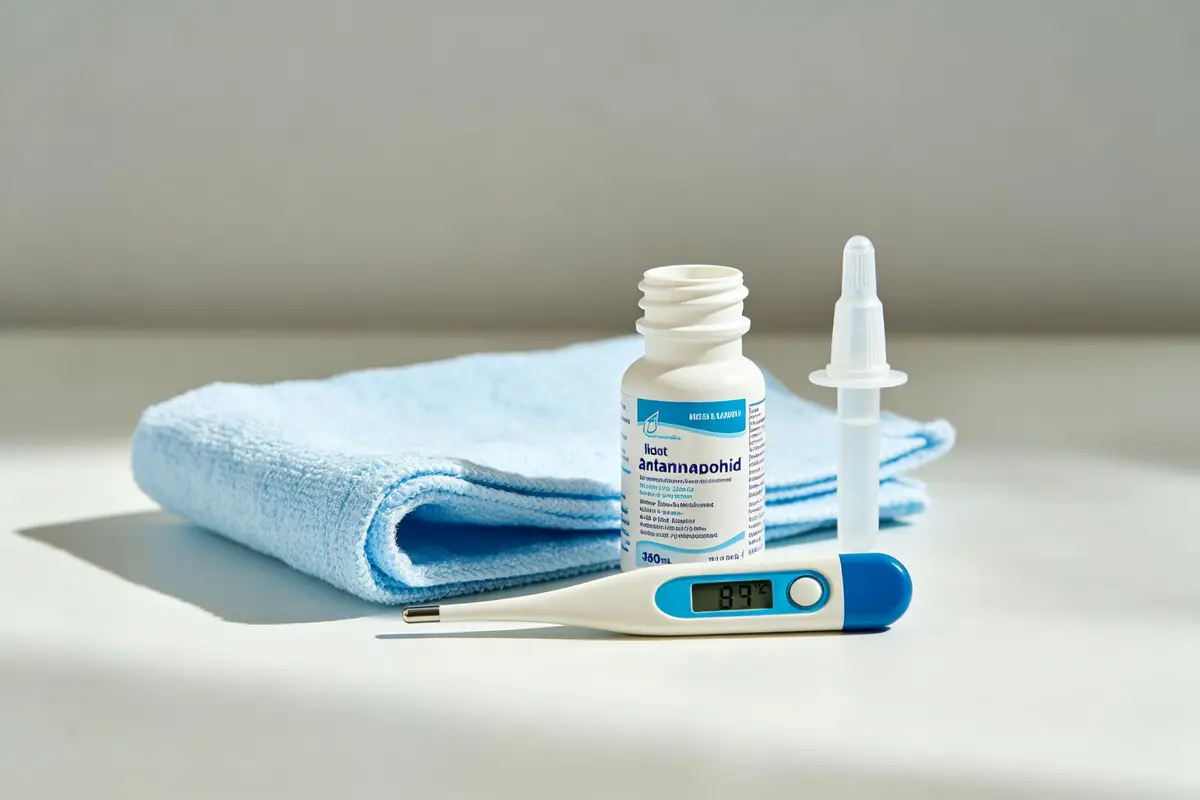
- Acetaminophen (paracetamol): Safe for babies 2 months and older. The dose is based on your baby's weight, not age—always check the label or ask your pediatrician for the correct dose. Acetaminophen usually takes 30-60 minutes to work and lasts 4-6 hours. Don't give more than 4 doses in 24 hours.
- Ibuprofen: Safe for babies 6 months and older (and at least 5 kg / 11 pounds). Like acetaminophen, the dose is based on weight. Ibuprofen usually takes 30-60 minutes to work and lasts 6-8 hours. Don't give more than 3-4 doses in 24 hours. Ibuprofen should be given with food or milk to reduce stomach upset. Don't give ibuprofen to babies who are dehydrated or have kidney problems.
- Never give aspirin to a baby or child: Aspirin can cause Reye's syndrome, a rare but serious condition that affects the liver and brain. Always use acetaminophen or ibuprofen instead.
- Don't alternate medicines unless your pediatrician tells you to: Some doctors recommend alternating acetaminophen and ibuprofen for high fevers that don't respond to one medicine, but this can be confusing and increases the risk of dosing errors. Always ask your pediatrician before alternating.
- Don't give fever medicine to babies under 3 months without doctor approval: For newborns, a fever needs medical evaluation first—don't mask it with medicine before seeing the doctor.
2. Keep your baby hydrated: Fever causes the body to lose fluids faster, so it's important to keep your baby well-hydrated. Offer breast milk or formula frequently (even smaller, more frequent feeds if your baby doesn't feel like eating much). For babies over 6 months, you can also offer small amounts of water. If your baby is breastfeeding, continue nursing on demand—breast milk provides both hydration and antibodies to help fight the infection. Watch for signs of dehydration and call your doctor if you're concerned.
3. Dress your baby lightly: It's a common myth that you should bundle up a baby with a fever to "sweat it out." In fact, overdressing can trap heat and make the fever higher. Dress your baby in lightweight, breathable clothing (like a cotton onesie) and use a light blanket if they seem cold or are shivering. Keep the room at a comfortable temperature (around 20-22°C / 68-72°F). If your baby is shivering, that means the fever is still rising—you can add a light layer, but don't overbundle.
4. Lukewarm sponge bath (optional): A lukewarm (not cold) sponge bath can help bring down a high fever and make your baby more comfortable. Use water that's about 29-32°C (85-90°F)—test it on your wrist first. Sponge your baby's body with a damp washcloth, focusing on the forehead, neck, armpits, and groin (areas where blood vessels are close to the surface). Don't use cold water, ice baths, or rubbing alcohol—these can cause shivering (which raises body temperature), skin irritation, or even alcohol absorption through the skin. Stop the bath if your baby starts shivering or seems uncomfortable. A sponge bath works best when combined with fever medicine—otherwise, the fever may bounce right back up.
5. Offer plenty of rest and comfort: A baby with a fever needs extra rest and cuddles. Hold your baby, rock them, sing to them, or just sit quietly with them. Skin-to-skin contact can be comforting and can also help regulate your baby's temperature. If your baby is sleeping, let them sleep—don't wake them just to give fever medicine unless your pediatrician has told you to. Offer extra comfort feeds and plenty of cuddles during this time.
6. Monitor the fever closely: Keep a log of your baby's temperature readings, when you gave medicine, and any other symptoms. This information will be helpful if you need to call the pediatrician. Take the temperature every 2-4 hours while your baby is awake, and before and after giving medicine to see if it's working.
7. What about teething fever? Many parents attribute low-grade fevers to teething, but the evidence is mixed. While teething can cause a slight rise in temperature (usually less than 38°C / 100.4°F), a true fever is more likely caused by an infection. If your baby has a fever over 38°C, don't assume it's just teething—monitor for other symptoms and call your pediatrician if you're concerned. Teething can cause drooling, gum rubbing, irritability, and mild fussiness, but it shouldn't cause a high fever, vomiting, diarrhea, or lethargy.
Common Causes of Baby Fever
Most baby fevers are caused by viral infections, which don't require antibiotics and will resolve on their own. Common viral causes include:
- Common cold and upper respiratory infections: The most common cause of fever in babies. Symptoms include runny nose, congestion, cough, and mild fever.
- Roseola (sixth disease): Common in babies 6 months to 2 years. Causes a high fever (39-40°C) for 3-5 days, followed by a pink rash that appears on the trunk and spreads outward. The fever usually resolves when the rash appears.
- Hand, foot, and mouth disease: Caused by the coxsackievirus. Symptoms include fever, sore throat, painful sores in the mouth, and a rash on the hands, feet, and sometimes the buttocks. Common in babies and toddlers, especially in daycare settings.
- Gastroenteritis (stomach flu): Causes fever, vomiting, diarrhea, and abdominal pain. Can be caused by viruses (rotavirus, norovirus) or bacteria. Dehydration is the main concern.
- Ear infections (otitis media): Common after a cold. Symptoms include fever, ear pain (pulling at the ear), irritability, and sometimes drainage from the ear. May require antibiotics if bacterial.
- Urinary tract infections (UTIs): Can cause fever without other obvious symptoms in babies. Signs may include fever, irritability, poor feeding, vomiting, and foul-smelling or cloudy urine. More common in girls and uncircumcised boys. Requires antibiotics.
- Immunizations: Vaccines can cause a mild fever 1-2 days after vaccination (or 7-10 days for MMR and varicella vaccines). This is a normal immune response and usually resolves within 1-2 days. You can give acetaminophen or ibuprofen if your baby seems uncomfortable.
Bacterial infections that can cause fever include ear infections, urinary tract infections, pneumonia, meningitis, and bacterial sinusitis. These may require antibiotics. Your pediatrician will determine whether the fever is viral or bacterial based on your baby's symptoms, a physical exam, and possibly tests like a urine test, blood test, or chest X-ray.
Article Summary
A baby fever is one of the most common reasons parents call the pediatrician, and while it can be scary, it's usually a sign that the immune system is working to fight off an infection. A fever is defined as a rectal temperature of 38.0°C (100.4°F) or higher, and the most accurate method for babies under 3 months is a rectal temperature. The most important factor in determining severity is your baby's age: any fever in a baby under 3 months requires immediate medical attention; babies 3-6 months need evaluation for fevers over 38.3°C (101°F); babies 6-12 months for fevers over 38.9°C (102°F); and toddlers over 12 months for fevers over 39.4°C (103°F). Red flags that require immediate attention regardless of age include difficulty breathing, lethargy, signs of dehydration, febrile seizures, persistent vomiting/diarrhea, rash that doesn't fade with pressure, refusal to feed, fever that doesn't respond to medicine, prolonged fever, stiff neck, and inconsolable crying. To help your baby feel better, give age-appropriate fever medicine (acetaminophen for 2+ months, ibuprofen for 6+ months—never aspirin), keep them hydrated with frequent breast milk/formula feeds, dress them lightly, offer a lukewarm sponge bath if needed, provide extra rest and cuddles, and monitor the fever closely. Most fevers are caused by viral infections and resolve within 2-3 days, but bacterial infections may require antibiotics. Trust your instincts—if something feels wrong, call your pediatrician. And remember, a fever is a sign that your baby's immune system is doing its job. With proper monitoring and care, most babies recover quickly from fevers. For more baby care guides, explore our baby skin care guide and Moni Happy baby care products.
Frequently Asked Questions
When should I call the pediatrician?
Call your pediatrician if your baby has a fever over 100.4°F (38°C) under 3 months old, seems lethargic or difficult to wake, refuses to eat or drink, has persistent vomiting or diarrhea, shows signs of dehydration (fewer wet diapers, dry mouth, sunken fontanelle), has difficulty breathing, or if something just doesn't seem right. Trust your instincts as a parent.
How can I tell if my baby is in pain?
Babies show pain through crying that's different from their usual cry — it may be higher-pitched, more intense, or difficult to soothe. Other signs include facial grimacing, clenched fists, drawing legs up to the chest, changes in sleep or feeding patterns, and being unusually fussy or unusually quiet. If you suspect pain, check for common causes like teething, gas, ear infection, or injury.
Is it normal for my baby to get sick often?
It's normal for babies and toddlers to get 6-8 colds a year, especially if they're in daycare or around older siblings. Their immune systems are still developing and building immunity. However, frequent infections that are severe, last a long time, or are accompanied by poor weight gain may warrant a checkup with your pediatrician to rule out underlying issues.
How do I give my baby medicine safely?
Always use the measuring device that comes with the medicine — never use a household spoon. Check the dose based on your baby's weight, not just age. Give the full prescribed course of antibiotics even if your baby seems better. Never give aspirin to children under 18, and check with your pediatrician or pharmacist before combining medicines or giving over-the-counter medicine to babies under 6 months.
Frequently Asked Questions
What temperature is considered a fever in a baby?
A fever is defined differently depending on how you take the temperature. For rectal temperature (the most accurate method for babies under 3 months), 38.0°C (100.4°F) or higher is considered a fever. For armpit (axillary) temperature, 37.5°C (99.5°F) or higher is a fever. For ear (tympanic) or forehead (temporal artery) temperature, 38.0°C (100.4°F) or higher is a fever. Normal baby temperature ranges from 36.5°C to 37.5°C (97.7°F to 99.5°F). A baby's temperature can fluctuate throughout the day—usually lower in the morning and higher in the late afternoon/evening—and can rise after crying, feeding, or being bundled too warmly. That's why it's important to take the temperature when your baby is calm and not overly bundled. For babies under 3 months, a rectal temperature is the only method pediatricians trust, because an inaccurate reading could mean missing a serious infection in a newborn.
When should I worry about my baby's fever and call the doctor?
The most important factor is your baby's age. For babies under 3 months: any rectal temperature of 38.0°C (100.4°F) or higher requires immediate medical attention—call your pediatrician or go to the ER right away. Newborns have immature immune systems, and a fever can be the only sign of a serious bacterial infection like meningitis or a UTI. Don't give fever medicine before seeing the doctor, as it can mask the fever. For babies 3-6 months: call the pediatrician for a rectal temperature of 38.3°C (101°F) or higher, or if your baby seems unwell even with a lower fever. For babies 6-12 months: call for a fever over 38.9°C (102°F), or a lower fever lasting more than 24-48 hours. For babies over 12 months: call for a fever over 39.4°C (103°F), or a fever lasting more than 3 days. Regardless of age and temperature, seek immediate medical attention if your baby has any red flags: difficulty breathing or rapid breathing, lethargy or difficulty waking, signs of dehydration (fewer wet diapers, no tears, dry mouth, sunken fontanelle), a febrile seizure, persistent vomiting or diarrhea, a rash that doesn't fade when pressed, refusal to feed or drink, fever that doesn't respond to medicine, stiff neck, or inconsolable crying. Trust your instincts—if something feels wrong, call your pediatrician. It's always better to be safe than sorry.
How can I help my baby feel better when they have a fever?
Most baby fevers are caused by viral infections and will resolve on their own within 2-3 days. To help your baby feel more comfortable: 1) Give age-appropriate fever medicine: acetaminophen (paracetamol) is safe for babies 2 months and older, and ibuprofen for babies 6 months and older (and at least 5kg/11lbs). Doses are based on weight, not age—always check the label or ask your pediatrician. Never give aspirin to a baby, as it can cause Reye's syndrome. Don't alternate medicines unless your pediatrician tells you to. 2) Keep your baby hydrated: fever causes faster fluid loss. Offer frequent breast milk or formula feeds (smaller, more frequent feeds if needed). For babies over 6 months, offer small amounts of water. Watch for signs of dehydration. 3) Dress your baby lightly: don't bundle up to 'sweat it out'—overdressing traps heat and raises temperature. Use lightweight, breathable clothing and a light blanket if they're shivering. Keep the room at 20-22°C (68-72°F). 4) Lukewarm sponge bath (optional): a lukewarm (29-32°C / 85-90°F) sponge bath can help bring down a high fever. Focus on the forehead, neck, armpits, and groin. Never use cold water, ice baths, or rubbing alcohol. Stop if baby shivers. 5) Offer extra rest and cuddles: hold, rock, and comfort your baby. Skin-to-skin contact can be soothing and help regulate temperature. Let sleeping babies sleep—don't wake them just for medicine unless your doctor says to. 6) Monitor closely: keep a log of temperatures, medicine doses, and symptoms. Take temperature every 2-4 hours while awake. Remember: a fever is a sign the immune system is working. With proper care, most babies recover quickly.
What are the most common causes of fever in babies?
Most baby fevers (about 70-80%) are caused by viral infections, which don't require antibiotics and resolve on their own. Common viral causes include: 1) Common cold and upper respiratory infections - the most common cause, with runny nose, congestion, cough, and mild fever. 2) Roseola (sixth disease) - common in babies 6 months to 2 years, causing high fever (39-40°C) for 3-5 days followed by a pink rash on the trunk. 3) Hand, foot, and mouth disease - caused by coxsackievirus, with fever, sore throat, mouth sores, and rash on hands/feet. Common in daycare settings. 4) Gastroenteritis (stomach flu) - fever with vomiting and diarrhea; dehydration is the main concern. 5) Ear infections - common after a cold, with fever, ear-pulling, and irritability. 6) Urinary tract infections (UTIs) - can cause fever without other obvious symptoms; more common in girls and uncircumcised boys; requires antibiotics. 7) Immunizations - vaccines can cause mild fever 1-2 days after vaccination (or 7-10 days for MMR/varicella), a normal immune response that resolves in 1-2 days. Bacterial causes (less common but may need antibiotics) include ear infections, UTIs, pneumonia, meningitis, and bacterial sinusitis. Your pediatrician will determine whether the fever is viral or bacterial based on symptoms, physical exam, and possibly tests (urine test, blood test, chest X-ray). If your baby has a fever, monitor for other symptoms and call your pediatrician if you're concerned or if the fever persists. For babies under 3 months, any fever needs immediate medical evaluation regardless of other symptoms.