
2026-09-12 · Moni Happy Editorial
Baby Fine Motor Skills: Development Milestones & Activities Guide
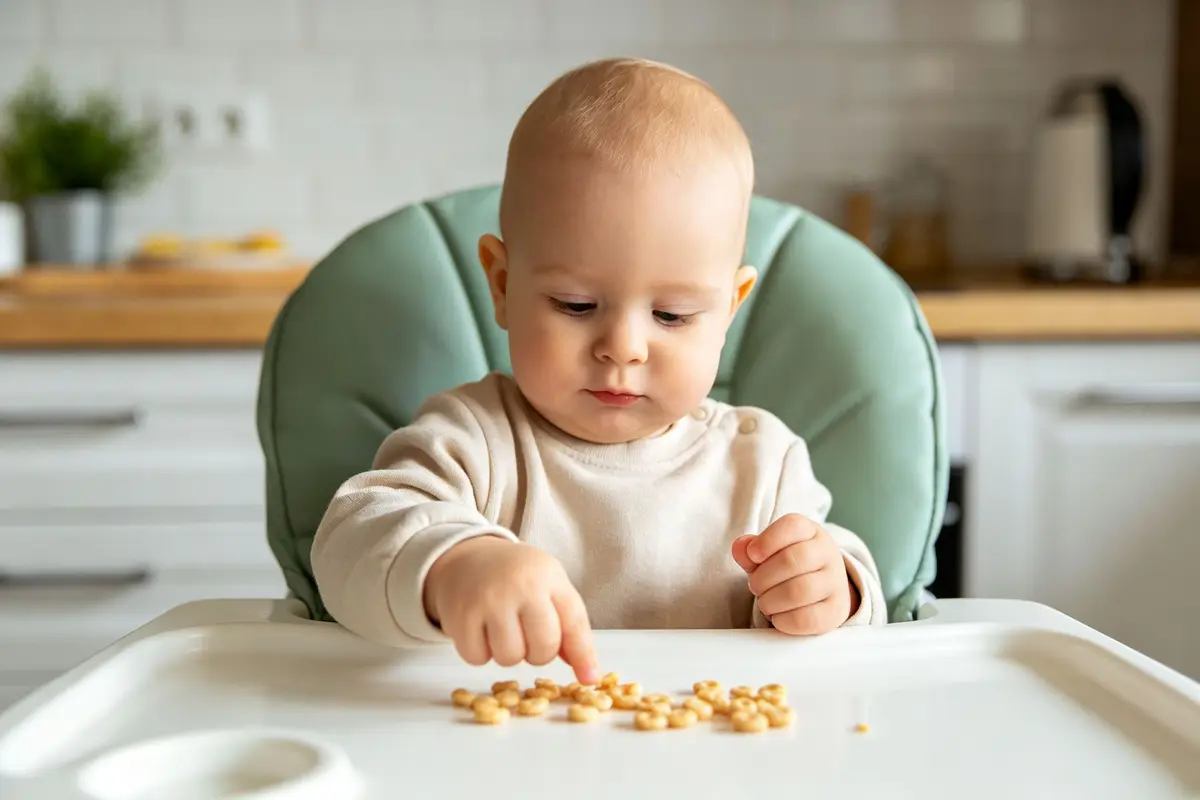
Watching my daughter discover her hands was one of the most magical parts of the first year. At first, they were just these blurry things that waved in front of her face. Then around three months, she started staring at them, studying them as if they were the most interesting thing in the world. By four months, she was reaching for toys and grabbing everything in sight. By eight months, she had developed the pincer grasp — that magical moment when she could pick up a single Cheerio between her thumb and forefinger. Fine motor skills — the coordination of small muscles in the hands, fingers, and wrists — are foundational to everything from feeding and dressing to writing and drawing later in life. This guide covers the fine motor development milestones, activities to encourage skill building, and when to seek help if you have concerns.
What Are Fine Motor Skills and Why Do They Matter?
Fine motor skills involve the coordination of the small muscles in the hands, fingers, and wrists, working together with the eyes (hand-eye coordination) to perform precise tasks. These skills develop gradually from birth, starting with reflexive movements and progressing to intentional, controlled actions. Fine motor skills are essential for almost every daily activity: feeding (holding a bottle, self-feeding with fingers, using utensils), dressing (zipping, buttoning, tying shoes), grooming (brushing teeth, combing hair, washing hands), and academic skills (holding a crayon, drawing, writing, cutting with scissors, turning book pages). They also play a role in cognitive development — manipulating objects helps babies learn about cause and effect, spatial relationships, size, shape, texture, and weight. The hands are one of the primary ways babies explore and learn about their world, so developing fine motor control is closely linked to overall cognitive and sensory development. Fine motor skills develop alongside gross motor skills (larger movements like rolling, sitting, crawling, walking), and the two are interconnected. For example, a baby needs good core stability (a gross motor skill) to sit upright and free their hands for fine motor play. This is why tummy time and opportunities for movement are so important — they build the foundational strength that allows fine motor skills to develop.
What Are the Fine Motor Development Milestones by Age?
Fine motor skills develop in a predictable sequence, though every baby progresses at their own pace. Here are the general milestones by age. 0-3 months: newborns have a reflexive grasp (they will automatically curl their fingers around an object placed in their palm, but this is not intentional). By 2-3 months, they start to notice their hands, bring them to their mouth, and swipe at objects. They may briefly hold a rattle placed in their hand. 3-6 months: babies start reaching for and grabbing objects intentionally, transferring objects from one hand to the other, and bringing objects to their mouth to explore. They can hold a bottle (with support) and shake a rattle. By 6 months, they may start using a raking grasp (scooping objects with all fingers) to pick up larger items. 6-9 months: the raking grasp becomes more refined, and babies start to use their thumb in opposition to the other fingers. They can pick up smaller objects, bang two toys together, and drop objects on purpose (to watch them fall or hear the sound). They may start pointing with their index finger. By 8-9 months, many babies develop the pincer grasp — picking up small objects between the thumb and forefinger. 9-12 months: the pincer grasp becomes more precise and controlled. Babies can pick up small pieces of food (like Cheerios or peas), turn pages of a board book (several at a time), point with intention, and put objects into a container (and take them out). They may start holding a crayon with a fist grip and making marks on paper. 12-18 months: toddlers can stack 2-4 blocks, turn book pages one at a time, use a spoon (with some spilling), hold a cup with two hands, scribble with a crayon, and point to pictures in books. They start to use a more mature grasp on crayons (moving from fist grip to holding with fingers). 18-24 months: toddlers can stack 4-6 blocks, turn doorknobs, unzip large zippers, use a spoon more accurately, string large beads, and draw lines and circles. They may start to show a hand preference (right or left handedness), though consistent handedness may not be established until age 3-4. Remember that these are general guidelines — some babies develop skills earlier, some later, and that is usually normal. What matters most is that your baby is progressively gaining new skills over time.
What Activities Can I Do to Encourage Fine Motor Development?
There are many simple, fun activities you can do with your baby to encourage fine motor skill development, using items you probably already have at home. For newborns (0-3 months): place your finger or a lightweight rattle in your baby's palm to encourage the grasp reflex; hang a mobile or play gym with toys within reaching distance to encourage swatting and grabbing; let your baby explore different textures (soft blankets, smooth wooden toys, crinkly fabric) by placing them near their hands. For 3-6 months: offer toys of different shapes, sizes, and textures for your baby to grab and explore; encourage transferring objects from one hand to the other by placing a toy in one hand and then offering another; do tummy time with toys placed just out of reach to encourage reaching; let your baby hold their own bottle (with your support) during feedings. For 6-9 months: offer finger foods (soft, age-appropriate pieces like cooked vegetables, soft fruit, or baby puffs) to encourage self-feeding and the pincer grasp; play "drop and pick up" — let your baby drop toys and then hand them back (this is a favorite game at this age); provide stacking cups or nesting toys; give your baby a bowl and spoon to play with (even if they are not actually eating); let your baby explore textured balls, fabric books, and toys with buttons, knobs, or sliders. For 9-12 months: continue offering finger foods to refine the pincer grasp; play with shape sorters (start with simple, large shapes); provide blocks for banging and stacking (they will mostly bang at this age); give your baby crayons and paper for scribbling (supervise closely); play "put in, take out" with a container and objects; let your baby turn the pages of board books. For toddlers (12-24 months): offer more challenging finger foods and encourage utensil use; provide building blocks (try to stack 3-5 blocks); play with play dough (supervise, as it can be a choking hazard); string large wooden beads; do simple puzzles (large knob puzzles); draw with crayons and markers; practice zipping and unzipping (large zippers on jackets or toys); pour water or sand from one container to another; tear paper (great for building hand strength). The most important thing is to follow your baby's lead — let them explore and play at their own pace, and resist the urge to "teach" or correct. Play is the work of childhood, and through play, babies naturally develop the skills they need. You can find a range of baby care products at Moni Happy's online store, including soft wipes and towels that are useful during play and feeding sessions.
When Should I Be Concerned About Fine Motor Development?
While every baby develops at their own pace, there are some red flags that may indicate a need for evaluation by a pediatrician or occupational therapist. Contact your pediatrician if: by 3 months, your baby does not bring their hands to their mouth or does not seem to notice their hands; by 4 months, your baby does not reach for or grab objects; by 6 months, your baby does not transfer objects from one hand to the other or does not bring objects to their mouth to explore; by 9 months, your baby does not use a raking grasp to pick up objects or does not bang two toys together; by 12 months, your baby does not develop a pincer grasp (cannot pick up small objects between thumb and forefinger), does not point with intention, or does not put objects into a container; by 18 months, your toddler does not stack at least 2 blocks, does not scribble with a crayon, or consistently uses only one hand (strong hand preference before 18 months can sometimes indicate an issue); by 2 years, your toddler does not stack 4-6 blocks, cannot turn book pages, or shows significant difficulty with self-feeding. Also, if your baby consistently keeps their hands fisted (closed) after 3-4 months, or if one hand seems significantly weaker or less coordinated than the other, these are worth discussing with your pediatrician. Early intervention is key — if there is a delay, occupational therapy can be very effective in helping babies develop fine motor skills. Your pediatrician may refer you to an early intervention program (many countries offer free or low-cost early intervention services for babies and toddlers with developmental delays) or a pediatric occupational therapist for an evaluation. It is also important to remember that some babies simply prefer to focus on gross motor skills (like crawling and walking) before fine motor skills, and that is normal. If your baby is walking early but not yet stacking blocks, that may just be their developmental priority. But if you have concerns, trust your instincts and talk to your pediatrician — an evaluation can either reassure you that everything is on track, or identify areas where a little extra support can make a big difference.
Frequently Asked Questions
When does the pincer grasp develop and how can I encourage it?
The pincer grasp — picking up small objects between the thumb and forefinger — typically develops between 8 and 10 months, though some babies develop it a little earlier or later. You can encourage it by offering small, soft finger foods that are easy to pick up (like baby puffs, cooked peas, small pieces of soft fruit, or shredded cheese). Place the food on your baby's high chair tray and let them practice picking it up. At first, they may use a raking grasp (scooping with all fingers), but gradually they will refine to the pincer grasp. You can also offer small toys or objects (like large beads or blocks) that require picking up with thumb and finger. Always supervise closely when your baby is eating or playing with small objects to prevent choking. By 12 months, most babies have a well-developed pincer grasp and can pick up even tiny objects — which is why baby-proofing becomes so important at this age!
My baby prefers to use one hand — is this normal?
It is normal for babies to experiment with both hands and occasionally prefer one over the other during the first year. However, a consistent, strong hand preference before 18 months can sometimes be a sign of an issue (such as weakness or decreased coordination in the non-preferred hand), and it is worth mentioning to your pediatrician. Most children do not establish consistent handedness (right or left) until 3-4 years old, and some children remain ambidextrous for even longer. Before that, they should be using both hands relatively equally for tasks like reaching, grabbing, and playing. If you notice your baby consistently favors one hand, try to encourage the other hand by placing toys or food on the non-preferred side, or by gently guiding the non-preferred hand to interact with objects. But do not force it — simply provide opportunities for both hands to be used. If the preference persists or if the non-preferred hand seems weak or clumsy, talk to your pediatrician.
Are there any toys that are especially good for fine motor development?
The best fine motor toys are simple, open-ended, and require manipulation. Some great options include: stacking cups or nesting toys (encourages grasping, stacking, and size perception); shape sorters (encourages matching, turning, and placing); building blocks (encourages grasping, stacking, and hand-eye coordination — start with large, soft blocks for younger babies); textured balls and sensory toys (encourages grasping and tactile exploration); toys with buttons, knobs, sliders, or doors (encourages finger isolation and cause-effect learning); large wooden beads for stringing (for toddlers 18+ months); play dough (for toddlers — builds hand strength and finger dexterity); crayons and paper (for scribbling — start with large, chunky crayons that are easy to grip); and board books with lift-the-flap or touch-and-feel elements. You do not need expensive or electronic toys — many household items (wooden spoons, plastic containers, measuring cups, empty boxes) are excellent for fine motor play. The key is to provide a variety of objects that require different types of manipulation (grasping, stacking, inserting, turning, squeezing, pulling) and to let your baby explore freely. Always supervise play and ensure toys are age-appropriate (no small parts that could be a choking hazard for babies under 3).
Can tummy time really help with fine motor skills?
Yes! Tummy time is one of the most important activities for overall motor development, including fine motor skills. When babies are on their stomachs, they must push up with their arms and hands to lift their head and chest. This builds strength in the shoulders, upper back, arms, and wrists — all of which provide the stable foundation needed for fine motor control. Without this upper body stability, babies have difficulty controlling their hands and fingers for precise tasks. Tummy time also encourages babies to reach for toys while on their stomachs, which builds hand-eye coordination and reaching skills. As babies get stronger, they will start to shift weight to one hand while reaching with the other, which is an important precursor to more refined fine motor tasks. Even after babies can sit and crawl, continued floor play (including tummy time) helps build and maintain the core and upper body strength that supports fine motor development. So while tummy time may seem like it is only for gross motor skills (head control, rolling, crawling), it is actually foundational for fine motor skills as well. Aim for 30-60 minutes of supervised tummy time per day by 3-4 months, spread throughout the day in short sessions.
Article Summary
Fine motor skills — the coordination of small muscles in the hands, fingers, and wrists — develop gradually from birth and are foundational to feeding, dressing, grooming, and later academic skills like writing and drawing, while also supporting cognitive development through object exploration. Development follows a predictable sequence: newborns have reflexive grasping, 3-6 month olds reach and transfer objects, 6-9 month olds use a raking grasp and begin the pincer grasp, 9-12 month olds refine the pincer grasp and put objects in containers, and toddlers progressively stack blocks, scribble, use utensils, and manipulate fasteners. Parents can encourage development through age-appropriate activities: offering textured toys and reaching opportunities for newborns, finger foods and stacking toys for infants, and play dough, beads, puzzles, and drawing for toddlers — always following the baby's lead through play. Red flags that warrant pediatric evaluation include not reaching by 4 months, no pincer grasp by 12 months, consistent one-hand preference before 18 months, or difficulty with age-appropriate self-feeding or stacking, as early intervention with occupational therapy can be highly effective. With opportunities for exploration, play, and practice, most babies develop fine motor skills naturally and progressively, building the foundation for a lifetime of skilled hand use.
Frequently Asked Questions
When does the pincer grasp develop and how can I encourage it?
The pincer grasp typically develops between 8-10 months. Encourage it by offering small soft finger foods (baby puffs, cooked peas, soft fruit pieces) on the high chair tray. At first babies use a raking grasp, then refine to thumb-forefinger. Also offer small toys that require precise picking up. Always supervise to prevent choking. By 12 months most babies have a well-developed pincer grasp.
My baby prefers to use one hand — is this normal?
Occasional preference is normal in the first year, but consistent strong hand preference before 18 months may indicate weakness in the other hand and is worth discussing with your pediatrician. Most children establish handedness at 3-4 years. Encourage both hands by placing toys on the non-preferred side. If the non-preferred hand seems weak or clumsy, seek evaluation.
Are there toys especially good for fine motor development?
Best toys are simple and require manipulation: stacking cups, shape sorters, building blocks, textured balls, toys with buttons/knobs/sliders, large wooden beads (18+ months), play dough, chunky crayons, and lift-the-flap board books. Household items like wooden spoons and plastic containers work too. Provide objects requiring different manipulations (grasping, stacking, inserting, turning, squeezing) and ensure age-appropriate sizes to prevent choking.
Can tummy time really help with fine motor skills?
Yes — tummy time builds shoulder, upper back, arm, and wrist strength that provides the stable foundation for fine motor control. Without upper body stability, babies struggle with precise hand tasks. Tummy time also encourages reaching while prone, building hand-eye coordination. As babies get stronger, they shift weight to one hand while reaching with the other, an important precursor to refined fine motor tasks. Aim for 30-60 minutes daily by 3-4 months.