
2026-09-11 · Moni Happy Editorial
Baby First Aid Kit Essentials: A Mom's Complete Guide to Emergency Preparedness
The night my 10-month-old fell and hit his head on the coffee table, I froze. He was screaming, there was a red bump forming, and my mind went completely blank — what do I do? Do I call an ambulance? Do I put ice on it? Should I keep him awake? After the pediatrician assured me he was fine (monitor for 24 hours, no vomiting, no unusual behavior), I went straight home and assembled a proper baby first aid kit. I never wanted to feel that helpless again. If you have a baby or toddler, having a well-stocked, easily accessible first aid kit is not optional — it is essential.
What Should Be in Every Baby First Aid Kit?
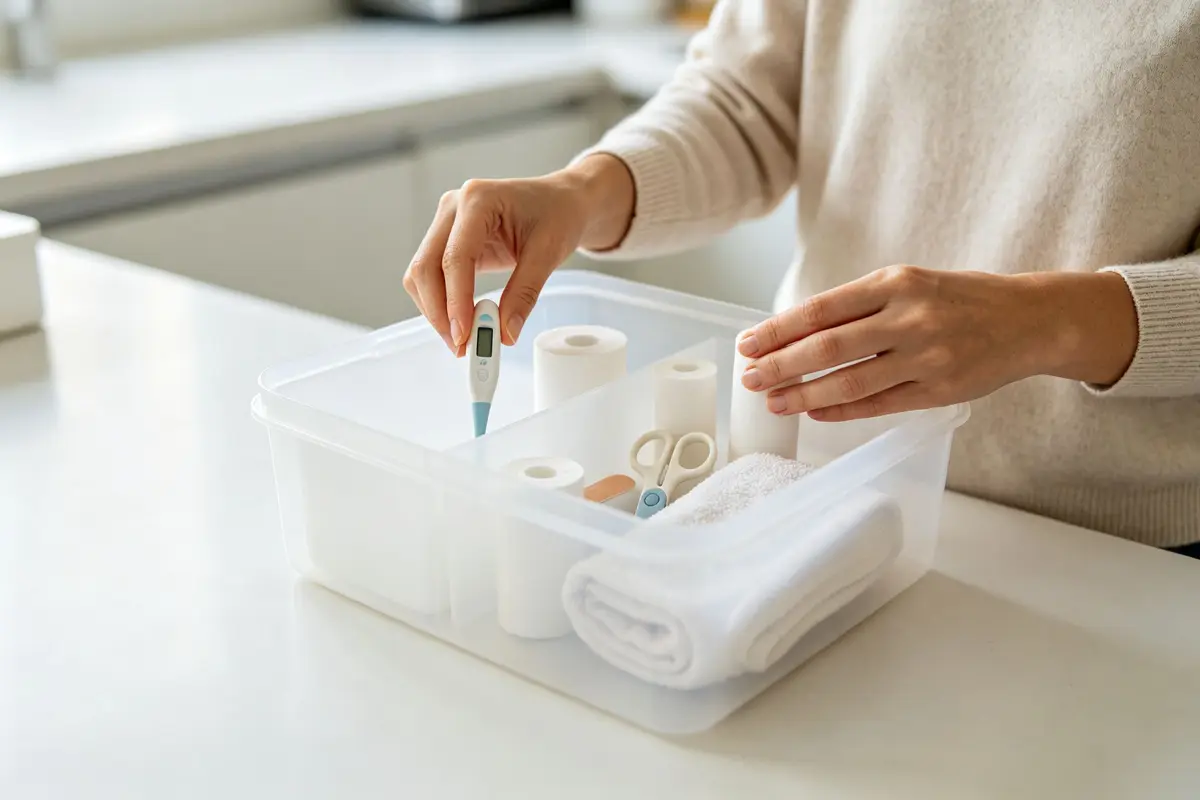
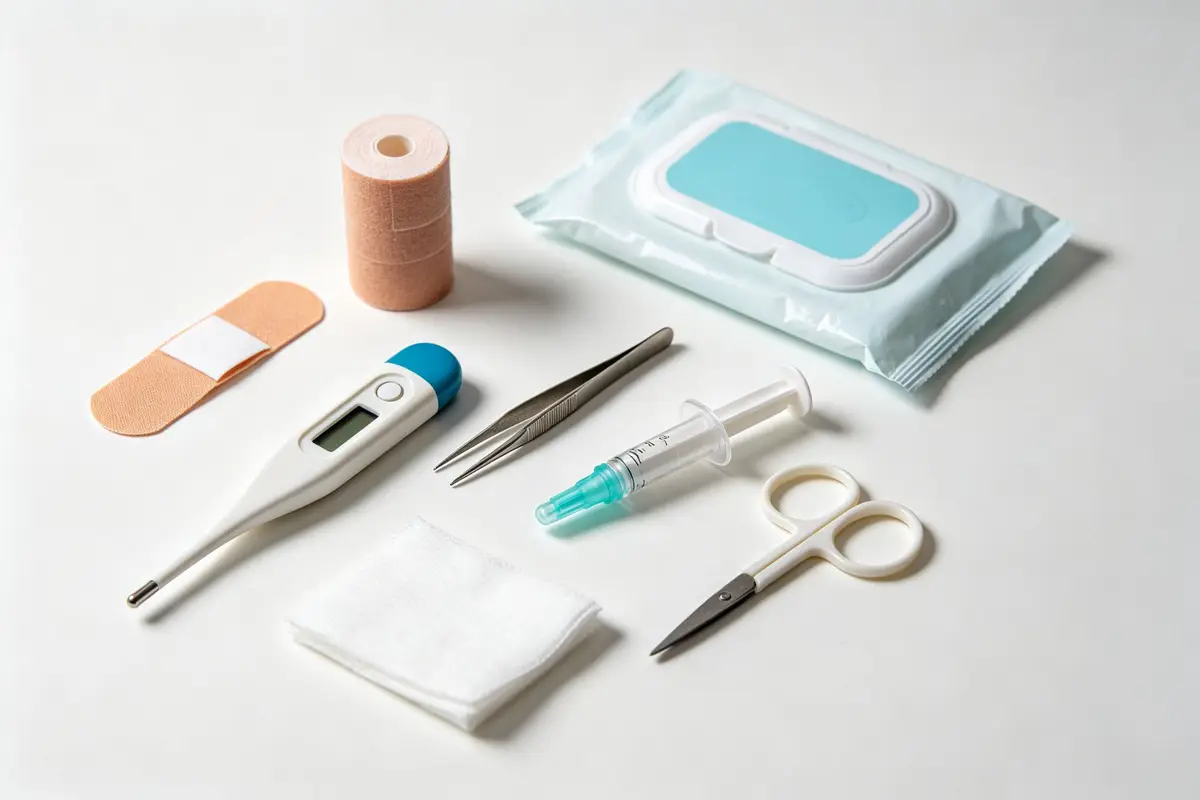
A baby first aid kit is different from an adult one because babies and toddlers have specific needs and vulnerabilities. Here is what I recommend including, based on what I have actually used (plus what pediatricians and the Red Cross recommend): a digital thermometer (ear or forehead, plus a rectal one for infants under 3 months), infant acetaminophen (Tylenol) and ibuprofen (for babies 6 months and older), with dosing based on weight, not age; adhesive bandages in various sizes (fun prints help distract toddlers); sterile gauze pads and rolled gauze; medical tape; antiseptic wipes or saline solution for cleaning wounds; blunt-tip scissors; tweezers for splinters; an oral syringe or medicine dropper for accurate dosing; a bulb syringe for nasal congestion; petroleum jelly for minor burns and dry skin; a cold pack (instant or reusable); a soft cloth or washcloth; a list of emergency phone numbers (pediatrician, poison control, nearest emergency room); and your baby's health insurance card and any allergy information. Store everything in a clear, waterproof container so you can see contents at a glance.
What Medications Are Safe for Babies?
This is one of the most confusing parts of baby first aid, because so many common over-the-counter medications are not safe for infants. For fever and pain, infant acetaminophen (Tylenol) is safe for babies 2 months and older, and infant ibuprofen (Motrin, Advil) is safe for babies 6 months and older — always dose by weight, not age, and use the included measuring device (never a kitchen spoon). Never give aspirin to anyone under 18 due to the risk of Reye's syndrome. Cough and cold medications are not recommended for children under 4 years — they can cause serious side effects and have not been proven effective in young children. For congestion, use saline drops and a bulb syringe, a cool-mist humidifier, and plenty of fluids. Antihistamines like diphenhydramine (Benadryl) should only be given under a doctor's guidance for babies under 2. For any medication, check with your pediatrician first, and never give more than the recommended dose or combine medications without checking for interactions.
How Do I Treat Common Baby Injuries at Home?
Bumps, bruises, scrapes, and minor burns are inevitable with a mobile baby or toddler. For bumps on the head, apply a cold pack for 10-15 minutes to reduce swelling, and monitor closely for 24 hours — watch for vomiting, excessive sleepiness, unusual behavior, unequal pupil size, or clear fluid from the nose or ears, which warrant immediate medical attention. For scrapes and cuts, clean gently with soap and water or saline, apply pressure with sterile gauze if bleeding, and cover with an adhesive bandage or gauze and tape. For minor burns (first-degree, red and painful but no blisters), run cool (not cold) water over the area for 10-20 minutes, then apply a thin layer of petroleum jelly and cover loosely with sterile gauze — never use ice, butter, or ointments on burns, and never pop blisters. For insect bites, wash with soap and water, apply a cold pack to reduce swelling, and use a paste of baking soda and water for itching — avoid topical antihistamine creams on babies under 2. For splinters, use clean tweezers to gently pull it out in the same direction it entered, then clean the area.
When Should I Call Emergency Services vs. the Pediatrician?
Knowing when to call 911 (or your local emergency number) versus when to call the pediatrician can be the difference between life and death. Call emergency services immediately if: your baby is not breathing or has stopped breathing; your baby is unresponsive or cannot be woken; your baby has blue or gray lips, face, or fingernails; your baby is having a seizure that lasts more than 5 minutes or is having trouble breathing after a seizure; your baby has a severe allergic reaction with swelling of the face, lips, or tongue, difficulty breathing, or widespread hives; your baby has a head injury with loss of consciousness, vomiting, or unusual behavior; your baby has a burn that is large, deep, or on the face, hands, feet, or genitals; your baby has swallowed a poisonous substance or a foreign object; or your baby has a fever over 38°C (100.4°F) if under 3 months old. For non-emergency concerns — mild fever, minor cuts, cold symptoms, rash, feeding issues — call your pediatrician's office during hours or use their after-hours line. When in doubt, always err on the side of calling for help.
How Do I Baby-Proof My Home to Prevent Injuries?
While a first aid kit is essential for treating injuries, preventing them in the first place is even better. Baby-proofing should start before your baby becomes mobile (around 6 months) and be updated as they reach new milestones. Key areas: install safety gates at the top and bottom of stairs (hardware-mounted at the top, not pressure-mounted); secure heavy furniture (dressers, bookshelves, TVs) to the wall with anti-tip straps; cover electrical outlets with outlet covers; use corner and edge bumpers on sharp furniture; install window guards or window stops on windows above the first floor; keep small objects (coins, buttons, batteries, small toy parts) out of reach — anything that fits through a toilet paper roll is a choking hazard; secure cords from blinds and curtains; install toilet lid locks; use stove knob covers and turn pot handles toward the back of the stove; keep cleaning products, medications, and other toxic substances in locked cabinets; and use door knob covers or door pinch guards. Remember that no baby-proofing is a substitute for supervision, but it significantly reduces risk.
Should I Take an Infant CPR and First Aid Class?
Yes, absolutely — and I cannot recommend this strongly enough. Infant CPR is different from adult CPR, and knowing what to do in an emergency can save your baby's life. The American Red Cross, American Heart Association, and many local hospitals and community centers offer infant and child CPR and first aid classes, often available both in-person and online. Ideally, both parents or primary caregivers should be certified, and the certification should be renewed every 1-2 years. Key skills to learn include: infant CPR (chest compressions and rescue breaths for babies under 1 year), choking relief (back blows and chest thrusts for conscious choking infants), how to use an AED (automated external defibrillator) on a child, how to recognize signs of distress, and when to call emergency services. Even if you hope you never need to use these skills, having the knowledge gives you confidence and could be the difference between a tragedy and a close call. I took a class before my first baby was born, and while I have (thankfully) never had to perform CPR, the choking relief techniques I learned came in handy when my toddler choked on a grape.
Frequently Asked Questions
What is the most important item in a baby first aid kit?
If I had to pick one, it would be a digital thermometer with an infant-appropriate measuring method (rectal for under 3 months, ear or forehead for older babies). Fever is one of the most common reasons parents seek medical care, and having an accurate temperature reading helps you and your pediatrician make informed decisions. A close second would be infant acetaminophen with a proper dosing syringe, since fever and pain are the most common baby ailments.
Can I give my baby medicine for a cold or cough?
No. The FDA and AAP recommend against over-the-counter cough and cold medications for children under 4 years old. These medications can cause serious side effects in young children (including rapid heart rate, convulsions, and even death in rare cases) and have not been proven effective for children under 6. For cold symptoms, use saline drops and a bulb syringe for congestion, a cool-mist humidifier, plenty of fluids, and rest. If symptoms are severe or persist, contact your pediatrician.
How do I know if my baby's fever is serious?
For babies under 3 months, any rectal temperature of 38°C (100.4°F) or higher is considered a medical emergency — call your pediatrician immediately or go to the emergency room, because fever in young infants can indicate a serious bacterial infection. For babies 3-6 months, a fever over 38.5°C (101.3°F) warrants a call to the pediatrician. For babies over 6 months, the height of the fever is less important than how your baby looks and acts — a baby with a high fever who is still playful and responsive is less concerning than a baby with a mild fever who is lethargic, irritable, or not drinking. Always trust your instincts.
What should I do if my baby is choking?
If your baby is coughing forcefully, let them cough — coughing is the most effective way to clear an airway obstruction. If your baby cannot cough, cry, or breathe (signs include silent choking, blue lips, or clutching the throat), act immediately. For a baby under 1 year: support the baby's head and neck, place them face-down along your forearm with their head lower than their body, and deliver 5 firm back blows between the shoulder blades with the heel of your hand. If the object does not come out, turn the baby face-up, place 2 fingers on the center of the chest just below the nipple line, and give 5 quick chest thrusts. Repeat back blows and chest thrusts until the object is expelled or the baby becomes unresponsive. If the baby becomes unresponsive, call emergency services immediately and begin infant CPR. I strongly recommend taking an in-person CPR class to practice these techniques properly.
Article Summary
A well-stocked baby first aid kit is essential for every parent, containing a digital thermometer, infant acetaminophen and ibuprofen (dosed by weight), bandages, gauze, antiseptic wipes, blunt scissors, tweezers, an oral syringe, a bulb syringe, petroleum jelly, a cold pack, and emergency contact information. Never give aspirin to children under 18, and avoid cough and cold medications for children under 4. Treat common injuries like bumps, scrapes, and minor burns with simple first aid, but know when to call emergency services — for breathing difficulties, unresponsiveness, severe allergic reactions, head injuries with vomiting, high fever in infants under 3 months, or poisoning. Baby-proof your home with safety gates, furniture anchors, outlet covers, and locked cabinets to prevent injuries before they happen. Most importantly, take an infant CPR and first aid class — knowing what to do in an emergency can save your baby's life and gives you the confidence to act when seconds count.
Frequently Asked Questions
What is the most important item in a baby first aid kit?
A digital thermometer with an infant-appropriate method (rectal for under 3 months, ear or forehead for older babies). Fever is the most common reason parents seek care, and an accurate reading helps you and your pediatrician make informed decisions. Infant acetaminophen with a dosing syringe is a close second.
Can I give my baby medicine for a cold or cough?
No. The FDA and AAP recommend against over-the-counter cough and cold medications for children under 4. These can cause serious side effects and are not proven effective in young children. Use saline drops, a bulb syringe, cool-mist humidifier, fluids, and rest instead. Contact your pediatrician if symptoms are severe.
How do I know if my baby's fever is serious?
For babies under 3 months, any rectal temperature of 38C (100.4F) or higher is a medical emergency. For 3-6 months, fever over 38.5C (101.3F) warrants a pediatrician call. For over 6 months, how your baby looks and acts matters more than the number — lethargy, irritability, or not drinking are more concerning than a high fever with a playful baby.
What should I do if my baby is choking?
If your baby is coughing forcefully, let them cough. If they cannot cough, cry, or breathe, deliver 5 firm back blows between the shoulder blades with the baby face-down along your forearm. If that fails, turn them face-up and give 5 chest thrusts with 2 fingers on the center of the chest. Repeat until the object is expelled or the baby becomes unresponsive, then call emergency services and begin CPR. Take an in-person CPR class to practice these skills.