
2026-09-10 · Sarah Mitchell
Baby Hand, Foot & Mouth Disease: Symptoms, Care & Prevention — A Mom's Guide

The first sign was a fever that came on suddenly in the middle of the night. My 10-month-old was burning up, fussy, and refusing her bottle. By the next morning, I noticed tiny red spots on her hands and feet, and when she cried, I could see painful-looking ulcers inside her mouth. A quick trip to the pediatrician confirmed what I had suspected: hand, foot and mouth disease. If you've ever dealt with this common childhood illness, or are worried your baby might have it, here's what I learned from our experience.
What is hand, foot and mouth disease?
Hand, foot and mouth disease (HFMD) is a common, highly contagious viral infection that primarily affects infants and children under 5 years old. It's caused by several types of enteroviruses, most commonly coxsackievirus A16, and less commonly enterovirus 71 (which can cause more severe cases). Despite the similar-sounding name, HFMD is completely different from foot-and-mouth disease, which affects livestock — you cannot catch HFMD from animals or give it to your pets. HFMD occurs worldwide, but it's especially common in tropical climates like Southeast Asia, where outbreaks can occur year-round, with peaks during the rainy season.
The disease gets its name from the characteristic rash that appears on the hands, feet, and inside the mouth, though the rash can also appear on the buttocks, knees, elbows, and genital area. HFMD is usually a mild illness that resolves on its own within 7-10 days, but it can be uncomfortable for babies and worrying for parents. My daughter's case was mild — she had a fever for 3 days, mouth sores that made feeding difficult for about 5 days, and a rash that lasted about a week. But I know some babies have more severe cases, and it's important to know when to seek medical help.
What are the symptoms and how does HFMD progress?
HFMD typically progresses in stages, and knowing what to expect can help you prepare. The first stage is the incubation period — after exposure, it usually takes 3-6 days for symptoms to appear. The second stage begins with a fever (often 38-39C or 101-102F), sore throat, poor appetite, runny nose, and general irritability or tiredness. My daughter woke up screaming with a fever of 38.8C, and she was so irritable that nothing would soothe her. The third stage, which begins 1-2 days after the fever, is when the characteristic symptoms appear: painful sores or ulcers develop inside the mouth (on the tongue, gums, inner cheeks, or back of the throat), and a rash with small, fluid-filled blisters appears on the palms of the hands, soles of the feet, and sometimes the buttocks, knees, or elbows.
The mouth sores are often the most distressing symptom for babies because they make eating and drinking painful. My daughter refused her bottle for almost 2 days, which was terrifying — I was constantly offering small sips and checking her wet diapers to make sure she wasn't getting dehydrated. The rash on the hands and feet is usually not itchy but may be tender to the touch. The blisters eventually break, crust over, and heal within about 7-10 days. Some babies may also have vomiting, diarrhea, or a second wave of fever. It's important to note that not all babies get all symptoms — some may only have a fever and mouth sores, while others may have a rash without mouth sores. If you're unsure whether your baby has HFMD, your pediatrician can usually diagnose it with a visual exam, though in some cases they may take a throat swab or stool sample for testing.
How do I care for my baby with HFMD at home?
Since HFMD is a viral infection, antibiotics won't help — the infection must run its course. The goal of home care is to relieve symptoms, keep your baby comfortable, and prevent dehydration. For fever and pain, I used acetaminophen (paracetamol) as recommended by my pediatrician, dosed according to my daughter's weight. Never give aspirin to children — it can cause a rare but serious condition called Reye's syndrome. I also used lukewarm sponge baths to help bring down the fever, and I dressed her in lightweight cotton clothing to prevent overheating.
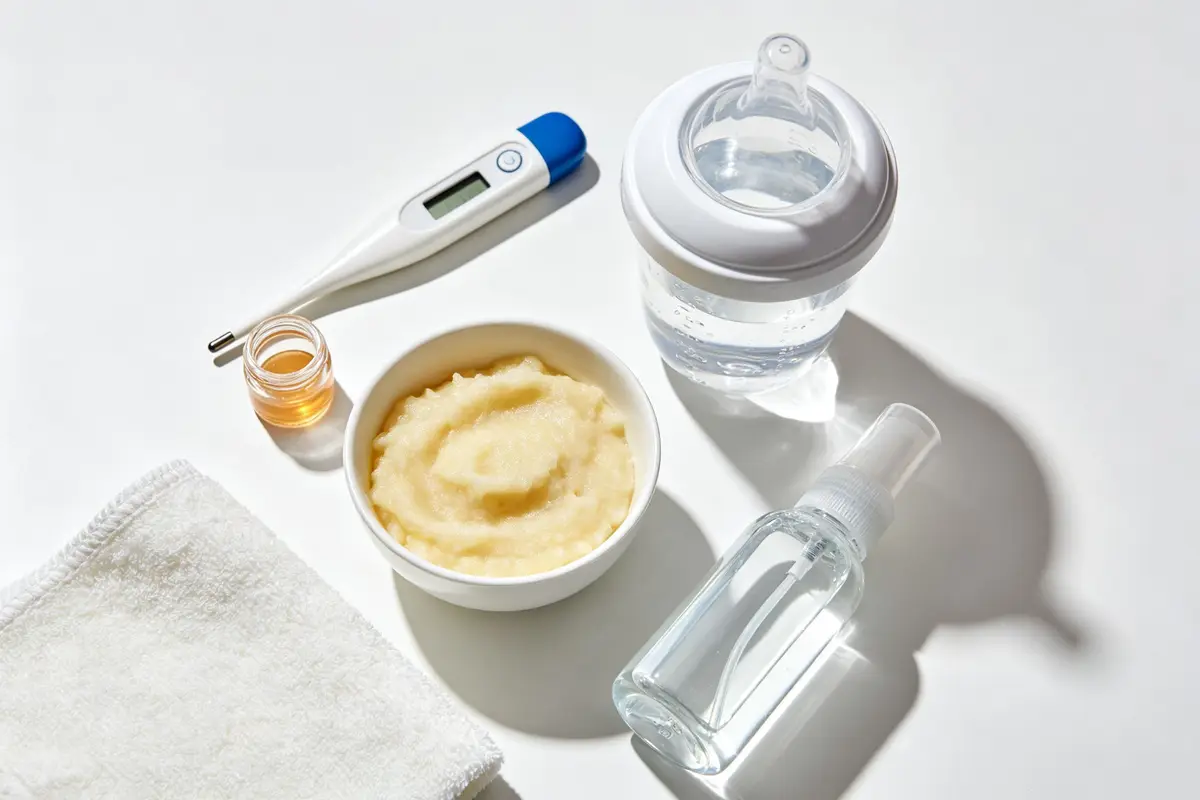
The biggest challenge was keeping her hydrated because the mouth sores made sucking from a bottle painful. What worked for us was offering small, frequent sips from a sippy cup, a spoon, or even a syringe (gently squirting small amounts into the side of her mouth). I offered breast milk, formula, and for babies over 6 months, small amounts of water. Cold fluids were especially soothing — I chilled her expressed milk and offered it in a sippy cup. For food, I offered cool, soft foods like yogurt, chilled applesauce, mashed banana, and custard. I avoided acidic foods (like orange juice or tomato-based foods), spicy foods, and salty foods, as these can irritate mouth sores. I also kept gentle, water-based baby wipes handy for cleaning her face and hands, and a soft cotton towel for dabbing her mouth after she ate. For the rash, I kept the areas clean and dry, and I avoided using scented lotions or soaps that could irritate the blisters. I also made sure she got plenty of rest — we spent a lot of time cuddling on the couch with her favorite blanket and quiet toys.
How can I prevent HFMD from spreading?
HFMD is extremely contagious and spreads through direct contact with nasal mucus, saliva, fluid from blisters, or stool of an infected person. It can also spread through contact with contaminated surfaces, toys, or objects. A person with HFMD is most contagious during the first week of illness, but the virus can remain in the body for weeks after symptoms disappear — especially in stool, where it can be shed for several weeks. This means your baby can still spread the virus even after they seem fully recovered, which is why outbreaks in childcare settings can be so difficult to contain.
To prevent the spread of HFMD, the most important measure is frequent and thorough handwashing — especially after diaper changes, before preparing food, and after contact with an infected person. Use soap and water and wash for at least 20 seconds; hand sanitizer is less effective against enteroviruses, so soap and water is preferred. Keep your baby home from childcare, playgroups, or public places until the fever is gone and all blisters have crusted over (usually about 7 days). Avoid sharing cups, utensils, towels, toothbrushes, or toys with an infected person. Clean and disinfect frequently touched surfaces (like doorknobs, light switches, toys, and changing tables) with a bleach-based cleaner — enteroviruses are resistant to many common disinfectants, but bleach is effective. If your baby has HFMD, wash their soiled clothing and bedding separately in hot water. And if you're pregnant and have been exposed to HFMD, talk to your doctor — while the risk is generally low, some strains of the virus can rarely cause complications during pregnancy.
When should I worry about complications?
Most cases of HFMD are mild and resolve without complications, but it's important to be aware of the warning signs that may indicate a more serious case. The most common complication is dehydration, which can occur when mouth sores make it too painful for your baby to drink. Signs of dehydration include: fewer wet diapers (less than 6 in 24 hours for babies under 6 months, or less than 4 for older babies), dry mouth and lips, sunken soft spot (fontanelle) on the head, no tears when crying, lethargy or excessive sleepiness, and decreased skin elasticity (if you gently pinch the skin on the abdomen, it doesn't spring back quickly). If you notice any of these signs, contact your pediatrician immediately — severe dehydration may require intravenous fluids.
In rare cases, certain strains of the virus (especially enterovirus 71) can cause more serious complications, including viral meningitis (infection of the membranes surrounding the brain and spinal cord), encephalitis (brain infection), or myocarditis (heart muscle inflammation). Warning signs of these serious complications include: a stiff neck, severe headache, sensitivity to light, seizures or convulsions, difficulty breathing, rapid breathing, persistent vomiting, extreme lethargy or difficulty waking, confusion or altered mental state, and a fever that lasts more than 3 days or is very high (above 39C or 102F). If your baby shows any of these signs, seek emergency medical care immediately. While these complications are rare, it's important to monitor your baby closely and trust your instincts — if something feels wrong, don't hesitate to call your doctor or go to the emergency room.
FAQ
What are the first signs of hand, foot and mouth disease in babies?
Hand, foot and mouth disease (HFMD) usually begins with a fever (often 38-39C or 101-102F), sore throat, poor appetite, and general irritability or tiredness. About 1-2 days after the fever starts, painful sores develop in the mouth (on the tongue, gums, inside of the cheeks, or back of the throat), and a rash with small blisters appears on the hands, feet, and sometimes the buttocks, knees, or elbows. The rash is usually not itchy but may be tender. Some babies may also have vomiting or diarrhea. If you notice these symptoms, especially mouth sores and a rash on the hands and feet, contact your pediatrician for diagnosis.
How is hand, foot and mouth disease treated?
There is no specific treatment for hand, foot and mouth disease — it's a viral infection that must run its course, usually 7-10 days. Treatment focuses on relieving symptoms and keeping your baby comfortable and hydrated. For fever and pain, your pediatrician may recommend acetaminophen (paracetamol) — never give aspirin to children, as it can cause a rare but serious condition called Reye's syndrome. For mouth pain, offer cool, soft foods and plenty of fluids; avoid acidic, spicy, or salty foods that can irritate mouth sores. Cold foods like yogurt, popsicles (for older babies), or chilled applesauce can soothe sore mouths. Keep your baby hydrated with frequent small sips of breast milk, formula, or water (for babies over 6 months). If your baby is not drinking enough or shows signs of dehydration, seek medical attention.
How long is hand, foot and mouth disease contagious?
Hand, foot and mouth disease is highly contagious and spreads through direct contact with nasal mucus, saliva, fluid from blisters, or stool of an infected person. A person with HFMD is most contagious during the first week of illness, but the virus can remain in the body for weeks after symptoms disappear — especially in stool, where it can be shed for several weeks. This means your baby can still spread the virus even after they seem fully recovered. To prevent spread, keep your baby home from childcare or playgroups until the fever is gone and all blisters have crusted over (usually about 7 days). Wash hands frequently, especially after diaper changes, and avoid sharing cups, utensils, towels, or toys. Disinfect frequently touched surfaces with a bleach-based cleaner.
When should I take my baby to the doctor for hand, foot and mouth disease?
Most cases of hand, foot and mouth disease are mild and can be managed at home, but you should contact your pediatrician if: your baby is under 6 months old (younger babies are at higher risk for complications); your baby has a fever above 39C (102F) that doesn't respond to medication; your baby refuses to drink or shows signs of dehydration (fewer wet diapers, dry mouth, sunken soft spot, lethargy); the mouth sores are so painful that your baby can't eat or drink; symptoms last more than 10 days; or your baby seems very unwell, lethargic, or difficult to wake. Seek emergency care immediately if your baby has: a stiff neck, seizures, difficulty breathing, persistent vomiting, or signs of severe dehydration. In rare cases, HFMD can cause complications like viral meningitis or encephalitis, so it's important to monitor your baby closely.
Wrapping up
Hand, foot and mouth disease is one of those common childhood illnesses that every parent will likely encounter at some point, especially in tropical climates where it's prevalent year-round. While it's distressing to see your baby in pain, the good news is that most cases are mild and resolve within 7-10 days with supportive home care. The key things to remember are: recognize the symptoms (fever, mouth sores, rash on hands and feet), keep your baby hydrated with frequent small sips of cool fluids, offer soft cool foods and avoid acidic or spicy foods, use acetaminophen for fever and pain (never aspirin), keep your baby home until the fever is gone and blisters have crusted over, wash hands frequently to prevent spread, and watch for signs of dehydration or serious complications. With patience, cuddles, and plenty of fluids, your baby will be back to their happy, healthy self before you know it. And if you're ever worried, don't hesitate to call your pediatrician — that's what they're there for.
Frequently Asked Questions
What are the first signs of hand, foot and mouth disease in babies?
Hand, foot and mouth disease (HFMD) usually begins with a fever (often 38-39C or 101-102F), sore throat, poor appetite, and general irritability or tiredness. About 1-2 days after the fever starts, painful sores develop in the mouth (on the tongue, gums, inside of the cheeks, or back of the throat), and a rash with small blisters appears on the hands, feet, and sometimes the buttocks, knees, or elbows. The rash is usually not itchy but may be tender. Some babies may also have vomiting or diarrhea. If you notice these symptoms, especially mouth sores and a rash on the hands and feet, contact your pediatrician for diagnosis.
How is hand, foot and mouth disease treated?
There is no specific treatment for hand, foot and mouth disease — it's a viral infection that must run its course, usually 7-10 days. Treatment focuses on relieving symptoms and keeping your baby comfortable and hydrated. For fever and pain, your pediatrician may recommend acetaminophen (paracetamol) — never give aspirin to children, as it can cause a rare but serious condition called Reye's syndrome. For mouth pain, offer cool, soft foods and plenty of fluids; avoid acidic, spicy, or salty foods that can irritate mouth sores. Cold foods like yogurt, popsicles (for older babies), or chilled applesauce can soothe sore mouths. Keep your baby hydrated with frequent small sips of breast milk, formula, or water (for babies over 6 months). If your baby is not drinking enough or shows signs of dehydration, seek medical attention.
How long is hand, foot and mouth disease contagious?
Hand, foot and mouth disease is highly contagious and spreads through direct contact with nasal mucus, saliva, fluid from blisters, or stool of an infected person. A person with HFMD is most contagious during the first week of illness, but the virus can remain in the body for weeks after symptoms disappear — especially in stool, where it can be shed for several weeks. This means your baby can still spread the virus even after they seem fully recovered. To prevent spread, keep your baby home from childcare or playgroups until the fever is gone and all blisters have crusted over (usually about 7 days). Wash hands frequently, especially after diaper changes, and avoid sharing cups, utensils, towels, or toys. Disinfect frequently touched surfaces with a bleach-based cleaner.
When should I take my baby to the doctor for hand, foot and mouth disease?
Most cases of hand, foot and mouth disease are mild and can be managed at home, but you should contact your pediatrician if: your baby is under 6 months old (younger babies are at higher risk for complications); your baby has a fever above 39C (102F) that doesn't respond to medication; your baby refuses to drink or shows signs of dehydration (fewer wet diapers, dry mouth, sunken soft spot, lethargy); the mouth sores are so painful that your baby can't eat or drink; symptoms last more than 10 days; or your baby seems very unwell, lethargic, or difficult to wake. Seek emergency care immediately if your baby has: a stiff neck, seizures, difficulty breathing, persistent vomiting, or signs of severe dehydration. In rare cases, HFMD can cause complications like viral meningitis or encephalitis, so it's important to monitor your baby closely.