
2026-09-13 · Moni Happy Editorial
Baby Self-Feeding: Encouraging Independent Eating — A Mom's Guide
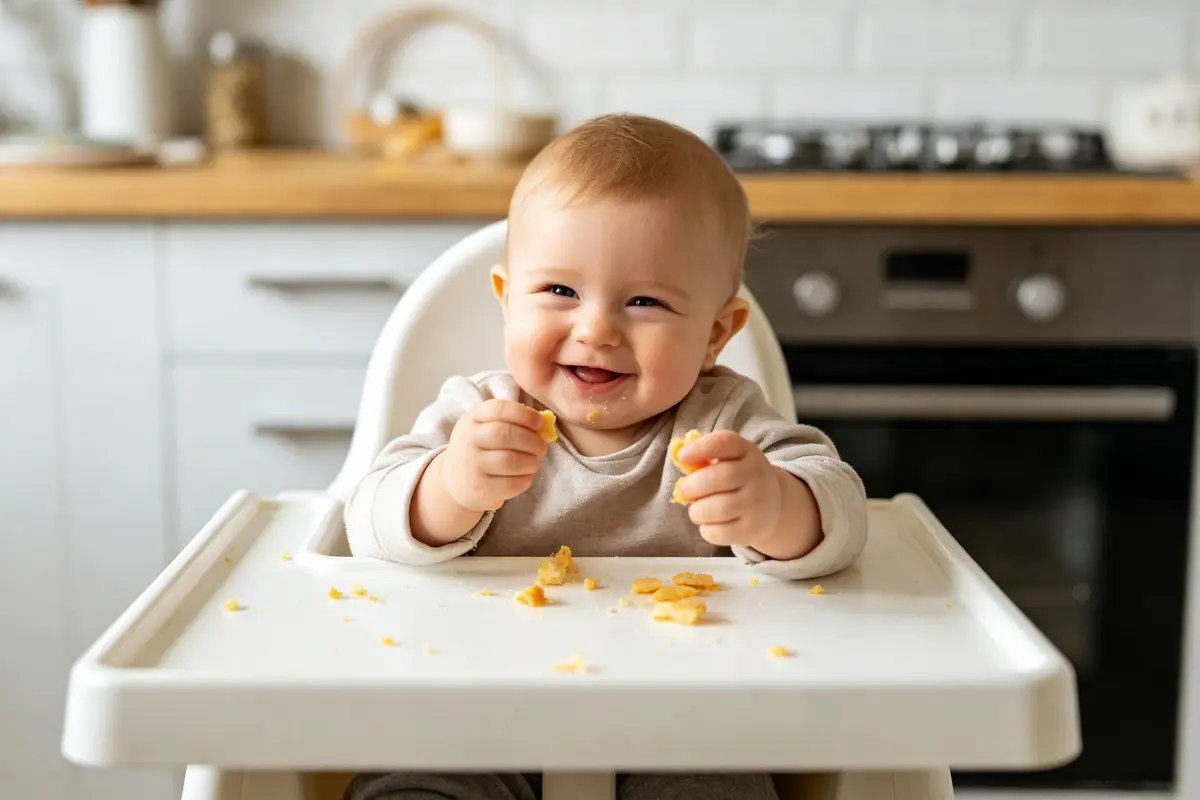
The first time I put a bowl of food in front of my 6-month-old and let her go at it, I was horrified. Food was everywhere — in her hair, up her nose, on the floor, in her ears. She was more interested in squishing the avocado between her fingers than eating it. I thought I was doing it wrong. But my pediatrician assured me: this messy, chaotic process is exactly how babies learn to feed themselves. Self-feeding is not just about eating — it is about developing fine motor skills, hand-eye coordination, independence, and a healthy relationship with food. Here is what I learned, from the first messy bites to (mostly) clean mealtimes.
When should I let my baby self-feed?
Most babies are ready to start exploring self-feeding around 6 months, when they show signs of readiness: they can sit up with minimal support, they have good head and neck control, they show interest in your food (reaching for it, watching it go to your mouth), they have lost the tongue-thrust reflex (they no longer automatically push food out of their mouth), and they can bring objects to their mouth. There are two main approaches to starting solids: puree-led (spoon-feeding smooth purees, gradually introducing textures) and baby-led weaning (offering soft finger foods from the start and letting the baby self-feed). Many families do a combination of both — offering some purees on a spoon AND some finger foods for self-feeding. There is no one "right" way. What matters is that by around 8-9 months, your baby is getting opportunities to practice self-feeding with finger foods, because this is when they develop the pincer grasp (thumb and finger) that is essential for independent eating. My daughter started with purees at 6 months, but I always put a few soft finger food strips (steamed carrot, avocado, banana) on her tray too. By 8 months, she was refusing the spoon entirely and wanted to do everything herself. I went with it, and she was feeding herself completely by 10 months (messily, but independently).
What foods are safe for self-feeding?
Safety is the number one concern with self-feeding. The key is to offer foods that are soft enough to squish between your fingers (the "squish test") and cut into shapes that are easy to grasp and low risk for choking. For younger babies (6-8 months), offer strip-shaped finger foods (about the size and shape of your finger) that are soft and easy to gum: steamed sweet potato or carrot strips, ripe avocado strips, ripe banana strips, soft pear or peach slices, well-cooked pasta (large shapes like penne), toast strips with a thin spread of avocado or nut butter, scrambled eggs (cut into strips), and soft cooked meat strips (chicken, beef — very tender). Avoid round, hard, or slippery foods that are choking hazards: whole grapes, cherry tomatoes, hot dog rounds, nuts, popcorn, hard candy, marshmallows, chunks of raw apple or carrot. As your baby develops their pincer grasp (around 8-9 months), you can start offering smaller, bite-sized pieces: cooked peas, beans, cut-up berries (halve grapes and cherry tomatoes!), small cubes of cheese, small pieces of cooked meat, and bite-sized pasta. Always supervise mealtimes, know infant CPR and choking first aid, and consider taking a choking safety course. It is also important to introduce common allergens (peanut, egg, dairy, wheat, soy, fish, shellfish, sesame) early and regularly — research shows that introducing them around 6 months and continuing them several times a week reduces the risk of allergy. Start with small amounts and watch for reactions. I was nervous about allergens, but our pediatrician encouraged early introduction, and my daughter tolerated everything well.
What gear do I need for self-feeding?
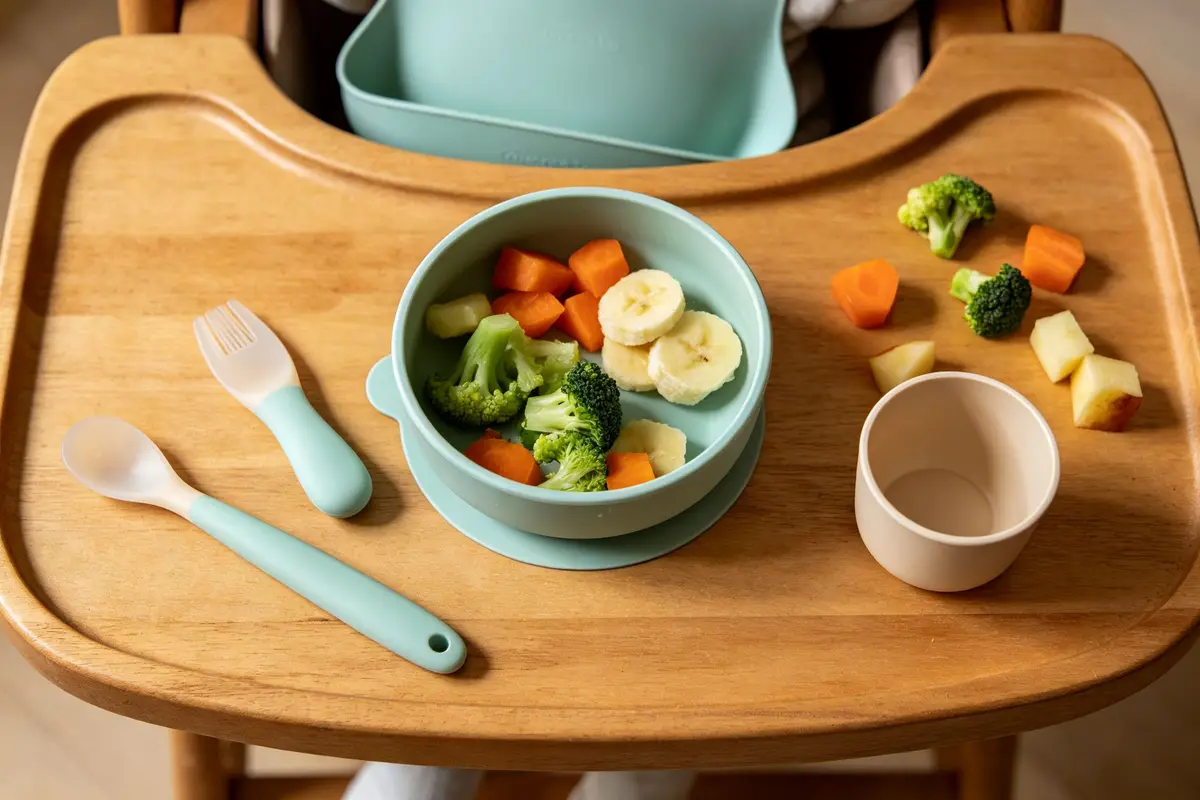
You do not need a lot of fancy gear, but a few essentials make self-feeding easier (and slightly less messy). A good high chair — look for one with a removable, easy-to-clean tray, a secure harness, and a stable base. A tray that is dishwasher-safe is a bonus. Silicone suction bowls and plates — these stick to the high chair tray, preventing your baby from flipping the bowl and sending food flying. They are soft, unbreakable, and easy to clean. Silicone spoons — soft, flexible, gentle on gums, and easy for small hands to grip. Even if your baby is self-feeding with fingers, having a spoon available lets them practice using it. A good bib — look for a waterproof or silicone bib with a food-catching pocket at the bottom. The pocket catches a surprising amount of food that would otherwise land in your baby's lap or on the floor. Silicone bibs are easiest to wipe clean; fabric bibs with a waterproof lining are also good. A splash mat or floor cover — put a plastic mat, shower curtain, or old tablecloth under the high chair to catch the food that inevitably falls. This makes cleanup much easier. A sippy cup or open cup — offer water with meals. Some parents prefer a sippy cup; others use a small open cup (like a Doidy cup or a small shot glass) to teach cup drinking from the start. Wipes — lots of them. Keep baby wipes handy for hands, faces, trays, and floors. You will go through a lot of them in the early months. Do not waste money on fancy "self-feeding" gadgets — most babies do best with simple, soft, easy-to-grasp utensils and bowls. The most important thing is that the gear is safe, easy to clean, and does not frustrate your baby.
How do I handle the mess and keep mealtimes positive?
This is the hardest part for most parents. Self-feeding is messy — there is no way around it. But the mess is temporary, and the skills your baby is developing are lifelong. Here is what helped me keep my sanity: Embrace the mess — accept that food will be on the floor, in the hair, on the walls, and in the dog's mouth. Put down a splash mat, strip your baby down to a diaper or use a long-sleeved bib, and let them go at it. The more relaxed you are, the more relaxed your baby will be. Keep mealtimes short — 15-20 minutes is plenty for a baby or toddler. When they start throwing food or losing interest, mealtime is over. Do not force them to stay in the chair longer. Never pressure or force — let your baby decide how much to eat and what to try. It is normal for them to play with food, squish it, smell it, and even taste it and spit it out — all of this is learning. Do not say "just one more bite" or "eat your vegetables." Model healthy eating — eat meals together as a family when possible. Your baby learns by watching you eat and enjoy a variety of foods. Talk about the food: "this banana is sweet and soft," "this broccoli is green and crunchy." Do not make separate meals — offer your baby what the family is eating (adapted for their chewing ability), with at least one food you know they like. If they choose not to eat, that is okay — they will not starve, and they will be hungrier at the next meal. Praise effort, not consumption — praise your baby for trying, for using their spoon, for touching a new food. Do not praise them for "eating everything" or "being a good boy/girl" — this can create pressure around food. Clean up calmly — when mealtime is over, wipe your baby's hands and face, wipe the tray, shake the splash mat into the trash, and move on. Do not make a big deal about the mess. I used to get stressed about every meal, but once I accepted the mess and focused on the fact that my daughter was learning an important skill, mealtimes became much more enjoyable. By 18 months, she was using a spoon reasonably well and the mess had decreased dramatically. It gets better — I promise.
FAQ
Q: My baby just plays with food and does not eat anything. Is this normal?
A: Yes, this is completely normal, especially in the early weeks of self-feeding. Babies learn about food through all their senses — touching, squishing, smelling, and even throwing — before they are ready to eat it. This exploration is an important part of the process. As long as your baby is getting enough nutrition from breastmilk or formula (which is still their primary source of nutrition until around 12 months), and they are growing well, there is no need to worry. Continue offering a variety of foods, and over time they will start eating more and playing less.
Q: How do I know if my baby is choking vs. gagging?
A: Gagging is a normal protective reflex — your baby may make a gagging sound, push food forward with their tongue, or even vomit a little. Gagging is loud and the baby is working to move the food. Choking is silent — the baby cannot make any sound, may turn blue, and is not coughing or crying. If your baby is gagging, stay calm and let them work it out (do not reach into their mouth, as this can push the food further). If your baby is choking (silent, blue, not breathing), immediately perform infant CPR and choking first aid, and call emergency services. Every parent should know infant choking first aid.
Q: When should my baby start using a spoon?
A: Most babies show interest in using a spoon around 8-10 months, but they will not be proficient until 12-18 months or even later. Start by offering a soft silicone spoon alongside finger foods — let them hold it, bang it, and try to scoop food. You can pre-load the spoon with food and hand it to them, which helps them understand the concept. Do not expect neatness — there will be a lot of food on the face, hair, and floor. By 18-24 months, most toddlers can use a spoon with reasonable accuracy, though they may still prefer fingers for some foods. Be patient and keep offering the spoon.
Q: Is baby-led weaning safe? What about choking?
A: Baby-led weaning (offering finger foods from the start of solids) is generally safe when done correctly. The key is to offer foods that are soft enough to squish between your fingers, cut into appropriate shapes (strips for younger babies, small pieces for older babies), and avoid known choking hazards (whole grapes, hot dog rounds, nuts, popcorn, hard candy, chunks of raw apple or carrot). Always supervise mealtimes, know infant choking first aid, and consider taking a safety course. Research has not shown an increased risk of choking with baby-led weaning compared to puree feeding, as long as foods are prepared safely. If you are nervous, you can combine purees with finger foods.
Article Summary
Self-feeding is an important developmental milestone that helps babies build fine motor skills, hand-eye coordination, independence, and a healthy relationship with food. Most babies are ready around 6 months when they can sit up, show interest in food, and bring objects to their mouth. Offer soft, squishable finger foods in strip shapes for younger babies and small pieces as they develop a pincer grasp, avoiding choking hazards like whole grapes and hot dog rounds. Essential gear includes a good high chair, silicone suction bowls, soft spoons, a food-catching bib, a splash mat, and wipes. Embrace the mess — it is temporary. Keep mealtimes short, positive, and pressure-free, model healthy eating, and praise effort rather than how much is eaten. Most babies become reasonably proficient with utensils by 18-24 months. It gets better.
Frequently Asked Questions
My baby just plays with food and does not eat anything. Is this normal?
Yes, this is completely normal, especially in the early weeks. Babies learn about food through all senses — touching, squishing, smelling — before eating. This exploration is important. As long as your baby gets enough nutrition from breastmilk or formula (still primary until 12 months) and is growing well, there is no need to worry. Continue offering variety, and over time they will eat more and play less.
How do I know if my baby is choking vs. gagging?
Gagging is a normal protective reflex — your baby makes gagging sounds, pushes food forward, and is working to move it. Choking is silent — the baby cannot make sound, may turn blue, and is not coughing. If gagging, stay calm and let them work it out (do not reach in). If choking (silent, blue), immediately perform infant CPR and choking first aid and call emergency services. Every parent should know infant choking first aid.
When should my baby start using a spoon?
Most babies show interest in a spoon around 8-10 months, but will not be proficient until 12-18 months or later. Start by offering a soft silicone spoon alongside finger foods — let them hold it and try to scoop. Pre-loading the spoon helps them understand the concept. Do not expect neatness. By 18-24 months, most toddlers can use a spoon with reasonable accuracy, though they may still prefer fingers. Be patient and keep offering the spoon.
Is baby-led weaning safe? What about choking?
Baby-led weaning is generally safe when done correctly. Offer foods soft enough to squish between fingers, cut into appropriate shapes (strips for younger babies, small pieces for older), and avoid choking hazards (whole grapes, hot dog rounds, nuts, popcorn, hard candy, raw apple chunks). Always supervise mealtimes, know infant choking first aid, and consider a safety course. Research has not shown increased choking risk with baby-led weaning when foods are prepared safely. If nervous, combine purees with finger foods.