
2026-07-31 · Moni Happy Editorial Team
Baby Sleep Guide in Southeast Asia: Best Aircon Temperature, Mosquito & Heat Rash Tips
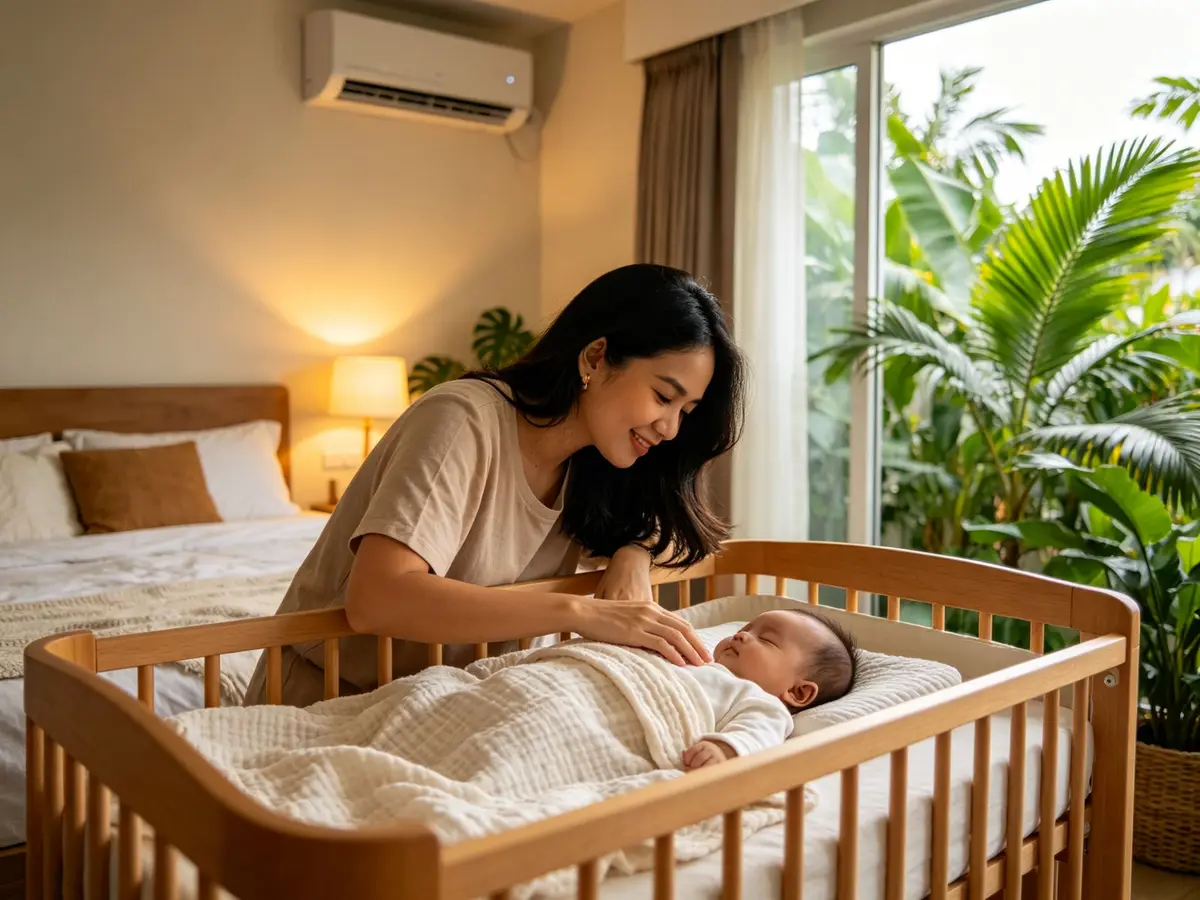
Let's be real: nights in Southeast Asia are tough on babies
My first baby was born in Bangkok in April—the hottest month of the year. For the first month, I barely slept. Not because the baby was crying, but because I was constantly stressing about the aircon temperature. Set it to 24°C and I'd find his hands and feet ice cold at midnight, so I'd turn it off. Turn it off and within half an hour his back was soaked and red spots were popping up on his neck. It took me about two weeks of this back-and-forth to finally figure things out.
Later, when I talked to other moms in Singapore and Kuala Lumpur, I realized we all had similar stories. Raising a baby in the tropics is genuinely different from what most Western parenting books describe. High humidity, high temperatures, and mosquitoes—these three things alone make sleep a real challenge. Generic advice like "dress your baby in one extra layer compared to an adult" just doesn't cut it here.
In this guide, I'm sharing everything I've learned through trial and error with my two kids. From the right temperature to mosquito protection, from choosing the right sleepwear to handling heat rash—let's get into it.
What temperature should the aircon be? I tested at least ten settings
Here's the short answer: 26 to 27 degrees Celsius, with a fan on low speed for air circulation. That's the sweet spot where both my babies slept most soundly.
But this number didn't come from nowhere. I tried 24°C and my baby ended up with a stuffy nose and sneezing the next day. I tried 28°C and his back was drenched, with heat rash appearing immediately. 26-27°C turned out to be the Goldilocks zone—the back of his neck was warm and dry, no sweating, and his hands and feet weren't cold either.
Here's an important trick: don't check your baby's hands and feet—check the back of their neck. Newborns have underdeveloped circulation, so cool hands and feet are normal and don't mean they're cold. If the back of the neck is warm and dry, the temperature is just right. If it's hot or sweaty, they're too warm. If it's cold, they're too cold.
One more detail: don't point the aircon directly at the baby. We use a deflector to direct the airflow toward the ceiling, so the cool air sinks naturally and the room temperature stays even—no "cold spot under the aircon, hot spot by the door" situation. If you don't have a deflector, placing the crib in the corner farthest from the aircon works too.
Don't forget about humidity. Southeast Asia is already humid, but running the aircon dries out the room, which can irritate your baby's nose and skin. I keep a thermo-hygrometer in the nursery and aim for 50-60% humidity. If it drops below 50%, I run a small humidifier or just place a bowl of water in the room.
Mosquito protection is non-negotiable here
In Southeast Asia, mosquito bites aren't just itchy—dengue, Zika, and chikungunya are all real concerns, and babies are at higher risk after being bitten. My second baby got three mosquito bites before he was even three months old, and that's when I completely upgraded our mosquito protection setup.
The most effective first layer is physical barriers. Your baby's crib absolutely needs a mosquito net—the pop-up tent style with a frame is the most practical, as it won't get pulled down once your baby starts rolling and crawling. Before putting the baby to bed at night, I always check inside the net first to make sure no mosquitoes are hiding in the corners. I've kept this habit to this day, and it really does prevent about 90% of nighttime bites.
Daytime protection matters too. If you have windows open, install screens. We have invisible screens on both our living room and bedroom windows—they let air through while keeping mosquitoes out. Mosquitoes are most active from 4 PM to 6 PM, so I try to avoid taking the baby outside during those hours. If we have to go out, I dress him in long sleeves and long pants to cover as much skin as possible.
About mosquito repellent: I've done a lot of research and asked our pediatrician. Babies under two months should not use any chemical repellent—stick to physical protection. For babies over two months, you can use products containing Picaridin or IR3535, at concentrations under 20%. DEET is not recommended for young babies. Spray it on clothes rather than directly on skin, and wash it off when you get home.
One little trick I use: I keep a mosquito trap lamp in the nursery and run it during the day when no one's in the room—it catches quite a few mosquitoes hiding inside. But always turn it off at night when the baby is sleeping; the light and noise can disrupt sleep.
Heat rash appears? Here's the fastest way to handle it
Heat rash (or prickly heat, as we often call it) is probably the most common baby skin issue in Southeast Asia. Both my kids got it, especially on the neck, armpits, and groin—those skin fold areas. At first I'd panic and apply all kinds of creams, but eventually I realized that handling heat rash comes down to two words: cool down and dry off.
When you spot heat rash, the first step is to lower the environmental temperature. Turn the aircon to around 26°C, change your baby into light, breathable cotton clothes, and don't bundle them up. I usually let my baby play without a diaper for a while in the aircon room, letting the skin breathe—this works especially well for heat rash on the groin and butt area.
The second step is to keep the skin dry. Whenever the baby sweats, gently pat dry with a soft towel—notice I said "pat," not "rub," as friction irritates already inflamed skin. For bathing, use lukewarm water, not hot, and don't use body wash on the rash areas—just rinse with clean water. After bathing, gently pat dry, and you can apply a tiny bit of cornstarch baby powder (make sure it's talc-free) in the skin folds to help absorb sweat.
Generally, mild heat rash will clear up within two to three days with this approach. But if the rash turns into pus-filled blisters, your baby develops a fever, or the rash spreads all over the body, don't try to handle it at home—see a doctor right away, as it may be a secondary infection.
Prevention is better than treatment. My routine now is: as soon as we get home from going out, I wipe the baby down and change clothes—don't let sweat sit on the skin for too long. At least twice a day, we have "no diaper time" to let the skin breathe. Clothes are cotton or bamboo fiber, loose-fitting, never tight. Do these things and heat rash will become much less of a problem.
Sleepwear and sleep sacks: getting it right saves a lot of trouble
In Southeast Asia, what your baby wears to sleep is also a skill. At first I dressed my baby in long-sleeve, long-pants onesies, only to find him soaked in sweat at midnight. Then I switched to short sleeves and shorts, and worried he'd catch a cold in the aircon room. After trying many combinations, I found what works best for us.
In a 26-27°C aircon room, a short-sleeve onesie plus a thin muslin sleep sack is the perfect combination. The onesie protects the tummy from getting cold, and the muslin sleep sack is breathable yet stays on—no matter how much the baby rolls around, it won't get kicked off. I choose sleep sacks under 1.0 TOG, just two layers of muslin. Anything thicker is completely unnecessary in Southeast Asia.
If the aircon is set to 28°C or you're just using a fan, a short-sleeve onesie is enough—no sleep sack needed, just a thin muslin blanket. If it's a particularly cool rainy day and the temperature drops below 24°C, you can switch to a long-sleeve onesie plus a thin sleep sack.
For materials, cotton and bamboo fiber are top choices. I especially recommend bamboo fiber sleepwear—it's more breathable and absorbent than cotton, and naturally has some antibacterial properties, which is really useful in humid Southeast Asia. Avoid that slippery synthetic material that looks fancy—it doesn't breathe at all and can cause heat rash.
A few final honest words
There's really no one-size-fits-all answer when it comes to raising babies. The temperatures and methods I've written about are what worked for my babies. Every baby is different, and you may need to adjust based on your own baby's reactions. Don't get anxious because someone says "you should do it this way," and don't feel guilty if your method differs from what the books say.
Observe your baby's reactions—if they're sleeping peacefully, not sweating, and not crying, you're doing it right. Gradually you'll find the rhythm that works best for your family.
If your baby has persistent sleep or skin issues, or if you're really unsure about something, don't hesitate to see a pediatrician. Professional advice is more reliable than any online guide.
Here's to all of us raising babies who sleep soundly in this hot, humid Southeast Asian weather.
Frequently Asked Questions
How much sleep does my baby need?
Newborns sleep 14-17 hours a day, infants 4-12 months need 12-16 hours, and toddlers 1-2 years need 11-14 hours, including naps. Every baby is different, so watch for sleepy cues like rubbing eyes, yawning, or looking away rather than strictly following the clock.
When should I start a bedtime routine?
You can start a simple bedtime routine as early as 6-8 weeks. Keep it consistent and short — a warm bath, gentle massage, fresh diaper, quiet feeding, and a lullaby or story works well. The routine signals to your baby that sleep is coming.
Is sleep training safe for my baby?
Most experts agree that sleep training is safe for healthy babies 4-6 months and older. Choose a method that fits your parenting style — from gentle gradual retreat to the Ferber method. Always check with your pediatrician first, especially if your baby has health concerns.
How do I handle the 4-month sleep regression?
The 4-month sleep regression happens when baby's sleep cycles mature and they wake more often between cycles. Stick to your bedtime routine, encourage full feedings during the day, and offer extra comfort. It usually lasts 2-6 weeks and then sleep improves again.
Frequently Asked Questions
What is the ideal aircon temperature for a baby's room in Southeast Asia?
The ideal aircon temperature for a baby's room in Southeast Asia is between 24-26°C (75-79°F). This temperature range is comfortable for most babies and helps prevent overheating, which is a risk factor for SIDS. Use a room thermometer to monitor the temperature, and dress your baby in light, breathable clothing. Avoid setting the aircon too low (below 22°C), as this can cause the baby to become too cold and may lead to respiratory issues.
How can I keep my baby cool while sleeping in tropical weather?
To keep your baby cool while sleeping in tropical weather: use a fan or aircon to maintain a comfortable room temperature (24-26°C); dress your baby in light, breathable cotton clothing; use a breathable mattress and bedding; avoid using heavy blankets or swaddles; consider using a cooling mattress pad or gel pillow; ensure good air circulation in the room; and monitor your baby's body temperature by feeling their neck or chest—they should feel warm, not hot or sweaty.
Is it safe for babies to sleep with aircon on all night in Southeast Asia?
Yes, it is generally safe for babies to sleep with aircon on all night in Southeast Asia, provided the temperature is set appropriately (24-26°C) and the baby is dressed appropriately. Aircon can actually help reduce the risk of overheating and SIDS in hot climates. However, avoid directing the aircon airflow directly at the baby, and ensure the room is not too cold. Use a timer or smart thermostat to maintain a consistent temperature throughout the night, and check on your baby regularly to ensure they are comfortable.
What are the safe sleep guidelines for babies in Southeast Asia?
Safe sleep guidelines for babies in Southeast Asia include: always place your baby on their back to sleep; use a firm, flat mattress with a fitted sheet; keep the crib free of loose bedding, pillows, stuffed toys, and bumper pads; avoid co-sleeping on the same bed, especially if parents are smokers, have consumed alcohol, or are overly tired; maintain a comfortable room temperature (24-26°C); dress your baby in light, breathable clothing; use a pacifier at naptime and bedtime (after breastfeeding is established); and avoid exposing your baby to secondhand smoke. These guidelines help reduce the risk of SIDS and sleep-related accidents.