
2026-08-31 · Moni Happy Editorial Team
Baby Solid Food Guide: When to Start, What to Feed First & Allergy Tips for 6-12 Months

Let's talk about starting solids—because I messed it up the first time
My daughter was five and a half months old when I stared at her while she grabbed the toast off my plate. That was my sign. But honestly? I was terrified. I'd read so many conflicting things—start at four months, wait until six, rice cereal first, skip cereal entirely, eggs cause allergies, eggs prevent allergies. My head was spinning.
With my second baby, I was much more relaxed. I knew what mattered and what didn't. This guide is everything I wish someone had told me before that first messy spoonful—when to start, what to feed first, how to handle allergies, and how much your baby actually needs. I've cross-checked everything against WHO guidelines and the Chinese Nutrition Society's infant feeding white paper, so you're getting real science, not mom-group rumors.[1][2]
When should babies start solid food?
The short answer: around six months. Both WHO and China's National Health Commission agree that six months is the sweet spot—your baby's iron stores from birth are running low, their digestive system is ready, and they're developmentally capable of swallowing food.[3]
But don't just watch the calendar—watch your baby. They're ready when they hit all three of these:
- They can sit up with minimal support and hold their head steady
- They show obvious interest in your food—leaning forward, opening their mouth, grabbing at your plate
- The tongue-thrust reflex is gone (they don't automatically push food out with their tongue)
Can you start earlier? The earliest is four months, and only if all three signs above are there. Don't start before four months—their gut isn't ready and it increases allergy risk. Should you wait longer? Don't go past eight months. Waiting too long means your baby misses out on critical iron and doesn't practice chewing and swallowing when they're developmentally primed for it.
Quick reality check: My first baby showed all the signs at five months and two weeks. I waited until exactly six months because I was following the rulebook. With my second, she was ready at five and a half months and I started then. Both did fine. The signs matter more than the exact date.
What should baby's first solid food be?
Iron-fortified infant rice cereal. This isn't just tradition—it's science.
Here's why: your baby's stored iron runs out around six months, and breast milk alone doesn't have enough. Iron deficiency in infants can cause lasting cognitive development issues that you can't reverse later. Rice cereal is fortified with iron, it's low-allergen, and it's easy to mix to the right consistency.[2]
Start thin—mix it with breast milk, formula, or water until it's a runny paste that slowly drips off the spoon. If it's too thick, your baby will gag and push it out. Once they get the hang of swallowing (usually a few days), gradually make it thicker.
First feeding: one small spoonful, once a day. That's it. Don't expect them to eat much—the goal is learning to swallow, not filling their tummy. My first baby spit out more than she swallowed for the first week. I thought I was doing something wrong. Turns out that's totally normal.
A common myth I hear all the time: "egg yolk should be the first food." No. Egg yolk has iron but it's poorly absorbed, and eggs are a common allergen. Save egg for later—around seven months, after cereal and veggies are established.
If you're also curious about using local ingredients in Southeast Asia, check out this guide on baby first foods with local ingredients.
What's the right order for introducing solid foods?
The principle is simple: from thin to thick, from one food to many, from smooth to lumpy. Here's the timeline that worked for both my kids and aligns with official guidelines:
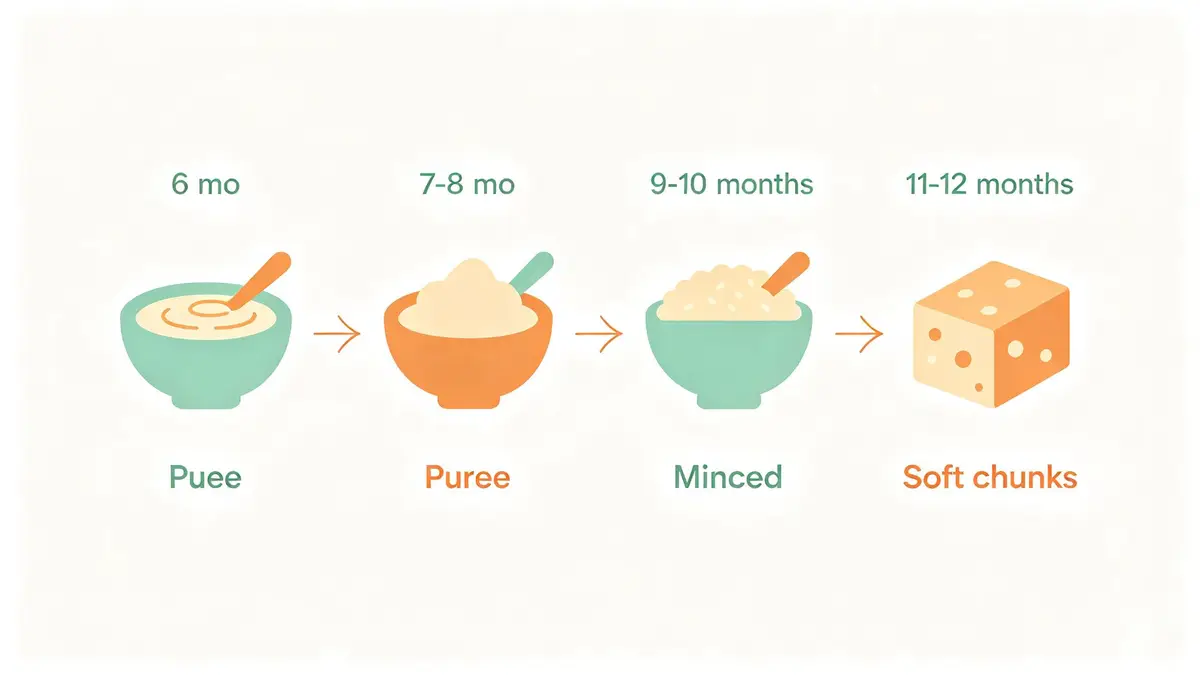
- 6 months: Iron-fortified rice cereal first. Once accepted, add root vegetable purees (carrot, pumpkin, potato)—these are easier to digest than leafy greens. Then add fruit purees.
- 7-8 months: Add egg yolk, then meat puree (pork, beef, chicken liver). Start offering thick porridge and soft noodles. Texture moves from smooth puree to slightly lumpy.
- 9-10 months: Food gets thicker—minced meat, chopped vegetables, soft rice. Start offering finger foods so baby can practice self-feeding.
- 11-12 months: Chopped and bite-sized foods, soft rice, gradually moving toward family meals. Still no added salt or sugar.
Here's the mistake I see most often: parents delay meat because they think it's hard to digest. The opposite is true—meat is the best source of easily absorbed iron and zinc, and you should introduce it around seven months. The Chinese Nutrition Society explicitly recommends adding animal-source foods early in the solid food journey.[2]
The golden rule for new foods: one new food at a time, wait 2-3 days before adding the next. This way, if there's a reaction, you know exactly which food caused it. I kept a little notebook with my first baby—date, food, any reaction. It sounds obsessive but it saved me so much guesswork.
Aim for at least four different food groups each day, including at least one animal-source food, one vegetable, and one grain. White rice porridge with just veggies every day is not enough—your baby needs the iron and protein from meat, eggs, or fish.
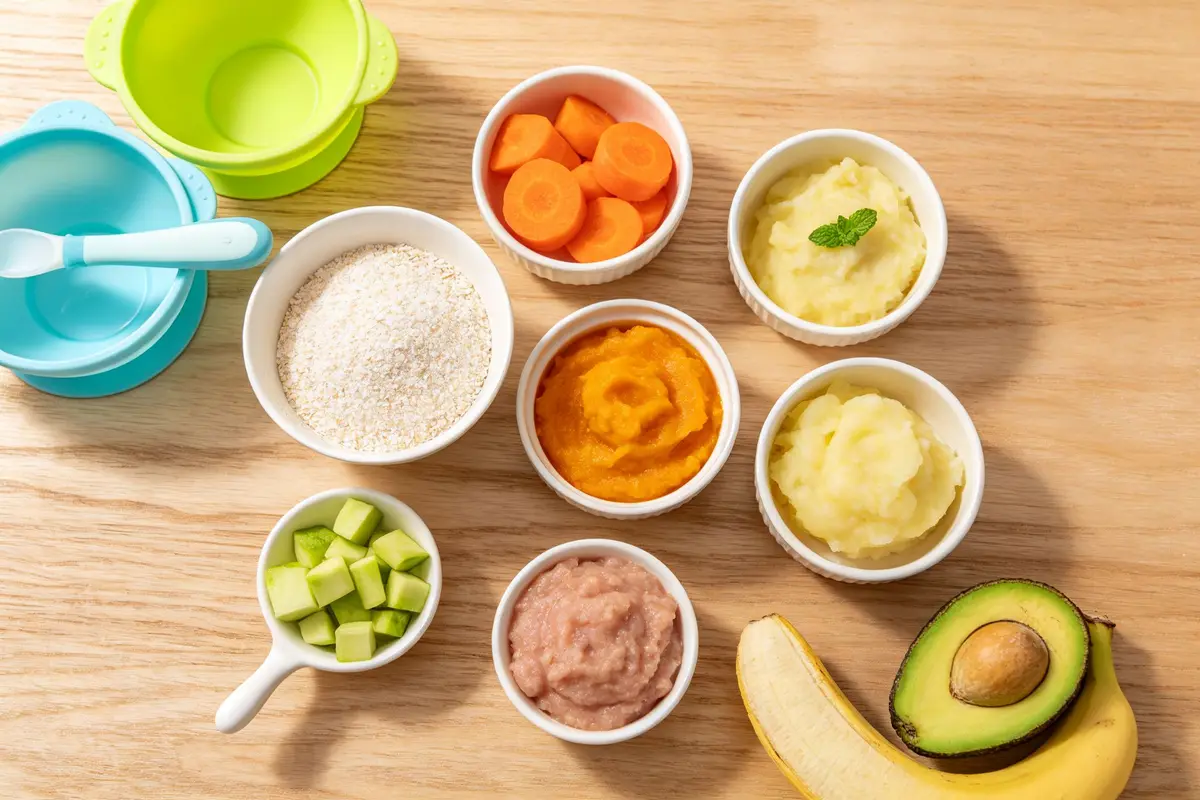
How do you handle food allergies when starting solids?
This was my biggest fear with my first baby. I'd heard so many horror stories. Here's what the science actually says now: you don't need to delay common allergens. In fact, introducing them early and regularly may actually reduce allergy risk.
The old advice was to wait until one year for eggs, peanuts, and seafood. That's been overturned. Both the American Academy of Pediatrics and Chinese guidelines now recommend introducing common allergenic foods—egg, peanut, cow's milk, wheat, fish, soy, tree nuts, sesame—once basic solids are established, usually around 6-8 months.[2]
Here's how to introduce them safely:
- Pick a morning or midday feeding—so you have the whole day to watch for reactions
- Start with a tiny amount—like 1/4 teaspoon of smooth peanut butter mixed into cereal, or a small piece of hard-boiled egg yolk
- Feed it for 2-3 consecutive days, watching for rash, vomiting, diarrhea, or breathing changes
- If no reaction, it's safe to include regularly in their diet. The key word is regularly—don't introduce it once and then never give it again. Regular exposure is what builds tolerance.
If you see a mild rash or diarrhea, stop that food and wait a week before trying again with an even smaller amount. If you see swelling of the lips or face, difficulty breathing, widespread hives, or vomiting right after eating—stop immediately and seek medical attention. Don't keep trying at home.
One safety note that has nothing to do with allergies but is critical: never give whole peanuts, whole grapes, cherry tomatoes, hot dog rounds, or jelly to babies under three. These are choking hazards. Peanuts should be smooth peanut butter or finely ground. Grapes should be quartered. Hot dogs should be sliced lengthwise and then into small pieces.
For more on gentle feeding approaches, you might also like this article on responsive baby feeding.
How many times a day and how much should baby eat?
Don't obsess over grams. Look at the feeding frequency and your baby's growth curve instead. Here's what WHO recommends:[1]
| Age | Solid food meals | Milk feeds | Texture |
|---|---|---|---|
| 6-8 months | 2-3 times/day | 4-6 times/day | Smooth puree |
| 9-11 months | 3-4 times/day | 2-4 times/day | Lumpy, minced, finger foods |
| 12-24 months | 3 meals + 1-2 snacks | Continue breastfeeding | Soft rice, chopped family foods |
At six months, start with just one meal a day. Once your baby is enthusiastically opening their mouth and finishing what you offer, add a second meal. By eight months, most babies are on three meals a day.
Milk is still the main nutrition source for the first year. Solids are about learning and complementary—think of them as "complementary" to milk, not a replacement. After one year, the balance gradually shifts so that meals become primary and milk becomes secondary.
How do you know if your baby is eating enough? Three things: their growth is on track (check the growth curve at pediatrician visits), they're alert and active, and their diapers are regular. Stop stressing about whether they finished the bowl. Some days they eat like a champion, other days two bites and they're done. That's normal.
What gear do you actually need for starting solids?
You don't need a kitchen full of gadgets. Here's what I actually used every day:
- A high chair: Start from day one. Baby sits in the high chair for every solid food meal. No feeding on the couch, no chasing them around the room. This builds the habit that mealtime happens at the table.
- Suction bowls and silicone spoons: Suction bowls prevent the inevitable bowl-flip. Silicone spoons are gentle on gums and don't scrape the palate. I went through at least four spoons because they kept getting dropped on the floor.
- A silicone bib: The kind with the pocket at the bottom that catches food. Rinse it off after each meal and it's ready for the next one. So much better than cloth bibs that need constant washing.
- Baby wipes: Mealtime gets messy—face, hands, the high chair tray, sometimes the hair. Keep Moni Happy baby wipes within arm's reach for quick cleanups between meals. They're gentle enough for faces and strong enough for sticky hands.
- Ice cube trays or silicone food storage: Make batches of vegetable and meat purees, freeze in portions, and pop one out when needed. This saved me at least an hour a day.
What you probably don't need: a fancy baby food processor. A regular blender or even a fork (for very ripe avocado or banana) works fine for the first couple of months. By the time you need more texture, you're mashing with a fork anyway. I bought an expensive baby food maker and used it maybe ten times total.
And one more thing—once your baby starts grabbing food and making a mess, you'll want those wipes handy for more than just diaper changes. Check out the full wipes range here.
Quick summary: the essentials of starting solids
- Start around 6 months when baby can sit, shows interest in food, and has lost the tongue-thrust reflex. Not before 4 months, not after 8 months.
- First food: iron-fortified rice cereal, mixed thin, one spoonful at a time.
- Order: cereal → root veggies → fruits → egg yolk → meat → minced/chopped foods. One new food at a time, wait 2-3 days.
- Allergens: don't delay them. Introduce egg, peanut, fish, wheat, and dairy around 6-8 months in small amounts, then keep them in the diet regularly.
- Meals: 2-3 times/day at 6-8 months, 3-4 times/day at 9-12 months. Milk remains primary until 12 months.
- Texture: smooth puree at 6 months → lumpy at 9 months → chopped at 12 months. Progressing texture is crucial for speech and chewing development.
- No added salt or sugar before 1 year. No honey before 1 year. No whole grapes, nuts, or other choking hazards.
- Responsive feeding: watch baby's hunger and fullness cues. Don't force. Mealtime should be positive, not a battle.
Starting solids is messy, stressful, and honestly kind of fun once you stop overthinking it. Your baby will eventually eat real food. Follow the guidelines, trust your instincts, and keep the wipes close. You've got this.
For more on introducing specific foods, here's a guide to baby's first fruit experience.
References
- World Health Organization: Infant and Young Child Feeding
- Chinese Nutrition Society: Scientific Complementary Feeding White Paper
- National Health Commission of China: Infant Feeding Education Core Information
Frequently Asked Questions
When should I start solid foods?
Most babies are ready for solids around 6 months, when they can sit up with support, show interest in food, and have lost the tongue-thrust reflex. Some babies show readiness as early as 4 months, but always check with your pediatrician before starting.
What are the best first foods for my baby?
Single-ingredient, iron-rich foods are ideal first foods — rice cereal, oatmeal, pureed sweet potato, avocado, banana, or pureed chicken. Introduce one new food at a time and wait 3-5 days to watch for allergic reactions. You can offer purees or try baby-led weaning with soft finger foods.
How do I introduce allergenic foods safely?
Current guidelines recommend introducing common allergens (peanut, egg, dairy, wheat, soy, fish, shellfish, tree nuts, sesame) early — around 6 months — and offering them regularly (2-3 times a week) to build tolerance. Start with a small amount in the morning so you can watch for reactions during the day.
How much solid food should my baby eat?
At 6 months, solids are mostly for practice — 1-2 tablespoons once a day is fine. By 8-9 months, aim for 2-3 meals a day with a variety of foods. By 12 months, your baby should be eating 3 meals plus snacks, with breast milk or formula still providing important nutrition. Let your baby's hunger and fullness cues guide you.
Frequently Asked Questions
Can I start my baby on solid food before 6 months?
The earliest recommended age is 4 months, and only if your baby shows all three readiness signs: sitting with support, showing clear interest in food, and losing the tongue-thrust reflex. Most babies aren't ready until around 6 months. Starting before 4 months increases the risk of allergies and digestive issues, and may replace breast milk or formula that your baby still needs as their primary nutrition source.
Is it normal for my baby to push food out with their tongue?
Yes, completely normal in the first week or two of starting solids. The tongue-thrust reflex is protective—it prevents babies from choking on things they can't swallow. As they practice, the reflex fades and they learn to move food to the back of their mouth. If after two weeks they're still pushing everything out and seem frustrated, check with your pediatrician, but most babies figure it out quickly.
My baby refuses to eat solids. Should I be worried?
It's very common for babies to take time warming up to solids. Some dive right in, others need 10-15 exposures before they accept a new food. Keep offering, stay calm, and don't force it. Try different textures, temperatures, and times of day. Eat together so baby can watch you. If after several weeks your baby is still refusing all solids, not gaining weight, or seems to have difficulty swallowing, check with your pediatrician.
When can my baby eat the same food as the rest of the family?
By 12 months, most babies can eat modified family meals—soft rice, chopped vegetables, tender meat, pasta. By 18-24 months, they can generally eat most of what the family eats, as long as it's cut into appropriate sizes and isn't too spicy or salty. The key transition points are: no added salt/sugar before 12 months, no honey before 12 months, and always avoid choking hazards (whole grapes, nuts, hard candy) until at least 3 years old.