
2026-08-09 · Moni Happy Editorial Team
Baby First Foods Guide in Southeast Asia: Using Local Ingredients for Solids
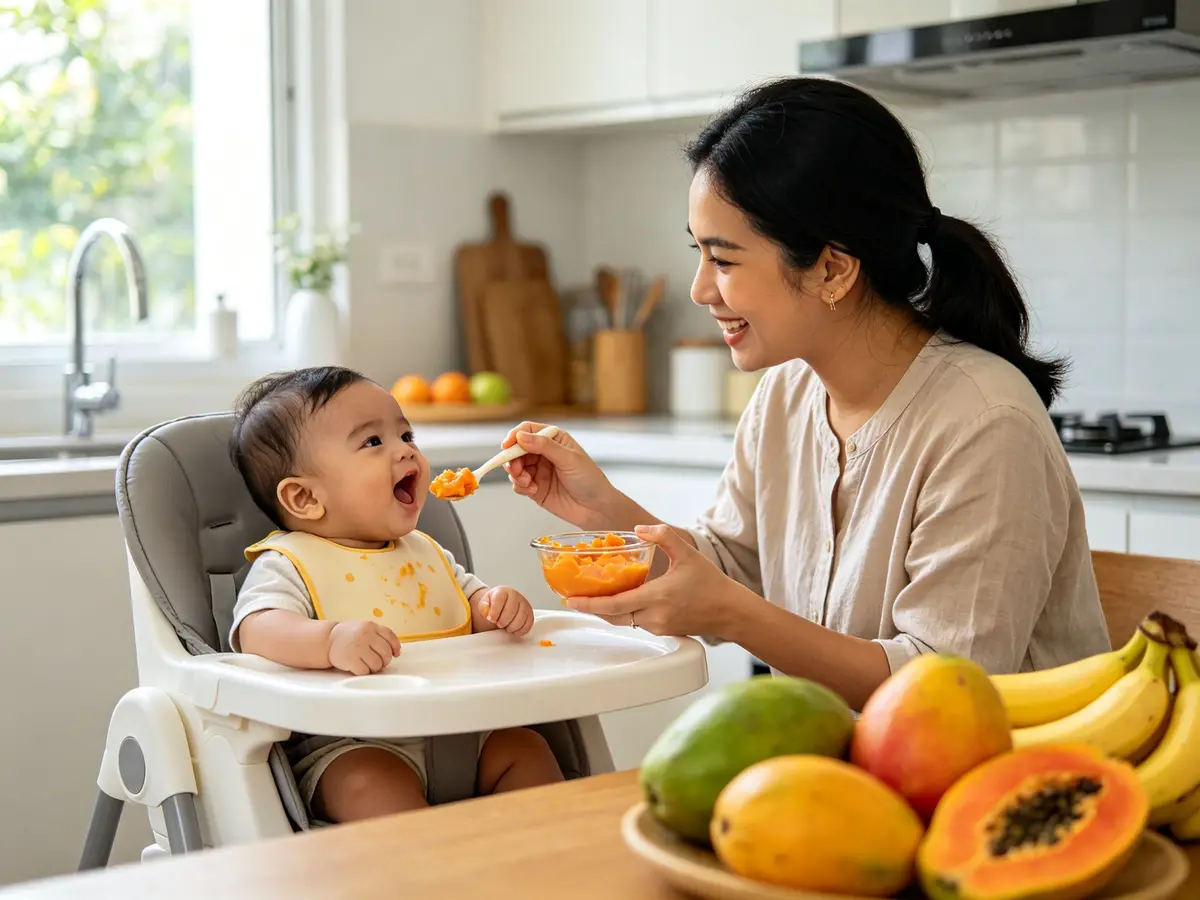
Don't obsess over imported baby food—we have great local ingredients right here
When my first baby turned six months, like many new moms, I went crazy buying imported baby food pouches and imported rice cereal, thinking imported meant safer and more nutritious. The result? Those baby food pouches were ridiculously expensive, my baby didn't even like them, and many expired before we used them. Later, I talked to a friend who's a pediatric nutritionist, and she said something that woke me up: "Southeast Asia has one of the most diverse ingredient ranges in the world. Why are you ignoring all these great things around you and buying stuff that's been shipped halfway across the world?"
Later I started researching making baby food with local ingredients, and it really opened up a new world. Thai jasmine rice, Malaysian sweet potatoes, Indonesian papaya, Philippine mangoes, plus all kinds of tropical vegetables and fruits I can't even name—fresh, cheap, and nutrient-rich. My second baby's solids were basically all made with local ingredients. He ate well, grew strong, and we saved a lot of money.
In this article, I've compiled my years of experience making baby food—from how to introduce first foods, to local ingredient recommendations, to finger foods, to common allergens. It's all stuff you can directly follow. I hope it helps those of you currently stressing about starting solids.
First foods—how exactly do you introduce them?
First, timing: The World Health Organization recommends exclusive breastfeeding until six months, then starting solids at six months. But every baby develops differently. If your four-month-old is already interested in adult food, can sit up, and has lost the tongue-thrust reflex, you can start a little earlier—but no earlier than four months. If your baby is six months old and still shows no interest in food, don't rush—wait a bit. Forcing it can make babies resistant.
For first foods, I recommend iron-fortified infant rice cereal, or make your own rice porridge using local jasmine rice ground into rice flour. Why rice? Because rice is one of the least allergenic grains, and it has a fine texture that babies accept easily. Why iron-fortified? Because around six months, the iron stores your baby got from your body are nearly used up, and breast milk doesn't contain much iron. So solids must include iron to prevent iron-deficiency anemia.
For both my babies' first foods, I used rice porridge made from ground Thai jasmine rice, with a little ground chicken liver puree for iron. The first time, make it thin—thick enough that it slowly drips off a spoon. Just feed one or two spoonfuls. The main goal is to let your baby get used to the taste and texture, not to fill them up. Observe for two to three days. If there's no allergic reaction (vomiting, diarrhea, rash), you can increase the amount or add new ingredients.
The principle for introducing solids: add only one new ingredient at a time, observe for two to three days, and if there's no problem, add the next one. This way, if your baby has an allergic reaction, you can quickly identify which food caused it. New ingredients are best introduced in the morning, so if there's an allergic reaction, you can handle it during the day without it affecting nighttime.
One more important point: Before one year old, solids are "complementary"—milk is still the main food. Don't reduce milk intake just because you've started solids. Before one year old, your baby's nutrition mainly comes from milk. Solids are for补充 nutrition and practicing chewing and swallowing. Ensure 600-800ml of milk per day, and gradually increase solids from one to two meals to two to three meals.
These local ingredients are perfect for baby food
Southeast Asian ingredients are truly abundant, and many are excellent choices for baby food. I've compiled some ingredients I frequently use and that my babies loved, organized by category.
Grains and starches:
- Thai jasmine rice / fragrant rice—soft and sticky texture. When ground into rice flour for porridge, it's especially fragrant. Babies love it.
- Sweet potato / purple sweet potato—available everywhere in Southeast Asia, cheap and sweet. Steam and mash into puree, or add to rice porridge. Babies love it. Sweet potatoes are also rich in dietary fiber and beta-carotene.
- Yam (Chinese yam)—good for the spleen and stomach. Steam and mash into puree, fine texture, suitable for babies with weak digestion.
- Pumpkin—sweet and starchy, nutrient-rich. Steam and mash, or cook in porridge. Babies love it.
Vegetables:
- Broccoli—a very nutrient-dense vegetable. Steam and mash, or cut into small florets for finger foods. At first, you can just give the flower part—the stems are harder, so wait until your baby is older.
- Carrots—rich in beta-carotene. Steam and mash, or cut into strips for finger foods. Note: carrots must be steamed—raw ones are hard to digest.
- Spinach / water spinach (kangkung)—common local leafy greens. Blanch first, then chop or puree, and add to rice porridge. Leafy greens should be blanched first to remove oxalic acid before giving to babies.
- Tomato—sweet and sour, appetizing. Peel and remove seeds, then puree and add to rice porridge or noodles. Tomatoes are rich in vitamin C and also promote iron absorption.
Fruits:
- Banana—the most convenient baby food fruit. Just mash with a spoon, no heating needed. Bananas are rich in potassium and dietary fiber, and can also relieve constipation.
- Papaya—Southeast Asian papayas are sweet and cheap. Ripe papaya can be directly mashed for babies. Rich in vitamin A and digestive enzymes, it also aids digestion.
- Mango—the king of tropical fruits, sweet and delicious, rich in vitamins A and C. But mango is a common allergen—first time, give a small amount and observe for allergic reactions.
- Avocado—although not native to Southeast Asia, it's now easily available in supermarkets. Avocados are rich in healthy fats and folate, especially good for your baby's brain development. Just mash directly, no heating needed.
Proteins:
- Chicken—one of the least allergenic meats. Steam chicken breast and chop or puree, then add to rice porridge.
- Fish—Southeast Asia has abundant fish resources. Sea bass, sole, and cod are all good choices with few bones and tender meat. Steam, remove bones, and mash, then add to solids. Fish is rich in DHA, good for your baby's brain development. First time, give a small amount and observe for allergies.
- Tofu—a good source of plant protein. Steam soft tofu and mash, or add to porridge. Tofu is also a common allergen—first time, give a small amount.
- Egg yolk—rich in iron and lecithin. Can start around eight months, beginning with a quarter, gradually increasing to one whole yolk. Egg whites are recommended after one year old, as egg white allergy is more common.
These ingredients are all easily available in Southeast Asian wet markets and supermarkets—fresh and cheap, no need to import. The key is freshness and hygiene, cooking thoroughly, and paying attention to ingredient combinations.
Finger foods: a great helper for practicing self-feeding
When your baby is around eight to nine months old, they'll start showing interest in grabbing food to eat themselves. That's when you can introduce finger foods. Finger foods are foods your baby can grab and eat with their hands. They practice hand-eye coordination and self-feeding skills, and also let your baby experience different textures and flavors.
Local ingredients suitable for finger foods:
- Steamed sweet potato strips / pumpkin strips / yam strips—steamed and cut into strips your baby can grip, soft but firm. The classic finger food.
- Steamed carrot strips / broccoli florets—steamed until soft but firm, your baby can grab and eat.
- Banana chunks / avocado strips / papaya pieces—soft fruits cut into appropriate sizes, your baby can grab and eat.
- Soft noodles / small wontons—cooked soft noodles or small wontons, your baby can grab with hands and eat, also practicing chewing.
- Chicken floss / fish floss—can be sprinkled on porridge or noodles, or let your baby pinch and eat with hands.
When giving your baby finger foods, always watch them closely to prevent choking. Food size should be appropriate—too big and your baby can't bite through, too small and it's a choking hazard. Texture should also be appropriate—soft enough that you can easily crush it with your fingers. At first, your baby may make a mess everywhere. Don't worry—it's a learning process, and gradually they'll get more skilled.
These allergens—be careful when introducing
Common baby food allergens in Southeast Asia include the following. Be especially careful when introducing for the first time—give a small amount and observe for two to three days:
- Eggs—especially egg whites, one of the most common allergens. Egg yolks can be introduced around eight months; egg whites are recommended after one year old. First time, give a quarter of an egg yolk and observe for rash, vomiting, or diarrhea.
- Seafood—shrimp, crab, and shellfish are highly allergenic, recommended after one year old. Fish is relatively safe, but first time also give a small amount and observe.
- Mango—one of the more allergenic tropical fruits. First time, give a small amount and observe for redness or rash around the mouth.
- Soy products—tofu, soy milk are also common allergens. First time, give a small amount.
- Wheat—wheat protein in noodles and bread can also cause allergies. Watch for reactions when first giving wheat-based foods.
If your baby develops a rash, vomiting, diarrhea, lip swelling, or difficulty breathing after eating a certain food, stop feeding immediately. In severe cases, go to the hospital right away. Record the foods your baby is allergic to and avoid them in the future. Most food allergies are gradually outgrown as your baby gets older, but severe allergies should always be avoided.
A few final words
Making baby food really doesn't need to be stressful. You don't need to追求 perfectly balanced nutrition or elaborate variety at every meal, and you don't need to compare how much or how little your baby eats with other babies. Every baby's appetite and development pace is different. Some babies love to eat, some eat less. As long as growth and development are normal and your baby is happy and alert, there's no problem.
Use fresh local ingredients, simple preparation, no added salt or sugar—that's the best baby food. Your baby getting to eat homemade food made with fresh local ingredients is better than any imported baby food pouch.
Enjoy the process of exploring food with your baby—it's a wonderful time.
Related Products
At Moni Happy, we offer a complete range of premium baby care products to keep your little one clean, comfortable, and healthy:
- Baby Wet Wipes — Designed for sensitive baby skin, ultra-soft and dermatologist-tested.
- Cotton Soft Towels & Face Towels — Designed for sensitive baby skin, ultra-soft and dermatologist-tested.
- Facial Tissue — Designed for sensitive baby skin, ultra-soft and dermatologist-tested.
Frequently Asked Questions
When should I start solid foods?
Most babies are ready for solids around 6 months, when they can sit up with support, show interest in food, and have lost the tongue-thrust reflex. Some babies show readiness as early as 4 months, but always check with your pediatrician before starting.
What are the best first foods for my baby?
Single-ingredient, iron-rich foods are ideal first foods — rice cereal, oatmeal, pureed sweet potato, avocado, banana, or pureed chicken. Introduce one new food at a time and wait 3-5 days to watch for allergic reactions. You can offer purees or try baby-led weaning with soft finger foods.
How do I introduce allergenic foods safely?
Current guidelines recommend introducing common allergens (peanut, egg, dairy, wheat, soy, fish, shellfish, tree nuts, sesame) early — around 6 months — and offering them regularly (2-3 times a week) to build tolerance. Start with a small amount in the morning so you can watch for reactions during the day.
How much solid food should my baby eat?
At 6 months, solids are mostly for practice — 1-2 tablespoons once a day is fine. By 8-9 months, aim for 2-3 meals a day with a variety of foods. By 12 months, your baby should be eating 3 meals plus snacks, with breast milk or formula still providing important nutrition. Let your baby's hunger and fullness cues guide you.
Frequently Asked Questions
When should I start introducing solid foods to my baby in Southeast Asia?
The World Health Organization (WHO) and most pediatric guidelines recommend exclusively breastfeeding babies for the first 6 months, then introducing solid foods around 6 months of age while continuing breastfeeding. Signs that your baby is ready for solid foods include: being able to sit up with minimal support and having good head and neck control; showing interest in food when others are eating; opening their mouth when food is offered; losing the tongue-thrust reflex (pushing food out of the mouth); and being able to pick up small objects and bring them to their mouth. In Southeast Asia, some traditional practices may introduce solids earlier (4-6 months), but it is generally recommended to wait until 6 months to reduce the risk of allergies, digestive issues, and infections. Always consult your pediatrician before starting solids, especially if your baby has a history of allergies or digestive issues.
What local Southeast Asian ingredients are safe and nutritious for baby's first foods?
Many local Southeast Asian ingredients are safe and nutritious for baby's first foods, including: rice (white rice porridge/congee is a common first food across the region); sweet potato and pumpkin (steamed and mashed); banana and papaya (ripe, mashed); avocado (mashed); chicken and fish (cooked thoroughly, deboned, and minced or shredded—local fish like tilapia, cod, or snapper are good options); tofu (soft, silken tofu); lentils and mung beans (cooked until very soft and mashed); spinach and other leafy greens (cooked and finely chopped); and coconut milk (in small amounts, mixed into porridge). When introducing new foods, follow the 3-4 day rule: introduce one new food at a time and wait 3-4 days before introducing another, watching for any allergic reactions (rash, vomiting, diarrhea, difficulty breathing). Avoid honey (for babies under 1 year), added salt and sugar, cow's milk (as a main drink before 1 year), choking hazards (whole grapes, nuts, hard candy), and raw or undercooked meat/fish/eggs.
How can I ensure food safety for baby food in Southeast Asia's tropical climate?
Food safety is particularly important in Southeast Asia's tropical climate, where warm temperatures and high humidity promote bacterial growth. To ensure food safety for baby food: always wash your hands thoroughly with soap and water before preparing food; clean and sanitize all feeding equipment (bowls, spoons, blenders) before use; use fresh, high-quality ingredients—wash fruits and vegetables thoroughly under running water, and peel them when possible; cook food thoroughly until it is piping hot (especially meat, fish, and eggs); avoid leaving cooked food at room temperature for more than 2 hours (or 1 hour in very hot weather); refrigerate or freeze leftover food promptly in clean, airtight containers; when reheating food, heat it thoroughly until it is steaming hot, then let it cool to a safe temperature before feeding; avoid using food that has been sitting out, has an unusual smell or appearance, or is past its expiration date; and when eating out, choose restaurants with good hygiene standards, and order freshly cooked, hot foods—avoid raw or undercooked items, buffet food, and street food for babies.
What are some traditional Southeast Asian baby food recipes I can try?
Traditional Southeast Asian baby food recipes that are nutritious and easy to prepare include: (1) Rice Congee/Porridge (Singapore/Malaysia/Indonesia/Philippines/Vietnam/Thailand): cook white rice in plenty of water or broth until very soft and creamy; can be mixed with mashed vegetables, minced meat, or fish. (2) Bubur Ayam (Indonesia/Malaysia): chicken rice porridge cooked with ginger, garlic, and a little turmeric; shred the chicken finely and mix into the porridge. (3) Cháo (Vietnam): rice porridge cooked with pork or chicken, pumpkin, and carrots; blend or mash to a smooth consistency. (4) Lugaw (Philippines): rice porridge cooked with ginger and chicken or fish; can be mixed with mashed egg or vegetables. (5) Khao Tom (Thailand): rice soup cooked with chicken, ginger, and a little soy sauce (use low-sodium soy sauce and use sparingly for babies). (6) Steamed Banana Cake (Malaysia/Indonesia/Philippines): mash ripe banana, mix with a little rice flour or wheat flour and water/breastmilk/formula, steam until cooked. (7) Pumpkin and Sweet Potato Mash (across the region): steam pumpkin and sweet potato until soft, mash with a fork or blend with a little breastmilk/formula/water. Always adjust the texture to your baby's age and chewing ability, and avoid adding salt, sugar, or strong spices for babies under 1 year.