
2026-09-02 · Moni Happy Editorial Team
Baby Travel Tips: Flying & Traveling with an Infant - A Mom's Survival Guide
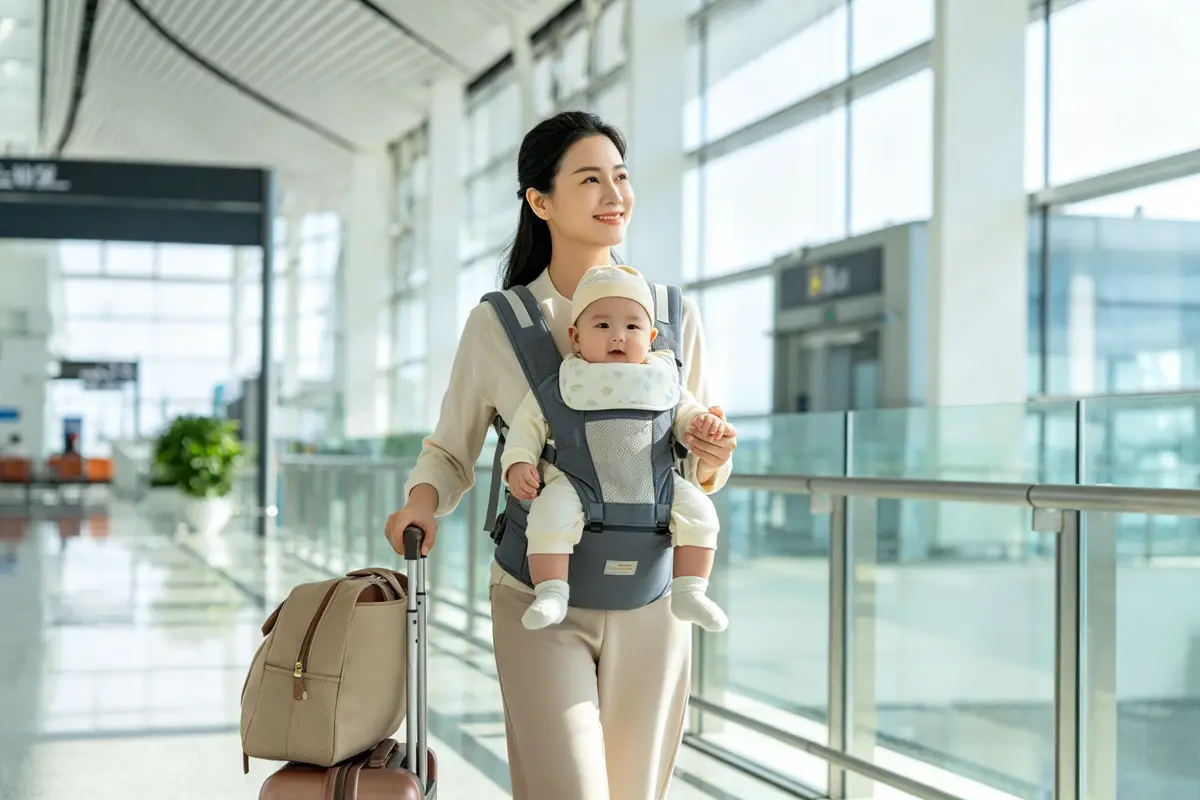
Baby Travel Tips: Flying & Traveling with an Infant - A Mom's Survival Guide
The thought of traveling with a baby can be terrifying. I remember our first flight with our newborn—she was just 3 months old, and I was a nervous wreck. I packed everything but the kitchen sink, worried about her ears popping, about her crying on the plane, about how I'd change her diaper in a tiny airplane bathroom. But you know what? It went better than I expected, and with each subsequent trip, I got better at it. Now, having traveled with three kids across multiple countries and countless flights, I've learned a thing or two about traveling with a baby. Here's my complete survival guide—everything I wish someone had told me before that first trip.
When Is It Safe to Travel with a Baby?
One of the most common questions new parents ask is: when can I travel with my baby? The answer depends on several factors, including your baby's age, health, and the type of travel.
By air: Most airlines allow babies as young as 2 days old to fly, but most pediatricians recommend waiting until your baby is at least 2-3 months old before flying, especially for long-haul flights. This gives your baby's immune system time to develop and reduces the risk of catching illnesses in the confined airplane environment. For premature babies or babies with health conditions, always consult your pediatrician before flying. If you must fly with a newborn (under 2 months), talk to your pediatrician first, take extra precautions to avoid sick passengers, and consider wearing a baby carrier to keep people from touching your baby.
By car: Car travel is generally safer for younger babies, as you have more control over the environment and can stop as needed. However, it's important to limit the time your baby spends in a car seat to no more than 2 hours at a time for newborns, as prolonged sitting in a car seat can restrict breathing. Take frequent breaks (every 1-2 hours) to take baby out of the seat, stretch, feed, and change diapers.
International travel: If traveling internationally, check the vaccination requirements for your destination. Some countries require specific vaccinations or malaria prophylaxis, which may not be suitable for young babies. Also, consider the availability of medical care at your destination, and make sure you have adequate travel insurance that covers your baby. Consult a travel medicine specialist or your pediatrician well in advance (ideally 4-6 weeks before travel) to discuss any necessary vaccinations or precautions.
Always consult your pediatrician before traveling with a baby, especially if your baby is premature, has any health conditions, or if you're traveling to a destination with specific health risks.
Preparing for the Trip: Planning & Packing
Successful travel with a baby starts with good planning and packing. Here's what I've learned over the years:
Before You Go
- Visit the pediatrician: Schedule a well-baby checkup 1-2 weeks before travel. Make sure all vaccinations are up to date, get a copy of your baby's vaccination records, and ask for a letter from your pediatrician if your baby has any medical conditions or needs to carry medication on the plane. Ask about any travel-specific precautions (malaria prevention, food/water safety, etc.).
- Book strategically: When booking flights, try to choose flights that align with your baby's sleep schedule. A red-eye flight (overnight) can work well if your baby will sleep through most of it, but it can also backfire if baby is over-tired and fussy. For long-haul flights, consider booking a bulkhead seat for extra floor space, or book an extra seat for your baby if they're over 6 months and you can afford it—having a separate seat for the car seat can be a game-changer. If traveling with a partner, book your seats in an aisle-window pair (leaving the middle seat open)—there's a good chance the middle seat won't be booked, giving you extra space.
- Check airline policies: Every airline has different policies for traveling with infants. Check: the age requirement for flying, whether you can use a car seat on the plane, baggage allowance for baby items (most airlines allow a stroller and car seat for free in addition to your regular baggage), whether you can bring breast milk/formula through security (yes, in reasonable quantities, but declare it at security), and whether bassinets are available on long-haul flights (book early—they're limited and assigned on a first-come, first-served basis, usually for babies under 6 months and under a certain weight).
- Research your destination: Before you go, research the availability of baby supplies at your destination. Can you buy diapers, formula, wipes, and baby food there? What brands are available? If your baby has specific needs (special formula, certain diapers for sensitive skin), bring enough from home. Also, research the safety of tap water, food, and any health risks at your destination. For a complete guide to baby skincare products for travel, see our baby care products collection.
Packing Essentials
The key to packing for a baby is to be prepared but not overpack. Here's my essential packing list:
- Diapers and wipes: Pack enough diapers for the travel days plus 2-3 extra days' worth (in case of delays or difficulty finding your brand at your destination). For a 1-week trip, I usually pack about 70-80 diapers (10-12 per day for a newborn, 6-8 per day for an older baby). Pack wipes in a travel-sized dispenser, plus a few refill packs. For premium, dermatologically tested diapers and wipes that are great for travel, check out Moni Happy diapers and water-based baby wipes.
- Diaper changing supplies: A portable changing pad (disposable or reusable), diaper rash cream, hand sanitizer, and plastic bags for dirty diapers. A small travel-sized bottle of diaper rash cream is essential—airplane air is dry and can irritate baby's skin.
- Feeding supplies: If breastfeeding: a nursing cover (optional), breast pump (if needed), milk storage bags, and a cooler bag for expressed milk. If formula-feeding: enough formula for the trip plus extra, pre-measured formula dispensers (a lifesaver for travel), bottles (2-3), a bottle brush, and a travel sterilizer (or use a clean pot with boiling water at your destination). For both: burp cloths, bibs, and a receiving blanket.
- Clothing: Pack 2-3 outfits per day (babies spit up, have diaper blowouts, and get dirty), plus 1-2 extra outfits for emergencies. Dress baby in layers, as airplane cabins can be cold. Include sleepers, onesies, pants, socks, hats (a sun hat for warm destinations, a warm hat for cold), and a light jacket or sweater. Don't forget a swaddle blanket for newborns—they're versatile and can be used as a blanket, nursing cover, changing pad, or sunshade.
- Sleep supplies: A travel crib or portable bassinet (many hotels provide cribs, but call ahead to confirm), a sleep sack or wearable blanket (safer than loose blankets), a white noise machine or app (airplane and hotel noise can disrupt sleep), and a familiar lovey or blanket (for older babies—nothing in the crib for babies under 1 year per safe sleep guidelines). Blackout curtains or a portable blackout blind can be a lifesaver for naps in unfamiliar places.
- Health and safety: A well-stocked first aid kit (infant acetaminophen/paracetamol, infant ibuprofen for babies 6 months+, thermometer, nasal aspirator, saline drops, band-aids, antiseptic wipes, tweezers, and any prescription medications), sunscreen (for babies 6 months+—use mineral-based sunscreen with SPF 30+), insect repellent (for babies 2 months+—use DEET-free or picaridin-based, and follow age guidelines), and a copy of your baby's vaccination records and insurance information. A baby carrier or wrap is essential for navigating airports and sightseeing—babies are often happiest when close to you, and it frees up your hands.
- Entertainment: For babies 3 months+, pack a few favorite toys (rattles, teething toys, soft books), but don't overpack—babies are often just as entertained by the airplane safety card, a cup, or the window. For older babies (6 months+), pack some finger snacks (puffs, rice cakes, soft fruit) and a sippy cup. A tablet with downloaded baby-friendly shows or music can be a last-resort distraction for older babies on long flights.
- Travel gear: A lightweight, compact stroller that folds easily (many airlines allow you to gate-check strollers for free, so you can use them right up to boarding), a car seat (if renting a car or using a taxi—always use a car seat for car travel, even in taxis), and a travel high chair or portable seat (for feeding at your destination). A luggage cart or a stroller with a large basket can help transport all your gear through the airport.
Airport & Airplane Tips
Navigating the airport and airplane with a baby can be challenging, but these tips will make it much easier:
At the Airport
- Arrive early: Give yourself plenty of time—arrive at least 2 hours before a domestic flight and 3 hours before an international flight. Everything takes longer with a baby, and you don't want to be rushing. If baby needs to feed, change, or just have a break, you'll have time.
- Use family lanes: Many airports have family or priority security lanes for passengers with children. These lanes are usually less crowded and have more space for strollers and baby gear. Ask at the security checkpoint if there's a family lane available.
- Declare baby items at security: You can bring breast milk, formula, water for mixing formula, and baby food through security in quantities greater than the 100ml liquid limit, but you must declare them at the security checkpoint. They may be subject to additional screening. Pack these items in an easily accessible bag so you can pull them out quickly. Strollers and car seats will need to go through the X-ray machine (or be manually inspected if too large).
- Gate-check your stroller and car seat: Most airlines allow you to use your stroller right up to the boarding gate, then gate-check it for free. It will be waiting for you at the gate when you arrive (or at baggage claim for some airlines—ask the gate agent). A car seat can also be gate-checked, or you can use it on the plane if you've booked a seat for your baby. Always put your stroller and car seat in a travel bag to protect them from damage during handling.
- Board early (or late): Most airlines allow families with young children to board early (after first class/business class, before general boarding). This gives you time to get settled, store your carry-on, and set up your baby's space without the rush of general boarding. However, some parents prefer to board last to minimize the time baby spends on the plane. Do what works best for you and your baby. If you have a lot of gear, early boarding is usually better.
- Change diaper before boarding: Try to change your baby's diaper right before boarding, even if it's not quite time. Airplane bathrooms are tiny, and changing a diaper on a plane is much harder than in an airport bathroom. Also, feed baby right before boarding if possible—a full, sleepy baby is more likely to sleep during takeoff and the flight.
On the Plane
- Ears popping: The change in cabin pressure during takeoff and landing can cause ear pain for babies (just like it does for adults). The best way to relieve this is to have baby swallow or suck during takeoff and landing. Breastfeed, bottle-feed, or offer a pacifier during ascent and descent. If baby is sleeping, don't wake them—they'll usually be fine. For older babies, offering a sippy cup or a snack can also help with swallowing. Avoid giving baby a bottle to lie flat with during takeoff/landing—hold them semi-upright to reduce ear pressure and the risk of ear infections.
- Seating: If you're holding baby on your lap (allowed for babies under 2 years old on most airlines), ask the flight attendant if there's an empty seat next to you that you can use. If the flight isn't full, you may get lucky. If you've booked a separate seat for baby, bring your car seat and install it rear-facing in the window seat (car seats can't be in aisle seats). This gives baby a familiar, safe space to sit and sleep, and frees you up to eat, use the bathroom, or just rest. For more on car seat safety, see our baby home safety guide.
- Diaper changes on the plane: Most airplanes have a fold-down changing table in the bathroom (usually in the accessible/family bathroom, or in some of the regular bathrooms). It's small and cramped, but it works. Lay down a disposable changing pad (the airplane changing table is not always clean), have everything you need within reach (diaper, wipes, cream, plastic bag), and work quickly. If the changing table is too small or unavailable, you can change baby on your lap (with a changing pad) or on the closed toilet seat (with a changing pad). Always keep one hand on baby at all times. For easy diaper changes on the go, diaper pants are a great option—they pull on and off like underwear, making changes easier in small spaces.
- Feeding on the plane: You can breastfeed anywhere on the plane—use a nursing cover if you'd like privacy, or just use a blanket. For formula feeding, bring pre-measured formula in dispensers and ask the flight attendant for hot water to mix (test the temperature on your wrist before feeding). Bring bottled water for mixing formula if you're concerned about the plane's water quality. Burp baby frequently during feeds, as the air pressure can cause extra gas.
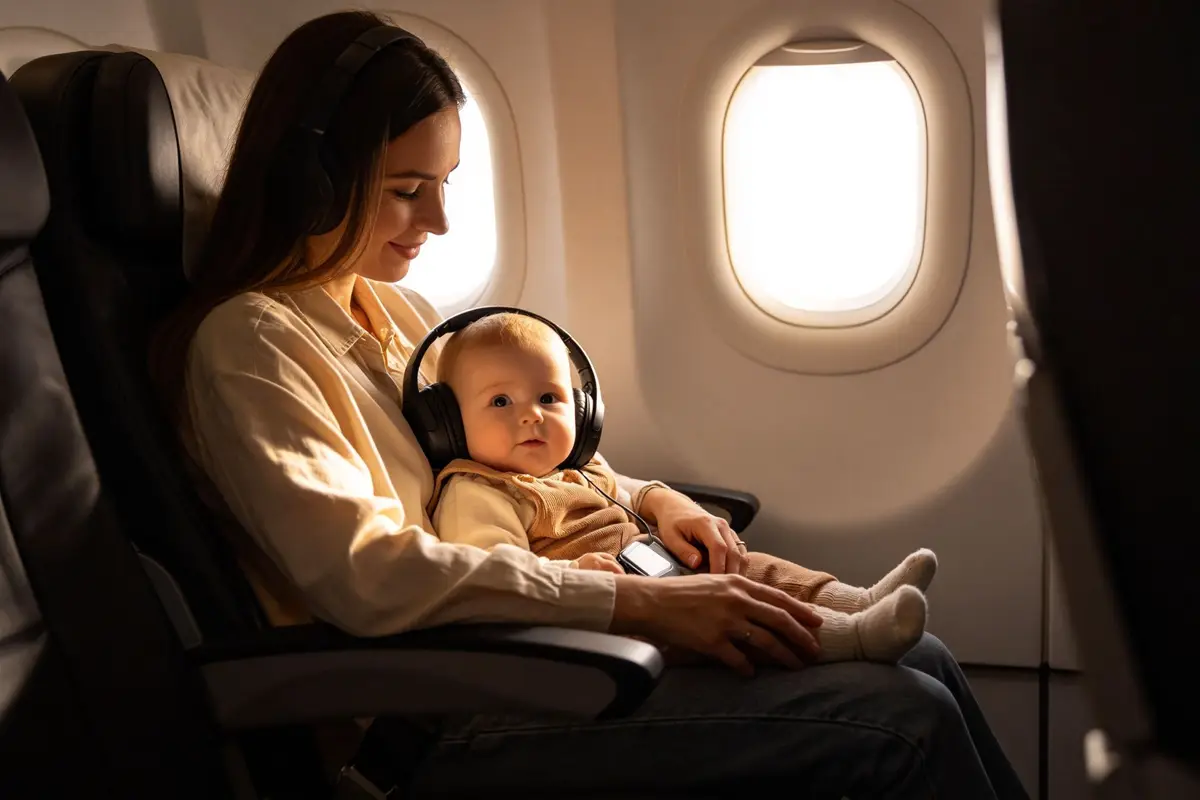
- Keeping baby comfortable: Dress baby in layers, as the cabin temperature can vary. Bring a light blanket or sleep sack for warmth. Use a white noise app on your phone (with headphones for you, or just play it softly) to help baby sleep through the plane noise. A baby carrier can be great for walking up and down the aisle with a fussy baby (ask the flight attendant when it's safe to do so). Walk, rock, and soothe baby as needed—don't worry about what other passengers think. Most people are understanding, and those who aren't can deal with it.
- Hydration: The dry airplane air can cause dehydration, especially for babies. Offer breast milk, formula, or water (for babies 6 months+) frequently throughout the flight. For breastfed babies, nursing more frequently than usual can help with hydration and ear pressure.
- What to do if baby cries: First, take a deep breath. It's normal for babies to cry on planes, and you're doing the best you can. Try the usual soothing techniques: feeding, pacifier, walking up and down the aisle, rocking, singing, white noise, a change of position, or a new toy. If nothing works, it's okay—just keep trying and know that the flight will end. Don't let the stares of other passengers stress you out (most people are sympathetic, and those who aren't have probably forgotten what it's like to travel with a baby). If you're traveling with a partner, take turns so each of you gets a break.
Car Travel with a Baby
Car travel with a baby has its own set of challenges and advantages. Here are my tips:
- Car seat safety first: Always use a properly installed, rear-facing car seat for every car ride, no matter how short. Make sure the car seat is installed correctly (many are not—consider having it inspected by a certified child passenger safety technician). The harness should be snug (you shouldn't be able to pinch any slack at the shoulder), and the chest clip should be at armpit level. Never place a car seat in the front seat with an active airbag. For more on car seat safety, see our baby safety guide.
- Limit time in the car seat: Newborns should not spend more than 2 hours at a time in a car seat, as the upright position can restrict breathing. Take frequent breaks (every 1-2 hours) to take baby out of the seat, stretch, feed, and change diapers. Plan your route to include rest stops with facilities for changing and feeding.
- Time your drives around sleep: Many babies sleep well in the car, so try to time long drives around nap time or bedtime. A full, sleepy baby is more likely to sleep through most of the drive. However, don't let baby sleep in the car seat for extended periods outside of the car—move them to a safe sleep surface (crib, bassinet) once you arrive.
- Pack a car essentials bag: Keep a bag within easy reach (not in the trunk) with diapers, wipes, a changing pad, diaper cream, a change of clothes, burp cloths, bottles/formula or snacks, water, a few toys, a blanket, and hand sanitizer. You don't want to have to dig through the trunk at every rest stop.
- Sun protection: Use sun shades on the car windows to protect baby from the sun (UV rays can pass through glass, and sun in the eyes can make baby fussy). Dress baby in light, breathable clothing and a hat. Never leave baby alone in the car, even for a minute—cars heat up quickly, even on mild days, and heatstroke can be fatal.
- Entertainment: For older babies (6 months+), attach safe car seat toys to the car seat handle or use a car seat activity bar. Play music or sing songs. For long drives, a tablet with baby-friendly shows can be a last-resort distraction (mount it safely out of baby's reach, or use a car seat headrest mount). For younger babies, the sound of the car engine and the motion are usually enough to keep them content or asleep.
- Be flexible: Car travel with a baby rarely goes exactly as planned. Build extra time into your schedule for stops, feedings, diaper changes, and fussy moments. If baby is having a bad day, it's okay to stop early, take a longer break, or even spend the night somewhere unexpected. The goal is to arrive safely and with everyone's sanity intact.
Staying Healthy & Safe While Traveling
- Food and water safety: If traveling to a destination with questionable water quality, use only bottled or boiled water for drinking, mixing formula, and brushing teeth (for baby and for you if breastfeeding). Avoid ice, raw or undercooked foods, street food, and unpeeled fruits and vegetables. If breastfeeding, continue breastfeeding—your breast milk provides protection against many illnesses and is the safest food for your baby. If formula-feeding, use ready-to-feed formula when possible, or mix powdered formula with safe water.
- Sun protection: For babies under 6 months, avoid direct sun exposure as much as possible. Keep baby in the shade, dress in lightweight long sleeves and pants, a wide-brimmed hat, and UV-protective sunglasses. For babies 6 months+, use mineral-based sunscreen (zinc oxide or titanium dioxide) with SPF 30+, applied 15-30 minutes before sun exposure and reapplied every 2 hours or after swimming/sweating. Avoid peak sun hours (10am-4pm) when possible.
- Insect protection: If traveling to an area with mosquitoes or other insects, use a mosquito net over the stroller or car seat, dress baby in lightweight long sleeves and pants, and use insect repellent approved for your baby's age (DEET up to 30% for babies 2 months+, or picaridin-based repellents). Avoid areas with standing water, and use air conditioning or mosquito nets at night. If traveling to a malaria-endemic area, consult a travel medicine specialist about malaria prevention for your baby (many malaria medications are not suitable for young babies, so you may need to reconsider travel to high-risk areas).
- Vaccinations: Make sure your baby's routine vaccinations are up to date before travel. Some destinations may require additional vaccinations (e.g., yellow fever, typhoid) or recommend others (e.g., hepatitis A, Japanese encephalitis). Consult a travel medicine specialist 4-6 weeks before travel to discuss what's recommended for your destination and your baby's age.
- Medical care: Research the availability and quality of medical care at your destination. Know the location of the nearest hospital or clinic that can treat infants. Carry a copy of your baby's vaccination records, medical history, and insurance information. Consider purchasing travel insurance that covers medical evacuation and emergency care for your baby. If your baby has any chronic medical conditions, carry a letter from your pediatrician explaining the condition and any necessary medications or equipment.
- Safe sleep away from home: Always follow safe sleep guidelines, even when traveling. Baby should sleep on their back, on a firm, flat surface (travel crib, bassinet, or play yard), with no loose blankets, pillows, stuffed animals, or bumpers. If using a hotel crib, check that it meets current safety standards (no drop-side rails, slats no more than 2 3/8 inches apart, firm mattress that fits snugly). Bring your own fitted sheet for the travel crib, as hotel sheets may not fit properly. For more on safe sleep, see our baby sleep guide.
Maintaining Routine While Traveling
One of the biggest challenges of traveling with a baby is maintaining their routine while away from home. Here are some tips:
- Bring familiar items: Bring your baby's usual sleep sack, lovey (for older babies), white noise machine, and bedtime books. Familiar items from home can help baby feel secure and comfortable in an unfamiliar environment.
- Stick to the schedule as much as possible: Try to maintain your baby's usual feeding and sleep schedule, even while traveling. If there's a time zone change, gradually adjust baby's schedule by 30-60 minutes per day in the days leading up to the trip, or adjust on arrival by exposing baby to natural light at the appropriate times. For short trips (less than 3 days), it may be easier to keep baby on their home time zone rather than adjusting.
- Create a sleep-friendly environment: Use blackout curtains or a portable blackout blind to darken the room, use white noise to mask unfamiliar sounds, and keep the room at a comfortable temperature (around 20-22°C / 68-72°F). A consistent bedtime routine (bath, book, feed, sleep) can signal to baby that it's time to sleep, even in a new place.
- Be flexible: It's normal for baby's routine to be disrupted while traveling. Naps may be shorter or happen in the car/stroller/carrier, bedtimes may be later, and baby may be fussier than usual. This is temporary—baby will get back to their normal routine once you're home. Don't stress too much about maintaining the perfect schedule while traveling; the goal is to have a safe, enjoyable trip for everyone.
- Take it slow: Don't overschedule your days. Plan one activity per day, and leave plenty of time for naps, feeds, and downtime. A tired, overstimulated baby is a fussy baby, and no one enjoys a vacation with a fussy baby. It's okay to spend an afternoon at the hotel or rental, letting baby nap and play, rather than trying to see every tourist attraction.
Article Summary
Traveling with a baby can be challenging, but with good planning, the right gear, and a flexible attitude, it can also be a wonderful experience. The key points to remember are: consult your pediatrician before traveling, especially for newborns, premature babies, or international travel; plan and pack strategically, bringing enough diapers, formula, and supplies for the trip plus extra; arrive early at the airport and use family lanes; gate-check your stroller and car seat; help baby with ear pressure during takeoff and landing by feeding or offering a pacifier; change diapers before boarding and be prepared for tiny airplane bathrooms; always use a properly installed rear-facing car seat for car travel, limiting time in the seat to 2 hours at a time for newborns; take frequent breaks on road trips; prioritize food and water safety, sun protection, and insect protection at your destination; maintain baby's routine as much as possible with familiar items and a consistent sleep environment; and be flexible—travel with a baby rarely goes exactly as planned, and that's okay. The most important thing is to enjoy the journey and make memories with your baby. Don't let fear of the unknown keep you from traveling—with the right preparation, you and your baby can have a great trip. And remember: every parent has been where you are, and you're doing a great job. Safe travels!
Frequently Asked Questions
When is it safe to travel with a baby?
Most healthy full-term babies can travel safely after the first 2-4 weeks, but many pediatricians recommend waiting until your baby is 2-3 months old, especially for air travel. This gives their immune system time to develop and reduces the risk of catching illnesses in crowded spaces. Always check with your pediatrician before traveling, especially if your baby was premature or has health concerns. Make sure your baby has had any necessary vaccinations before traveling.
How do I handle flying with a baby?
Key tips for flying with a baby: book a direct flight if possible, feed your baby during takeoff and landing to help with ear pressure (breastfeeding, bottle, or pacifier all work), bring more supplies than you think you'll need (diapers, wipes, formula, clothes), use a baby carrier for hands-free movement through the airport, and try to time flights around your baby's sleep schedule. Most airlines allow you to check a stroller and car seat for free, and babies under 2 usually fly free on your lap (though buying a separate seat is safer for long flights).
What should I pack for traveling with a baby?
Essentials include: diapers and wipes (pack 2-3 times what you think you'll need), changing pad, diaper rash cream, formula or breastfeeding supplies, bottles and sterilizing supplies, baby food and snacks (for older babies), bibs and burp cloths, several changes of clothes, sleep sack or swaddle, favorite toy or comfort item, baby first aid kit, thermometer, infant sunscreen (for babies 6 months+), sun hat, and any medications. Pack a separate carry-on bag with enough supplies for 24 hours in case your luggage is delayed.
How do I keep my baby safe and healthy while traveling?
To keep your baby healthy while traveling: wash your hands frequently and use hand sanitizer, avoid crowded spaces during peak illness seasons, keep your baby's vaccinations up to date, bring any necessary medical records and your pediatrician's contact information, be careful about food and water safety (use bottled or boiled water for formula and drinking), protect your baby from sun and insects with appropriate clothing and baby-safe repellent, and stick to your baby's routine as much as possible to minimize stress. If your baby gets sick while traveling, seek medical care promptly.
Frequently Asked Questions
When is it safe to travel with a baby by plane?
Most airlines allow babies as young as 2 days old to fly, but most pediatricians recommend waiting until your baby is at least 2-3 months old before flying, especially for long-haul flights. This gives the immune system time to develop and reduces the risk of catching illnesses in the confined airplane environment. For premature babies or babies with health conditions, always consult your pediatrician before flying. If you must fly with a newborn under 2 months, talk to your pediatrician first, take extra precautions to avoid sick passengers, and consider using a baby carrier to keep people from touching your baby. For international travel, check vaccination requirements and consult a travel medicine specialist 4-6 weeks before departure. Car travel is generally safer for younger babies, as you have more control over the environment, but limit time in the car seat to no more than 2 hours at a time for newborns and take frequent breaks.
What should I pack for traveling with a baby?
The key is to be prepared but not overpack. Essentials include: 1) Diapers and wipes - enough for travel days plus 2-3 extra days (about 10-12 per day for newborns, 6-8 for older babies), plus a travel-sized wipe dispenser. 2) Diaper changing supplies - portable changing pad, diaper rash cream, hand sanitizer, plastic bags for dirty diapers. 3) Feeding supplies - if breastfeeding: nursing cover, breast pump (if needed), milk storage bags, cooler bag; if formula: enough formula plus extra, pre-measured formula dispensers, 2-3 bottles, bottle brush, travel sterilizer; plus burp cloths, bibs, receiving blanket. 4) Clothing - 2-3 outfits per day plus 1-2 extra for emergencies, layers, sleepers, onesies, socks, hats, swaddle blanket. 5) Sleep supplies - travel crib/bassinet, sleep sack, white noise machine/app, familiar lovey (for older babies), portable blackout blind. 6) Health and safety - first aid kit (infant acetaminophen, thermometer, nasal aspirator, saline drops, band-aids, prescription meds), sunscreen (6 months+), insect repellent (2 months+), vaccination records, baby carrier. 7) Entertainment - a few favorite toys, teething toys, soft books, finger snacks for older babies. 8) Travel gear - lightweight stroller, car seat, travel high chair. Pack baby items in an easily accessible carry-on bag for the flight, and check the rest.
How do I handle my baby's ears during takeoff and landing?
The change in cabin pressure during takeoff and landing can cause ear pain for babies, just like it does for adults. The best way to relieve this is to have baby swallow or suck during ascent and descent: breastfeed, bottle-feed, or offer a pacifier during takeoff and landing. If baby is sleeping, don't wake them - they'll usually be fine. For older babies (6 months+), offering a sippy cup, water, or a snack can also help with swallowing. Avoid giving baby a bottle to lie flat with during takeoff/landing - hold them semi-upright to reduce ear pressure and the risk of ear infections. Some parents also use saline nasal drops before the flight to keep nasal passages clear, which can help with ear pressure. If your baby has a cold or ear infection, talk to your pediatrician before flying, as the pressure changes can be more painful. In most cases, though, a little feeding or sucking during takeoff and landing is all that's needed to keep baby comfortable.
How do I change a diaper on an airplane?
Changing a diaper on an airplane is challenging but doable. Most airplanes have a fold-down changing table in the bathroom (usually in the accessible/family bathroom, or in some regular bathrooms). It's small and cramped, but it works. Tips: 1) Change baby's diaper right before boarding, even if it's not quite time, to minimize the need for an onboard change. 2) When you need to change on the plane, gather everything you need before heading to the bathroom: diaper, wipes, diaper cream, changing pad, and a plastic bag for the dirty diaper. 3) Lay down a disposable changing pad on the airplane changing table (they're not always clean). 4) Work quickly and efficiently, keeping one hand on baby at all times. 5) If the changing table is too small or unavailable, you can change baby on your lap (with a changing pad) or on the closed toilet seat (with a changing pad), though these are less ideal. 6) Dispose of the dirty diaper in the bathroom trash (wrap it in a plastic bag to contain odor). 7) For easier changes in small spaces, consider using diaper pants (pull-up style diapers) for older babies - they're easier to pull on and off without laying baby down. Remember: airplane bathrooms are tiny, so be prepared for a bit of a workout, but it's totally doable with practice.