
2026-08-05 · Moni Happy Editorial Team
Developmental Sequence of a Baby's First Steps
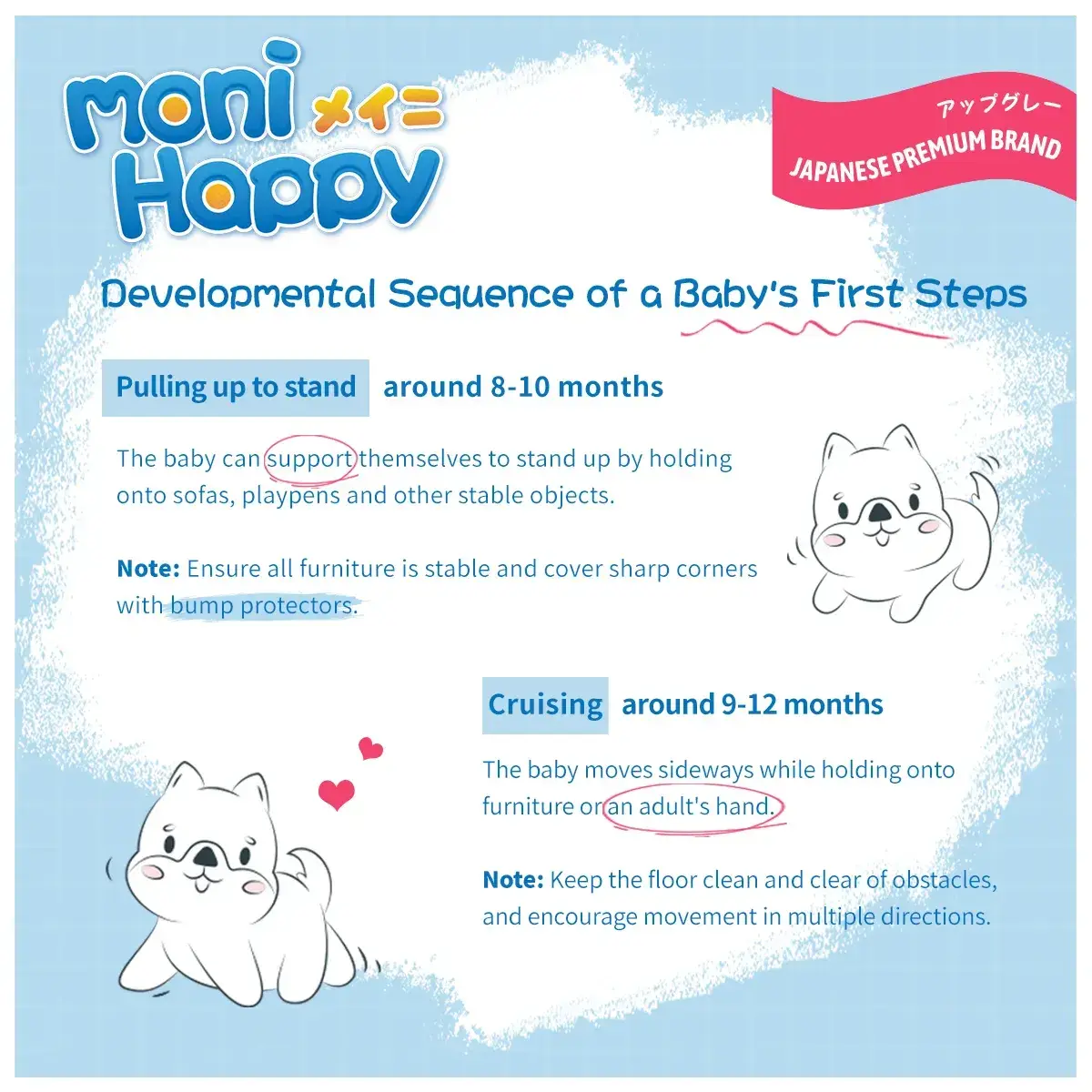
Pulling up to stand around 8-10 months
The baby can support themselves to stand up by holding onto sofas, playpens and other stable objects.
Note: Ensure all furniture is stable and cover sharp corners with bump protectors.
Cruising around 9-12 months
The baby moves sideways while holding onto furniture or an adult's hand.
Note: Keep the floor clean and clear of obstacles, and encourage movement in multiple directions.
Standing independently around 10-13 months
The baby can stand briefly without support, with a gradual development of balance.
Note: Play the "squat to pick up toys" game frequently to exercise balance and leg strength.
Walking independently around 12-15 months
The baby takes their first independent steps! There is a wide time range for this milestone, and some babies may not walk steadily until 18 months.
Note: Stay close to protect the baby in the early stage, but try to avoid holding their hand or pulling them forcefully.
Frequently Asked Questions
What are the most important baby milestones?
Key milestones include: smiling socially (2 months), rolling over (4-6 months), sitting unsupported (6-8 months), crawling (7-10 months), pulling to stand (8-12 months), first words (8-15 months), and walking independently (9-18 months). Every baby develops at their own pace, and there's a wide range of normal. If your baby misses multiple milestones or loses skills they previously had, talk to your pediatrician.
How can I encourage my baby's development?
The best way to support development is through everyday interaction — talk, read, and sing to your baby from birth. Give them plenty of supervised tummy time to build neck and core strength. Provide age-appropriate toys that encourage reaching, grasping, and problem-solving. Limit screen time for babies under 18 months (except video chatting). Most importantly, respond to your baby's cues and give them lots of love and attention.
When should I worry about developmental delays?
Talk to your pediatrician if your baby: doesn't make eye contact by 3 months, doesn't smile by 3 months, doesn't babble by 9 months, doesn't respond to their name by 9 months, doesn't point or gesture by 12 months, doesn't say any words by 16 months, doesn't walk by 18 months, or loses any skills they previously had. Early intervention is key — if you have concerns, ask for a developmental screening.
How much tummy time does my baby need?
Aim for 10-15 minutes of supervised tummy time, 2-3 times a day, starting from the first weeks home. You can start with shorter sessions (2-3 minutes) and gradually increase as your baby builds strength. Tummy time helps build neck, shoulder, and core muscles, prevents flat spots on the back of the head, and encourages motor development. If your baby fusses during tummy time, try getting down on the floor with them, using a tummy time pillow, or doing it after a nap when they're well-rested.