
2026-11-07 · Moni Happy
How do you explain the switch from tape diapers to pull up pants at the counter?

Explain it in three moves: name the signals that the child is ready, say that the size number usually moves up by one, and set expectations for the first two weeks of night use. That is the whole conversation, and it takes about ninety seconds at the counter.
Most parents who abandon pull up pants do not abandon them because of the product. They abandon them because nobody told them the fit would feel different, or that a night leak in week one is normal. The sale is easy; the second purchase is where the explanation pays.
What signals tell a parent the child is ready?
When changing a diaper turns into a negotiation rather than a routine. The child stands up, rolls away, wants to hold the pack, or tries to pull the tapes themselves.
That behaviour usually shows up somewhere between nine and fifteen months, which is well before toilet training and is the point parents most often misread as a reason to wait. It is actually the reason to switch: a child who resists lying down is a child who will accept a product they can step into.
Say it in the parent's language, not in category language. "If she won't lie still for a change any more, that's the sign" lands better than "the developmental window for pull up pants begins at".
Why does the size number move up?
Because pull up pants fit like underwear, and the size transition is not one-to-one with a taped diaper.
A tape diaper is fastened at the waist and adjusted by the parent, so it tolerates a wider range of fit, while a pants size transition depends on the elastic holding without help. Pants have an elastic waist and leg bands that have to hold without adjustment, and the same weight band can feel tighter. In practice a child in a medium tape diaper very often needs a large in pants, and a parent who buys the same number will report that the product is too small.
Use the weight band on the pack as the guide and be explicit about it: "she's 9 kilos, so she's in L in pants even though she's M in tape". A parent who hears that once does not need to hear it again, and the store does not get a return.
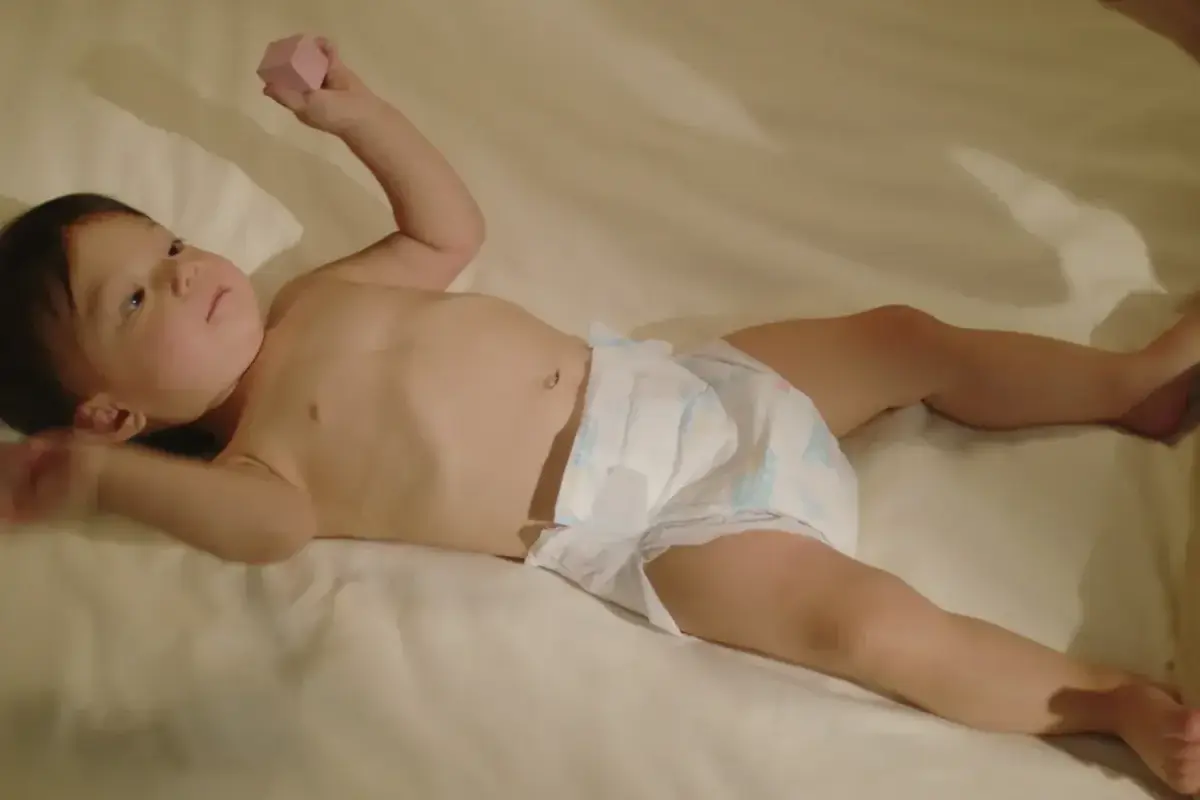
Do pull up pants absorb as much as tape diapers?
Comparable, but not identical, and the difference that matters is fit rather than capacity.
A taped diaper can be snugged at the waist, which helps contain a heavy night wetting. Pants rely on the elastic waist sitting correctly, and a child who sleeps in a curled position can open a gap at the leg. That is why the honest answer at the counter is "day first, night later" rather than "they're the same" - night leakage in the first fortnight is a fit story, not a product failure.
The absorbency itself is usually built on the same core technology in the same weight band. What changes is how the product sits on the body, and that is a fit conversation rather than a specification one.
How do you handle the "it leaked at night" complaint?
Ask what time the leak happened and whether the child was on their side. Then treat the night leakage as a fit question and offer the day and night split rather than a refund.
- Leak in the first hour: usually a fit problem - the wrong size, or the waistband rolled. Check the size against the weight band before anything else.
- Leak after several hours: a capacity question for that child, and the answer is a tape diaper at night for a few more months.
- Leak at the leg opening only: often a child who is between sizes, and the answer is to move up rather than to double up.
Give the parent a plan with a date: "use pants in the day for two weeks, tape at night, and try a night in pants once she's dry in the morning". A plan with a date ends the complaint; a refund invites the next one.
What should staff say about cost per day?
That pants cost slightly more per piece and usually fewer pieces a day, so the daily cost is close - and the real saving is the change that no longer turns into a fight.
Parents compare pack prices, not daily costs, and a pants pack that looks more expensive can discourage the switch. Give the comparison in the unit the parent thinks in: pieces per day, then cost per day. If the child uses six tape diapers a day and five pants, the difference is smaller than the shelf price suggests.
Do not promise a saving you cannot support. The credible line is that the daily cost is similar, the fit is better for a mobile child, and the trial pack is the way to find out without committing.
Which pack should a parent buy first?
A trial pack of eight to twelve pieces, and only one.
The first pack exists to test two things the parent cannot test on the shelf: whether the size is right and whether the child accepts stepping into the product. A carton bought before either is confirmed is the most common reason a parent concludes pull up pants "don't work" and returns to tape diapers for another six months.
Once the trial pack works, move the parent to the pack size that matches their usage - usually a larger pack, because a child in pants is changed less often and the pack lasts longer than they expect.
The range we supply is built around that sequence, with trial and standard packs in the same size bands, so the switch does not require changing brand. Retailers stocking pull up pants alongside tape diapers keep the customer through the transition instead of losing them to a competitor at the point of change.
How do you keep the parent on the brand after the switch?
By making the next size the obvious purchase, and by staying in the same shelf position the parent already looks at.
A child moves through two or three pants sizes in the first year of use. If the store stocks the full weight ladder in one place and the staff can say "she'll be in XL by summer", the parent re-orders without evaluating alternatives. If the sizes are scattered or the ladder is incomplete, the parent shops around and the brand loses the customer at the exact moment loyalty would have been cheapest to keep.
That is a stocking decision before it is a marketing one, and it is why the tape and pants ranges are planned together rather than as separate categories. Distributors building that ladder in a new market can see the pack structure on the product pages, and a territory enquiry starts with the size bands your retailers actually sell.
Frequently asked questions
Can a child wear pull up pants before they can walk?
Yes. Pants are usable as soon as the child resists lying down for a change. Walking is not a requirement, though the product is easier to use once the child can stand.
Are pants suitable for swimming?
No. Swim pants are a separate product with a different construction; a standard pull up pant will absorb water and sag.
Do pants help with toilet training?
They help with independence, because the child can pull them down. They do not train a child, and staff should not promise that they do.
What if the child refuses to wear them?
Usually a fit or a comfort issue rather than a preference. Check the size, then try again in two weeks - most refusals resolve once the waistband is not too tight.
Sources and further reading
- UNICEF, early childhood development and caregiving reference material - unicef.org
- World Health Organization, child growth standards used for the weight bands on packs - who.int
- EDANA, absorbent hygiene product industry reference - edana.org
Bottom line: the switch sells on three sentences - the signals, the size, the night plan. Staff who can say them keep the customer through two or three size changes, which is worth more than any single pack sold at the counter.
Frequently Asked Questions
When is a child ready to move to pull up pants?
When changing becomes a struggle rather than a routine: the child stands up, rolls over, or wants to help. That usually arrives somewhere between nine and fifteen months, well before toilet training begins.
Does the size number change when switching?
Often by one. Pull up pants sit like underwear and the fit band differs from a taped diaper, so a child in a medium tape diaper frequently needs a large in pants. Weight bands on the pack are the reliable guide.
Will pull up pants leak at night?
They can, in the first weeks, because the fit is different rather than the absorbency. Many parents keep tape diapers for night and use pants during the day until the child is consistently dry overnight.
Should a parent buy a small pack first?
Yes. A trial pack of eight to twelve pieces tests the fit and the child acceptance before committing to a carton, and it is the pack that keeps the switch from becoming an expensive mistake.