
2026-08-16 · Moni Happy Editorial Team
Indonesia Traditional Trade (Warung) Distribution for Baby Products: Guide 2026
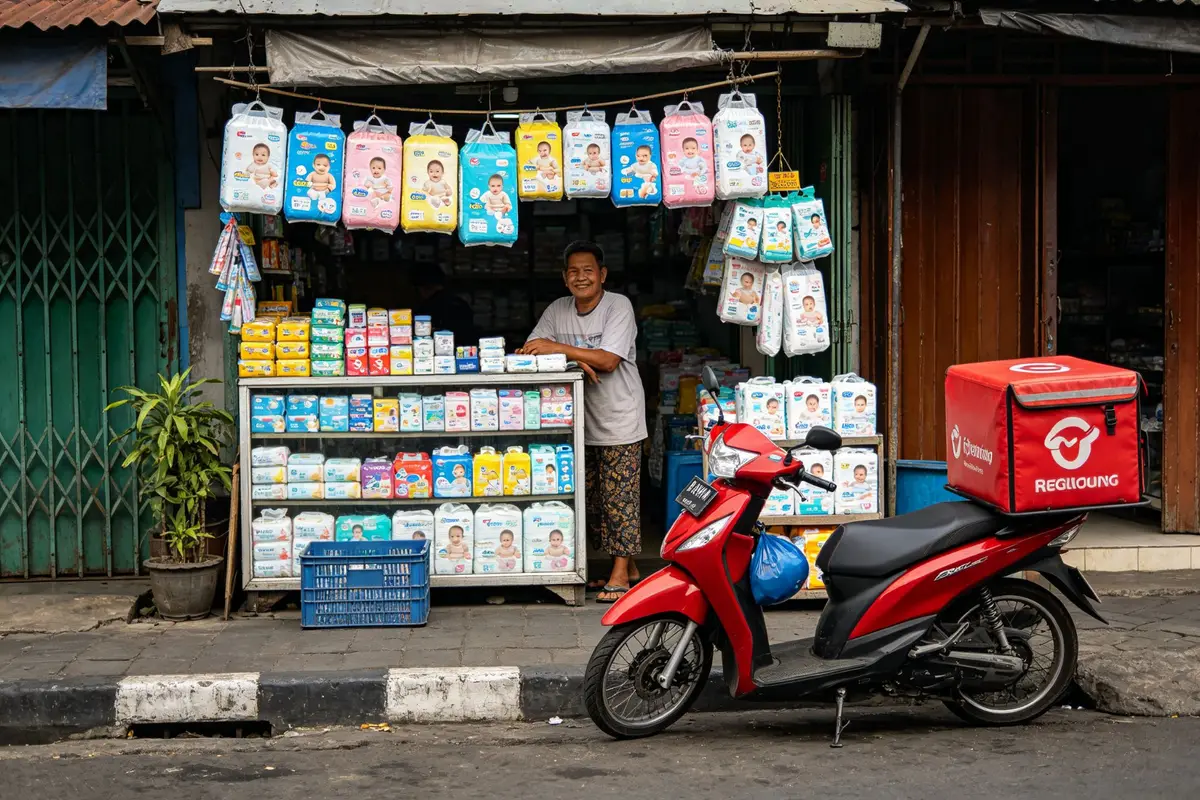
Warungs: Indonesia's Distribution Backbone
In Indonesia, the warung—small neighborhood shops that sell everything from snacks to household essentials—is the backbone of the country's retail distribution system. With an estimated 3-4 million warungs scattered across the archipelago, from the bustling streets of Jakarta to remote villages in Papua, these small outlets are the primary shopping destination for millions of Indonesian consumers. For baby product brands, particularly in the mass market segment, understanding and effectively penetrating the warung channel is essential for success in Indonesia's vast and diverse market.
The importance of warungs in Indonesia's baby product distribution cannot be overstated. While modern retail (supermarkets, hypermarkets, convenience stores) is growing rapidly in urban areas, and e-commerce is expanding across the country, traditional trade—including warungs, mini-markets, and local grocery stores—still accounts for approximately 60-70% of baby product volume sales. For mass market products like diapers and wipes, which are purchased frequently and consumed by a broad cross-section of the population, warungs are the most important point of sale.
Understanding the Warung Ecosystem
Warungs come in many shapes and sizes, from tiny roadside stalls selling a limited assortment of snacks and drinks to larger mini-markets that carry a full range of household products, including baby diapers and wipes. Despite their diversity, warungs share several common characteristics that shape the distribution landscape:
Ubiquity and Accessibility: Warungs are everywhere in Indonesia. They are found in urban neighborhoods, rural villages, along highways, and near markets and public transportation hubs. Their ubiquity makes them the most accessible retail format for many Indonesian consumers, particularly those who live in areas where modern retail is limited or who prefer to shop locally for everyday essentials. For baby products, this accessibility is critical, as parents need to purchase diapers and wipes frequently and may not have the time or means to travel to a supermarket.
Small Format and Limited Assortment: Most warungs are small, with limited shelf space and storage capacity. This means they can only carry a limited assortment of products, and competition for shelf space is intense. For baby products, warungs typically carry only the most popular brands and sizes, often focusing on mass market products that offer good margins and fast turnover. Premium or niche products are rarely found in warungs, as they may not have sufficient demand or may be too expensive for the typical warung customer.
Personal Relationships and Trust: Warung owners often have personal relationships with their customers, many of whom are neighbors or regulars. This personal connection builds trust and loyalty, and warung owners often play an informal advisory role, recommending products to customers based on their knowledge and experience. For baby products, this means that warung owner recommendations can significantly influence purchasing decisions, particularly for first-time parents who may be unsure about which products to choose.
Price Sensitivity and Value Orientation: Warung customers are typically price-sensitive and value-oriented. They are looking for affordable products that offer good value for money, and they may be reluctant to try new or more expensive brands without a compelling reason. For baby products, this means that mass market brands with competitive pricing and strong value propositions are most likely to succeed in the warung channel. Promotions, discounts, and bulk packaging are important drivers of purchase decisions.
Credit and Informal Financing: Many warungs operate on thin margins and may rely on credit from distributors to finance their inventory. This creates a complex credit ecosystem where distributors need to carefully manage accounts receivable and credit risk. For baby product brands, this means that working with distributors who have strong credit management capabilities and established relationships with warung owners is essential. Some distributors offer credit terms to warungs, while others require cash on delivery, depending on the warung's track record and relationship with the distributor.
The Multi-Layered Distribution Structure
Reaching millions of warungs across Indonesia's vast archipelago requires a complex, multi-layered distribution structure. The typical distribution chain for baby products involves several intermediaries, each playing a specific role in getting products from manufacturers to warung shelves:
National Distributors / Importers: At the top of the distribution chain are national distributors or importers who source products directly from manufacturers (either local or international). These companies have the scale and resources to import products in large quantities, manage warehousing and logistics at the national level, and distribute products to regional partners. For international brands, the national distributor is often the first point of contact in the Indonesian market, responsible for managing the brand's distribution and marketing strategy across the country.
Regional Distributors: Below the national distributors are regional distributors who cover specific provinces or islands. Indonesia's geography—with over 17,000 islands—makes regional distribution essential, as it is impractical for a single national distributor to reach all areas directly. Regional distributors typically have warehouses in major cities and distribute products to sub-distributors and large retail customers within their territory. They play a critical role in managing logistics, credit, and relationships at the regional level.
Sub-Distributors / Wholesalers: Sub-distributors, also known as wholesalers or agen, operate at the city or regency level. They purchase products from regional distributors in bulk and distribute them to smaller retailers, including warungs, mini-markets, and local grocery stores. Sub-distributors are the critical link between the formal distribution system and the informal retail sector, as they have the local knowledge, relationships, and logistics capabilities to reach small outlets that larger distributors cannot efficiently serve. Many sub-distributors specialize in specific product categories or channels, such as baby products or traditional trade.
Sales Agents / Direct Sales Force: At the bottom of the distribution chain are sales agents or direct sales teams who visit warungs on a regular basis to take orders, deliver products, and manage merchandising. These salespeople are the face of the brand to warung owners, and their relationships and effectiveness can significantly impact product placement and sales. Many sub-distributors employ their own sales teams, while some larger brands have their own direct sales forces that work alongside distributor teams to ensure consistent coverage and execution.
This multi-layered structure is necessary to reach Indonesia's vast and dispersed retail landscape, but it also creates challenges. Each layer adds margin, which can increase the final price to consumers. Communication and visibility can be limited, making it difficult for brands to track sales, inventory, and execution at the warung level. And the complexity of managing multiple partners across different regions can make it difficult to ensure consistent pricing, promotion, and brand presentation.
Challenges in Warung Distribution
While warungs offer enormous potential for baby product brands, they also present significant challenges that must be navigated effectively. Understanding these challenges is the first step to developing a successful warung distribution strategy:
Limited Shelf Space and Intense Competition: Warungs have limited shelf space, and baby products must compete with a wide range of other products for placement. Even within the baby category, there may be space for only a few brands and sizes. Gaining and maintaining shelf space requires ongoing effort, including building relationships with warung owners, offering competitive margins, and providing merchandising support. Brands that are not actively managed may find their products pushed off the shelf by competitors who offer better terms or more aggressive sales efforts.
Price Sensitivity and Margin Pressure: Warung customers are highly price-sensitive, and warung owners need to offer competitive prices to retain customers. This creates pressure on margins throughout the distribution chain, as each layer needs to make a profit while keeping the final price affordable. For baby product brands, this means that products targeted at the warung channel need to be priced competitively and offer good value for money. Premium products with high price points are generally not suitable for the warung channel, as they may not have sufficient demand or may be too expensive for the typical warung customer.
Credit Risk and Accounts Receivable Management: Many warungs purchase products on credit from sub-distributors, creating credit risk for distributors. Managing accounts receivable and ensuring timely payment is a constant challenge, particularly for smaller warungs with limited cash flow. Distributors need to have strong credit management processes in place, including credit limits, payment terms, and collection procedures. For brands, working with distributors who have proven credit management capabilities is essential to minimize the risk of bad debt and ensure the financial health of the distribution chain.
Logistics Complexity and Cost: Reaching millions of warungs across Indonesia's vast archipelago is logistically complex and costly. Products need to be transported from national warehouses to regional distribution centers, then to sub-distributor warehouses, and finally to individual warungs. This multi-stop distribution process increases transportation costs and the risk of product damage or loss. In remote areas, logistics can be particularly challenging, with poor infrastructure, limited transportation options, and long delivery times. Distributors need to have efficient logistics networks and strong relationships with transportation providers to ensure timely and cost-effective delivery.
Limited Marketing and Merchandising Capabilities: Warung owners typically have limited time, resources, and expertise for marketing and merchandising. They may not have the ability to create attractive product displays, manage promotional programs, or provide product information to customers. This means that brands need to take an active role in providing merchandising support, including point-of-sale materials, display racks, product samples, and training for warung owners and their staff. Brands that invest in merchandising and marketing support at the warung level are more likely to achieve better visibility and sales.
Counterfeit and Gray Market Products: The traditional trade channel is also vulnerable to counterfeit and gray market products, which can undermine brand reputation and create unfair competition. Counterfeit baby products, in particular, pose a safety risk to consumers and can damage the brand's image. Brands need to implement strong anti-counterfeiting measures, including secure packaging, authentication systems, and regular monitoring of the distribution chain. Working with reputable distributors and maintaining strict control over pricing and promotion can also help reduce the risk of gray market activity.
Strategies for Success in Warung Distribution
Despite the challenges, many baby product brands have achieved significant success in the warung channel by implementing effective strategies tailored to the unique characteristics of traditional trade. Key strategies for success include:
Build a Strong and Loyal Distributor Network: The foundation of successful warung distribution is a strong network of distributors and sub-distributors who have existing relationships with warung owners and the capabilities to reach them effectively. Brands should carefully select distribution partners based on their coverage, reputation, financial stability, and commitment to the brand. Investing in distributor training, incentives, and support can help build loyalty and ensure that distributors prioritize the brand in their sales efforts. Regular communication and performance monitoring are also essential to ensure that distribution partners are meeting coverage and sales targets.
Offer Competitive Margins and Incentives: Warung owners and distributors are motivated by margins and incentives, so brands need to offer competitive terms that make it worthwhile for them to stock and promote the products. This includes not only base margins but also volume incentives, promotional allowances, and rebates for achieving sales targets. For warung owners, offering free samples, display racks, and point-of-sale materials can also be effective incentives. Brands that can demonstrate a strong return on investment for warung owners are more likely to gain and maintain shelf space.
Develop Channel-Specific Products and Packaging: Products that are specifically designed for the warung channel are more likely to succeed than products that are simply imported from other channels. This includes smaller pack sizes that are more affordable for price-sensitive consumers, value packs that offer better value for money, and packaging that is durable and easy to display in a small retail environment. For baby diapers, this might mean offering single-size packs or small bundles that are more accessible to warung customers. For wipes, travel packs and small formats can be effective for trial and on-the-go use.
Invest in Merchandising and Point-of-Sale Materials: In a crowded warung environment, visibility is key. Brands that invest in attractive and functional merchandising materials—including display racks, shelf talkers, posters, and product samples—are more likely to capture the attention of warung owners and customers. Point-of-sale materials should be designed to be easy to install and maintain in a small retail environment, and they should clearly communicate the product's key benefits and value proposition. Regular merchandising visits by sales teams can help ensure that products are displayed correctly and that materials are in good condition.
Leverage Digital Tools and Mobile Technology: Digital tools and mobile technology are transforming warung distribution in Indonesia, offering brands greater visibility, efficiency, and control over the traditional trade channel. Mobile sales apps allow sales teams to take orders electronically, track inventory, and capture merchandising data in real time. Digital platforms connect warung owners directly with distributors, enabling them to order products online, access promotions, and manage their accounts more efficiently. Brands that embrace these digital tools can improve distribution efficiency, reduce costs, and gain better visibility into warung sales and execution.
Build Relationships with Warung Owners: At the end of the day, warung distribution is about relationships. Warung owners are more likely to stock and promote products from brands and distributors that they know and trust. Investing in relationship building—through regular sales visits, personalized service, and support for warung owners' businesses—can pay significant dividends. Sales teams should be trained to understand the needs and challenges of warung owners and to provide solutions that help them succeed. Brands that are seen as partners rather than just suppliers are more likely to achieve long-term success in the warung channel.
Future Outlook: The Evolving Warung Channel
The warung channel in Indonesia is evolving rapidly, driven by digital technology, changing consumer behavior, and the modernization of traditional retail. Several trends are likely to shape the future of warung distribution:
Digital Transformation: Digital platforms and mobile technology are making it easier for warung owners to order products, manage inventory, and access financial services. E-commerce platforms like Bukalapak and Tokopedia have launched programs specifically targeting warung owners, enabling them to purchase products online and access a wider assortment than what is available from traditional distributors. This digital transformation is likely to increase efficiency, reduce costs, and improve visibility in the warung channel.
Modernization of Traditional Retail: Many warungs are evolving into mini-markets, offering a wider assortment of products, better shopping environments, and more professional operations. This modernization is being driven by increasing consumer expectations, competition from modern retail, and the availability of financing and support programs for small retailers. As warungs become more sophisticated, they are likely to carry a wider range of baby products, including premium and niche products that were previously only available in modern retail.
Financial Inclusion and Credit Access: Financial technology (fintech) companies are expanding access to credit and financial services for warung owners, enabling them to purchase more inventory and grow their businesses. Digital payment systems are also becoming more widespread, reducing the reliance on cash and improving the efficiency of transactions. This financial inclusion is likely to strengthen the warung channel and enable warung owners to carry a wider assortment of products, including baby products.
Omnichannel Integration: The boundaries between online and offline retail are blurring, and warungs are increasingly becoming part of omnichannel retail ecosystems. Some e-commerce platforms are using warungs as pickup points for online orders, while others are enabling warung owners to sell products online through their platforms. This omnichannel integration is likely to create new opportunities for baby product brands to reach consumers through the warung channel, both as a point of sale and as a fulfillment node for online orders.
For baby product brands, the future of warung distribution is both challenging and full of opportunity. By understanding the unique characteristics of the warung channel, building strong distributor relationships, investing in merchandising and marketing support, and embracing digital technology, brands can successfully penetrate this vast and important market. Those that can effectively navigate the complexities of traditional trade while adapting to the evolving retail landscape will be well-positioned to capture significant share in Indonesia's dynamic baby products market.
Frequently Asked Questions
How important is traditional trade (warung) for baby products in Indonesia?
Traditional trade, including warungs, mini-markets, and local grocery stores, accounts for approximately 60-70% of baby product volume sales in Indonesia. Warungs are ubiquitous, with an estimated 3-4 million outlets across the country, including remote rural areas where modern retail has limited presence. For mass market baby products like diapers and wipes, traditional trade is the most important distribution channel, reaching consumers who may not have access to supermarkets or e-commerce.
What is the typical distribution structure for reaching warungs in Indonesia?
The distribution structure for reaching warungs in Indonesia typically involves multiple layers: national distributors who import or source products from manufacturers, regional distributors who cover specific provinces or islands, sub-distributors who cover cities or regencies, and finally agents or salespeople who deliver directly to warungs. This multi-layered structure is necessary due to Indonesia's vast geography and the large number of small outlets. Some larger brands have begun to streamline this structure by working directly with key sub-distributors or using digital platforms to improve visibility and efficiency.
What are the main challenges of distributing baby products through warungs?
The main challenges include: (1) Limited shelf space—warungs are small and can only carry a limited assortment, so competition for shelf space is intense; (2) Price sensitivity—warung customers are highly price-sensitive, making it difficult to command premium prices; (3) Credit and payment terms—many warungs operate on credit, requiring distributors to manage accounts receivable and credit risk; (4) Logistics complexity—reaching warungs in remote areas requires efficient logistics and can be costly; (5) Limited marketing and merchandising capabilities—warung owners may have limited ability to display and promote products effectively.
What strategies can brands use to succeed in warung distribution?
Key strategies include: (1) Build a strong distributor network with partners who have existing warung relationships; (2) Offer competitive margins and incentives for warung owners to stock and promote products; (3) Provide point-of-sale materials, displays, and sampling programs to increase visibility and trial; (4) Develop products specifically for the warung channel, such as smaller pack sizes and affordable price points; (5) Use digital tools and mobile sales apps to improve order taking, inventory management, and visibility into warung sales; (6) Invest in sales force training and relationship building with warung owners.