
2026-08-24 · Moni Happy Editorial Team
Philippines Value Baby Wipes Market: Price-Sensitive Consumer Behavior & Distribution
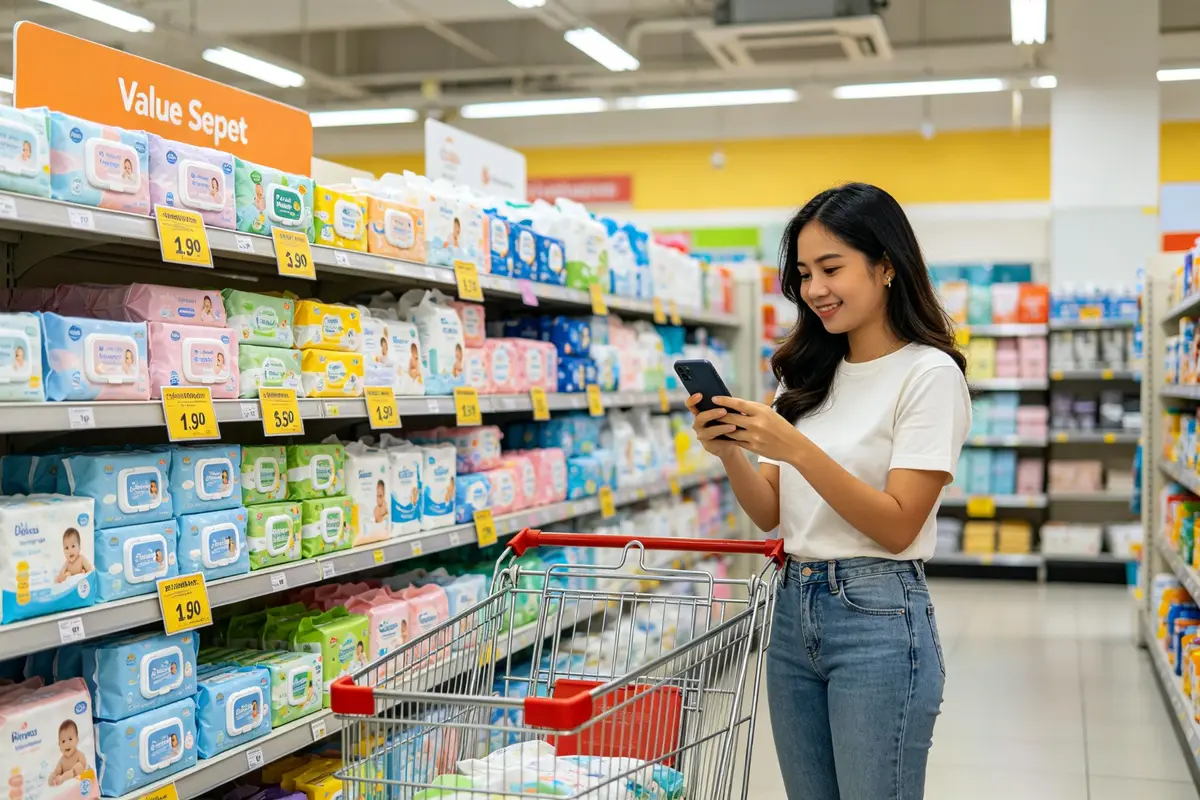
Value Wipes: The Philippine Mass Market Engine
In the Philippines' vast baby care market, value baby wipes are the engine that drives volume. With a population of over 110 million, a large price-sensitive consumer base, and a retail landscape dominated by traditional trade, the value wipes segment—typically priced under PHP 100 per pack—accounts for the majority of wipes volume sales in the country. For brands and distributors looking to capture a share of this massive market, understanding the unique dynamics of the value segment is essential.
The importance of value wipes in the Philippines cannot be overstated. While premium wipes are growing in urban areas, the majority of Filipino consumers—particularly those in rural areas, lower-income households, and traditional trade channels—prioritize affordability over premium features. For these consumers, baby wipes are an essential everyday product, and price is often the deciding factor in purchasing decisions. Brands that can offer good quality at an affordable price point have the potential to achieve significant volume and market share.
Understanding Price-Sensitive Filipino Consumers
The value wipes market is driven by price-sensitive consumers who make purchasing decisions based on value for money rather than brand prestige or premium features. Understanding the behavior and preferences of these consumers is essential for brands looking to succeed in the value segment.
Price Per Sheet Mentality: Price-sensitive Filipino consumers are sophisticated value shoppers who often calculate the price per sheet when comparing wipes products. They understand that a larger pack may offer better value even if the upfront cost is higher, and they actively compare prices across brands and pack sizes. For brands, this means that pricing strategy must be carefully calibrated to offer competitive price per sheet while maintaining acceptable margins. Promotions that effectively reduce the price per sheet—such as buy-one-get-one-free offers, multi-pack bundles, or volume discounts—are particularly effective in driving trial and repeat purchase.
Quality Expectations at Value Prices: While price is the primary consideration, price-sensitive consumers still have basic quality expectations for baby wipes. They expect wipes to be sufficiently moist, thick enough to not tear during use, and gentle enough for baby's skin. Wipes that are too dry, too thin, or that cause skin irritation will not be repurchased, regardless of price. For brands, this means that competing on price alone is not enough—they must also meet minimum quality standards to build consumer trust and loyalty. The most successful value wipes brands are those that can deliver acceptable quality at a competitive price point.
Brand Familiarity and Trust: Price-sensitive consumers tend to be brand-loyal, sticking with brands they know and trust rather than experimenting with new products. This is particularly true for baby products, where parents are cautious about trying new brands due to concerns about quality and safety. However, price-sensitive consumers are also willing to try new brands if they are offered at a significant discount or if they come recommended by friends, family, or retail shop owners. For new brands, this means that promotional activities—particularly sampling and initial discount offers—are essential for breaking through brand loyalty and encouraging trial.
Purchase Frequency and Tingi Culture: Baby wipes are a high-frequency purchase item, with most parents buying wipes on a weekly or bi-weekly basis. In the Philippines, the "tingi" culture of buying products in small quantities is particularly strong, with many consumers purchasing wipes in small sachets or single-use packets from sari-sari stores. This is driven by limited budgets, the desire to avoid waste, and the convenience of buying only what is needed for the immediate future. For brands, offering small pack sizes and sachets is essential for reaching price-sensitive consumers and for penetrating the sari-sari store channel.
Family and Community Influence: Filipino consumers are heavily influenced by family and community opinions when making purchasing decisions. Word-of-mouth recommendations from family members, friends, neighbors, and community leaders carry significant weight, particularly for baby products where safety and quality are concerns. Sari-sari store owners, who are often respected members of the community, also play an influential role in recommending products to their customers. For brands, building positive word-of-mouth through community engagement, influencer partnerships, and strong relationships with sari-sari store owners is essential for success in the value segment.
Key Product Attributes for Value Wipes
While value wipes are priced lower than premium products, they still need to meet consumer expectations for quality and performance. The key product attributes that drive success in the value segment include:
Moisture Content: Moisture content is one of the most important quality attributes for baby wipes. Consumers expect wipes to be sufficiently moist to clean effectively, but not so wet that they leave excess moisture on the skin or drip during use. For value wipes, maintaining consistent moisture content across the pack and over the product's shelf life is a challenge, but it is essential for consumer satisfaction. Wipes that dry out quickly or that have inconsistent moisture levels will not be repurchased.
Sheet Thickness and Durability: Sheet thickness and durability are also important quality attributes. Consumers expect wipes to be thick enough to not tear during use, particularly when cleaning messy diapers. Wipes that are too thin or that tear easily are perceived as low quality, even if they are affordable. For value wipes, using a sufficient basis weight of nonwoven material and ensuring good sheet integrity is essential for meeting consumer expectations. While premium wipes may use more expensive materials like cotton or bamboo, value wipes can still achieve acceptable durability with quality viscose/polyester blends and proper manufacturing processes.
Gentleness and Skin Compatibility: Even in the value segment, consumers expect wipes to be gentle on baby's skin. Wipes that cause redness, irritation, or allergic reactions will not be tolerated, regardless of price. For value wipes, this means avoiding harsh chemicals like alcohol, parabens, and artificial fragrances, and using mild, skin-friendly formulations. While premium wipes may offer additional benefits like natural ingredients, organic certifications, or dermatological testing, value wipes should at minimum be hypoallergenic and pH-balanced to ensure skin compatibility. Lightly scented or unscented wipes are generally preferred, as strong fragrances can cause skin irritation.
Packaging Design and Functionality: Packaging plays an important role in the value wipes segment, both for attracting consumers on crowded retail shelves and for ensuring product functionality. Packaging should be attractive, with clear branding and product information, but it should also be functional—with a resealable flip-top lid that keeps wipes moist and easy to access. For value wipes, packaging cost is a consideration, but skimping on packaging quality can lead to product drying out and consumer dissatisfaction. The most successful value wipes brands use packaging that balances cost with functionality and shelf appeal.
Pack Size and Value Options: Offering a range of pack sizes is important for meeting the diverse needs of price-sensitive consumers. Smaller packs (20-40 sheets) and sachets (10-20 sheets) are ideal for trial, travel, and on-the-go use, and they are essential for penetrating the sari-sari store channel. Larger packs (80-120 sheets) offer better value for money and are preferred for everyday home use. Multi-pack bundles (e.g., 3 packs for the price of 2) are also effective for encouraging bulk purchases and increasing average order value. For brands, offering a range of pack sizes and value options allows them to cater to different consumer needs and purchase occasions.
Distribution Channel Strategy
The distribution strategy for value baby wipes in the Philippines must prioritize reach and accessibility, as price-sensitive consumers are dispersed across the country, including in rural and remote areas. The key distribution channels for value wipes include:
Traditional Trade (Sari-Sari Stores and Public Markets): Traditional trade is the most important channel for value wipes, accounting for the majority of volume sales. Sari-sari stores, public markets, and neighborhood shops are ubiquitous across the Philippines, even in remote rural areas, and they are the primary shopping destination for price-sensitive consumers. For value wipes, having broad distribution in traditional trade is essential for achieving volume. This requires working with a network of distributors and wholesalers who have existing relationships with sari-sari store owners and the logistics capabilities to reach them. Competitive margins and incentives for sari-sari store owners are also important for gaining and maintaining shelf space.
Modern Trade (Supermarkets and Convenience Stores): While traditional trade dominates in volume, modern trade is also an important channel for value wipes, particularly for promotional activities and bulk purchases. Supermarkets and hypermarkets (SM Supermarket, Robinsons Supermarket, Puregold, Savemore) attract a broad range of consumers, including price-sensitive shoppers who are looking for value and promotions. For value wipes, modern trade offers the opportunity to reach a large number of consumers through end-cap displays, promotional flyers, and in-store demonstrations. Convenience stores (7-Eleven, Ministop, FamilyMart) are also growing channels, particularly for smaller pack sizes and impulse purchases.
Drugstores: Drugstores (Mercury Drug, Watsons, Southstar Drug, Rose Pharmacy) are becoming increasingly important channels for baby products, including value wipes. Drugstores attract health-conscious consumers who trust pharmacist recommendations, and they often carry a curated selection of baby products. For value wipes, drugstores offer the opportunity to reach consumers who may not shop in supermarkets or who prefer to purchase baby products alongside other health and personal care items. Drugstores also have extensive store networks, with locations in both urban and rural areas, making them an effective channel for reaching a broad consumer base.
E-commerce: E-commerce is a rapidly growing channel for baby wipes in the Philippines, driven by increasing internet penetration, smartphone adoption, and the growth of platforms like Shopee, Lazada, and TikTok Shop. While e-commerce still accounts for a smaller share of value wipes sales compared to traditional trade, it is growing rapidly, particularly for bulk purchases and subscription services. E-commerce offers several advantages for value wipes: the ability to reach consumers in areas where physical retail is limited, the opportunity to offer competitive prices through lower overhead costs, and the ability to use data and targeted marketing to reach price-sensitive consumers. Live commerce, in particular, has emerged as a powerful tool for selling value wipes, as sellers can demonstrate product quality and offer exclusive deals in real time.
Marketing and Promotion Strategies
In the competitive value wipes market, effective marketing and promotion are essential for building brand awareness, encouraging trial, and driving repeat purchase. Key strategies for success include:
Sampling and Trial Programs: Given the brand loyalty of price-sensitive consumers, sampling is one of the most effective ways to encourage trial of new or lesser-known brands. Offering free sample packs—either through in-store promotions, direct mail, or as add-ons to other products—allows consumers to experience the product's quality without committing to a full-size purchase. For value wipes, sampling can be particularly effective at the point of sale, where consumers are making purchasing decisions and may be open to trying a new brand if it is offered at a discount or for free. Small sachets and travel packs are ideal for sampling, as they are low-cost and easy to distribute.
Price Promotions and Discounts: Price promotions are the most common and effective marketing tool in the value wipes segment. Consumers are highly responsive to discounts, buy-one-get-one-free offers, and multi-pack bundles, particularly when they reduce the effective price per sheet. For brands, planning promotional calendars and coordinating promotions across channels is essential for driving sales and maintaining market share. However, brands must be careful not to over-rely on promotions, as this can train consumers to only buy when products are on sale and can erode brand value over time.
Point-of-Sale Merchandising: In crowded retail environments—particularly in sari-sari stores and public markets where shelf space is limited—effective point-of-sale merchandising is essential for visibility and sales. This includes attractive packaging, shelf talkers, display racks, and promotional signage that highlights the product's key benefits and value proposition. For value wipes, merchandising that clearly communicates the price per sheet or the value of a multi-pack bundle can be particularly effective in driving purchase decisions. Regular merchandising visits by sales teams can help ensure that products are displayed correctly and that promotional materials are in good condition.
Word-of-Mouth and Community Marketing: Word-of-mouth recommendations are extremely influential in the value wipes segment, particularly among price-sensitive consumers who rely on the experiences of friends, family, and community members when making purchasing decisions. For brands, encouraging word-of-mouth through community marketing programs—such as partnering with local parenting groups, community health workers, and neighborhood leaders—can be an effective way to build trust and credibility. In rural areas, where traditional media may have limited reach, community-based marketing can be particularly effective in building brand awareness and driving adoption. Barangay health centers and day care centers can also be effective channels for reaching parents and distributing samples and information.
Digital and Social Media Marketing: While traditional trade remains the primary channel for value wipes, digital and social media marketing are becoming increasingly important, particularly among younger, digitally savvy consumers. Platforms like Facebook, Instagram, TikTok, and YouTube offer opportunities to build brand awareness, engage with consumers, and drive traffic to both online and offline retail channels. For value wipes, social media marketing that focuses on value, quality, and practical tips for parents can be effective in resonating with price-sensitive consumers. Influencer partnerships with mommy bloggers and parenting influencers can also help build credibility and reach target audiences. Live commerce, in particular, has emerged as a powerful tool for selling value wipes, as sellers can demonstrate product quality and offer exclusive deals in real time.
Future Outlook and Opportunities
The value baby wipes market in the Philippines is expected to continue growing, driven by population growth, increasing urbanization, and growing awareness of hygiene and baby care products. Several trends are likely to shape the market in the coming years:
Quality Upgrading in the Value Segment: As consumers become more informed and disposable incomes rise, the value segment is likely to see quality upgrading, with consumers expecting better quality wipes at affordable prices. Brands that can offer improved moisture content, sheet thickness, and gentleness while maintaining competitive pricing will be well-positioned to capture market share. The line between value and premium wipes is likely to blur, with value brands incorporating features that were previously only found in premium products.
E-commerce and Live Commerce Growth: E-commerce will continue to grow in importance, particularly for bulk purchases and subscription services. Live commerce, in particular, is expected to grow rapidly, as more sellers and brands embrace live streaming as a way to reach consumers and drive sales. As logistics infrastructure improves and delivery becomes faster and more affordable, e-commerce is likely to capture an increasing share of the value wipes market. Brands that can build strong e-commerce and live commerce capabilities will be well-positioned for growth.
Traditional Trade Modernization: The traditional trade channel is undergoing modernization, with sari-sari stores and public markets adopting digital tools and more professional operations. This creates opportunities for brands to reach traditional trade consumers with more sophisticated marketing and merchandising. Distributors that leverage digital tools to improve efficiency and visibility in traditional trade will have a competitive advantage. The growth of convenience store chains and mini-markets is also blurring the line between traditional and modern trade, creating new opportunities for value wipes brands.
Sustainability and Eco-Friendliness: While still a niche concern in the value segment, environmental awareness is growing, particularly among urban consumers. Brands that can offer eco-friendly wipes at affordable prices—through the use of biodegradable materials, reduced packaging, or sustainable manufacturing practices—may be able to differentiate themselves and capture the growing segment of environmentally conscious price-sensitive consumers. However, cost remains a significant barrier, and eco-friendly value wipes are likely to remain a niche segment in the near term.
For brands and distributors, the key to success in the Philippines' value baby wipes market lies in understanding the unique needs and preferences of price-sensitive consumers, offering good quality at competitive prices, building broad distribution through traditional trade channels, and investing in marketing and promotion that encourages trial and repeat purchase. With the right strategy and execution, brands can capture significant share in one of Southeast Asia's largest and most dynamic baby wipes markets.
Frequently Asked Questions
What is the typical price range for baby wipes in the Philippines?
Baby wipes in the Philippines range from approximately PHP 30 to PHP 300 per pack, depending on brand, quality, and pack size. Value/mass market wipes typically cost PHP 40-80 per pack of 50-80 sheets, while premium wipes can cost PHP 150-300. The value segment (under PHP 100) accounts for the majority of volume sales, particularly in traditional trade and among price-sensitive consumers. Small sachets and travel packs (10-20 sheets) are also popular, priced at PHP 15-30, and are commonly sold in sari-sari stores.
What factors drive purchasing decisions for value wipes in the Philippines?
For price-sensitive Filipino consumers, the key factors are: (1) Price per sheet—consumers calculate the cost per sheet to compare value across brands and pack sizes; (2) Moisture content—wipes that are sufficiently moist but not overly wet are preferred; (3) Sheet thickness and durability—wipes that don't tear easily are valued; (4) Scent—lightly scented or unscented wipes are preferred, as strong fragrances can cause skin irritation; (5) Pack size and value—larger packs and multi-pack bundles offer better value; (6) Brand familiarity—consumers tend to stick with brands they know and trust, though promotions can encourage trial.
Which distribution channels are most important for value wipes?
Traditional trade (sari-sari stores, public markets, neighborhood shops) is the most important channel for value wipes, accounting for the majority of volume sales. These outlets reach price-sensitive consumers across the Philippines, including rural areas where modern retail is limited. Modern trade (supermarkets, hypermarkets, convenience stores like 7-Eleven and Ministop) is also important, particularly for promotional activities and bulk purchases. Drugstores (Mercury Drug, Watsons, Southstar Drug) are growing channels for baby products, including value wipes. E-commerce (Shopee, Lazada, TikTok Shop) is growing rapidly, especially for bulk purchases and subscription services.
How can new brands compete in the Philippines' value wipes market?
New brands can compete by: (1) Offering competitive pricing while maintaining acceptable quality—consumers are willing to try new brands if they offer good value; (2) Focusing on key quality attributes like moisture content, sheet thickness, and durability; (3) Building distribution through traditional trade channels, particularly sari-sari stores and public markets; (4) Offering small pack sizes and sachets that are affordable for price-sensitive consumers; (5) Investing in promotional activities like sampling, discounts, and bundle deals to encourage trial; (6) Developing attractive packaging that stands out on crowded shelves; (7) Leveraging e-commerce and social media, including live commerce, to build brand awareness and reach younger, digitally savvy consumers.