
2026-10-09 · Moni Happy Editorial Team
Southeast Asia Baby Product Distribution Channels: Complete 2026 Guide
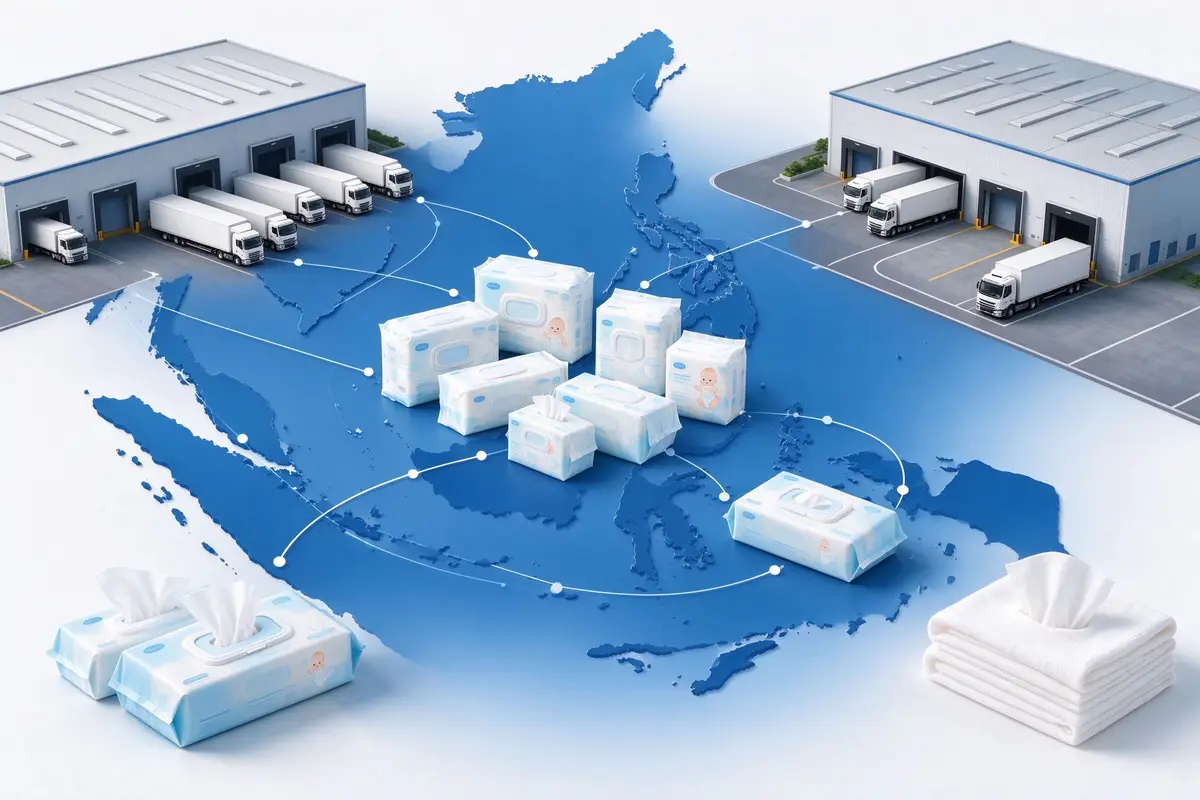
Key takeaway. Southeast Asia is not one distribution market, it is several, and the differences that matter to a supplier are regulatory, structural and commercial rather than cosmetic. This guide sets out how distribution actually works across the region: which channel types exist, how they differ by country, what a brand has to decide before entering, and which figures we deliberately do not publish. We have left out the market-size and margin-per-channel numbers you will find in articles like this one, because we could not trace them to a source we are prepared to stand behind — and a distributor who plans against a borrowed figure discovers the problem in the first quarter.
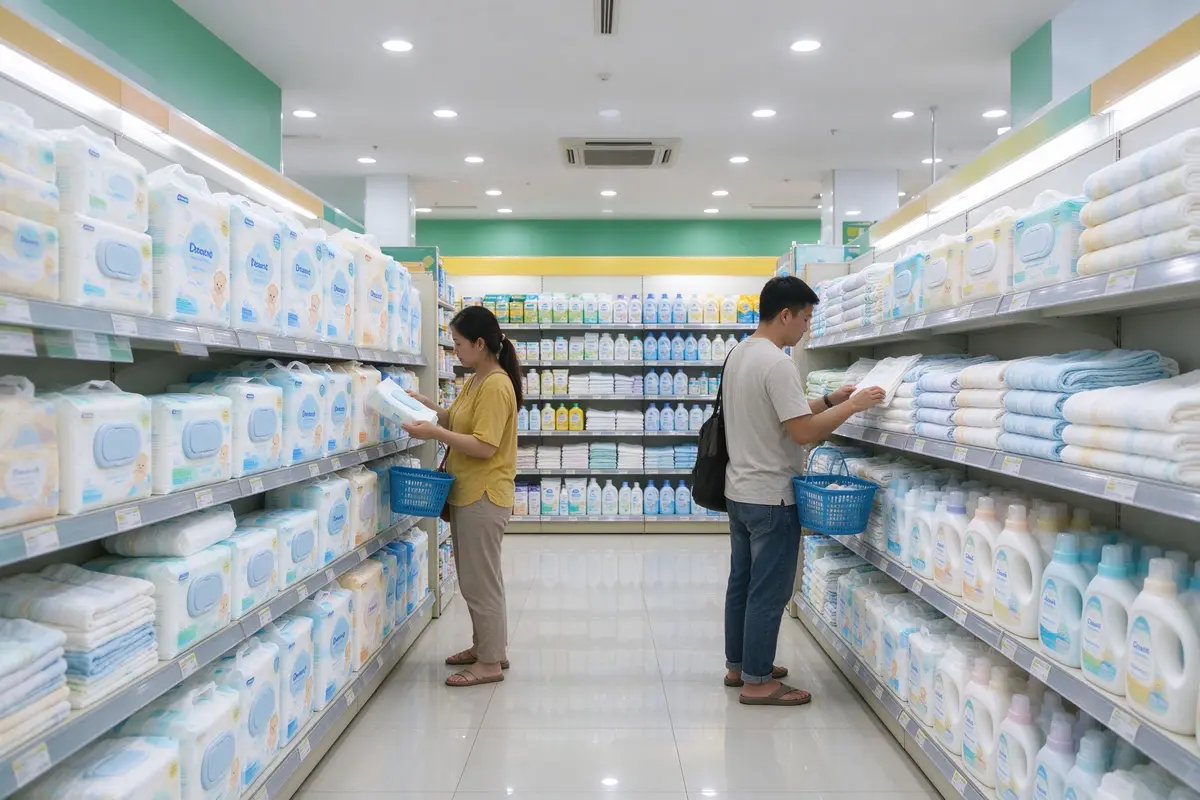
How Big Is the Southeast Asia Baby Product Market?
We are not going to give you a market size, and this section explains how to get a number you can actually use.
Anyone can produce a figure for this region. The problem is that you will find different figures in different places, often differing by an order of magnitude, and none of them will be traceable to a method you can check. If two sources disagree about the size of the same market, neither is a planning input.
What actually drives demand, and which you can measure yourself:
Births. The single most useful public figure in this category, published by national statistics offices and consistently available. Demand for a diaper or wipe product follows births with a lag, and the lag differs by category.
Imported versus locally manufactured share. This is what decides whether a supplier is competing on price or on something else, and it is visible on any shelf.
Modern trade penetration. The shift from traditional to organised retail is the structural change in this region, and it is visible by walking a few streets.
Premium share. Whether buyers trade up, and in which categories, is observable in what is actually on the shelf next to the product you are looking at.
Those four give you a defensible estimate for a specific market. If you need the current figures for a specific country, we would rather help you build the estimate than quote a number whose provenance neither of us can defend.
What Are the Main Offline Distribution Channels?
Four channel types cover most offline baby product volume in the region, and they behave differently enough that "offline" is not a useful word on its own.
Modern trade and supermarkets. Chains such as AEON, Big C, Lotus's, NTUC FairPrice and Robinsons operate this format across the region, with different mixes per market. The format runs on known price ranges and a promotional calendar. The commercial characteristics that matter to a supplier: a long payment term, a documented listing or delisting process, a promotional calendar funded partly by suppliers, and barcode and label compliance requirements. Entry usually goes through a distributor rather than direct.
Pharmacy and drugstore. Watsons, Guardian, Boots and Mercury Drug across the region, plus national chains. This channel carries a narrower range, relies more on staff recommendation, and is often the channel where a product with a credible dermatological rating has an advantage over one without. It is also the channel where product knowledge and staff training genuinely move volume.
Mother and baby specialists. Motherswork, Baby Kingdom and Kiddy Palace are examples in the region. These are the stores that decide whether a new brand gets a chance at all: they are the closest to the customer, they carry a lot of SKUs, and they are the channel most able to recommend a product rather than merely stock it. If a brand's route into a market is one store chain, this is usually the one worth starting with.
Traditional trade and neighbourhood retail. Small shops: warung in Indonesia, sari-sari stores in the Philippines, and equivalents elsewhere. Individually small, collectively still a large share of volume in several markets, and the format that produces the most price sensitivity. Here the cost-to-serve question dominates: a low-priced product that will not fit on the shelf is not a low-cost product.
What changes across countries is not which of these formats exists, but their relative weight and how a supplier reaches them. That is covered below.
What Are the Main Online Distribution Channels?
Online in this region is not one channel, and the distinction that matters is between search-driven marketplaces and discovery-driven social commerce. They attract different buyers and they work differently.
Search-driven marketplaces. Shopee, Lazada and Amazon operate this format. The buyer arrives with intent and searches for a product or a brand, which makes this the channel where your product name, your listing content and your review count do the work. Price competition is visible and immediate. This is where a buyer who already wants your product goes, which makes it a conversion channel rather than a discovery channel.
Social commerce and live commerce. The transaction happens inside a short video or a livestream, with a host presenting the product. The format has been built out most aggressively in the Philippines and is expanding in Indonesia. It rewards products that can be demonstrated in seconds and repeat purchase rather than single-transaction value. See our coverage of live commerce for baby products in the Philippines and Indonesia for why this format suits the category.
Social marketplaces and group buying. A distinct regional pattern: orders are collected in messaging groups, paid for by transfer, and fulfilled by a seller. It reaches buyers that marketplace logistics do not serve well, particularly outside the main cities, and it is built on trust in the seller rather than on platform guarantees. Any supplier entering it should understand that the trust belongs to the group, not to the brand.
Which of these matters most depends on where your buyer is. A distributor in a large city with a modern-trade portfolio gets more from the marketplaces; a distributor covering areas outside the main cities may find social commerce and group buying are the only channels that reach them.
How Does Distribution Differ by Country?
Four things differ, and each of them is a decision rather than a detail.
1. Product registration. This is the requirement that stops shipments, and it is country-specific. There is a national food or health authority in most of these markets, and the notification or registration route for a specific product category must be confirmed locally. It cannot be done by an overseas supplier on the buyer's behalf, and it is not something to discover at the port. Confirm it with your local agent, and find out who owns that filing in your agreement.
2. Language and labelling. A product sold in more than one market needs localised labelling per market, and the cost of doing that is a real part of landed cost rather than a printing detail. A bilingual pack can work across markets, but buyers do not all prefer it, and local regulators have their own requirements.
3. Channel structure. Where organised retail is dominant, entry runs through a distributor with a listing process. Where traditional trade dominates, entry runs through a distributor with a distribution network. The supplier's route, and the supplier's realistic volume in year one, differ accordingly.
4. Currency and payment practice. What you are paid in, and when, is a commercial fact that belongs in the agreement from the start rather than discovered afterwards.
Vietnam, Thailand, Indonesia, Malaysia, Singapore, Laos and Cambodia are seven markets, not one. Our partner program is structured market by market for this reason, and we would rather scope a market properly than describe the region as a single opportunity.
What Distribution Model Should a Brand Use?
Three structures cover most cases, and the decision is driven by the cost of being wrong rather than by which sounds best.
Exclusive distributor per market. One partner, one territory, an agreed commitment. This is the right structure when the partner is genuinely building the market and will carry the cost of doing it — which is the condition that has to be tested, not assumed. Exclusivity granted before any order has been placed is a gift, not a strategy.
Non-exclusive distribution. Several partners, no territory protection. Lower risk, lower control, and usually a higher price expectation from partners because they are not being asked to build something. For a supplier testing whether a market is real, this is the honest starting point.
Direct or hybrid. Selling to large accounts directly while using a distributor for everything else. This gives control where the volume is, and reach where it is not — and it introduces the tension every hybrid arrangement eventually has: the distributor's relationship with an account you also serve directly. It is manageable if written down, and unmanageable if it is not.
The sequence that tends to work is deliberate and slow: establish whether the product sells at all in the market, then decide how much of the market you can actually service, then agree exclusivity on the part you can service. A supplier who reverses that order spends their first year on a legal argument instead of on a shelf.
What Are the Margins and Pricing by Channel?
We do not publish margin or price figures by channel, for the same reason we do not publish a market size: we cannot source them, and a distributor who plans on ours will find out what the real number is from their own first order rather than from us.
What is worth knowing is how margin is actually constructed in each format, because that is what you negotiate against.
Your margin is a function of four variables: your landed cost, the channel's buying price, the promotional funding you are asked to carry, and the payment term. Change any one of them and the effective margin moves. A channel's listed margin is not your effective margin, and the gap between them is promotions, returns, credit cost and shrink.
Modern trade buys on a price range and funds promotions through supplier contributions, so the effective margin on a promotion month is lower than the listed one. The promotional calendar and the funding requirement are the two things to ask about.
Pharmacy and specialist retail carry a narrower range and rely on recommendation, which is why product knowledge and staff training have commercial value there rather than being marketing overhead.
Marketplaces add commission and fulfilment cost to whatever the listing price implies. The same product can be viable in a shop and unviable on a marketplace, purely on cost structure.
Traditional trade is decided on cost-to-serve: a low price that will not fit on the shelf is not a low-cost product.
Where you want figures that apply to a specific market and channel, we will send them in writing once we know the market, the channel and the configuration. The four we always settle first are landed cost, minimum order quantity, payment terms, and who pays for freight — see the MOQ and territory policy for how we handle that.
What Are the Key Trends Shaping Distribution in 2026?
Four trends are worth planning around, each with a practical consequence rather than a slogan.
Organised retail continues to gain share over traditional trade. Consequence: a distributor whose route to market is built on neighbourhood shops will find the mix moving underneath them. The capability that matters increasingly is listing and promotional management, not coverage.
Social commerce and live commerce are now a channel, not an experiment. Consequence: the host relationship has to be treated as a channel investment with repeat-agreed economics, not as a promotional appearance. A single session sells a session; a standing relationship sells a customer base.
Product safety and registration scrutiny is rising across the region. Consequence: a supplier who cannot produce documentation on request is finding out at the border. Documentation readiness has become a commercial qualification rather than an administrative one.
Group buying and social marketplaces continue to reach buyers that formal logistics do not. Consequence: outside the main cities, this may be the only channel that reaches the buyer — and it comes with a cost-to-serve and a trust structure that is different from a marketplace listing.
How Should a Brand Enter the Southeast Asia Market?
In the order that tends to protect you.
1. Choose one market and one channel. Not the region. One country, and within it one channel that reaches the buyer you actually want. A brand that is present in five markets thinly is worse than one that is present in one market properly, because the first cannot learn anything.
2. Confirm product registration before you commit to anything. Including who owns the filing in your distributor agreement. This is the step that is never on the critical path until it is the only thing on it.
3. Fix the four commercial figures in writing. Landed cost, minimum order quantity, payment terms, freight responsibility.
4. Order a pilot shipment and compare it to the approved sample. The most reliable test available, and where a supplier's behaviour under a small order tells you what a large one will look like.
5. Agree territory and exclusivity after evidence, not before. And make sure you know which specific lines are exclusive — exclusive by category, by territory, or by account are three different things and are easy to misread.
6. Build a category range, not a single SKU. Basket behaviour is what makes distribution profitable, and a range that complements itself sells better than a product with a better margin. Our five lines — baby diapers, diaper pants, baby wipes, facial tissue and facial towels — are designed to be taken together. The full range is here.
FAQ
Which Southeast Asia market is easiest to enter? There is no single answer without knowing your channel, your product and your target buyer, and any answer given in general is not worth acting on. What we can say is that the ease of entry is mostly a function of how developed organised retail is in that market and how much registration your specific product requires. Tell us the market and the channel and we will tell you what we actually know about it.
How big is the baby product market in Southeast Asia? We do not publish a figure. We have seen too many mutually contradictory numbers for the same market, and a supplier who plans on a borrowed number finds out the real one from their own first order. We would rather help you build a defensible estimate for one market than quote a regional average that is not true of any market in it.
Do we need a local entity to import? In most of these markets, the importer of record needs to be a local entity, and how that works with a foreign supplier should be written into the distributor agreement. Confirm the current requirement locally rather than relying on a general description.
Which channel gives the fastest cash? The one where the payment term is shortest, which is rarely the one with the largest volume. This is worth deciding deliberately, because a distributor that starts with the slowest-paying channel and the fastest-moving stock is a cash-flow problem, not a growth problem.
Should we pursue exclusivity? Only after the partner has demonstrated they can service the market. If you grant exclusivity before any orders have moved, you have given away your ability to correct a market that is not working.
How do we get the figures for our market? Ask us, and tell us the market, the channel and the product lines you want. We work through this market by market rather than publishing a number that would not apply to you — see the Moni Happy partner program, or start with the how the partner program works and the supply chain and certifications behind it.
Frequently Asked Questions
Which Southeast Asian country has the largest baby product market?
Public estimates for this market differ widely by source and by scope, so we do not quote a market size or a growth rate here. What we can speak to is the direction, and we would rather help you size one market from figures you can verify than publish a number we cannot source.
What percentage of baby product sales are online in Southeast Asia?
Online accounts for 45% of baby product sales in 2026 and is growing at 18% annually — three times faster than offline. Singapore has the highest online penetration at 58%.
What is the average margin for baby diaper distributors?
Distributors typically take a distributor margin set by the brand margin, while retailers take a retailer margin set by the brand. Brands net a brand margin set by the brand depending on the channel, with DTC yielding the highest margins.
How long does it take to enter a new Southeast Asian market?
A phased entry takes 12 to 18 months from regulatory registration to supermarket shelf placement. Marketplace-only entry can be achieved in 3 to 6 months.
Distributor resources
If you are evaluating suppliers for your market, these are the pages that answer the commercial questions — in the order buyers usually need them.