
2026-09-18 · Moni Happy Editorial
Starting Solids: A Mom's Guide to Baby's First Foods
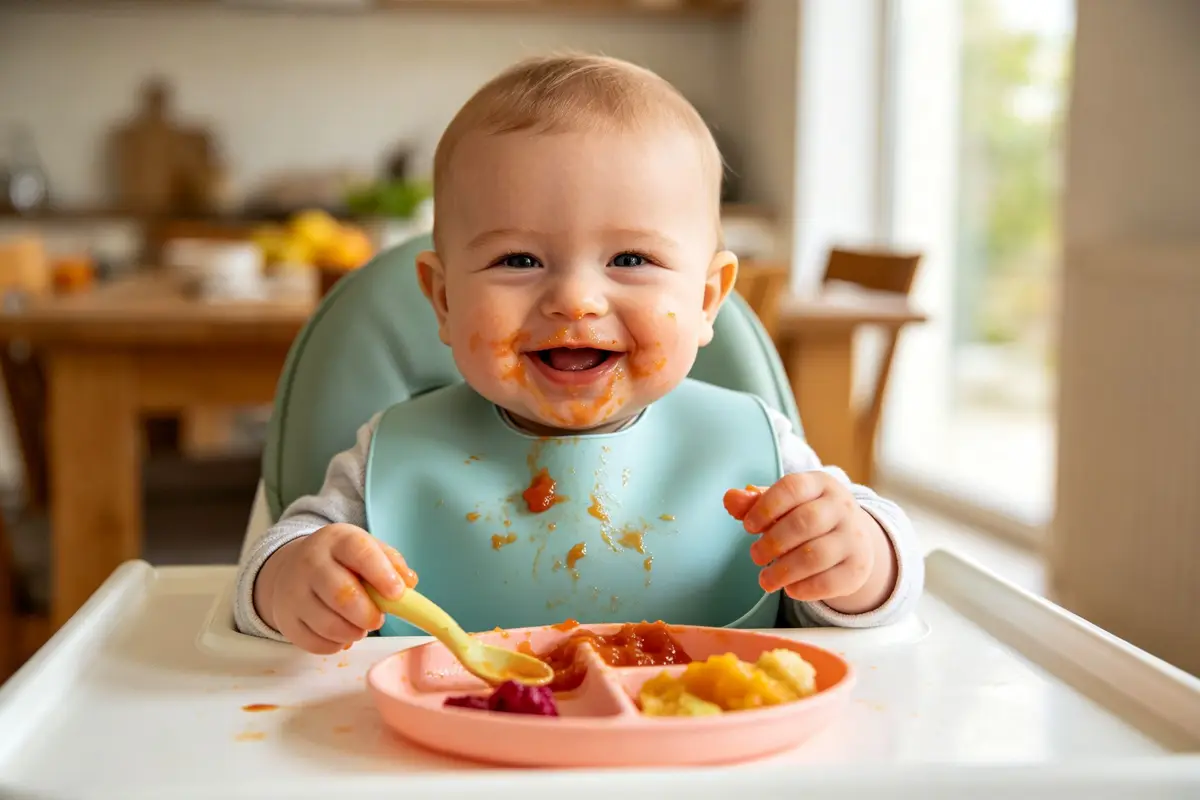
The first time my baby ate real food, she looked at me like I was crazy. I offered a spoonful of sweet potato puree, and she opened her mouth, tasted it, and made a face like she'd bitten a lemon. Then she leaned in for more. Starting solids is a messy, wonderful milestone. Here's what I wish I'd known before we began.
When and How to Start Solids
The American Academy of Pediatrics recommends starting solid foods around 6 months of age, when your baby shows signs of readiness: they can sit unsupported, they've lost the tongue-thrust reflex, they lean forward to reach food, and they show interest in what you're eating. Some babies are ready closer to 4 months, others closer to 8 months. You can start with either purees or baby-led weaning (giving soft finger foods). Both are perfectly fine. What matters is that the food is safe — soft, bite-sized, no choking hazards — and mealtime is supervised.
What to Offer First and What to Avoid
There's no need to start with white rice cereal. Start with nutrient-dense, iron-rich foods: iron-fortified oatmeal, pureed meats, soft-cooked lentils, mashed avocado, sweet potato, banana, and soft cooked carrots. Introduce common allergens (peanut, egg, dairy, wheat, soy, fish) early around 6 months — early introduction reduces allergy risk. Offer one new food at a time and wait 3-5 days before introducing another. Avoid: honey (under 1 year), choking hazards (whole grapes, nuts, popcorn), added sugar and salt. Let your baby lead. For less mess during mealtime, soft Moni Happy's wipes make cleanup easy. Explore Moni Happy's collection for mealtime essentials.
Mealtime Expectations: It's a Mess
The first months of solids are about exploration, not nutrition. Most of the food will end up on their face, their hands, the floor, and your walls. That's normal. Breast milk or formula should still be their main nutrition source until around 12 months. Start with one meal a day, then gradually add more. Don't stress about how much they eat. As they approach 12 months, solids become more important. If you're worried about allergies or growth, talk to your pediatrician.
Frequently Asked Questions
When should I start my baby on solid food?
Around 6 months, when your baby sits unsupported, lost the tongue-thrust reflex, leans forward to reach food, and shows interest in what you eat. Signs of readiness matter more than exact age.
What are good first foods for a baby?
Start with iron-rich foods: iron-fortified oatmeal, pureed meats, lentils, mashed avocado, sweet potato, banana, and soft cooked carrots. Introduce common allergens early around 6 months. Avoid honey under 1, choking hazards, and added sugar.
Should I do purees or baby-led weaning?
Both are fine. Purees are gentler for beginners; baby-led weaning encourages self-feeding. You can combine both. What matters is that food is soft, bite-sized, and mealtime is always supervised.
How much should my baby eat at first?
Very little. The first months are about exploration, not nutrition. Most food ends up on the floor. Breast milk or formula remains the main nutrition source until around 12 months. Don't stress about quantities.