
2026-09-13 · Moni Happy Editorial
Toddler Picky Eating: How to Handle Fussy Eaters — A Mom's Guide

If you have a toddler who turns up their nose at everything except chicken nuggets and plain rice, you are not alone. Picky eating is one of the most common — and most stressful — phases of toddlerhood. I went through it with my son, who at one point was surviving on about five foods total. I worried he was malnourished, that I was a bad mom for not making him eat, and that he would be the kid who only eats white food forever. Spoiler: he grew out of it (mostly), and I learned a lot along the way. Here is what actually helped, from one mom to another.
Is picky eating normal?
Yes — incredibly normal. Research shows that up to 50% of toddlers are described as picky eaters by their parents, and it typically peaks between ages 2 and 6. There are real developmental reasons for it: toddlers are asserting independence (saying "no" to food is one of the few things they can control), their growth rate slows down after the first year so they genuinely need less food, and they may have a heightened sensitivity to textures, smells, and tastes (this is called food neophobia — fear of new foods — and it is an evolutionary survival trait). My son went through a phase where he would not eat anything that was "mixed" — no casseroles, no sauces, no stir-fries. Everything had to be separate and plain on the plate. It was exhausting, but it was his way of feeling in control. The good news: most kids outgrow extreme pickiness by age 5 or 6, especially if parents handle it the right way. The bad news: pressure, bribes, and short-order cooking can make it worse and turn a phase into a habit.
What actually works with picky eaters?
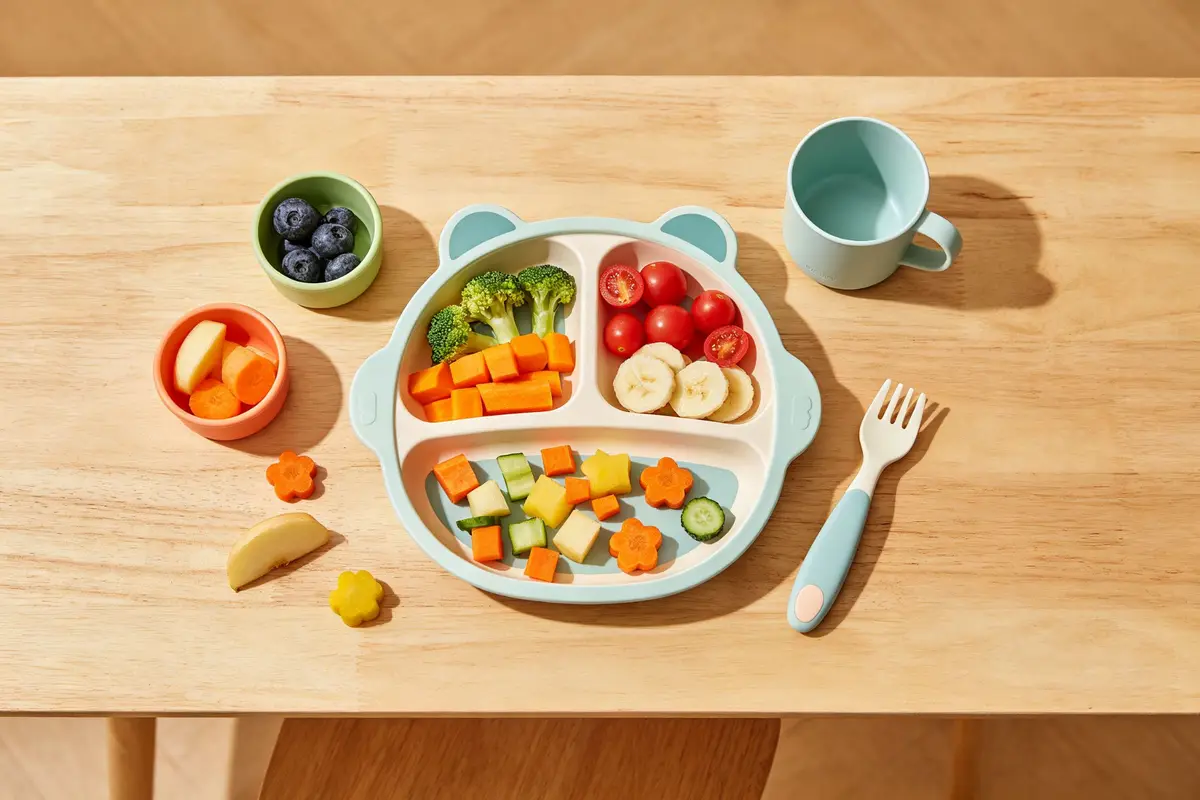
After reading every book and trying every trick, these are the strategies that made a real difference for us. First, the division of responsibility (from feeding expert Ellyn Satter): you decide what, when, and where food is served; your child decides whether and how much to eat. This means you put a variety of foods on the table (including at least one "safe" food you know they like), and you let them choose what to eat. No forcing, no bargaining, no "just one more bite." It sounds counterintuitive, but taking the pressure off actually makes kids more willing to try foods. Second, repeated exposure: it can take 10-15 (or more!) exposures to a new food before a toddler will even try it, and many more before they like it. Keep offering the food — even if they just touch it, smell it, or put it in their mouth and spit it out. That all counts as exposure. Do not give up after three tries. Third, involve them in food prep: let them wash vegetables, stir batter, set the table, or pick out produce at the grocery store. Kids are much more likely to try food they helped make. Fourth, make food fun: use cookie cutters to make sandwich shapes, arrange vegetables into a face on the plate, use fun plates and utensils, or give foods silly names ("broccoli trees," "carrot coins"). Fifth, eat together as a family: kids learn by watching. If they see you enjoying a variety of foods, they are more likely to want them too. Turn off screens and make mealtime pleasant, not a battle zone.
What should I absolutely avoid?
These are the things that seem helpful but actually make picky eating worse. Do not force or pressure: "just one more bite," "clean your plate," "you cannot leave the table until you eat your vegetables" — all of these create power struggles and make food feel like a punishment. Kids who are forced to eat often develop negative associations with food and may become even pickier. Do not use food as a reward or bribe: "if you eat your broccoli, you can have dessert" actually makes kids like vegetables less and like dessert more. It sends the message that vegetables are unpleasant and dessert is the prize. Do not make separate meals: if you become a short-order cook, making a special meal every time your toddler refuses what is served, you reinforce the idea that they do not have to try new foods. Serve one family meal (with at least one safe food), and if they choose not to eat, that is okay — they will not starve, and they will be hungrier at the next meal. Do not label your child as "picky": if you say "he is a picky eater" in front of him, he will start to identify with that label and live up to it. Instead, say "he is still learning to like new foods." Do not offer too many snacks or drinks between meals: if your toddler is grazing all day on crackers, juice, and milk, they will not be hungry at mealtime. Stick to a schedule — three meals and two snacks, with nothing in between except water. My son's pickiness improved dramatically once I cut back on the constant snacking and let him actually feel hungry at mealtimes.
How do I make sure they are getting enough nutrition?
This was my biggest worry. Here is what I learned: look at their intake over a week, not a single day. Toddlers' appetites vary wildly from day to day — one day they eat like a teenager, the next they survive on three bites. As long as they are growing well (your pediatrician will track height and weight on a growth chart), have energy, and hit developmental milestones, they are probably getting enough. To maximize nutrition with a limited diet: offer a variety of foods from all food groups over the course of the week, focus on nutrient-dense foods (avocado, nut butters, whole milk yogurt, cheese, eggs, beans, sweet potato, banana), hide vegetables in foods they already like (spinach in smoothies, zucchini in muffins, carrots in pasta sauce — this is not cheating, it is smart), offer fortified foods (whole milk, fortified cereals, iron-fortified bread), and talk to your pediatrician about whether a multivitamin is needed (many picky toddlers benefit from an iron supplement, since iron deficiency is common in this age group). Do not obsess over every meal. My son ate almost nothing green for six months, but he loved fruit, dairy, and whole grains, and his growth was perfect. He eventually started eating vegetables when we stopped making a big deal about it.
FAQ
Q: My toddler only eats 3-4 foods. Should I be worried?
A: It is common for toddlers to go through phases where they only eat a handful of "safe" foods. As long as those foods include some protein, carbohydrates, fruits/vegetables, and dairy, and your child is growing well, it is usually a phase. Keep offering a wide variety of foods without pressure, and most kids gradually expand their repertoire. If your child is losing weight, has no energy, or the pickiness is extreme and getting worse, talk to your pediatrician.
Q: Is it okay to hide vegetables in food?
A: Yes, hiding vegetables in smoothies, sauces, muffins, and other foods is a practical way to boost nutrition while your toddler is still learning to like vegetables. However, do not rely on hiding alone — continue to offer visible vegetables too, so they learn to recognize and accept them in their natural form. There is no shame in sneaking in nutrition while working on long-term acceptance.
Q: Should I give my picky toddler a multivitamin?
A: Many pediatricians recommend a basic children's multivitamin for picky eaters, especially one containing iron and vitamin D. Iron deficiency is common in toddlers who do not eat much meat or leafy greens, and it can affect growth and development. However, do not give high doses of any vitamin without medical advice. Talk to your pediatrician about whether a supplement is right for your child.
Q: When should I seek professional help for picky eating?
A: Most picky eating is a normal phase, but seek help if: your child is not gaining weight or is losing weight, your child gags or vomits frequently with food, your child has extreme anxiety around food, the pickiness is getting worse rather than better, or mealtimes are so stressful that they are affecting your family's quality of life. Your pediatrician can refer you to a pediatric dietitian or feeding therapist who can help.
Article Summary
Picky eating affects up to 50% of toddlers and is a normal developmental phase, driven by independence, slowed growth, and food neophobia. The most effective approach is the division of responsibility — parents decide what, when, and where; children decide whether and how much. Repeated exposure (10-15+ times), involving kids in food prep, making food fun, and family meals all help. Avoid forcing, bribing, making separate meals, labeling, and constant snacking. Look at nutrition over a week, not a day, focus on nutrient-dense foods, hide veggies when needed, and discuss supplements with your pediatrician. Most kids grow out of it by age 5-6 if mealtimes stay low-pressure and pleasant.
Frequently Asked Questions
My toddler only eats 3-4 foods. Should I be worried?
It is common for toddlers to go through phases where they only eat a handful of safe foods. As long as those include protein, carbs, fruits/vegetables, and dairy, and your child is growing well, it is usually a phase. Keep offering variety without pressure. If weight loss or extreme pickiness, see your pediatrician.
Is it okay to hide vegetables in food?
Yes, hiding vegetables in smoothies, sauces, and muffins is a practical way to boost nutrition. But do not rely on hiding alone — continue offering visible vegetables so they learn to accept them naturally. There is no shame in sneaking in nutrition while working on long-term acceptance.
Should I give my picky toddler a multivitamin?
Many pediatricians recommend a basic children's multivitamin for picky eaters, especially one with iron and vitamin D. Iron deficiency is common in toddlers who eat little meat or greens. Do not give high doses without medical advice. Talk to your pediatrician about whether a supplement is right for your child.
When should I seek professional help for picky eating?
Seek help if your child is not gaining or is losing weight, gags or vomits frequently with food, has extreme anxiety around food, the pickiness is worsening, or mealtimes are so stressful they affect family life. Your pediatrician can refer you to a pediatric dietitian or feeding therapist.