
2026-09-15 · Moni Happy Editorial
Toddler Self-Feeding: From Spoon Grabbing to Independent Eaters
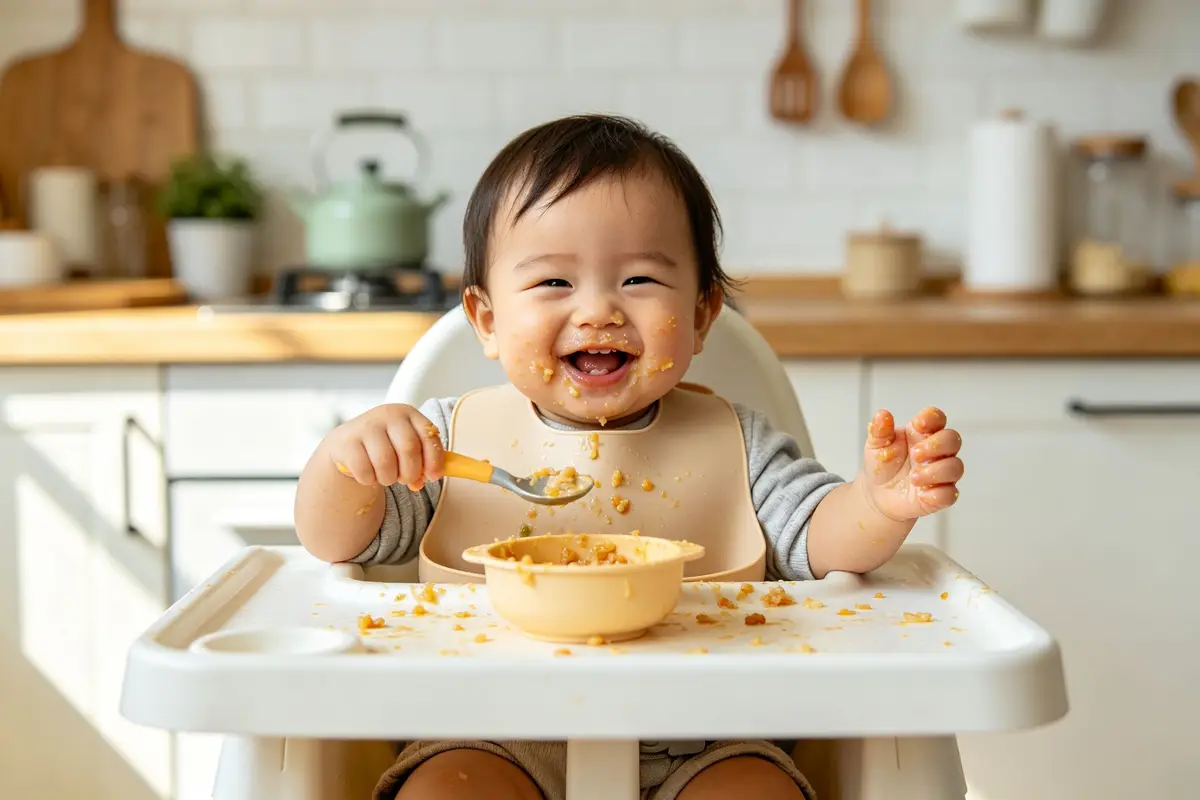
The first time I handed my daughter a spoon and let her feed herself, I thought the kitchen would never recover. Yogurt in her hair, oatmeal on the walls, sweet potato in her eyebrows. I spent more time cleaning than she spent eating. But I stuck with it, and six months later, she was confidently stabbing blueberries with a fork and drinking from an open cup with only occasional spills. Toddler self-feeding is messy, frustrating, and absolutely worth it. Here is what I learned from both my kids and a lot of spilled food.
When Is My Toddler Ready to Self-Feed?
Every child develops at their own pace, but most show signs of readiness for self-feeding between 6 and 12 months. Here is what to look for: They can sit up independently — Your baby should be able to sit in a high chair with good head and neck control before you start finger foods or self-feeding. This usually happens around 6 months. They show interest in your food — If your baby is grabbing food off your plate, leaning toward your fork, or opening their mouth when you eat, they are showing interest. My son started lunging for my sandwich at 5 months, which was a clear sign. They have lost the tongue-thrust reflex — Babies are born with a reflex that pushes foreign objects out of their mouth. This reflex usually fades around 4-6 months. If food keeps getting pushed out, they may not be ready yet. They can pick up small objects — The pincer grasp (using thumb and forefinger) typically develops around 8-10 months. Before that, babies use a raking motion to pick up larger pieces. Both are fine for self-feeding — just adjust the food size accordingly. They bring objects to their mouth — If your baby is consistently bringing toys, teethers, and other objects to their mouth, they have the coordination to bring food to their mouth too. There is no "right" age to start. Some babies are ready at 6 months, others closer to 10-12 months. Follow your baby's cues and do not compare them to other babies. The goal is to make mealtime positive and low-pressure, not to hit a milestone by a certain date.
Stage-by-Stage Guide to Self-Feeding
Self-feeding is a gradual process that unfolds in stages. Here is what to expect at each stage: Stage 1: Pre-loading (6-9 months) — At this stage, your baby may not have the coordination to scoop food themselves, but they can bring a pre-loaded spoon to their mouth. Dip a soft-tipped spoon into puree or yogurt and hand it to your baby. They will grab it and (eventually) get it to their mouth. It is messy, but it builds coordination. You can also offer large, soft finger foods like roasted sweet potato wedges, avocado slices, or banana chunks that they can palm and gum. Stage 2: Scooping (9-15 months) — As your baby's pincer grasp and hand-eye coordination improve, they will start attempting to scoop food themselves. Offer sticky foods that cling to the spoon (oatmeal, yogurt, mashed potatoes, rice with sauce) to make scooping easier. Use a suction bowl to prevent the bowl from being launched across the room (this will happen anyway, but suction helps). Expect a lot of food on the floor, the high chair, the dog, and your hair. This is normal. Stage 3: Using utensils (15-24 months) — Around 15-18 months, toddlers start using spoons and forks more intentionally. They may still prefer fingers for some foods, but they will attempt to use utensils for others. Offer child-sized utensils with easy-to-grip handles. Stab-friendly foods (meatballs, cheese cubes, cooked pasta shells, melon chunks) make fork practice easier. Do not correct their grip — let them experiment. They will figure out the most efficient way over time. Stage 4: Independent eating (2-3 years) — By age 2-3, most toddlers can feed themselves independently with a spoon and fork, drink from an open cup or straw cup with minimal spills, and use a napkin (sort of). They may still need help cutting food and may occasionally revert to finger feeding when tired or distracted. This is normal. For a complete range of baby feeding products that support self-feeding, explore Moni Happy's product collection.
Gear That Makes Self-Feeding Easier
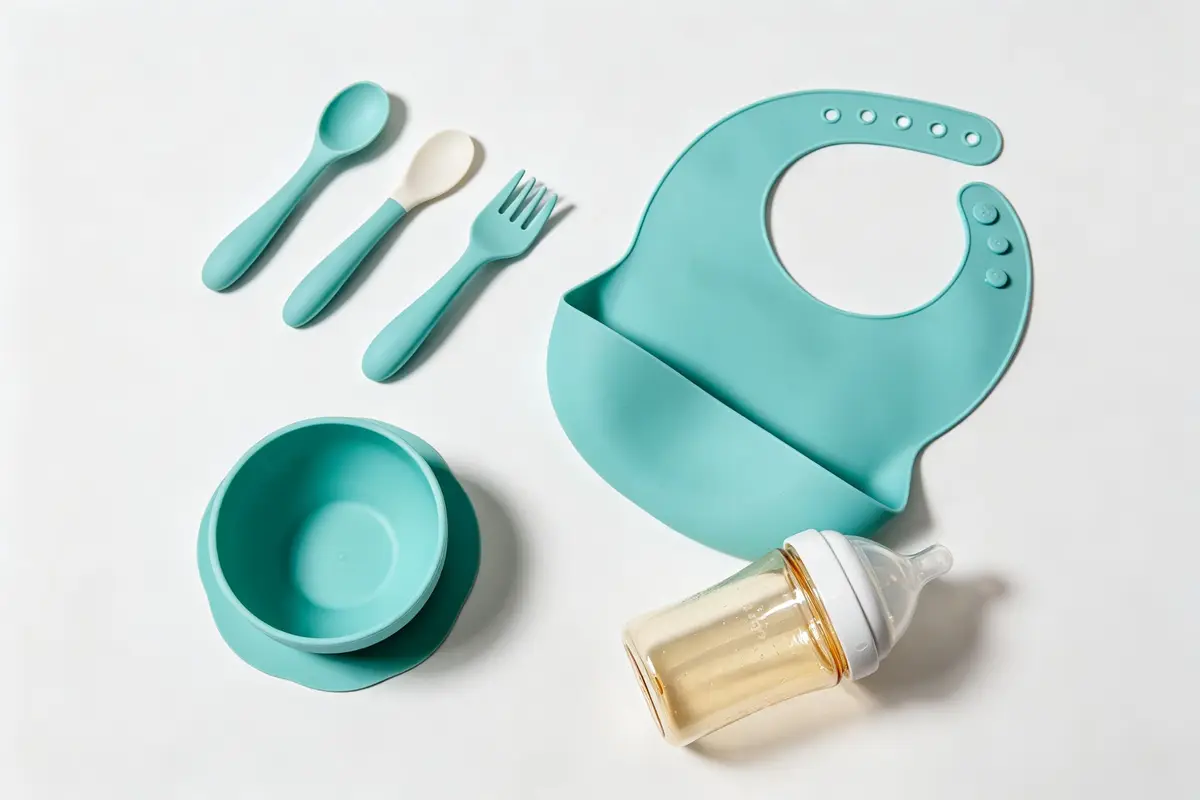
The right gear can make self-feeding significantly less stressful. Here is what worked for us: Suction bowls and plates — A suction bowl or plate that sticks to the high chair tray prevents your toddler from launching their meal across the room. Silicone suction plates with divided sections are great for separating foods (some toddlers hate when foods touch). We had a set that we used for every meal. Soft-tipped spoons — Start with soft, silicone-tipped spoons that are gentle on gums. As your toddler gets more coordinated, you can transition to firmer spoons. Look for spoons with short, thick handles that are easy for small hands to grip. Child-sized forks — Look for forks with rounded, blunt tines that are safe for toddlers. Some forks have a curved handle that makes it easier to get food to the mouth. Avoid sharp metal forks until your toddler has good control. Silicone bibs with food catchers — These are a game-changer. Silicone bibs with a pocket at the bottom catch food that misses the mouth, saving your floors and your toddler's clothes. They are easy to wipe clean or rinse in the sink. We had three that we rotated. Sippy cups and straw cups — Transition from bottle to cup gradually. Start with a sippy cup, then introduce a straw cup around 9-12 months. By 12-18 months, you can introduce an open cup (start with small amounts of water). Avoid prolonged bottle use, which can affect dental development. High chair with easy-to-clean tray — A high chair with a removable, dishwasher-safe tray makes cleanup much easier. Look for a chair with minimal crevices where food can get trapped. We used a chair with a smooth, wipeable seat cover. Floor mat or splat mat — Put a washable mat or splat mat under the high chair to catch fallen food. This saves your floors and makes cleanup faster. We used a large silicone mat that we could wipe down or rinse off. Wipes within reach — Keep a stack of baby wipes or a damp cloth within arm's reach for quick cleanups during the meal. For soft, gentle wipes that are safe for messy hands and faces, explore Moni Happy's wipes collection.
Dealing with the Mess (and Keeping Your Sanity)
Let me be honest: self-feeding is messy. There is no way around it. But there are ways to manage the mess and keep your sanity: Embrace the mess — I know this sounds counterintuitive, but accepting that mealtime will be messy makes it less stressful. Your toddler is learning a skill, and mess is part of the process. A toddler who is allowed to make a mess while learning will become a more confident, independent eater. Limit the food amount — Start with small portions. You can always add more. A huge pile of food on the tray is overwhelming for a toddler and gives them more to throw. Start with 2-3 tablespoons of each food and add more if they want it. Set a time limit — Mealtime should last 20-30 minutes max. After that, toddlers lose interest and start playing with (or throwing) food. If they are not eating after 20 minutes, end the meal calmly. You can offer a snack later. Establish clear rules — Simple rules like "Food stays on the tray" and "We do not throw food" help. If your toddler throws food, calmly say "Food is for eating, not throwing" and remove the food. Do not react dramatically (a big reaction encourages repetition). Involve them in cleanup — Even toddlers can help wipe the tray or put their bowl in the sink. This builds responsibility and makes cleanup part of the routine. Do not force bites — Pressuring a toddler to eat ("Just one more bite!") creates power struggles and negative associations with food. Trust that your toddler will eat when they are hungry. Their job is to decide how much to eat; your job is to decide what and when to offer. Keep offering new foods — It can take 10-15 exposures to a new food before a toddler will try it. Do not give up. Keep offering a variety of foods in different forms (roasted, steamed, pureed, raw) and let your toddler explore at their own pace. Take photos — The yogurt-in-the-hair, oatmeal-on-the-walls phase is temporary. Take photos and videos. One day you will look back and laugh (I promise). At the end of the day, self-feeding is about more than just eating. It is about building independence, fine motor skills, hand-eye coordination, and a positive relationship with food. The mess is temporary. The skills last a lifetime. Take a deep breath, keep the wipes handy, and know that you are doing a great job.
Frequently Asked Questions
When should I let my baby start self-feeding?
Most babies show readiness between 6-12 months. Signs include sitting independently with good head control, showing interest in your food, losing the tongue-thrust reflex, developing pincer grasp, and bringing objects to mouth. Follow your baby's cues — there is no right age, and the goal is positive, low-pressure mealtimes.
How do I handle the mess of self-feeding?
Embrace it as part of learning. Use silicone bibs with food catchers, a suction bowl, and a floor mat under the high chair. Start with small portions, set 20-30 minute time limits, and establish simple rules like 'food stays on the tray.' Keep wipes within reach. Do not react dramatically to thrown food — calmly remove it and end the meal if needed.
What are the best first finger foods for self-feeding?
Start with large, soft, easy-to-gum foods like roasted sweet potato wedges, ripe avocado slices, banana chunks, soft cooked carrot sticks, scrambled egg strips, and toast fingers with a thin spread. As pincer grasp develops (around 8-10 months), offer smaller pieces like peas, cooked beans, cheese cubes, and blueberries (cut in half for safety). Always supervise closely.
Should I be worried if my toddler prefers fingers over utensils?
No. It is completely normal for toddlers to prefer finger feeding even after they can use utensils. Many toddlers alternate between fingers and utensils until age 2-3. Continue offering utensils at every meal and model their use, but do not force it. They will use utensils more consistently as their coordination improves. What matters most is that they are eating a variety of foods and building independence.