
2026-09-15 · Moni Happy Editorial
Toddler Sharing & Turn-Taking: A Mom's Guide to the 'Mine!' Phase

"Mine!" If you have a toddler, you have probably heard this word approximately 4,827 times in the last week. My daughter went through a phase where she would grab a toy, clutch it to her chest, and yell "MINE!" at anyone who came within three feet — including the dog. I kept waiting for the sharing fairy to visit, but she never showed up. Turns out, toddlers are not developmentally capable of sharing the way adults understand it, and that is completely normal. After months of playdate drama, I have learned a lot about how to gently teach sharing without turning every playdate into a battlefield.
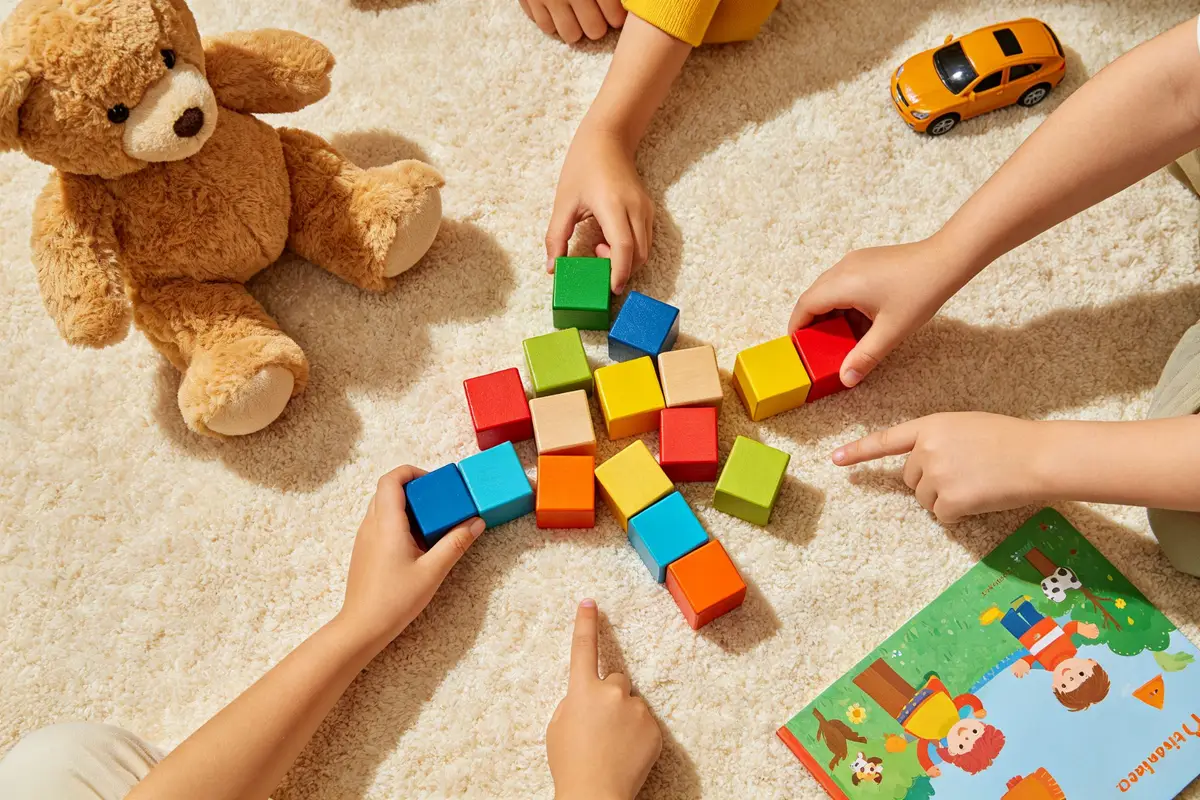
Why Don't Toddlers Just Share?
Before we dive into strategies, let me save you some guilt: your toddler is not selfish. They are not spoiled. They are not going to grow up to be a greedy adult. Toddlers between 12 and 36 months are in a developmental stage where they are just beginning to understand the concept of "mine" — and once they figure it out, they apply it to everything. Here is what is actually going on in that little brain: They are developing a sense of self — Around 18 months, toddlers begin to understand that they are separate individuals with their own belongings. Saying "mine" is how they assert this new identity. It is not greed; it is self-discovery. They lack impulse control — The prefrontal cortex, the part of the brain that controls impulses and decision-making, is not fully developed until adulthood. Toddlers literally cannot stop themselves from grabbing a toy they want, even if they know they "should" share. They do not understand time — When you say "You can have it in five minutes," a toddler hears "You can never have it." They live in the present moment, and waiting feels like forever. They are still learning empathy — Empathy develops gradually. A 2-year-old may not fully understand that taking a toy makes another child sad, even if they have been on the receiving end themselves. They are testing boundaries — Toddlers learn about rules and social norms by testing them. "What happens if I don't share? What if I take it back?" They need repeated, consistent experiences to learn that sharing is safe and that toys come back. Understanding all of this changed my approach entirely. Instead of getting frustrated that my daughter "would not share," I started seeing it as a skill that needed to be taught and practiced — like walking or talking. And just like walking, it takes time, falls, and lots of practice.
What Actually Works (and What Does Not)
Over the course of many playdates, I tried every approach in the book. Some worked beautifully, some backfired spectacularly. Here is what I learned. What works: Model sharing yourself. Toddlers learn more from what we do than what we say. I started narrating my own sharing: "Look, Mommy is sharing her crackers with Daddy. Would you like to share your blocks with Teddy?" When they see sharing as a normal, everyday behavior, they are more likely to try it themselves. Use a timer for turn-taking. Instead of forcing sharing, introduce the concept of taking turns. "You can play with the truck for two minutes, then it is Liam's turn for two minutes." Use a visual timer so they can see the time passing. This teaches that sharing does not mean losing a toy forever — it means taking turns. Praise every small effort. When your toddler even considers sharing, or shares for two seconds before taking it back, praise it: "Wow, you shared your bear with her! That was so kind!" Positive reinforcement builds the neural pathways for generous behavior. Offer special "sharing toys" at playdates. We had a basket of toys that only came out during playdates — toys that were novel and exciting. Because they were not "everyday" toys, my daughter was less possessive of them and more willing to share. Validate their feelings first. "I know you really love that truck and do not want to share it. That is okay. But we need to take turns so everyone gets a chance." When children feel heard, they are more cooperative. Read books about sharing. We read "The Rainbow Fish," "Llama Llama Time to Share," and "Should I Share My Ice Cream?" so many times I can recite them in my sleep. Books provide a low-pressure way to talk about sharing. What does not work: Forcing sharing by prying a toy out of their hands. This creates power struggles and makes them more possessive, not less. It also teaches that might makes right. Labeling them as "selfish" or "not nice." Labels stick, and children live up to them. Instead of "You are being selfish," try "I know sharing is hard right now." Making them share every single thing. Some things are special — a lovey, a favorite toy, a gift. It is okay to say "This is your special toy; you do not have to share it. But these other toys are for sharing." Giving a long lecture in the moment. Toddlers have the attention span of a goldfish. A calm, short message ("We take turns") is far more effective than a five-minute speech about why sharing is important. Expecting them to share like an adult. A 2-year-old sharing for 30 seconds is a huge win. Do not expect them to hand over their favorite toy and smile about it. That is not realistic.
Age-by-Age Guide to Teaching Sharing
Sharing looks different at every age, and expecting age-inappropriate behavior is a recipe for frustration. Here is what to realistically expect: 12-18 months: At this age, parallel play is the norm — toddlers play alongside each other but not with each other. They may grab toys from each other, but this is not "not sharing" — it is exploration. Focus on modeling gentle behavior and saying "gentle hands." Do not expect any actual sharing. Keep playdates short (30-45 minutes) and have duplicate toys when possible. 18-24 months: Toddlers begin to understand "mine" and may become more possessive. They may hand a toy to another child and immediately take it back — this is actually early sharing practice! Praise the handoff even if it lasts two seconds. Introduce simple turn-taking with a timer. Expect lots of "mine!" and occasional grabbing. This is normal. 2-3 years: This is when sharing skills really start to develop. Toddlers can understand simple rules like "we take turns" and may initiate sharing on their own (especially if praised). They can use simple phrases like "My turn?" and "Your turn." However, they still need adult support to navigate conflicts, and sharing is still inconsistent — some days they share everything, other days they clutch every toy. This is normal. 3-4 years: By this age, most children can share with minimal adult support, understand the concept of taking turns, and show concern when another child is upset. They may still struggle with sharing special toys or during transitions, but overall sharing becomes more natural. For a complete range of baby and toddler care products that support healthy development, explore Moni Happy's product collection.
When to Worry (and When to Breathe)
Most toddlers go through a "mine!" phase, and most grow out of it with gentle guidance and time. However, there are some situations where it is worth talking to your pediatrician: if your child is 4+ years old and still cannot share at all, even with adult support; if sharing difficulties are accompanied by other concerning behaviors like extreme aggression, no eye contact, or lack of empathy; if your child seems genuinely distressed by the idea of sharing to the point of panic attacks or extreme meltdowns; or if you feel overwhelmed and unsure how to handle it. But for the vast majority of toddlers, the "mine!" phase is just that — a phase. My daughter, who once yelled "MINE!" at a stranger's grocery cart, is now a generous 4-year-old who regularly shares her snacks with her little brother and brings toys to playdates specifically to share with her friends. The transformation happened gradually, without any big dramatic moment. One day I just realized she was sharing without being asked. So take a deep breath. Your toddler is not broken. They are learning. And with patience, consistency, and lots of praise for small efforts, they will get there. In the meantime, duplicate toys are your best friend, and wine after playdates is perfectly acceptable.
Frequently Asked Questions
When do toddlers learn to share?
Sharing develops gradually. At 12-18 months, parallel play is normal with no expected sharing. At 18-24 months, early turn-taking begins. At 2-3 years, sharing becomes more consistent with adult support. By 3-4 years, most children can share independently.
Should I force my toddler to share?
No. Forcing sharing by prying a toy away creates power struggles and makes children more possessive. It also teaches that might makes right. Instead, use turn-taking with a timer, model sharing yourself, and praise small efforts. Some special toys do not need to be shared at all.
Why does my toddler say 'mine' to everything?
Around 18 months, toddlers develop a sense of self and begin to understand the concept of ownership. Saying 'mine' is how they assert this new identity — it is self-discovery, not greed. They also lack impulse control and do not fully understand that sharing means taking turns, not losing a toy forever.
How can I handle sharing conflicts at playdates?
Stay calm and intervene early before conflicts escalate. Use simple language: 'We take turns.' Offer a timer for turn-taking. Have duplicate toys or special 'sharing toys' available. Validate both children's feelings. Praise any sharing effort, no matter how brief. Keep playdates short for younger toddlers.