
2026-09-16 · Moni Happy Editorial
When Do Babies Crawl? Milestones, Variations, and How to Encourage It
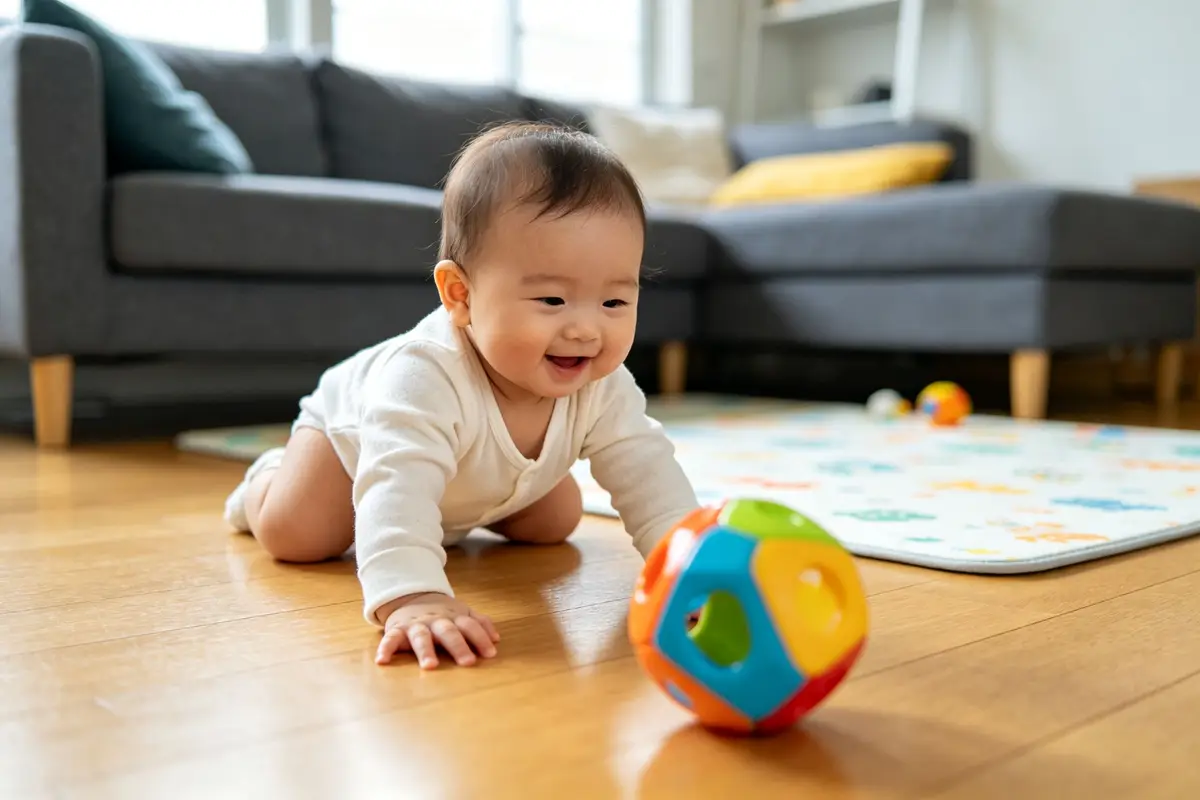
The day my son army-crawled across the living room floor at 7 months, I felt equal parts amazement and terror. Amazed because my little baby was actually moving across the room on his own. Terrified because I suddenly realized how much I needed to childproof. Crawling is one of the biggest milestones in a baby's first year — and it opens up a whole new world (and set of worries). Here's what I learned about when babies crawl, variations, and how to encourage it.
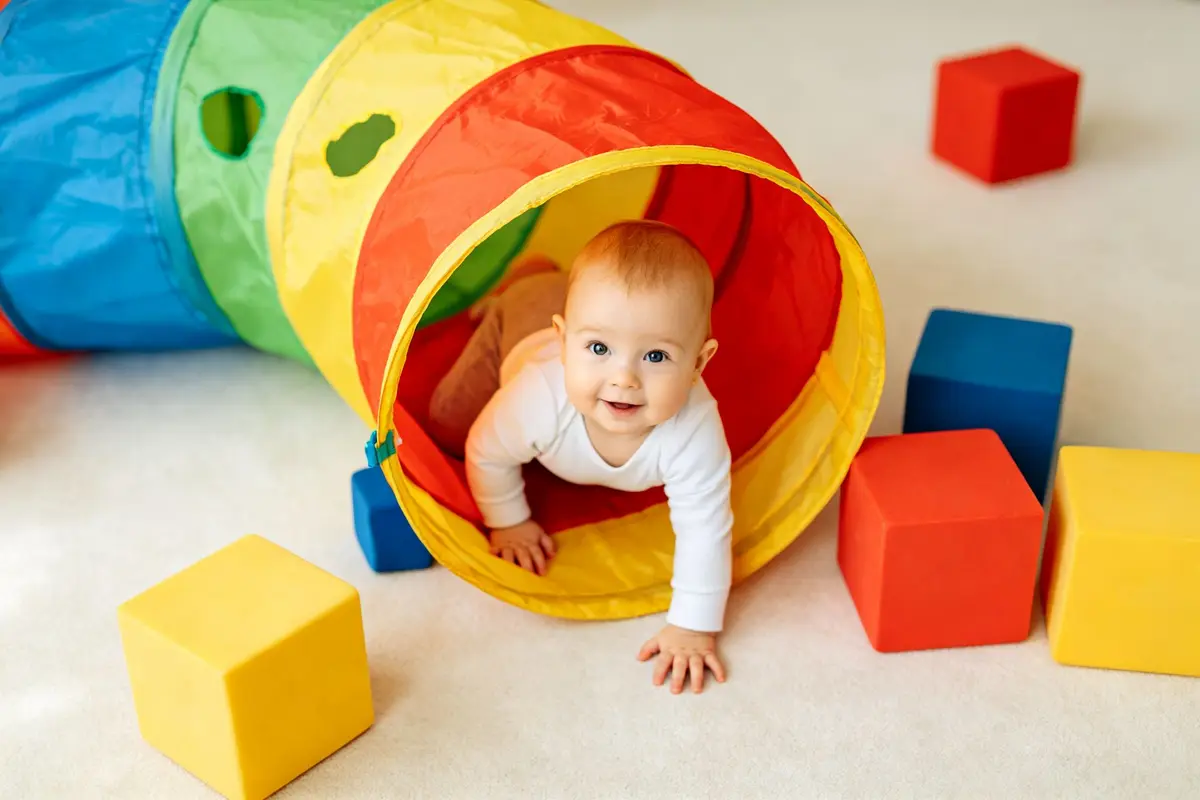
When Do Babies Typically Start Crawling?
Most babies start crawling between 6 and 10 months, but there is a wide range of normal. Some babies skip crawling entirely and go straight to cruising (holding onto furniture) or walking. The American Academy of Pediatrics says there is no single "right" time to crawl, and many perfectly healthy babies never formally crawl on hands and knees. Some variations include: Classic hands-and-knees crawl. The traditional crawl where baby alternates opposite arm and leg. This usually emerges around 8-9 months. Army crawl / commando crawl. Baby lies on their stomach and pulls themselves forward with their arms, dragging their belly along the floor. This often starts earlier (around 6-7 months) and may transition to the hands-and-knees crawl later. Bottom shuffle. Baby sits on their bottom and pushes themselves across the floor with their hands and feet. Some babies exclusively bottom-shuffle and never use their hands and knees. Crab crawl. Baby sits and pushes themselves backward or sideways with their hands behind them. Rolling everywhere. Some babies just roll from point A to point B. All of these variations are normal and count as mobility. If your baby is not showing any signs of mobility by 12 months, or seems to use one side of their body more than the other, mention it to your pediatrician. But between 6-10 months, there is a lot of room for individual development.
How to Encourage Crawling (Without Pressure)
You can't force a baby to crawl, but you can create an environment that encourages it: Tummy time, tummy time, tummy time. This is the foundation of crawling. Babies need strong neck, shoulder, arm, and core muscles, all built through tummy time. Start from day 2, a few minutes at a time, and build up. Get on the floor with them. Give them space and opportunity. Place a toy just out of reach and let them figure out how to get to it. Don't constantly hand them the toy — let them work for it. Use a mirror or a favorite toy. Babies are often motivated by looking at their own reflection or reaching for a toy they love. Place it just far enough that they have to move. Get on your belly and model it. Babies learn by watching. Get on the floor and crawl with them. Make it fun. Skip the containers. Baby seats, bouncers, exersaucers, and swings limit the time babies spend on the floor where they build the muscles and motivation to crawl. Limit "container" time and encourage floor time. Use a play tunnel or obstacle course. A soft play tunnel or a small pile of pillows creates fun challenges that motivate movement. Let them wear minimal clothing. Socks on slippery floors can make crawling hard. Bare feet or non-slip socks on a rug give better grip. If your floor is cold or hard, use a play mat. Don't use walkers. Baby walkers (the wheeled kind) are dangerous and can actually delay crawling and walking. They are banned in some countries. If you want a stationary activity center, that's fine for short periods, but floor time is best.
What to Watch For: When Crawling Means a Pediatric Visit
Most crawling variations are completely normal, but mention it to your pediatrician if: your baby is not bearing weight on their legs by 6 months; they use only one side of their body to move; they haven't shown any mobility (not rolling, not scooting, not creeping) by 12 months; or they seem unusually stiff or floppy when trying to move. Early intervention can make a big difference, so don't wait if something feels off. Once your baby is mobile, childproofing is essential. Cover outlets, anchor furniture to walls, use safety gates at stairs, lock cabinets with cleaning supplies, and keep small objects off the floor. The world just got bigger for your little one — make it a safe place. For a complete range of baby safety essentials and care products, explore Moni Happy's product collection, and for soft, gentle care during all the crawling and exploring, check Moni Happy's wipes.
Frequently Asked Questions
When do babies typically start crawling?
Most babies start crawling between 6 and 10 months, but there is a wide range of normal. Some babies skip hands-and-knees crawling entirely and go straight to cruising or walking. Variations include army crawl, bottom shuffle, crab crawl, and rolling. If your baby shows no mobility by 12 months, mention it to your pediatrician.
Is it normal if my baby never crawls on hands and knees?
Yes. Many perfectly healthy babies use alternative crawling styles like bottom-shuffling, army-crawling, or rolling, and some skip crawling entirely. What matters is that your baby is mobile, using both sides of their body equally, and reaching developmental milestones. Mention any concerns to your pediatrician, but don't worry if they prefer a different style.
How can I encourage my baby to crawl?
The best way is lots of supervised tummy time on the floor (not in containers like bouncers or seats). Place a favorite toy just out of reach, get on the floor and model crawling, use a play tunnel for fun motivation, and let them wear minimal clothing (bare feet grip better than socks). Avoid baby walkers — they can delay development and are dangerous.
When should I be concerned about my baby's crawling?
Contact your pediatrician if your baby: does not bear weight on legs by 6 months; uses only one side of their body; has no mobility (not rolling, scooting, or creeping) by 12 months; or seems unusually stiff or floppy. Early intervention can help. Once mobile, childproof: cover outlets, anchor furniture, use safety gates, and lock dangerous cabinets.