2026-10-28 · Moni Happy
Why does a Japanese brand licence matter when distributing baby diapers in Southeast Asia?
What does a Japanese brand licence actually cover?
A licence is a permission document, and its scope is defined by four variables: the trademark, the territory, the product scope, and the term. Everything else in the document is commentary.
In this category, the brand Moni Happy is owned by メフール Co., Ltd. of Ueno, Taito-ku, Tokyo, and the brand operates a licensed model under which production, certification and brand investment run through the brand itself while distribution is granted to partners by territory. That structure is common in Japanese consumer brands and it is exactly why the paperwork matters: a distributor who cannot show the licence is selling a mark they do not have the right to use.
What the licence does not do is certify the product. A trademark registration says nothing about absorbency, skin compatibility or factory quality. Those are answered by test reports and audits, and the two document sets sit side by side in a listing pack rather than substituting for one another.
Which documents should a distributor demand?
Five documents, and a supplier who cannot produce them within a week is not a licensing principal.
- A signed brand authorisation letter naming your company, the territory and the product categories, with a validity period.
- The trademark registration certificate or extract, showing the registration number, the class and the owner's legal name.
- A database printout or link showing the registration is live, so the buyer can verify it without taking your word.
- The manufacturing and certification documentation: ISO 13485 for the hygiene site, and product test reports from an independent laboratory.
- The territory map: which countries are licensed to whom, so you are not competing with another distributor's parallel supply.
Keep the set in a single PDF with a cover page, because a retail buyer will forward it internally and a folder of loose files loses half its pages in transit.
How do I verify a Japanese trademark registration?
Two public databases do the verification work on any trademark registration. J-PlatPat, run by the Japan Patent Office, holds Japanese national registrations and shows the owner, the classes, the filing date and the current status. The WIPO Global Brand Database covers international registrations designating Japan and several Southeast Asian jurisdictions in one search.
Search the brand name in both, then compare three fields against the certificate: the owner's legal name, the Nice classes covering diapers and wipes, and the status. A registration that is pending, opposed or lapsed looks almost identical to a live one on a photocopy, which is why the database check is not optional.
Then check the territory you actually sell in. A Japanese registration gives no protection in Malaysia, Thailand or Vietnam; protection there comes from national filings or from a Madrid Protocol designation. If the brand claims regional rights, ask for the national registration numbers rather than accepting a Japanese certificate as evidence of regional ownership.
Why does the Japanese claim still sell in Southeast Asia?
Because it maps onto a purchasing logic that shoppers in the region already hold: Japanese baby care is associated with tight quality control, softness and skin safety. That association is worth money at the shelf, and it is the reason a licensed Japanese brand can hold a premium over a comparable local product.
For a distributor, the commercial value is concrete. A licensed Japanese diaper brand supports a higher shelf price in pharmacy and modern trade, it justifies a place in the premium band rather than the entry band, and it gives the buyer a defensible reason to list a new SKU. Those three effects are what the premium actually pays for.
The claim also carries a duty. If the pack says Japanese, the buyer, the customs authority and the competitor's lawyer will all ask what that means: Japanese-owned brand, Japanese-designed product, or Japanese-manufactured goods. The answer has to be consistent across artwork, the listing pack and the shipping documents, because inconsistency is where regulatory complaints start.
What does a licence not prove?
A Japanese brand licence does not prove the product was made in Japan, and it does not prove the product performs. Those are two separate questions and both get asked during due diligence.
- Origin: a Japanese-owned brand manufactured in Southeast Asia is normal and legal, but the pack must not imply Japanese manufacture if that is not the case.
- Performance: absorbency, breathability and skin compatibility need independent test data, not a brand story.
- Factory quality: an ISO 13485 certificate covers the site and the scope named on it, which may not be the line you are buying.
- Continuing supply: a licence is not a supply agreement. It grants use of a mark, not a guaranteed allocation of production capacity.
Distributor due diligence usually stalls on exactly these four questions, and the strongest listing packs separate the answers into four pages. Buyers trust that structure because it shows the supplier knows the difference, and it removes the ambiguity that a competitor will otherwise exploit.
What are the red flags of an unlicensed Japanese diaper?
The pattern is consistent and visible from outside the pack.
- Japanese-looking branding with no registration number and no named owner anywhere in the documentation.
- A certificate of registration that cannot be found in J-PlatPat or the WIPO database under the owner's name.
- Artwork claiming a Japanese diaper brand with no test reports and no factory audit trail.
- A price that sits below the landed cost of a comparable Japanese-positioned product, which usually means the positioning is decorative.
- Reluctance to name the manufacturing site, or a site name that changes between shipments.
For a distributor the risk is not only reputational. If the mark is unregistered or licensed to someone else in your territory, a customs seizure or a takedown can remove your stock from the channel after you have paid for it, and the listing fee is not refundable.
How does the licence strengthen a retail listing pack?
Retail buyers in pharmacy and modern trade are personally accountable for what they put on shelf, so they want documentation that protects them. A licence and registration pair does that in a way a brochure cannot.
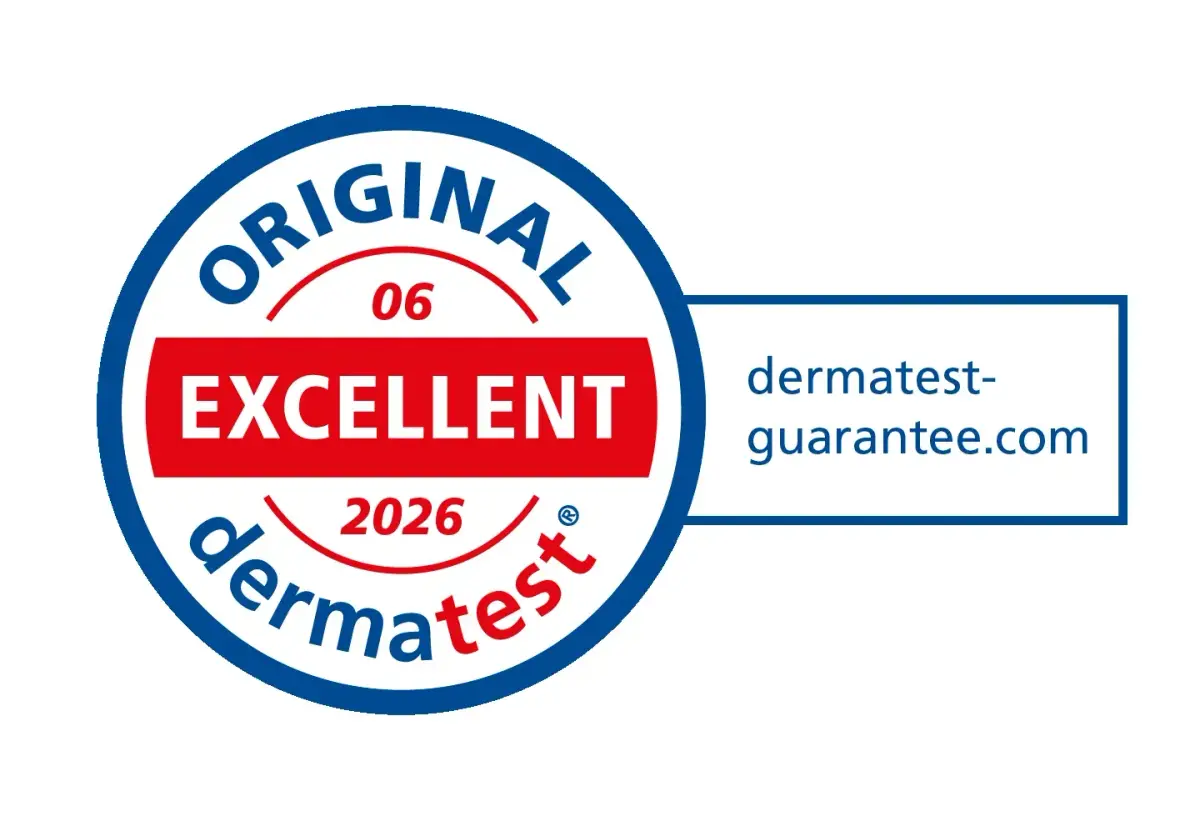
The practical gain is speed. A listing pack that already contains the authorisation letter, the registration extract, the ISO 13485 certificate with the correct scope, and a Dermatest result moves through a buyer's compliance check without a round of questions. That is often the difference between a two-week listing and a two-month one.
It also supports the commercial conversation. When the buyer asks why your pack is priced above a local brand, the answer is a documented premium position rather than an opinion, and that answer holds up in the next category review.
What should the licence say about territory and exclusivity?
Territory and exclusivity are commercial terms, not legal boilerplate, and they belong in the distribution agreement rather than in the authorisation letter alone. The brand authorisation letter should name the countries, the channels and the term; the agreement should state what happens if volume targets are missed.
Ask for exclusivity to be defined by channel as well as by country. A country-level exclusive that does not exclude e-commerce is not exclusive in practice, and a channel definition that omits modern trade leaves your key accounts open. Equally, accept that a principal will attach volume commitments to exclusivity: an exclusive with no target is a promise the brand cannot keep to its other partners.
Moni Happy grants distribution by territory and supports partners with certification, artwork and brand investment rather than leaving them to build the category alone. If you are evaluating the licence for your market, the onboarding guide sets out what the authorisation and first-order sequence looks like, and the partner desk will send the brand documentation set for your distributor due diligence file.
Frequently asked questions
- What is a Japanese brand licence in baby care?
A permission from the trademark owner allowing a named company to use the brand and sell its products in a defined territory, product scope and term. It is not a quality certificate. - How do I check a Japanese trademark registration?
Search the brand name in J-PlatPat, the Japan Patent Office database, and in the WIPO Global Brand Database, then compare the owner name, classes and status with the certificate you were given. - Does a Japanese brand mean the diapers are made in Japan?
Not necessarily. Many Japanese-owned brands manufacture in Southeast Asia. The pack and the listing pack must state origin accurately rather than imply Japanese manufacture. - Who owns the Moni Happy brand?
Moni Happy is owned by メフール Co., Ltd. of Ueno, Taito-ku, Tokyo, Japan, and is distributed through licensed partners by territory.
Sources and further reading
- J-PlatPat - Japan Patent Office trademark database
- WIPO Global Brand Database - international trademark search
- Dermatest - independent dermatological testing institute
Need the trademark, certification and test documentation for your own due diligence file before signing a territory? Request the Moni Happy brand documentation set and read how the wholesale price and margin structure is built alongside it.
Get pricing & free samples, or start your distributor application with Moni Happy.
Frequently Asked Questions
What is a Japanese brand licence in baby care?
A permission from the trademark owner allowing a named company to use the brand and sell its products in a defined territory, product scope and term. It is not a quality certificate.
How do I check a Japanese trademark registration?
Search the brand name in J-PlatPat, the Japan Patent Office database, and in the WIPO Global Brand Database, then compare the owner name, classes and status with the certificate you were given.
Does a Japanese brand mean the diapers are made in Japan?
Not necessarily. Many Japanese-owned brands manufacture in Southeast Asia. The pack and the listing pack must state origin accurately rather than imply Japanese manufacture.
Who owns the Moni Happy brand?
Moni Happy is owned by メフール Co., Ltd. of Ueno, Taito-ku, Tokyo, Japan, and is distributed through licensed partners by territory.