
2026-10-28 · Moni Happy
What carton and pack configuration should I order for wholesale pull-up pants?
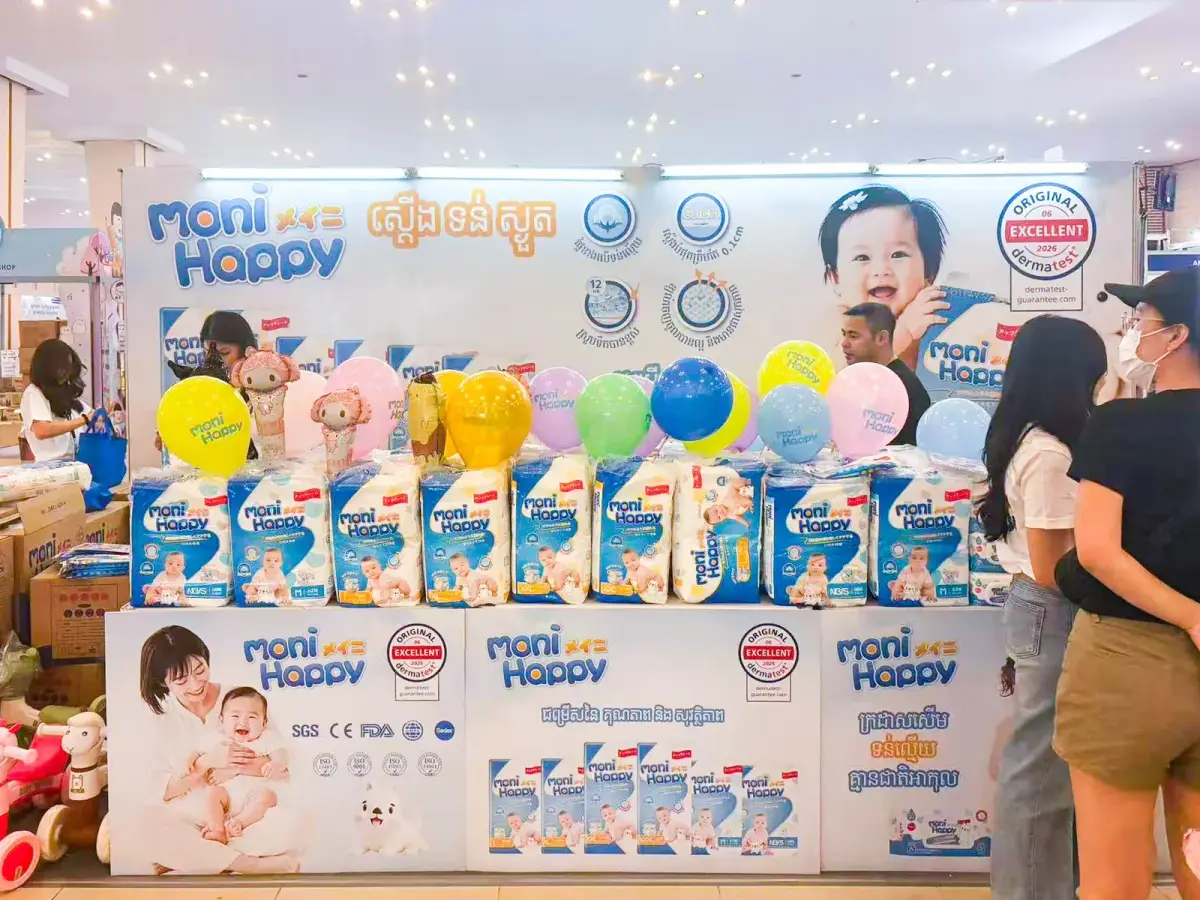
What does a standard export carton hold for pull-up pants?
There is no universal pull-up pants carton configuration. An export carton for pull-up pants typically holds four to eight consumer packs, with the split decided by pack size rather than by preference. Large packs of 40 to 50 pants usually run four to a carton; mid packs of 24 to 30 run six; small packs of 16 to 20 can run eight or ten.
The carton is a compression device as much as a container. Pull-up pants are bulky because the waistband does not compress flat the way a tape diaper does, so a loose carton means air in the container, and air is what you pay for. A well-specified carton gets 15 to 20% more pants into the same 20GP than a carton designed around handling convenience.
Ask for the carton's external dimensions, gross weight and compression strength in writing before the proforma invoice is issued. Suppliers who cannot provide those three numbers usually have not optimised the pack, and the cost lands on your freight line.
How many pants should go in one consumer pack?
When you buy wholesale pull up pants, set the pack count from the price point you need on shelf, then work back to cost. In most Southeast Asian markets the volume segment sits at a low single-digit local price, and the premium segment sits at two to three times that, so the pack count is the main lever you have to hit a price band without cutting the wholesale price.
- 16-20 pants: entry price point for minimarts, forecourts and wet markets, and the format that sells fastest in price-sensitive provinces.
- 24-30 pants: the default supermarket pack, and the size most distributors build their core range on.
- 40-50 pants: club store and e-commerce multipacks, where the shopper is buying a month of supply and the retailer wants a higher basket.
In wholesale pull up pants, packing the same pant in three counts is usually better than packing three qualities in one count. It gives the retailer a good-better-best ladder inside your brand, which is how a distributor defends shelf space against a cheaper import.
How many pants fit in a 20GP and how does pack count change it?
A 20GP of pull-up pants generally carries around 40,000 to 46,000 pants, and the range comes from size and pack count rather than from the container. Larger sizes are bulkier per pant, so a container weighted toward XL and XXL sits at the bottom of that range, while a small-size container can exceed it.
Packs per carton and pack count change the loading figure in two ways. Higher counts per pack reduce film and carton cost per pant but reduce cartons per pallet; lower counts do the reverse. The container total stays broadly similar, which is why pack count is a margin decision and carton dimension is a freight decision.
A hypothetical illustration of the chain: 1,150 cartons at six packs of 30 works out at 207,000 pants, which no 20GP can carry, so that carton count belongs to a different product. A realistic 42,000-pant loading at six packs of 30 needs about 233 cartons, and that is the figure to check against the loading plan. Always rebuild the number from your own carton dimensions rather than trusting a supplier's container claim.
Why does carton size drive landed cost per unit?
Freight is charged on the container, but cost per pant depends on 20GP loading efficiency rather than on the freight rate. Two suppliers can quote the same FOB price per pant and deliver very different landed cost, because one ships 42,000 pants and the other ships 36,000 in the same box.
The gap is set by three things: carton external dimensions against the pallet footprint, whether the cartons are palletised or floor-loaded, and the compression achieved in the pack. Floor loading can add 8 to 12% more cartons, at the cost of slower unloading and more handling damage at destination.
Run the comparison before you negotiate price. Convert each offer to landed cost per pant by dividing total landed cost by the actual pant count for that configuration. A supplier 6% cheaper on FOB who ships 10% fewer pants is 4% more expensive, and that is a conversation you want to have before signing, not after unpacking.
How should carton configuration differ by retail channel?
Different channels need different cartons, and forcing one configuration across all of them is how distributors end up with dead stock in a single SKU.
- Modern trade: shelf-ready cartons with a tear strip and printed shelf presentation, six packs of 24-30, because the retailer wants to replenish from the case without opening it.
- Minimarts and forecourts: eight packs of 16-20, low price point, carton small enough to store under a counter.
- Medical and confinement channels: four packs of 40-50, plain outer with clear batch and date printing, since the buyer cares about cost per pant and traceability.
- E-commerce: five-layer corrugated with a handled inner, six packs of 30, engineered for a single parcel drop rather than for pallet stacking.
Two carton configurations usually cover four channels, which is why a pull-up pants carton configuration should be designed per channel and then consolidated rather than designed per request. More than three configurations for one market is a sign the range is being built by request rather than by plan, and every extra configuration adds a minimum order quantity you have to carry.
Which pack-count mistakes inflate MOQ and leave dead stock?
The most expensive mistake when ordering wholesale pull up pants is spreading a first order across too many pack counts and sizes at once. Six sizes times three pack counts is eighteen SKUs, each with its own minimum run, and a first container rarely has the volume to justify that spread.
- Ordering every size in every pack count, which multiplies the pull-up pants MOQ without adding shelf presence.
- Copying a pack count from another market, where the price ladder and shopper basket size are different.
- Choosing a carton size for warehouse convenience rather than for container efficiency, then absorbing the freight gap.
- Adding a display or shelf-ready format before the base SKU has proven sell-through.
A workable first order covers the three sizes that carry 70-80% of volume in most markets, in two pack counts, and leaves the tail for the second container once you have ninety days of sell-through data.
How do I phase sizes and packs across a first order?
Take your target market's size distribution from actual retail scan data or your own accounts, not from a global average. Everything below is designed to keep the pull-up pants MOQ concentrated in the sizes that will actually turn. In most of Southeast Asia the volume sits in M, L and XL, with S carried mainly for newborn positioning and XXL carried for the premium end.
Then apply a 40/40/20 logic: 40% of the container in the fastest size, 40% split across the two next sizes, 20% held for the sizes that prove themselves. If you cannot get scan data, ask the supplier what other distributors in comparable markets order, and treat the answer as a starting hypothesis to test, not a plan.
Keep packs per carton constant across sizes in the first order. It makes the shelf price ladder simple for the buyer and it makes your own profitability analysis readable, because the only variable left is size.
How do I verify carton configuration before production starts?
Verifying the pull-up pants carton configuration starts with a pre-production sample of the actual carton, filled and sealed, photographed on a pallet. Then check four things: the pant count matches the purchase order, the carton dimensions match the spec sheet, the date and batch coding is legible on the seam, and the outer marking carries the destination and handling symbols the retailer requires.
Confirm the same for the inner pack: film seal integrity, easy-open tab, and the pack count printed on the film rather than on a sticker. A sticker that says six packs on a carton printed for eight is the kind of detail that turns into a claim at destination.
If the configuration is being built for the first time, ask for a loading plan sketch showing cartons per layer, layers per pallet and pallets per container. Any supplier who ships pull-up pants regularly has that drawing already and will send it the same day. For the range itself, the Moni Happy diaper pants page shows the size and pack options the line is built on, and the partner desk will confirm carton dimensions against your container plan before quoting.
Frequently asked questions
- How many packs go in a carton of pull-up pants?
Four to eight, depending on pack size: four for 40-50 pant packs, six for 24-30, and eight to ten for 16-20 pant packs. - How many pull-up pants fit in a 20GP container?
Roughly 40,000 to 46,000 pants. Larger sizes sit at the low end because each pant takes more volume, and compression plus carton design move the figure by up to 15%. - What is the MOQ for wholesale pull-up pants?
It is set per size and per pack count rather than per container, and it rises with every extra configuration. Moni Happy quotes against a confirmed size and pack split, subject to formal quotation. - Should I floor-load or palletise pull-up pants?
Palletising is safer and faster to unload. Floor loading fits 8-12% more cartons but adds handling damage risk, so it only pays on a full container with experienced receiving staff.
Sources and further reading
- ICC - Incoterms 2020 rules on loading, freight and risk
- ITC Trade Map - trade flows for HS 9619 absorbent hygiene products
- UN Comtrade - national import statistics by product code
Want the carton dimensions and container loading plan for each pant size before you commit a deposit? Request the Moni Happy specification pack and free samples, or read how wholesale price, MOQ and margin fit together first.
Get pricing & free samples, or start your distributor application with Moni Happy.
Frequently Asked Questions
How many packs go in a carton of pull-up pants?
Four to eight, depending on pack size: four for 40-50 pant packs, six for 24-30, and eight to ten for 16-20 pant packs.
How many pull-up pants fit in a 20GP container?
Roughly 40,000 to 46,000 pants. Larger sizes sit at the low end because each pant takes more volume, and compression plus carton design move the figure by up to 15%.
What is the MOQ for wholesale pull-up pants?
It is set per size and per pack count rather than per container, and it rises with every extra configuration. Moni Happy quotes against a confirmed size and pack split, subject to formal quotation.
Should I floor-load or palletise pull-up pants?
Palletising is safer and faster to unload. Floor loading fits 8-12% more cartons but adds handling damage risk, so it only pays on a full container with experienced receiving staff.
Distributor resources
If you are evaluating suppliers for your market, these are the pages that answer the commercial questions — in the order buyers usually need them.