
2026-09-04 · Moni Happy Editorial Team
Baby Cough & Cold: A Mom's Guide to Symptoms, Home Remedies & When to Worry

Baby Cough & Cold: A Mom's Guide to Symptoms, Home Remedies & When to Worry
The first time my baby caught a cold, I was a wreck. She was 4 months old, had a runny nose that wouldn't stop, and was coughing so much she could barely nurse. I called the pediatrician at 10 p.m. convinced she had pneumonia. The nurse calmly told me it was probably just a viral cold, gave me some tips for managing symptoms, and said to bring her in if she had trouble breathing. That night was long, but by the third day she was already improving. After three kids and countless colds, coughs, and runny noses, I've learned that baby colds are incredibly common—most babies get 6-8 colds in their first year alone—and most are viral and resolve on their own. But knowing how to help your baby feel better and when to worry is crucial. Here's everything I've learned about baby cough and cold.
Why Babies Get So Many Colds
If it feels like your baby is constantly sick, you're not imagining it. Babies get more colds than older children and adults for several reasons:
- Immature immune system: A baby's immune system is still developing and hasn't built up immunity to the hundreds of common cold viruses (rhinoviruses, coronaviruses, adenoviruses, respiratory syncytial virus/RSV, parainfluenza). Each cold they get helps build immunity, but it means lots of colds in the first years.
- Exposure: Babies put everything in their mouths—their hands, toys, other people's hands. Cold viruses spread through respiratory droplets and contact with contaminated surfaces, so babies are constantly exposed, especially in daycare, playgroups, or with older siblings.
- Smaller airways: A baby's nasal passages and airways are much smaller than an adult's, so even mild congestion can cause significant breathing difficulty, noisy breathing, and feeding problems. A little bit of mucus goes a long way in a tiny nose.
- Breastfeeding provides some protection but not complete: Breast milk contains antibodies (IgA) that help protect against some infections, but breastfed babies still get colds—though they may be less severe and shorter in duration.
Most babies get 6-8 colds in their first year, and this number can be higher (8-12) if they're in daycare or have older siblings. Each cold typically lasts 7-14 days, with the worst symptoms in the first 2-3 days. It may feel like your baby is always sick, but this is normal and actually helps build their immune system for the future.
Common Baby Cold Symptoms & What's Normal
A typical baby cold (upper respiratory infection) includes a combination of these symptoms, usually appearing 1-3 days after exposure to the virus:
- Runny or stuffy nose: The most common symptom. Nasal discharge may start clear and watery, then become thicker and yellow or green after a few days. This color change is normal and doesn't necessarily mean a bacterial infection—it's just the body's immune cells fighting the virus.
- Sneezing: The body's way of clearing nasal passages of mucus and irritants.
- Cough: Can be dry or wet (productive). Coughing helps clear mucus from the throat and airways. A cough from a cold can linger for 2-3 weeks, even after other symptoms have resolved—this is normal as long as it's gradually improving.
- Mild fever: A low-grade fever (37.5-38.5°C / 99.5-101.3°F) is common with colds, especially in the first 1-2 days. A higher fever may occur but should be evaluated, especially in younger babies.
- Decreased appetite: Congestion makes it hard for babies to breathe while feeding, so they may nurse or take less formula. Offer smaller, more frequent feeds to ensure they stay hydrated.
- Fussiness and irritability: Discomfort from congestion, sore throat, and general malaise can make babies fussy and clingy.
- Disrupted sleep: Congestion and coughing are often worse at night (when lying flat allows mucus to pool in the throat), leading to frequent night waking and shorter naps.
- Red, watery eyes: Viral conjunctivitis can accompany some colds, causing mild eye redness and clear discharge.
- Post-nasal drip: Mucus dripping down the back of the throat can cause gagging, spitting up, or a wet-sounding cough, especially after lying down.
What's normal: Symptoms peaking on days 2-3, gradual improvement over 7-10 days, a lingering cough for up to 2-3 weeks, mild fussiness but still able to smile and interact, decreased appetite but still taking enough fluids to produce wet diapers.
What's NOT normal: Symptoms that worsen after day 3 instead of improving, a baby who is lethargic or very difficult to wake, refusal to feed for an extended period, signs of dehydration, difficulty breathing, or a fever that lasts more than 3 days or is very high. These warrant a call to the pediatrician.
Home Remedies That Actually Work
There's no cure for the common cold—it's viral and antibiotics won't help. But there are many things you can do to help your baby feel more comfortable and prevent complications. Here's what worked for my babies and what pediatricians recommend:
1. Saline drops + suction (the most important remedy):
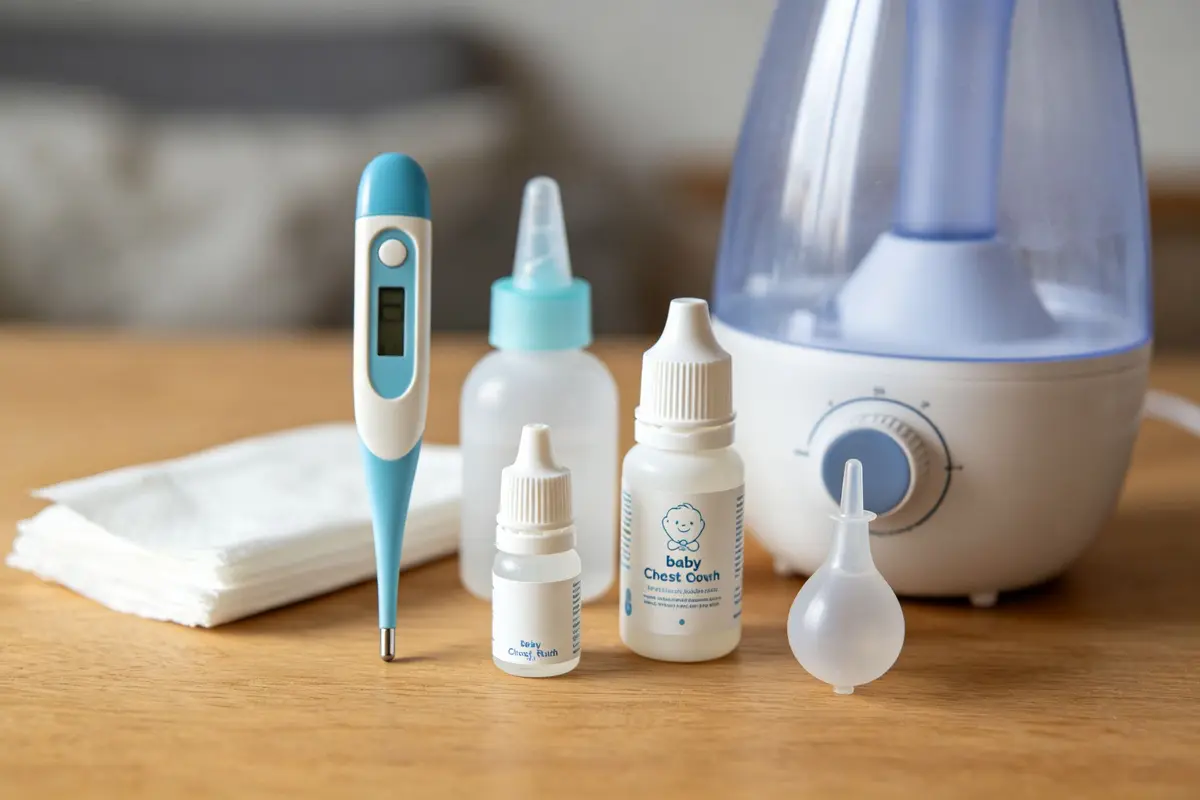
- Use saline (saltwater) nose drops or spray to thin and loosen mucus. Put 2-3 drops in each nostril, wait 30-60 seconds, then suction with a bulb syringe or nasal aspirator.
- Do this before feeds (so baby can breathe while nursing) and before bedtime (to improve sleep). You can do it 3-4 times per day, but don't overdo it—too much suctioning can irritate the nasal lining.
- Bulb syringe: Squeeze the air out first, gently insert the tip into the nostril (don't go too deep), and slowly release to suction mucus. Clean the syringe after each use with soap and water.
- Nasal aspirators (like the NoseFrida): Many parents prefer these over bulb syringes because you control the suction with your mouth and they're easier to clean. They come with filters to prevent mucus from reaching your mouth.
- You can make your own saline: mix 1/4 teaspoon of non-iodized salt with 1 cup (240ml) of warm distilled or boiled-cooled water. Store in a clean container for up to 24 hours.
2. Humidifier:
- A cool-mist humidifier in your baby's room adds moisture to the air, which helps thin mucus and soothe irritated nasal passages and throats. Cool-mist is safer than warm-mist (no burn risk).
- Clean the humidifier daily according to the manufacturer's instructions to prevent mold and bacteria growth—dirty humidifiers can actually make things worse.
- If you don't have a humidifier, a steamy bathroom can help: run a hot shower, close the door, and sit with your baby in the steamy bathroom for 10-15 minutes. The steam helps loosen congestion.
3. Elevate the head of the crib/bassinet:
- Elevating the head slightly helps mucus drain and reduces post-nasal drip coughing at night. Place a wedge under the mattress (NOT pillows or blankets, which are a SIDS risk) or raise the head of the crib frame slightly.
- Alternatively, for naps, you can hold your baby in an upright position in a baby carrier or sling—this helps with congestion and gives them comfort.
4. Plenty of fluids:
- Continue breastfeeding or formula feeding as usual, but offer smaller, more frequent feeds if baby is too congested to take a full feed. Staying hydrated helps thin mucus and prevents dehydration.
- For babies over 6 months, you can offer small amounts of water (1-2 ounces at a time) in addition to breast milk/formula. For babies over 1 year, you can also offer diluted fruit juice or warm clear fluids (like warm water with a little lemon) to soothe a sore throat.
- Watch for signs of dehydration: fewer wet diapers (less than 4-6 in 24 hours for babies under 6 months), no tears when crying, dry mouth/lips, sunken fontanelle (soft spot), lethargy.
5. Fever management (if needed):
- For babies 2-6 months: acetaminophen (paracetamol) for fever or discomfort, dosed by weight. Check with your pediatrician for the correct dose.
- For babies 6+ months: acetaminophen or ibuprofen (ibuprofen should be given with food and not used if baby is dehydrated or has kidney issues).
- Never give aspirin to a baby (risk of Reye's syndrome). Never give over-the-counter cough and cold medicines to babies under 4 years (the FDA and AAP warn against these due to serious side effects and lack of effectiveness in young children).
- A fever is the body's way of fighting infection—you don't need to treat every fever. Use fever medicine if your baby seems uncomfortable, is fussy, or isn't sleeping/eating well.
6. Lots of rest and cuddles:
- Your baby's body is working hard to fight the virus, so extra rest is important. Let them nap more if they want to—don't worry about sticking to the perfect schedule during a cold.
- Extra cuddles, skin-to-skin contact, and comfort feeding help your baby feel secure and can also help regulate their temperature and breathing.
- If your baby is congested and having trouble sleeping, try contact napping (napping on you in an upright position) or contact sleeping for part of the night—this can significantly improve their breathing and sleep quality during the worst days.
7. Gentle chest rub (for babies 3+ months):
- A small amount of baby-safe chest rub (like Vicks BabyRub, which contains aloe, eucalyptus, lavender, and rosemary—no camphor or menthol which can be dangerous for babies) can be applied to the chest and soles of the feet before bed. The mild scent can help with congestion.
- Never use adult Vicks VapoRub on babies under 2 years—it contains camphor, eucalyptus oil, and menthol which can be toxic if ingested or inhaled in large amounts by young babies, and can actually worsen airway inflammation.
- Alternatively, a warm (not hot) compress on the chest can provide comfort.
When to Worry: Red Flags & When to Call the Doctor
Most baby colds are mild and resolve on their own, but it's important to know the red flags that require medical attention. Call your pediatrician immediately or go to the ER if your baby has any of these:
- Difficulty breathing or rapid breathing: If your baby is breathing fast (more than 60 breaths per minute for newborns, 50 for 1-6 months, 40 for 6-12 months), working hard to breathe (retractions—skin pulling in between the ribs, below the sternum, or above the collarbones), flaring nostrils, grunting with each breath, or has a bluish tint to the lips, tongue, or face, seek emergency care immediately. These can be signs of pneumonia, bronchiolitis, croup, or other serious respiratory infection.
- High or persistent fever: For babies under 3 months: any rectal temperature of 38.0°C (100.4°F) or higher requires immediate medical attention (newborns have immature immune systems and a fever can signal a serious bacterial infection). For babies 3-6 months: fever over 38.3°C (101°F). For babies 6+ months: fever over 38.9°C (102°F), or any fever lasting more than 3 days. A fever that goes away and then comes back can also be a sign of a secondary infection.
- Signs of dehydration: Fewer than 4-6 wet diapers in 24 hours (for babies under 6 months), no tears when crying, dry mouth and lips, sunken fontanelle (soft spot on the head), sunken eyes, lethargy, or decreased activity. Dehydration can develop quickly in babies with colds, especially if they're not feeding well.
- Refusal to feed or drink: If your baby refuses all feeds for an extended period (more than 6-8 hours for a young baby) or is taking so little that they're not producing wet diapers, call your pediatrician. Dehydration is a real risk.
- Persistent or worsening cough: A cough that lasts more than 2-3 weeks, gets worse instead of better, or is accompanied by wheezing (a high-pitched whistling sound when breathing out) or stridor (a harsh, high-pitched sound when breathing in, like a seal bark—this is croup) should be evaluated. Croup often worsens at night and may need treatment (like oral steroids or nebulized epinephrine).
- Ear pulling or ear pain: Colds can lead to ear infections (otitis media), especially in babies 6-18 months. Signs include pulling or rubbing the ear, increased fussiness (especially when lying down), fever, drainage from the ear, or difficulty sleeping. Ear infections may need antibiotics if bacterial.
- Thick, colored nasal discharge lasting more than 10 days: While yellow/green mucus is normal in the first few days of a cold, persistent thick colored discharge for more than 10 days can be a sign of a bacterial sinus infection and may need antibiotics.
- Lethargy or extreme irritability: If your baby is unusually sleepy, difficult to wake, floppy, or inconsolably fussy, call your pediatrician. A baby with a cold who is still smiling, interacting, and playing (even if fussy) is likely okay. A baby who is lethargic and unresponsive needs evaluation.
- Eye discharge: Thick, yellow/green discharge from one or both eyes, especially if accompanied by eye redness and swelling, can be bacterial conjunctivitis (pink eye) and may need antibiotic eye drops. Clear, watery eye discharge is usually viral and will resolve on its own.
- Vomiting or diarrhea: While mild spitting up from post-nasal drip is common, persistent vomiting or diarrhea can lead to dehydration and may indicate a more serious infection (like RSV or gastroenteritis).
- Symptoms that improve then worsen: If your baby seems to be getting better and then suddenly gets worse (new fever, increased cough, more congestion), this can be a sign of a secondary bacterial infection (like an ear infection, sinus infection, or pneumonia) and should be evaluated.
When in doubt, call your pediatrician. It's always better to be safe than sorry, and your doctor would rather see a healthy baby than miss something serious. Many pediatrician offices have after-hours nurse lines you can call for advice.
Article Summary
Baby coughs and colds are incredibly common—most babies get 6-8 colds in their first year (more if in daycare or with older siblings)—because their immune systems are still developing, their airways are small, and they're constantly exposed to viruses through putting things in their mouths. A typical cold causes runny/stuffy nose, sneezing, cough, mild fever, decreased appetite, fussiness, and disrupted sleep, with symptoms peaking on days 2-3 and gradually improving over 7-10 days (a lingering cough can last 2-3 weeks). Yellow/green mucus is normal after the first few days and doesn't automatically mean a bacterial infection. The most effective home remedies are: saline drops + nasal suctioning (bulb syringe or aspirator) before feeds and bedtime (the single most important thing you can do), a cool-mist humidifier in the bedroom (cleaned daily), elevating the head of the crib with a wedge under the mattress (never pillows), plenty of fluids (smaller, more frequent breast milk/formula feeds, plus water for 6+ months), fever management with acetaminophen (2+ months) or ibuprofen (6+ months, dosed by weight—never aspirin or OTC cough/cold medicines under 4 years), lots of rest and cuddles (contact napping in an upright position can greatly improve breathing and sleep), and a baby-safe chest rub (3+ months only, never adult Vicks on under-2s). Never give cough and cold medicines to babies under 4 years—they're ineffective and can cause serious side effects. Red flags requiring immediate medical attention include: difficulty breathing or rapid breathing (retractions, flaring, grunting, blue lips), any fever in babies under 3 months (38°C+), high or persistent fever in older babies, signs of dehydration (fewer wet diapers, no tears, dry mouth, sunken fontanelle), refusal to feed, persistent/worsening cough with wheezing or stridor (croup), ear pulling/pain, thick colored nasal discharge lasting 10+ days, lethargy or extreme irritability, thick eye discharge, persistent vomiting/diarrhea, or symptoms that improve then worsen (possible secondary infection). When in doubt, call your pediatrician—it's always better to be safe. Most colds are viral and resolve on their own with supportive care, and each cold helps build your baby's immune system for the future. With patience, lots of cuddles, and these remedies, both you and your baby will get through it. For more baby care guides, see our baby fever guide and explore Moni Happy baby care products.
Frequently Asked Questions
When should I call the pediatrician?
Call your pediatrician if your baby has a fever over 100.4°F (38°C) under 3 months old, seems lethargic or difficult to wake, refuses to eat or drink, has persistent vomiting or diarrhea, shows signs of dehydration (fewer wet diapers, dry mouth, sunken fontanelle), has difficulty breathing, or if something just doesn't seem right. Trust your instincts as a parent.
How can I tell if my baby is in pain?
Babies show pain through crying that's different from their usual cry — it may be higher-pitched, more intense, or difficult to soothe. Other signs include facial grimacing, clenched fists, drawing legs up to the chest, changes in sleep or feeding patterns, and being unusually fussy or unusually quiet. If you suspect pain, check for common causes like teething, gas, ear infection, or injury.
Is it normal for my baby to get sick often?
It's normal for babies and toddlers to get 6-8 colds a year, especially if they're in daycare or around older siblings. Their immune systems are still developing and building immunity. However, frequent infections that are severe, last a long time, or are accompanied by poor weight gain may warrant a checkup with your pediatrician to rule out underlying issues.
How do I give my baby medicine safely?
Always use the measuring device that comes with the medicine — never use a household spoon. Check the dose based on your baby's weight, not just age. Give the full prescribed course of antibiotics even if your baby seems better. Never give aspirin to children under 18, and check with your pediatrician or pharmacist before combining medicines or giving over-the-counter medicine to babies under 6 months.
Frequently Asked Questions
What are the normal symptoms of a baby cold and how long does it last?
A typical baby cold (upper respiratory viral infection) causes: runny or stuffy nose (discharge starts clear/watery, may become thicker yellow/green after a few days—this color change is normal and doesn't mean bacterial infection), sneezing, cough (dry or wet, can linger 2-3 weeks), mild fever (37.5-38.5°C / 99.5-101.3°F, usually first 1-2 days), decreased appetite (congestion makes breathing while feeding difficult), fussiness/irritability, disrupted sleep (congestion worse at night when lying flat), mild red watery eyes, and post-nasal drip causing gagging/spitting up. Symptoms usually appear 1-3 days after exposure, peak on days 2-3, and gradually improve over 7-10 days. A lingering cough can last 2-3 weeks even after other symptoms resolve—this is normal as long as it's gradually improving. Most babies get 6-8 colds in their first year (8-12 if in daycare or with older siblings) because their immune systems are still developing, airways are small, and they're constantly exposed to viruses. What's normal: baby still smiles/interacts (even if fussy), takes enough fluids to produce wet diapers, symptoms gradually improve after day 3. What's NOT normal: symptoms worsening after day 3, lethargy/difficult to wake, refusal to feed, dehydration signs, difficulty breathing, or high/persistent fever—these warrant a pediatrician call.
What home remedies actually help a baby with a cold?
There's no cure for the common cold (it's viral—antibiotics won't help), but these evidence-based remedies help your baby feel more comfortable: 1) Saline drops + nasal suctioning (THE most important remedy): Put 2-3 saline drops in each nostril, wait 30-60 seconds, then suction with a bulb syringe (squeeze air out first, insert gently, release slowly) or nasal aspirator (like NoseFrida). Do this before feeds (so baby can breathe while nursing) and before bedtime, 3-4 times daily. Don't overdo it—too much suctioning irritates the nasal lining. You can make saline: 1/4 tsp non-iodized salt + 1 cup warm distilled/boiled-cooled water. 2) Cool-mist humidifier: Adds moisture to thin mucus and soothe irritated airways. Cool-mist is safer (no burn risk). Clean daily to prevent mold. A steamy bathroom (run hot shower, sit 10-15 min) works too. 3) Elevate head: Place a wedge under the mattress (NOT pillows/blankets—SIDS risk) or raise crib head slightly. Upright contact napping in a carrier also helps drainage. 4) Plenty of fluids: Smaller, more frequent breast milk/formula feeds if baby can't take full feeds. For 6+ months, offer small amounts of water. For 1+ years, warm clear fluids can soothe sore throat. Watch for dehydration (fewer wet diapers, no tears, dry mouth, sunken fontanelle). 5) Fever management: Acetaminophen (paracetamol) for 2+ months, ibuprofen for 6+ months (with food, not if dehydrated), dosed by weight. Never aspirin (Reye's syndrome risk). Never OTC cough/cold medicines under 4 years (FDA/AAP warning—ineffective and dangerous side effects). Treat fever only if baby seems uncomfortable. 6) Rest and cuddles: Extra naps, contact napping upright, skin-to-skin, comfort feeding. Don't worry about perfect schedule during illness. 7) Baby-safe chest rub (3+ months only): Products like Vicks BabyRub (no camphor/menthol) on chest/soles of feet. NEVER adult Vicks on under-2s (camphor can be toxic). These remedies won't cure the cold but will significantly improve your baby's comfort and help prevent complications like dehydration or ear infections. Most colds resolve in 7-10 days with supportive care.
When should I call the doctor for my baby's cold?
Most baby colds are mild and viral, but these red flags require immediate medical attention: 1) Difficulty breathing or rapid breathing: More than 60 breaths/min (newborns), 50 (1-6mo), 40 (6-12mo); retractions (skin pulling in between ribs, below sternum, above collarbones); flaring nostrils; grunting with each breath; bluish lips/tongue/face. These can signal pneumonia, bronchiolitis, or croup—go to ER immediately. 2) Fever by age: Under 3 months: ANY rectal temp 38.0°C (100.4°F)+ (newborn immune systems are immature—fever can signal serious bacterial infection like meningitis/UTI/sepsis). 3-6 months: fever over 38.3°C (101°F). 6+ months: fever over 38.9°C (102°F) or lasting 3+ days. Fever that resolves then returns (possible secondary infection). 3) Dehydration signs: Fewer than 4-6 wet diapers/24hr (under 6mo), no tears when crying, dry mouth/lips, sunken fontanelle (soft spot), sunken eyes, lethargy. Dehydration develops quickly in sick babies. 4) Refusal to feed: Refusing all feeds for 6-8+ hours or taking so little that wet diapers decrease. 5) Persistent/worsening cough: Cough lasting 2-3+ weeks, getting worse, or with wheezing (whistling on breath out) or stridor (harsh seal-bark sound on breath in = croup, often worse at night, may need steroids). 6) Ear infection signs: Pulling/rubbing ear, increased fussiness when lying down, fever, ear drainage, difficulty sleeping (common 6-18 months, may need antibiotics if bacterial). 7) Persistent thick colored nasal discharge: Lasting 10+ days (possible bacterial sinus infection). 8) Lethargy or extreme irritability: Unusually sleepy, difficult to wake, floppy, or inconsolable. A baby who still smiles/interacts is likely okay. 9) Thick yellow/green eye discharge: With redness/swelling (possible bacterial conjunctivitis needing antibiotic drops). Clear watery discharge is usually viral. 10) Persistent vomiting/diarrhea: Can lead to dehydration. 11) Symptoms improve then worsen: Possible secondary bacterial infection (ear, sinus, pneumonia). When in doubt, call your pediatrician—many offices have after-hours nurse lines. It's always better to be safe than sorry, and your doctor would rather see a healthy baby than miss something serious. Trust your parental instincts—if something feels wrong, it probably is.
Can I give my baby cough or cold medicine and is it safe to use a humidifier?
Cough and cold medicines: NO for babies under 4 years old. The FDA and American Academy of Pediatrics (AAP) strongly recommend against over-the-counter cough and cold medicines (including decongestants, antihistamines, cough suppressants, and combination cold medicines) for children under 4 years old. These medications have not been proven effective in young children and can cause serious, potentially life-threatening side effects including rapid heart rate, seizures, hallucinations, excessive drowsiness, and even death. There have been multiple reports of infant deaths and hospitalizations from these medications. For babies 4-6 years, the AAP recommends consulting a doctor before using any cold medicine, and for 6+ years, follow label dosing carefully and never combine products with the same active ingredients (risk of overdose). Instead of medicine, use the safe, evidence-based home remedies: saline drops + suctioning, cool-mist humidifier, elevation, fluids, rest/cuddles, and acetaminophen/ibuprofen for fever/discomfort (dosed by weight). Honey can help with cough in children OVER 1 year old (1/2 to 1 teaspoon before bed), but NEVER give honey to babies under 1 year (risk of infant botulism from Clostridium botulinum spores). Humidifiers: YES, cool-mist humidifiers are safe and recommended for babies with colds. They add moisture to the air which helps thin nasal mucus, soothe irritated nasal passages and throats, and can ease coughing and congestion. Cool-mist humidifiers are preferred over warm-mist (steam vaporizers) because there's no risk of burns if the baby knocks it over, and they're generally safer in a nursery. Important safety tips for humidifiers: 1) Clean it DAILY according to manufacturer instructions—empty the tank, rinse, and let it air dry. Dirty humidifiers can grow mold and bacteria, which get sprayed into the air and can cause respiratory infections or worsen asthma. 2) Use distilled or demineralized water if possible—tap water contains minerals that can get dispersed into the air as white dust and may irritate airways. 3) Don't over-humidify—the ideal indoor humidity level is 30-50%. Too much humidity can promote mold and dust mite growth. You can buy an inexpensive hygrometer to monitor humidity levels. 4) Place the humidifier at least 3 feet away from the crib and out of baby's reach. 5) If you don't have a humidifier, a steamy bathroom works well: run a hot shower, close the door, and sit with your baby in the steamy bathroom for 10-15 minutes. The warm steam helps loosen congestion and soothe airways. This is especially helpful before bedtime or feeds. So: no cough/cold medicine under 4, yes to cool-mist humidifier (kept clean), and yes to the safe home remedies listed above. These natural approaches are just as effective (if not more so) than medications for the common cold in babies, without the dangerous side effects.