
2026-09-05 · Moni Happy Mom
Baby Developmental Milestones 0-12 Months: A Mom's Honest Guide
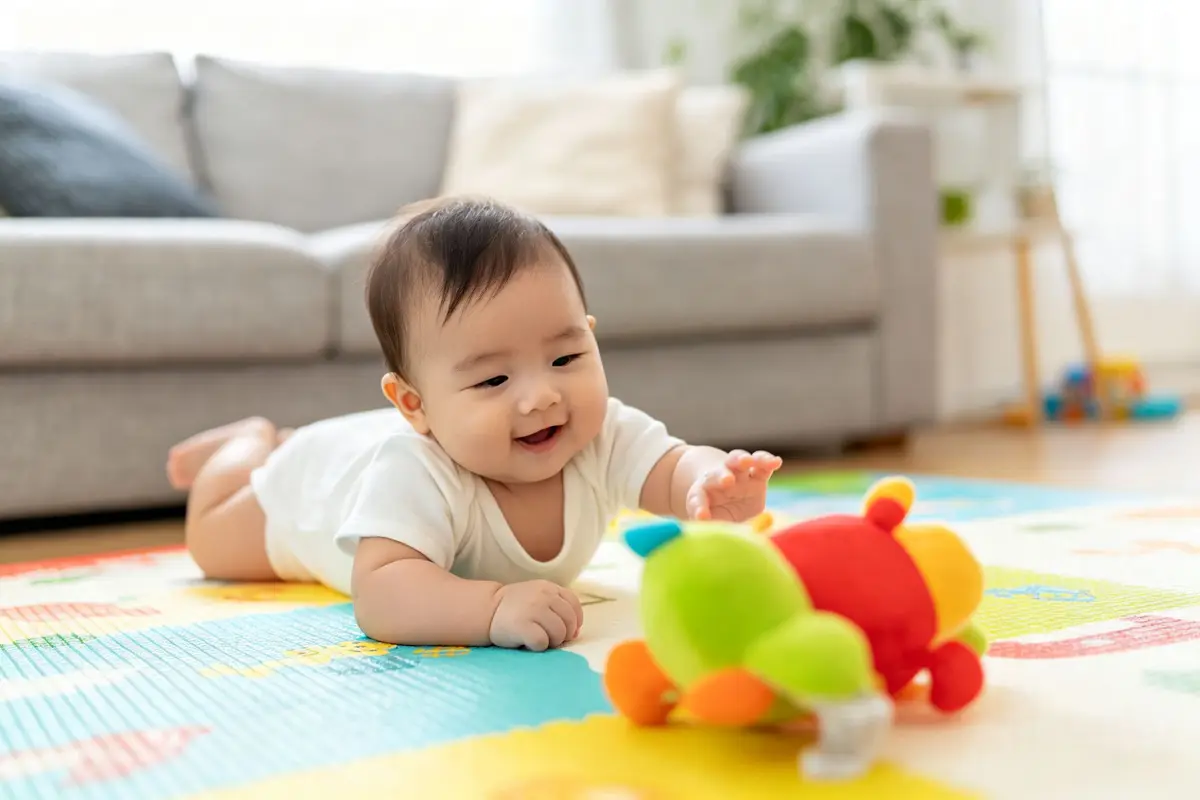
I became obsessed with developmental milestones during my baby's first year. Every time she did something new—lifted her head, grabbed a toy, babbled "ba-ba"—I was frantically Googling "is this normal?" and comparing her to every other baby I saw. What I've learned (the hard way, through many late-night Google spirals) is that milestones are guides, not deadlines. Every baby develops at their own pace, and the "normal" range is wider than most milestone charts suggest. But knowing what to look for and when can help you celebrate your baby's progress and flag any concerns early. Here's my honest, mom-to-mom guide to baby developmental milestones in the first year.
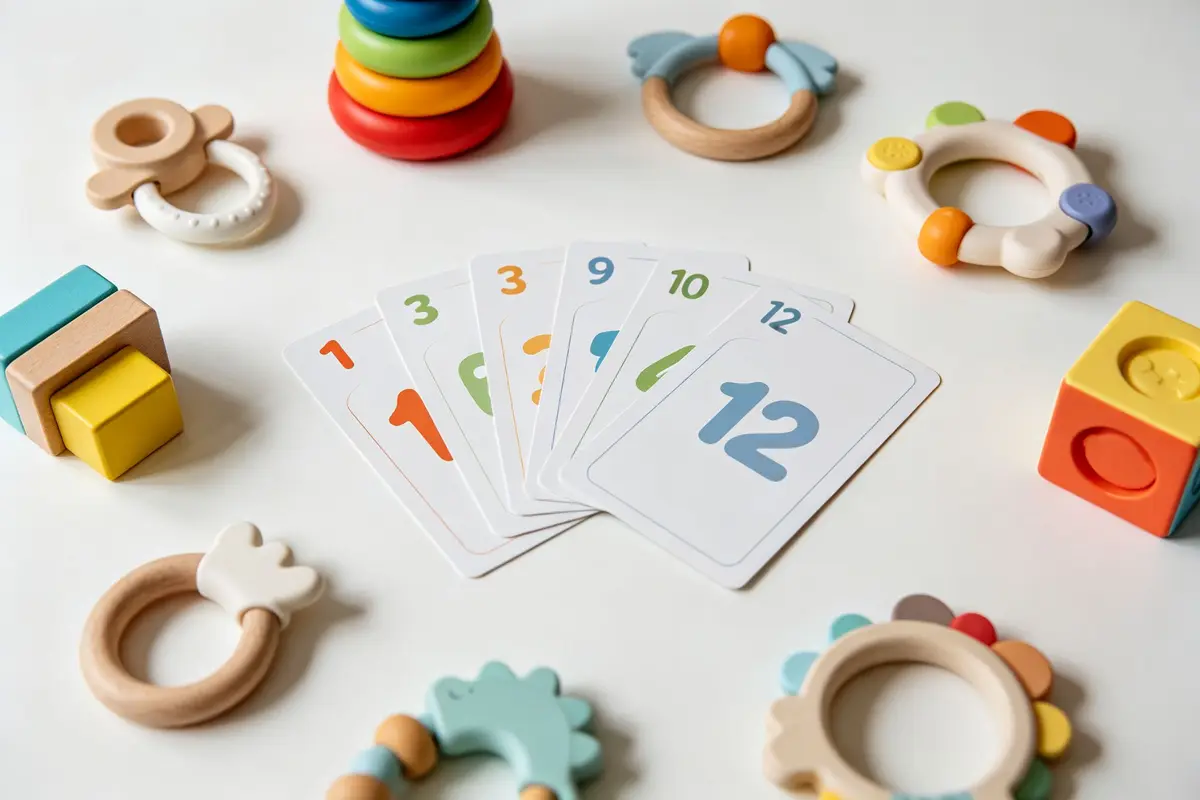
0-3 months: The newborn phase
The first three months are all about your baby adjusting to life outside the womb and building basic control over their body. It's a period of rapid brain development, even though it might not look like much is happening beyond eating, sleeping, and pooping.
Motor milestones: At birth, your baby's movements are mostly reflexive (the Moro/startle reflex, rooting reflex, grasping reflex). By 1 month, they can briefly lift their head when on their tummy (tummy time—start with short sessions, 2-3 minutes a few times a day, and build up). By 2-3 months, they can lift their head and chest up to 45 degrees during tummy time, and they may start to move their arms and legs more deliberately. The grasping reflex starts to fade around 3 months, and your baby may start to intentionally swipe at or bat at toys hanging above them. Hand-eye coordination is just beginning to develop.
Cognitive and language milestones: Your baby is born recognizing your voice and smell. By 1-2 months, they start to make cooing sounds (soft vowel sounds like "ah" and "oh") and they begin to smile socially (the real, responsive smile—not just the newborn gas smile). By 3 months, they can track moving objects with their eyes, recognize familiar faces and voices, and may start to laugh or squeal with delight. They're also beginning to understand cause and effect at a basic level—for example, they may realize that crying brings you.
Social-emotional milestones: The social smile (around 6-8 weeks) is a big one—it's your baby's first real communication with you. By 3 months, they enjoy being held and talked to, they may calm down when picked up, and they start to show different emotions (contentment, discomfort, excitement). They also begin to develop a sense of trust—when you respond consistently to their needs, they learn that the world is a safe place.
What I did at this stage: Lots of tummy time (even though she hated it at first—I got on the floor with her, used a nursing pillow for support, and kept sessions short and positive), talking to her constantly (narrating everything I did, which felt silly but is great for language development), singing, and using a simple play gym with hanging toys for her to look at and bat at. I also made sure to have soft, comfortable diapers that didn't restrict her movement during tummy time and play.
4-6 months: The rolling and reaching phase
This is when things start to get fun—and a little more chaotic. Your baby is gaining more control over their body, becoming more interactive, and starting to explore the world through their hands and mouth.
Motor milestones: Rolling is the big milestone of this phase. Most babies roll from tummy to back around 4 months (it's actually easier because gravity helps), and from back to tummy around 5-6 months (this requires more core strength). Once they can roll, they're mobile in a limited way—they can get across a room by rolling, which means you can no longer leave them unattended on a changing table or bed. By 5-6 months, many babies can sit with support (in a high chair or with pillows around them), and some can sit briefly without support. They also start to reach for and grab objects with purpose (the palmar grasp—closing their whole hand around an object), and they transfer objects from one hand to the other. Everything goes in the mouth at this stage—it's how they explore texture, shape, and taste.
Cognitive and language milestones: By 4-5 months, your baby's babbling becomes more varied—they start to combine consonants and vowels ("ba-ba," "ma-ma," "da-da"), though at this stage it's still babble, not meaningful words. They respond to their name (turning when they hear it), they understand simple words like "no" (though they may not obey), and they show curiosity about their environment. By 6 months, they may start to show stranger awareness—they may be wary of people they don't know, which is a normal cognitive milestone (they can distinguish familiar from unfamiliar faces). Object permanence is beginning to develop—they may look for a dropped toy, though they don't yet fully understand that things continue to exist when out of sight.
Social-emotional milestones: Your baby is becoming much more social and expressive. They laugh out loud, they show excitement (kicking legs, waving arms, squealing), and they may start to show preferences for certain people or toys. They also start to show frustration when a toy is taken away or they can't reach something. Separation anxiety may begin to appear around 6 months (though it often peaks later, around 8-10 months)—they may cry when you leave the room or hand them to someone else.
What I did at this stage: Baby-proofing started in earnest once she could roll (I thought we had more time—we didn't). I introduced a variety of textured toys for her to explore with her hands and mouth (silicone teething toys, crinkly fabric toys, soft blocks). We did lots of floor play time, encouraging rolling and reaching by placing toys just out of reach. I also started reading board books with simple pictures and textures—she was more interested in chewing the book than looking at it, but it's never too early to build a reading habit. Around 6 months, we started introducing solid foods, which was a whole new developmental adventure (messy, fun, and occasionally stressful).
7-9 months: The crawling and cruising phase
This is the phase where your baby becomes truly mobile—and where you realize your house is a danger zone. Crawling (or some form of mobility) opens up a whole new world of exploration for your baby, and it's an exciting (and exhausting) time.
Motor milestones: Most babies crawl somewhere between 7 and 10 months, but there's a wide range, and some babies skip crawling altogether and go straight to walking (this is completely normal). Before crawling, many babies do an "army crawl" (pulling themselves along with their arms while their legs drag), or they may scoot on their bottom, roll everywhere, or do a bear crawl (hands and feet, bottom up). By 8-9 months, most babies can sit independently without support, and they may start to pull themselves up to stand while holding onto furniture (cruising—moving along furniture while holding on). Their fine motor skills are developing rapidly: they develop the pincer grasp (using thumb and forefinger to pick up small objects) around 8-9 months, which means they can pick up small pieces of food (hello, finger foods!) and tiny objects off the floor (hello, choking hazard vigilance). They also start to point at objects, clap their hands, and wave bye-bye (though these may come a bit later for some babies).
Cognitive and language milestones: Object permanence becomes more established—your baby now understands that things continue to exist when out of sight, which means peek-a-boo becomes the greatest game ever invented. They also understand simple gestures and words: they may wave when you say "bye-bye," clap when you say "patty-cake," and look at the correct object when you name it ("where's the ball?"). Their babbling becomes more complex and may include intonation patterns that sound like real speech. By 9 months, some babies may say their first meaningful word ("mama" or "dada" directed at the correct parent), though many babies don't say their first word until 12 months or later—and that's normal.
Social-emotional milestones: Separation anxiety often peaks during this phase (8-10 months), and it can be intense. Your baby may cry when you leave the room, refuse to be held by strangers, and want to be held by you constantly. This is a normal developmental phase—it shows that your baby has formed a secure attachment to you and understands that you're separate from them (object permanence applies to people too). It's also a phase that passes (I promise), though it may come and go in waves. Your baby also starts to show more complex emotions: they may show jealousy (if you hold another baby), they may test boundaries (dropping food from the high chair to see what happens), and they may show empathy (looking concerned if another baby cries).
What I did at this stage: Serious baby-proofing. I got on my hands and knees and crawled around the house to see everything from her level—outlet covers, furniture corner guards, securing heavy furniture to walls, removing small objects, locking cabinets with cleaning supplies. We created a safe play space (a play yard or a baby-gated area) where she could explore freely. We did lots of floor play, encouraged crawling by placing toys just out of reach, and let her practice pulling up and cruising on stable furniture. We introduced finger foods once she had the pincer grasp (soft cooked vegetables, small pieces of fruit, puffs), which was great for fine motor development and self-feeding skills. We also made sure to have plenty of baby wipes on hand—this is the messiest phase by far.
10-12 months: The standing and first steps phase
The final stretch of the first year is all about your baby becoming more independent, more communicative, and more mobile. It's a bittersweet phase—you're proud of their progress but also aware that your tiny newborn is quickly becoming a toddler.
Motor milestones: By 10-11 months, most babies can pull themselves up to stand and cruise along furniture. Some may stand alone briefly (without holding on) around 11-12 months, and some may take their first independent steps around their first birthday. However, the normal range for first steps is wide—anywhere from 9 to 18 months is considered normal, and many babies don't walk independently until 13-15 months. If your baby isn't walking by 18 months, it's worth checking with your pediatrician, but before that, try not to compare (I know, easier said than done). Fine motor skills continue to develop: the pincer grasp becomes more refined, they can point with their index finger, they may start to use objects intentionally (brushing hair with a brush, talking on a toy phone), and they may start to stack 2-3 blocks. They also develop the ability to drink from a sippy cup or straw cup, and they may start to use a spoon (messily) to feed themselves.
Cognitive and language milestones: By 12 months, most babies say at least 1-3 meaningful words ("mama," "dada," and maybe "dog," "ball," or "bye"). They understand many more words than they can say—probably 50+ words by 12 months. They follow simple one-step instructions ("give me the toy," "wave bye-bye"), they point to objects to get your attention (proto-imperative pointing) and to share interest (proto-declarative pointing—an important social communication milestone), and they use gestures to communicate (waving, pointing, reaching up to be picked up). They also understand object permanence fully, they enjoy games with repetition and surprise (peek-a-boo, patty-cake, this little piggy), and they start to show problem-solving skills (fitting shapes into a shape sorter, stacking blocks, figuring out how to get a toy that's out of reach).
Social-emotional milestones: Separation anxiety may continue or peak again around 12 months (it often comes and goes in waves throughout the second year). Your baby shows strong preferences for familiar people and may be clingy in new situations. They also show a wider range of emotions: they may have temper tantrums (frustration at not being able to do something or communicate effectively), they show affection (hugs, kisses, leaning into you), they show empathy (comforting a crying peer or offering a toy), and they may show pride in their achievements (clapping for themselves after taking steps). They also start to develop a sense of self—they may recognize themselves in a mirror (touching their own nose when they see a mark on the mirror image), and they may assert independence (wanting to do things themselves, saying "no"—though verbal "no" usually comes later, around 18 months).
When to worry about developmental milestones
I want to be clear: most babies who are slightly "behind" on one or two milestones are completely normal and will catch up in their own time. The "normal" range is wide, and milestones are averages, not deadlines. However, there are some red flags that are worth discussing with your pediatrician:
- By 3 months: Doesn't lift head during tummy time; doesn't follow moving objects with eyes; doesn't smile socially; doesn't make cooing sounds; seems overly floppy or stiff; doesn't respond to loud sounds.
- By 6 months: Doesn't roll over in either direction; doesn't reach for or grab objects; doesn't bear weight on legs when held upright; doesn't laugh or squeal; doesn't respond to name; shows no affection or recognition of familiar people; has one hand consistently fisted or doesn't use both hands equally.
- By 9 months: Can't sit independently; doesn't crawl or show any form of mobility (rolling, scooting, army crawling); doesn't transfer objects from hand to hand; doesn't use the pincer grasp; doesn't babble (ba-ba, ma-ma, da-da); doesn't play back-and-forth games; shows no interest in toys or environment.
- By 12 months: Can't pull to stand or cruise; doesn't say any words (not even mama/dada); doesn't point or wave; doesn't follow simple instructions; doesn't search for hidden objects; loses skills they previously had (regression—this is always worth checking out).
If you notice any of these red flags, or if you have a gut feeling that something isn't right, talk to your pediatrician. Early intervention is key—if there is a developmental delay, early therapy (physical therapy, occupational therapy, speech therapy) can make a huge difference. Your pediatrician can do a developmental screening and refer you to early intervention services if needed. Remember: you know your baby best. If you're concerned, don't wait—speak up.
But also remember: comparison is the thief of joy. Every baby is different. My friend's baby walked at 9 months; mine walked at 14 months. My baby said her first word at 10 months; my friend's baby didn't say hers until 13 months. Both are healthy, happy, normally developing toddlers now. The milestones are there to guide you, not to stress you out. Celebrate your baby's unique timeline, and try to enjoy the journey (even the messy, exhausting parts).
Article Summary
Baby developmental milestones in the first year are guides, not deadlines—every baby develops at their own pace, and the normal range is wide. 0-3 months: Newborn phase—lifts head during tummy time, social smile (6-8 weeks), cooing, tracks objects, recognizes familiar faces, develops trust. Key activities: tummy time, talking/singing, play gym. 4-6 months: Rolling and reaching—rolls tummy-to-back (4 mo) and back-to-tummy (5-6 mo), sits with support, reaches/grabs objects, transfers hands, babbles (ba-ba/ma-ma), responds to name, stranger awareness begins, separation anxiety starts. Key activities: baby-proofing, textured toys, floor play, board books, starting solids. 7-9 months: Crawling and cruising—crawls or alternative mobility (7-10 mo, some skip crawling), sits independently, pulls to stand/cruises, pincer grasp develops (8-9 mo), points/claps/waves, object permanence established, understands simple words/gestures, first meaningful word possible, separation anxiety peaks (8-10 mo). Key activities: serious baby-proofing, safe play space, finger foods, encouraging mobility. 10-12 months: Standing and first steps—stands alone briefly, first steps possible (normal range 9-18 mo), refined pincer grasp, stacks 2-3 blocks, uses objects intentionally, drinks from cup, says 1-3 words, understands 50+ words, follows 1-step instructions, points to share interest, recognizes self in mirror, shows complex emotions, separation anxiety continues. Red flags to discuss with pediatrician: by 3 mo no head lift/smile/cooing; by 6 mo no rolling/reaching/laughing/name response; by 9 mo no independent sitting/mobility/babbling; by 12 mo no pulling to stand/words/pointing; or any loss of previously acquired skills. Early intervention is key if delays exist, but most babies are within normal range. Celebrate your baby's unique timeline and avoid comparison.
Frequently Asked Questions
What are the most important baby milestones?
Key milestones include: smiling socially (2 months), rolling over (4-6 months), sitting unsupported (6-8 months), crawling (7-10 months), pulling to stand (8-12 months), first words (8-15 months), and walking independently (9-18 months). Every baby develops at their own pace, and there's a wide range of normal. If your baby misses multiple milestones or loses skills they previously had, talk to your pediatrician.
How can I encourage my baby's development?
The best way to support development is through everyday interaction — talk, read, and sing to your baby from birth. Give them plenty of supervised tummy time to build neck and core strength. Provide age-appropriate toys that encourage reaching, grasping, and problem-solving. Limit screen time for babies under 18 months (except video chatting). Most importantly, respond to your baby's cues and give them lots of love and attention.
When should I worry about developmental delays?
Talk to your pediatrician if your baby: doesn't make eye contact by 3 months, doesn't smile by 3 months, doesn't babble by 9 months, doesn't respond to their name by 9 months, doesn't point or gesture by 12 months, doesn't say any words by 16 months, doesn't walk by 18 months, or loses any skills they previously had. Early intervention is key — if you have concerns, ask for a developmental screening.
How much tummy time does my baby need?
Aim for 10-15 minutes of supervised tummy time, 2-3 times a day, starting from the first weeks home. You can start with shorter sessions (2-3 minutes) and gradually increase as your baby builds strength. Tummy time helps build neck, shoulder, and core muscles, prevents flat spots on the back of the head, and encourages motor development. If your baby fusses during tummy time, try getting down on the floor with them, using a tummy time pillow, or doing it after a nap when they're well-rested.
Frequently Asked Questions
What are the most important baby developmental milestones in the first year and when should they happen?
The first year of life is a period of rapid development across four domains: motor (physical movement), cognitive (thinking and learning), language (communication), and social-emotional (relationships and feelings). Here are the key milestones by age, with the normal range: 0-3 months: Motor — lifts head briefly during tummy time (1 mo), lifts head/chest 45° (2-3 mo), moves arms/legs deliberately, bats at toys (3 mo). Cognitive/language — coos (1-2 mo), social smile (6-8 weeks), tracks moving objects, recognizes faces/voices, laughs/squeals (3 mo). Social — enjoys being held, calms when picked up, shows contentment/discomfort. 4-6 months: Motor — rolls tummy-to-back (4 mo), rolls back-to-tummy (5-6 mo), sits with support (5-6 mo), reaches/grabs objects, transfers hand-to-hand, everything to mouth. Cognitive/language — babbles consonant-vowel combinations (ba-ba, ma-ma), responds to name, understands 'no', stranger awareness, begins object permanence. Social — laughs out loud, shows excitement, shows preferences, begins separation anxiety. 7-9 months: Motor — crawls or alternative mobility (7-10 mo, normal range wide, some skip crawling), sits independently, pulls to stand/cruises (8-9 mo), pincer grasp develops (8-9 mo), points/claps/waves. Cognitive/language — object permanence established, understands simple words/gestures, complex babbling with intonation, first meaningful word possible (mama/dada). Social — separation anxiety peaks (8-10 mo), shows jealousy/frustration/empathy, tests boundaries. 10-12 months: Motor — stands alone briefly, first steps possible (normal range 9-18 mo), refined pincer grasp, stacks 2-3 blocks, uses objects intentionally, drinks from cup, uses spoon messily. Cognitive/language — says 1-3 meaningful words, understands 50+ words, follows 1-step instructions, points to share interest (proto-declarative), problem-solving (shape sorter, stacking), recognizes self in mirror. Social — separation anxiety continues, shows affection/pride/tantrums, asserts independence, strong familiar-person preference. Important caveats: Milestones are averages, not deadlines. The normal range is wide—for example, first walking can happen anywhere from 9 to 18 months and still be normal. Some babies skip certain milestones (e.g., skip crawling and go straight to walking) and that's fine. Premature babies should be assessed based on their corrected age (due date) rather than chronological age for the first 2 years. If you have concerns, discuss them with your pediatrician—early intervention is key if delays exist, but most babies are developing normally.
How can I encourage my baby's development through play and daily activities?
You don't need expensive toys or elaborate activities to encourage your baby's development—everyday interactions and simple play are the most powerful tools. Here are age-appropriate activities that support development: 0-3 months: Tummy time — Start with 2-3 minutes, 2-3 times a day, and gradually increase. Get on the floor with your baby, use a nursing pillow for support, place a mirror or high-contrast toy in front of them. Tummy time builds neck, shoulder, and core strength essential for rolling, sitting, and crawling. Talking and narrating — Talk to your baby constantly: narrate what you're doing ('I'm changing your diaper now,' 'Here comes the shirt over your head'), describe what you see, and respond to their coos as if they're having a conversation with you. This builds language skills and social connection. Singing — Sing nursery rhymes, lullabies, or any songs you know. Your baby loves the sound of your voice, and singing exposes them to rhythm, melody, and language patterns. Play gym — A simple play gym with hanging toys encourages batting, reaching, and visual tracking. You don't need anything fancy—a few colorful toys tied to a string works. Face-to-face time — Hold your baby in front of your face, make eye contact, stick out your tongue, make funny faces. This builds social connection and visual tracking. Skin-to-skin contact — Especially in the early months, skin-to-skin contact regulates your baby's temperature, heart rate, and breathing, and promotes bonding. 4-6 months: Floor play — Place your baby on a blanket on the floor with toys around them. Place toys just out of reach to encourage rolling and reaching. Rotate toys to maintain interest. Textured toys — Offer a variety of textures for your baby to explore with hands and mouth: silicone, crinkly fabric, smooth wood, soft fabric, rubber. This builds sensory awareness and fine motor skills. Reading — Start with board books with simple, high-contrast pictures and textures. Your baby may chew the book more than look at it, but that's okay—it's all exploration. Reading builds language, attention, and a love of books. Peek-a-boo — Start simple: cover your face with your hands and reveal. This builds object permanence and social connection. As your baby gets older, cover toys with a blanket and let them find it. Singing with actions — Songs like 'Patty-Cake,' 'Itsy Bitsy Spider,' and 'Head, Shoulders, Knees, and Toes' with hand movements build motor skills, language, and social connection. 7-9 months: Baby-proofed play space — Create a safe, enclosed area where your baby can explore freely. Fill it with a variety of toys: blocks, balls, stacking cups, shape sorters, push toys, household items (plastic bowls, wooden spoons, empty boxes). Let them explore at their own pace. Encourage crawling — Place toys just out of reach, get on all fours and crawl alongside them, create obstacle courses with pillows and cushions. This builds gross motor skills and confidence. Finger foods — Once your baby has the pincer grasp (around 8-9 months), offer soft finger foods: cooked vegetables, small fruit pieces, puffs, toast strips. This builds fine motor skills, hand-eye coordination, and self-feeding independence. Container play — Give your baby a container and objects to put in and take out. This builds problem-solving, fine motor skills, and understanding of object permanence. Reading with interaction — Point to pictures and name them, let your baby turn pages, ask simple questions ('Where's the dog?'). This builds language and cognitive skills. 10-12 months: Push and pull toys — Stable push toys (walkers, shopping carts, activity tables) encourage cruising and walking. Make sure they're stable and won't tip over. Stacking and nesting — Blocks, stacking cups, nesting dolls build fine motor skills, problem-solving, and understanding of size/order. Encourage your baby to stack and knock down (knocking down is just as educational as stacking!). Pretend play — Offer toy phones, dolls, stuffed animals, play food. Model pretend play: 'feed' the doll, 'talk' on the toy phone, 'cook' with play food. This builds symbolic thinking, language, and social skills. Music and movement — Play music and dance with your baby, offer simple instruments (shakers, drums), sing action songs. This builds gross motor skills, rhythm, and language. Outdoor play — Take your baby outside to explore: feel grass, look at trees, watch birds, play in a sandbox (supervised). Outdoor play builds sensory awareness, gross motor skills, and curiosity. General principles: Follow your baby's lead—if they're interested in something, explore it with them; if they're tired or fussy, stop. Keep activities short—babies have short attention spans (2-5 minutes for young babies, 5-10 minutes for older babies). Rotate toys to maintain interest—you don't need many toys, just a few that you rotate. Talk, talk, talk—language development is built through everyday conversation, not through videos or flashcards. Limit screen time—the AAP recommends no screen time for babies under 18 months (except video chatting). Real-world interaction is far more valuable. Remember: you are your baby's best toy. Your face, your voice, your reactions—these are the most engaging and developmentally appropriate 'toys' in the world.
When should I worry about my baby's development and what are the red flags?
Most babies who are slightly 'behind' on one or two milestones are completely normal and will catch up in their own time. The normal range for milestones is wide, and babies develop at different paces. However, there are certain red flags that warrant a discussion with your pediatrician. By 3 months: Doesn't lift head during tummy time (even briefly); doesn't follow moving objects with eyes (by 2 months); doesn't smile socially (by 8 weeks—though some babies smile later, and this can be normal); doesn't make any cooing or vowel sounds; seems overly floppy (hypotonia) or overly stiff/arching (hypertonia); doesn't respond to loud sounds (doesn't startle or quiet down); doesn't bring hands to mouth; has one hand consistently fisted (normal in newborns but should open up by 2-3 months). By 6 months: Doesn't roll over in either direction (tummy to back or back to tummy); doesn't reach for or grab objects; doesn't bear any weight on legs when held upright (standing on your lap with support); doesn't laugh or squeal; doesn't respond to their name (by 6-7 months); shows no affection or recognition of familiar caregivers; has one hand consistently fisted or doesn't use both hands equally; seems very stiff or very floppy; doesn't make eye contact. By 9 months: Can't sit independently (without support); doesn't crawl or show any form of mobility (rolling, scooting, bottom-shuffling, army crawling—note: some babies skip crawling entirely, which is normal, but they should show SOME form of mobility by 9-10 months); doesn't transfer objects from one hand to the other; doesn't use the pincer grasp (thumb and forefinger) to pick up small objects; doesn't babble (no ba-ba, ma-ma, da-da, or other consonant-vowel combinations); doesn't play back-and-forth games (peek-a-boo, patty-cake); shows no interest in toys or the environment; doesn't respond to name; doesn't make eye contact or show social engagement. By 12 months: Can't pull to stand or cruise along furniture; doesn't say any words (not even mama or dada—though some babies don't say their first word until 14-15 months, which can still be normal, but no words at all by 12 months is worth discussing); doesn't point or wave (or use other gestures to communicate); doesn't follow simple instructions ('give me,' 'wave bye-bye'); doesn't search for hidden objects (no object permanence); loses skills they previously had (REGRESSION—this is always a red flag and should be evaluated promptly). Additional concerns at any age: Loss of previously acquired skills (regression) — this is the most important red flag and should always be evaluated; no eye contact or social engagement; no response to sound or voice; persistent stiff or floppy muscle tone; repetitive movements (hand-flapping, rocking) that don't seem purposeful and interfere with play; extreme irritability or inability to be soothed; feeding difficulties (not gaining weight, difficulty swallowing, choking). What to do if you're concerned: Trust your gut—you know your baby best. If something feels off, don't wait. Talk to your pediatrician at your next well-child visit (or schedule an earlier appointment if you're worried). Your pediatrician can do a developmental screening (such as the M-CHAT for autism screening at 18 months, or general developmental screens like the Ages and Stages Questionnaire). If there are concerns, your pediatrician may refer you to early intervention services (physical therapy, occupational therapy, speech therapy, developmental specialists). Early intervention is key—the earlier delays are identified and addressed, the better the outcomes. Don't let fear or embarrassment prevent you from seeking help—developmental delays are common, and early intervention services are designed to support you and your baby. Also remember: being slightly 'behind' on one milestone is not necessarily a cause for concern. What matters more is the overall pattern of development—Is your baby making progress, even if slowly? Are they engaged and social? Are they acquiring new skills? If the answer is yes, they're likely fine. If the answer is no (no progress, no engagement, loss of skills), that's when to seek help.
Is it normal for babies to skip crawling and go straight to walking?
Yes, it is completely normal for some babies to skip crawling entirely and go straight to walking. Estimates vary, but approximately 5-15% of babies skip traditional hands-and-knees crawling and use alternative forms of mobility before walking, or skip mobility altogether and go from sitting to standing to walking. There are several alternative forms of mobility that babies use instead of traditional crawling: (1) Bottom scooting — The baby sits on their bottom and pushes themselves along using their legs and/or hands. This is one of the most common alternatives to crawling. (2) Army crawling / commando crawling — The baby pulls themselves along on their belly using their arms, with their legs dragging behind. This is actually a precursor to traditional crawling for many babies, but some stick with army crawling and never progress to hands-and-knees. (3) Bear crawling — The baby moves on hands and feet (not knees), with their bottom up in the air. This is less common but normal. (4) Rolling everywhere — Some babies get around by rolling across the floor. This is usually a temporary phase before they develop another form of mobility, but some babies roll until they walk. (5) No mobility at all — Some babies simply don't move around much before walking. They sit, play with toys, reach for things, and then one day they pull up, cruise, and walk. This is more common in babies who are content to sit and play, or who are carried a lot. Why do some babies skip crawling? There's no single reason, but factors may include: Personality/temperament — Some babies are more content to sit and observe, while others are driven to move. Body type — Heavier babies may find crawling more physically demanding and may prefer bottom scooting or waiting until they can walk. Environment — Babies who are carried a lot, spend a lot of time in containers (swings, bouncers, car seats), or don't have much floor play time may have less opportunity to practice crawling. Cultural factors — In some cultures, babies are carried more and have less floor time, and crawling may be less common or encouraged differently. Physical development — Some babies simply develop the strength and balance for standing and walking before they develop the coordination for crawling. Is skipping crawling a problem? In most cases, no. What matters is that the baby develops some form of independent mobility (even if it's not traditional crawling) and that they eventually walk. Crawling is not a required milestone—it's one of many possible paths to walking. The American Academy of Pediatrics (AAP) removed crawling from its list of formal developmental milestones in 2018, recognizing that there's too much variability in how and when babies crawl. However, crawling does offer some developmental benefits that are worth being aware of: (1) Bilateral coordination — Crawling requires both sides of the body to work together in a coordinated way, which supports brain development (connecting the left and right hemispheres). (2) Core strength — Crawling builds core, shoulder, and wrist strength that supports later fine motor skills (writing, cutting) and gross motor skills. (3) Visual development — Crawling requires the baby to look ahead (to where they're going) and down (at their hands), which develops depth perception and visual tracking. (4) Spatial awareness — Crawling helps babies understand spatial relationships (distance, depth, obstacles). If your baby skips crawling, you can still support these developmental areas through other activities: encourage bottom scooting or rolling (any mobility is good), do lots of floor play, encourage reaching and stretching in all directions, provide opportunities for climbing (stairs, soft play equipment), do activities that cross the midline (reaching across the body), and encourage fine motor play (stacking, picking up small objects, drawing with crayons). When to worry: If your baby shows NO form of independent mobility by 10-12 months (no rolling, no scooting, no crawling, no pulling to stand), AND they're not making progress toward mobility, that's worth discussing with your pediatrician. If your baby skips crawling but is otherwise developing normally (sitting independently, reaching, babbling, social, making progress toward standing/walking), there's no need for concern. Every baby's developmental path is unique, and skipping crawling is just one of many normal variations.