
2026-09-05 · Moni Happy Mom
Baby Diaper Rash: A Mom's Guide to Causes, Treatment & Prevention
Summary: Diaper rash is something every parent faces. After three kids and hundreds of diaper changes, I've learned what actually works — and what makes it worse. Here's my honest guide to causes, treatment, and prevention.
What Does Diaper Rash Actually Look Like?
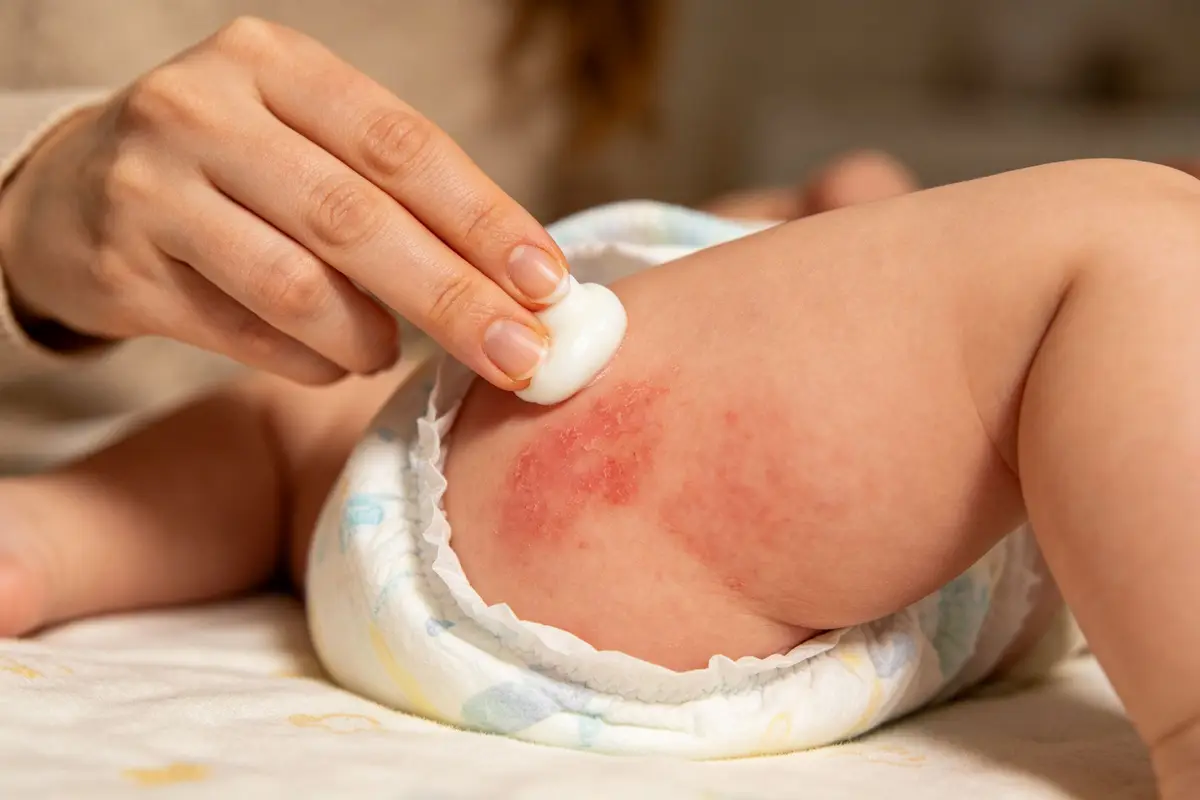
The first time I saw it on my newborn's bottom, I panicked. Bright red patches, sometimes with tiny bumps, covering the areas that touch the diaper. It can look flat and red, or raised and scaly. In worse cases, there might be blisters or open sores. My middle child got it so bad once that the skin was actually weeping — that's when I learned to take it seriously.
Diaper rash most commonly shows up on the buttocks, thighs, genitals, and the folds of skin. It's usually worse in the areas that stay wettest — exactly where the diaper sits tightest.
What Causes Diaper Rash, Really?
After dealing with it across three kids, I can tell you it's almost always one of these culprits:
1. Prolonged wetness. Urine and stool sitting against the skin break down the outer layer. This is the number one cause in my experience. My first baby slept through the night at 8 weeks — great for sleep, terrible for his bottom. A full diaper sitting for 8 hours is a recipe for disaster.
2. Friction. The diaper rubbing against delicate skin, especially when the baby is moving a lot. My third child was a roller and a scooter — constant movement meant constant rubbing.
3. New foods. When I started solids with each of my kids, diaper rash appeared within days. The digestive system is still maturing, and stool changes can irritate the skin. Acidic foods like tomatoes, citrus, and berries were particular triggers for us.
4. Antibiotics. When my second baby needed antibiotics for an ear infection, she developed a nasty diaper rash within 48 hours. Antibiotics kill off the good bacteria too, which can lead to yeast overgrowth.
5. Yeast infection. This is different from regular irritant diaper rash. It's bright red, often with satellite spots (small red dots around the main rash), and it doesn't respond to regular cream. If your baby's rash looks beefy red and has little dots around the edges, it's likely yeast and needs antifungal treatment.
How Do I Treat Diaper Rash at Home?
Here's what actually worked for us, in order of what I try first:
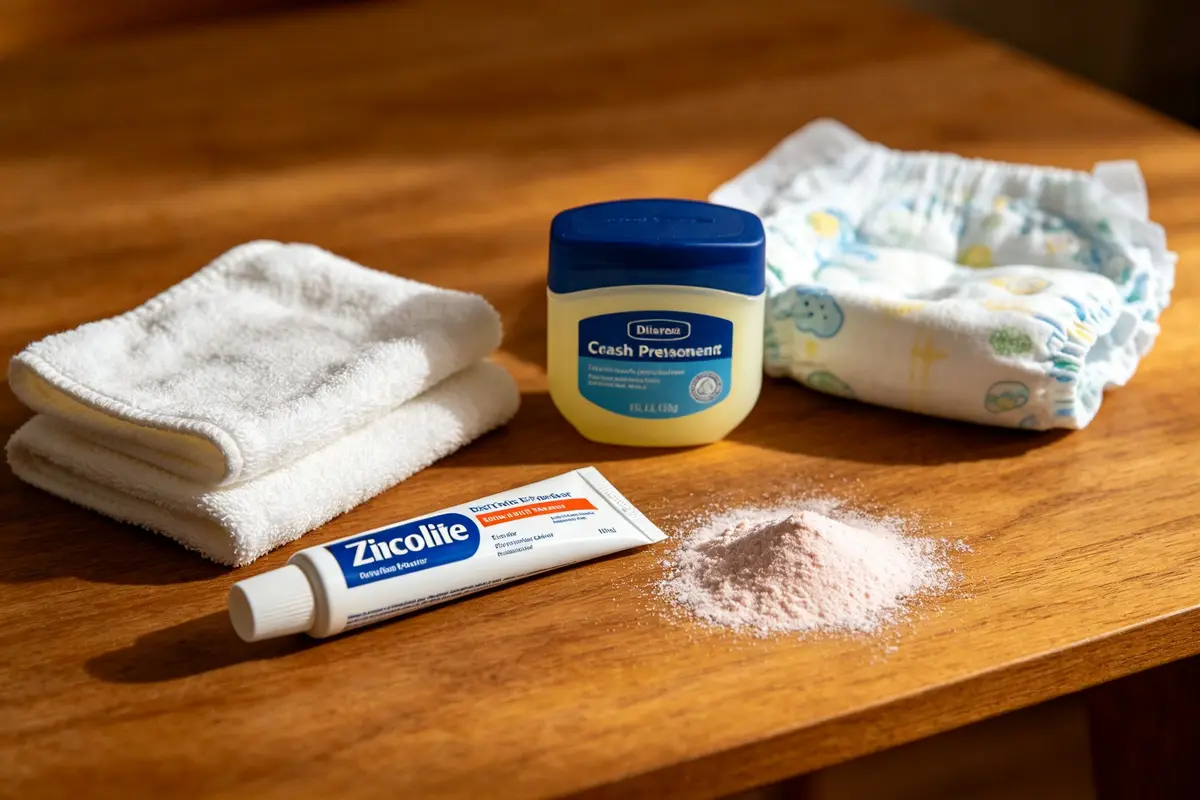
Step 1: More frequent changes. This sounds obvious but it's the most effective thing. I started changing my baby every 2 hours during the day, and once during the night if the diaper felt full. Even if it's just wet, changing it gives the skin a chance to breathe.
Step 2: Air dry. After cleaning, I lay my baby on a towel without a diaper for 10-15 minutes. I do this after every change when there's an active rash. It's messy sometimes (have extra towels ready) but the air circulation speeds up healing dramatically.
Step 3: Barrier cream. I use a thick zinc oxide cream (at least 15% zinc oxide) applied generously at every diaper change. The key word is generously — you want a visible white layer. Don't rub it in completely; it should sit on top of the skin as a barrier. My pediatrician told me to think of it like frosting on a cake.
Step 4: Gentle cleaning. Instead of rubbing with wipes, I use a soft washcloth with warm water, or I rinse the bottom in the sink. When we're out and about, I use water-based baby wipes that are fragrance-free and gentle. Pat dry, don't rub.
Step 5: Petroleum jelly. For mild rashes or as prevention, plain petroleum jelly works well. It's cheaper than zinc oxide and creates a good moisture barrier. I use it when the skin looks slightly pink but not fully rash-y.
When Should I Worry and See a Doctor?
Most diaper rashes clear up in 2-3 days with the steps above. But I've learned to watch for these red flags:
- The rash doesn't improve after 3 days of consistent treatment
- It's bright beefy red with satellite spots (likely yeast — needs prescription antifungal)
- There are blisters, pus, or open sores
- The rash spreads beyond the diaper area
- Your baby has a fever along with the rash
- Your baby seems in significant pain when urinating or having a bowel movement
With my first child, I waited too long and the rash turned into a bacterial infection that needed oral antibiotics. Don't be me. If it's not getting better, call your pediatrician.
How Do I Prevent Diaper Rash from Coming Back?
Prevention is really about consistency. Here's what I do now with my third baby to keep rash at bay:
Change frequently. Every 2 hours during the day, immediately after bowel movements. I set a timer on my phone when the baby was tiny because I'd forget.
Use breathable diapers. I look for diapers with good airflow. The Moni Happy diapers have a breathable outer layer that helps reduce moisture buildup. I also make sure the diaper isn't too tight — you should be able to fit two fingers under the waistband.
Apply barrier cream preventively. I put a thin layer of zinc oxide cream at every diaper change, not just when there's a rash. This creates a constant barrier against moisture.
Watch new foods. When introducing new foods, I watch the diaper area closely. If a particular food seems to trigger rash, I wait a few weeks and try again.
Diaper-free time. I try to give my baby at least 15-30 minutes of diaper-free time each day. Lay them on a waterproof mat and let them kick. The fresh air does wonders for skin health.
Avoid irritants. Fragranced wipes, bubble baths, and harsh soaps can all irritate. I stick to fragrance-free everything for the diaper area.
FAQ
Q: Can diaper rash be caused by the diaper brand itself?
A: Yes, some babies are sensitive to certain materials, fragrances, or lotions in diapers. If the rash appears consistently with one brand and clears when you switch, that brand may be the culprit. Try a hypoallergenic, fragrance-free option.
Q: Is cornstarch safe to use on diaper rash?
A: Cornstarch can help reduce friction and keep the area dry, but it shouldn't replace barrier cream. I use it occasionally as a drying agent, but I always apply zinc oxide cream on top. Avoid using it on yeast rashes, as yeast feeds on starch.
Q: How long should a typical diaper rash last?
A: With proper treatment, most irritant diaper rashes clear within 2-3 days. If it lasts longer than 3 days, or if it gets worse despite treatment, it may be a yeast infection or another condition that needs medical attention.
Q: Should I use cloth diapers or disposable diapers to prevent rash?
A: Both can work if changed frequently. Cloth diapers allow more airflow but need more frequent changing. Modern disposable diapers with breathable outer layers and superabsorbent gels can keep skin drier. The key factor is changing frequency, not the diaper type.
Final Thoughts
Diaper rash is inevitable. Every baby gets it at some point, and it doesn't mean you're doing anything wrong. What matters is how quickly you respond and how consistently you prevent it. With frequent changes, a good barrier cream, and some diaper-free time, you can keep most rashes under control. And when in doubt, call your pediatrician — it's always better to ask.