
2026-09-06 · Moni Happy Mom
Baby First Shoes: When to Buy, How to Choose & Foot Development Guide
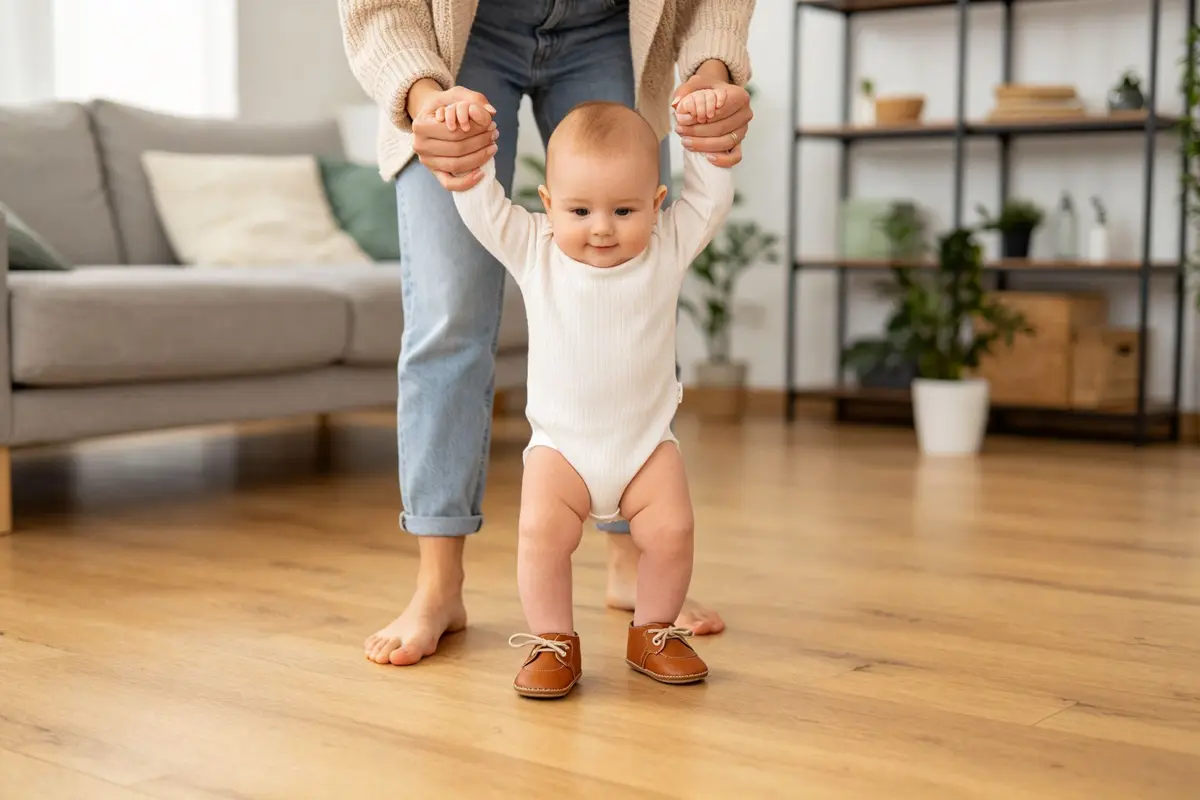
Summary: Buying my baby's first pair of shoes was surprisingly emotional — it felt like a milestone, like he was really growing up. But it was also confusing. When do babies actually need shoes? What kind should I buy? How do I know if they fit? After three babies and countless shoe purchases, here's what I've learned about baby first shoes and foot development.
When Do Babies Actually Need Shoes?
Here's the truth I wish someone had told me earlier: babies don't need shoes until they're walking confidently outdoors. Before that, barefoot is best. Going barefoot helps babies develop the muscles and arches in their feet, improves balance and coordination, and helps them feel the ground beneath them (which is important for learning to walk).
With my first baby, I bought shoes as soon as he started cruising (holding onto furniture and walking sideways) — way too early. He kept pulling them off, and they actually made it harder for him to balance. With my second and third, I waited until they were walking independently (taking 10+ steps without holding on) and needed to walk outside. Indoors, they went barefoot or wore soft socks with grippy bottoms.
Most babies start walking between 9 and 18 months — there's a wide range of normal. My first walked at 11 months, my second at 14 months, and my third at 10 months. Whenever your baby starts walking, that's when it's time to think about first shoes — for outdoor use. Indoors, barefoot is still best as much as possible.
What Should I Look for in Baby First Shoes?
Baby first shoes (also called pre-walkers or first walkers) are different from toddler shoes. Here's what I looked for:
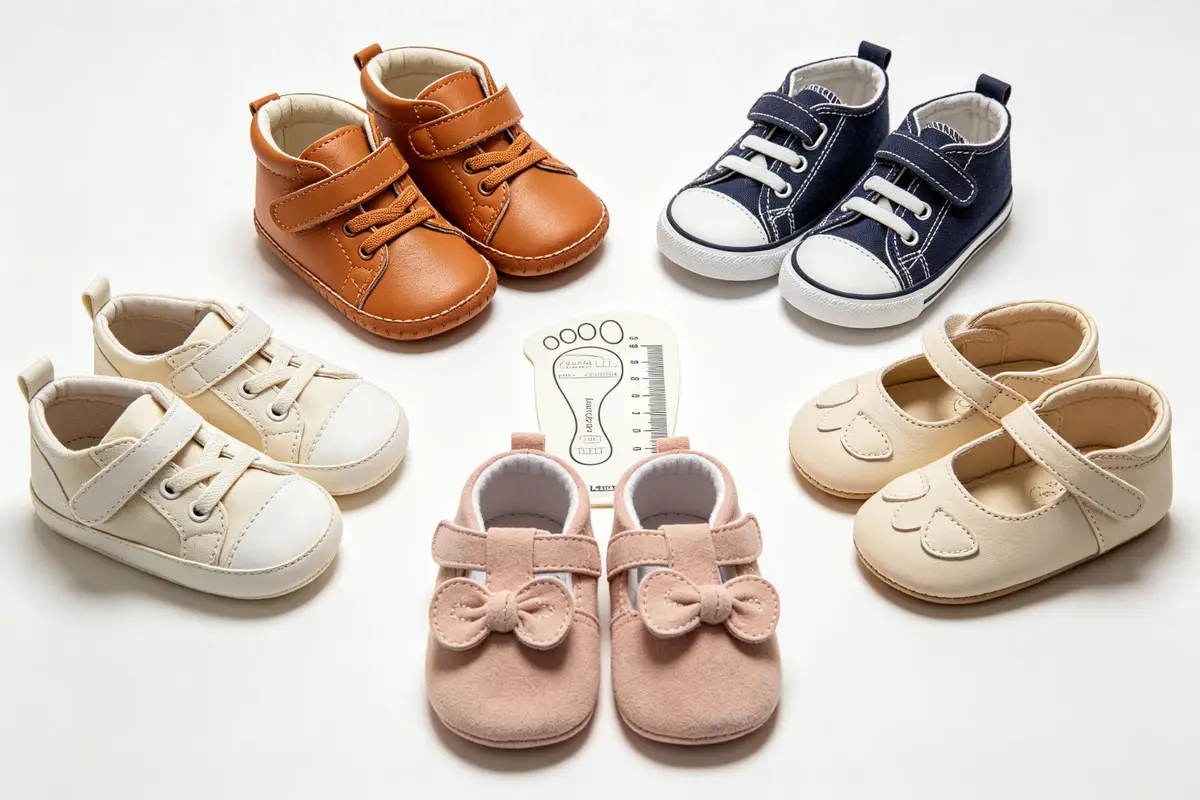
1. Soft, flexible sole. This is the most important feature. The sole should be thin and flexible enough that you can bend it easily with your hands. A stiff, thick sole makes it harder for babies to feel the ground and can interfere with natural foot development. I always did the "bend test" — if I couldn't bend the shoe in half easily, I put it back. Soft leather or suede soles are ideal for first shoes, as they're flexible and durable.
2. Lightweight. Babies' feet and legs are still developing, and heavy shoes can make walking harder and more tiring. I looked for shoes that felt almost weightless — if the shoe felt heavy in my hand, it would feel even heavier on a baby's foot. Canvas and soft leather are both lightweight options.
3. Wide toe box. Babies' feet are wide at the toes, and their toes need room to spread out and grip. A narrow toe box can squeeze the toes and interfere with natural foot development. I looked for shoes with a wide, rounded toe box that gave my babies' toes plenty of room to wiggle.
4. Secure closure. Velcro straps, laces, or elastic — whatever the closure, it should keep the shoe securely on the foot without being too tight. I preferred Velcro straps for first shoes — they're easy to adjust, easy to put on and take off, and they stay secure. Laces can come undone (tripping hazard), and elastic can stretch out over time. Whatever you choose, make sure the shoe doesn't slip off when your baby walks.
5. Breathable material. Babies' feet sweat a lot, and breathable materials (canvas, mesh, soft leather) help keep feet dry and comfortable. I avoided plastic or vinyl shoes, which don't breathe and can make feet sweaty and slippery inside the shoe.
6. No need for arch support. Babies' feet have a fat pad where the arch will eventually develop, and they don't need arch support in first shoes. In fact, arch support can interfere with natural arch development. Flat, flexible soles are best for first shoes — the arch develops naturally as babies walk and build foot muscles.
How Do I Know If the Shoes Fit?
Getting the right fit is crucial — ill-fitting shoes can cause blisters, ingrown toenails, and even interfere with foot development. Here's how I checked the fit:
Measure both feet. Babies' feet can be slightly different sizes (one may be bigger than the other). I measured both feet and bought shoes to fit the larger foot. To measure, have your baby stand on a piece of paper (weight-bearing — feet spread out more when standing), mark the heel and longest toe, and measure the distance. Add about 1 cm (about a thumb's width) for growing room. I did this at home, but many shoe stores will measure for free.
Check the length. With your baby standing in the shoes, press down at the toe — you should have about a thumb's width (about 1 cm) of space between the longest toe and the end of the shoe. This gives room for growth and prevents the toes from being cramped. Too much room (more than 1.5 cm) and the shoe will slip and cause blisters.
Check the width. The shoe should be wide enough that the toes aren't squeezed together, but not so wide that the foot slides around. I checked by gently pressing the sides of the shoe — there should be a little give, but the foot shouldn't be swimming. Also check that the widest part of the foot (the ball of the foot) aligns with the widest part of the shoe.
Check the heel. The heel should fit snugly without slipping. I checked by gently trying to pull the shoe off from the heel — if it came off easily, it was too loose. The heel counter (the stiff part at the back of the shoe) should hold the heel securely.
Let them walk. The best test is to let your baby walk around in the shoes (in the store or at home on a clean surface). Watch how they walk — if they're shuffling, tripping, or walking differently than they do barefoot, the shoes may be too heavy, too stiff, or not fitting right. They should be able to walk naturally, as if they're barefoot. I also checked for red marks on the feet after wearing them for 15-20 minutes — red marks that don't fade after a few minutes mean the shoes are too tight.
Baby shoe sizes vary by brand, so don't rely on the size number alone — always try them on and check the fit. I also bought shoes in the afternoon, when feet are slightly larger (feet swell a bit during the day), to ensure a comfortable fit all day.
FAQ
Q: Do babies need shoes when they're learning to walk indoors?
A: No — barefoot is best indoors when babies are learning to walk. Going barefoot helps develop foot muscles and arches, improves balance, and allows babies to feel the ground, which helps them learn to walk. If you're concerned about cold floors or rough surfaces, use soft socks with grippy bottoms or soft-soled booties. Save the shoes for outdoor walking.
Q: How often do I need to replace baby shoes?
A: Babies' feet grow fast — especially in the first year. I checked my babies' shoe size every 2-3 months, and replaced shoes when they outgrew them (less than a thumb's width of room at the toes, or red marks on the feet). On average, babies need new shoes every 2-3 months in the first year, and every 3-4 months after that. Don't be tempted to buy shoes that are too big "to grow into" — ill-fitting shoes can cause blisters and tripping hazards.
Q: Are expensive baby shoes worth it?
A: Not necessarily. The most important features are a soft, flexible sole, lightweight construction, a wide toe box, and a good fit — and you can find all of these at various price points. I bought a mix of expensive and affordable shoes for my babies, and the affordable ones (from brands like Stride Rite, Carter's, and local brands) worked just as well as the expensive ones. What matters is the fit and the features, not the brand name or price tag. That said, I did invest in one good pair of first shoes for each baby — the pair they wore most often for outdoor walking.
Q: My baby keeps pulling off their shoes. What should I do?
A: It's very common for babies to pull off their shoes — especially when they're first getting used to wearing them. First, check that the shoes fit properly (too-tight or too-loose shoes are more likely to be pulled off). If the fit is good, try shoes with a more secure closure (Velcro straps that go across the top of the foot, or laces that are tied securely). You can also try putting socks on under the shoes (the grip of the sock can help keep the shoe on). With my first baby, I went through a phase where he pulled off every pair of shoes — I finally found a pair with a wide Velcro strap that went all the way across, and he couldn't get those off. Be patient — as babies get used to wearing shoes, they'll pull them off less often.
Final Thoughts
Buying your baby's first shoes is a special milestone, but it doesn't have to be complicated. Remember: barefoot is best indoors, wait until your baby is walking confidently outdoors before buying shoes, look for soft flexible soles and a wide toe box, and always check the fit carefully. Your baby's feet are growing and developing, and the right shoes will support that development without getting in the way. And don't forget to take lots of photos of those tiny feet in their first shoes — they grow up so fast, and you'll want to remember this milestone.