
2026-09-06 · Moni Happy Mom
Baby Nail Care & Grooming: A Mom's Guide to Trimming, Cradle Cap & Bath Time
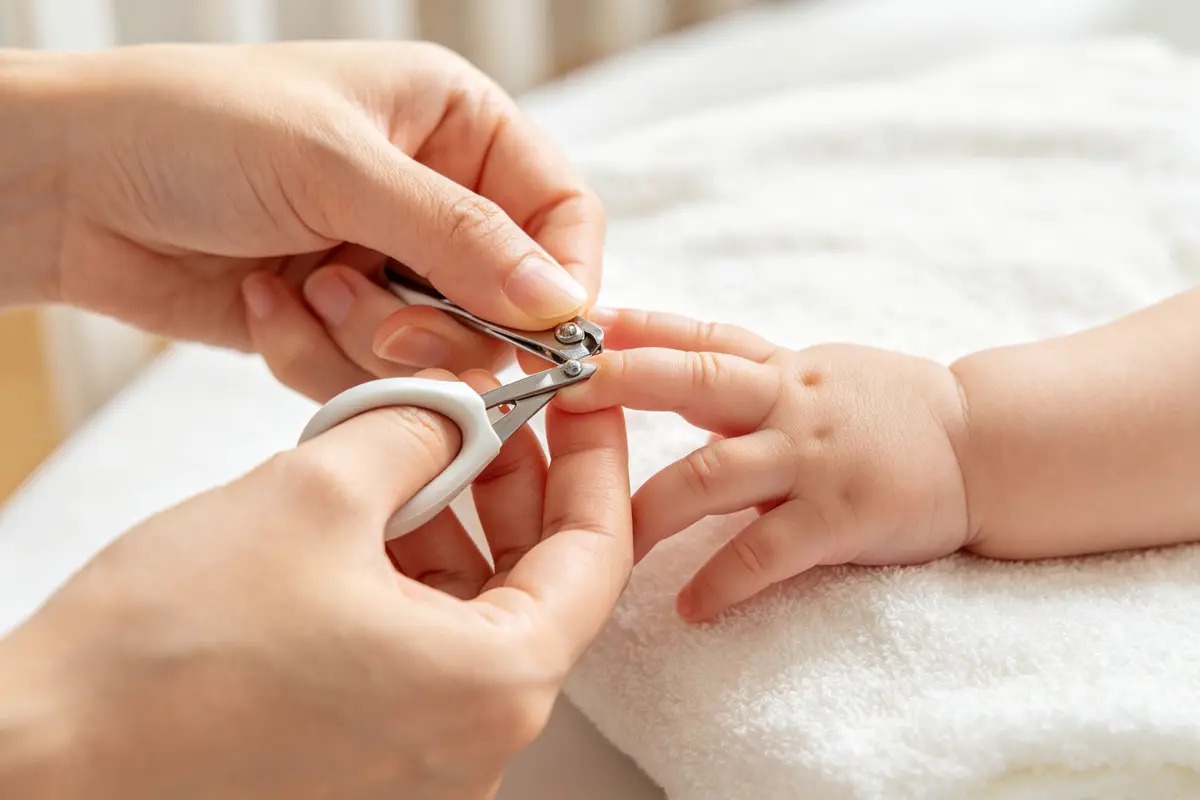
Summary: Trimming my newborn's tiny nails was one of the scariest things I faced as a first-time mom. Those little fingers were so small, and I was terrified of cutting the skin. After three babies and countless nail trims, here's what I've learned about baby nail care, grooming, and how to do it without panicking.
When Can I Start Trimming My Baby's Nails?
Newborns' nails grow surprisingly fast — some babies are even born with nails long enough to scratch their faces. With my first, I waited weeks because I was scared, and he scratched his face so badly that I had to put mittens on him. With my second and third, I started trimming within the first week. The earlier you start, the sooner it becomes routine, and the less scary it feels.
That said, newborn nails are very soft and flexible. In the first few weeks, you may be able to simply peel or file them down instead of cutting. I found that filing with a soft emery board was the safest method for the first 4-6 weeks, when the nails are still paper-thin and the fingers are impossibly tiny.
What Tools Do I Need for Baby Nail Care?
You don't need much — just a few basic tools. Here's what I kept in my baby grooming kit:
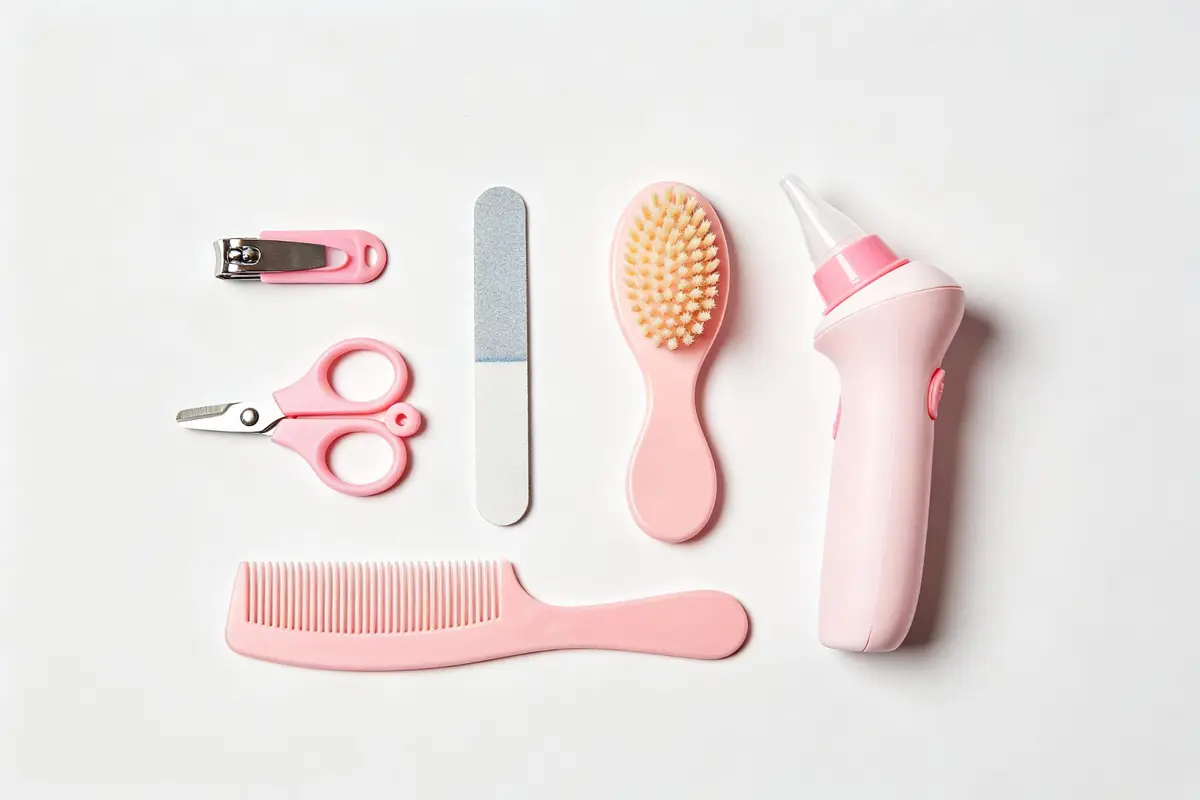
Baby nail clippers: These are smaller and have rounded tips compared to adult clippers. I preferred the ones with a magnifying glass built in — it sounds gimmicky, but it actually helped me see what I was doing on those tiny nails. Brands like Safety 1st, Frida Baby, and The First Years make good options.
Baby nail scissors: Some parents prefer scissors over clippers, especially for newborns. The rounded tips prevent accidental pokes, and the small blades give you more control. I used scissors for my first baby (when I was too scared to use clippers) and switched to clippers for the other two.
Soft nail file or emery board: This is essential for the first few weeks and for smoothing out any rough edges after clipping. I used a soft emery board — never a metal file, which is too harsh for baby nails.
Baby brush and comb: A soft-bristled baby brush is great for grooming hair and for gently brushing away cradle cap flakes. I used a natural bristle brush, which is gentler than plastic bristles. A wide-tooth comb works for babies with more hair or for detangling after baths.
Baby bath towels and washcloths: Soft, absorbent towels and washcloths are essential for bath time grooming. I kept a stack of soft baby towels and washcloths in the bathroom, and I used a separate washcloth for the face and diaper area to prevent spreading bacteria.
How Do I Trim Baby Nails Without Cutting the Skin?
This is the question every new parent asks. Here's the technique that worked for me, after a few near-misses with my first baby:
1. Pick the right time. The best time to trim nails is when your baby is calm and relaxed — after a feed, after a bath, or even while they're sleeping. I found that trimming while they were napping was the easiest — they didn't wiggle, and I could take my time. Just make sure you have good lighting.
2. Hold the finger firmly but gently. Use your thumb and index finger to hold the finger you're working on. Press the finger pad down slightly, away from the nail, to create a gap between the nail and the skin. This gives you a clear view of where the nail ends and the skin begins.
3. Cut straight across. For fingernails, cut straight across, following the natural shape of the nail. Don't cut too short — leave a tiny bit of white tip. Cutting too short is the number one cause of cutting the skin, and it can also lead to ingrown nails. For toenails, also cut straight across — don't round the corners, as this can cause ingrown toenails.
4. Smooth the edges. After clipping, use the soft nail file to smooth any rough or sharp edges. Baby nails are surprisingly sharp even after cutting, and they can scratch delicate skin (especially their own face).
5. Don't rush. If your baby starts wiggling or crying, stop and try again later. It's better to do one or two nails at a time than to rush and accidentally cut the skin. I sometimes did one hand during a nap and the other hand during the next nap — no need to do it all at once.
If you do accidentally nick the skin, don't panic. It happens to every parent at some point. Apply gentle pressure with a clean tissue or cloth for a minute or two until the bleeding stops. Clean the area with warm water. You don't need antiseptic or a bandage (babies suck on their fingers, and bandages are a choking hazard). If the bleeding doesn't stop after a few minutes, or if you notice signs of infection (redness, swelling, pus), call your pediatrician.
What About Cradle Cap and Baby Hair Care?
Cradle cap (seborrheic dermatitis) is common in babies — it looks like yellowish, greasy scales or crusts on the scalp. All three of my babies had it to some degree. It's not contagious, not caused by poor hygiene, and usually doesn't bother the baby. Here's what worked for us:
Gently brush the scalp. Before bathing, use a soft baby brush to gently loosen the scales. Brush in a circular motion — don't pick at the scales, as this can cause bleeding or infection.
Use a gentle baby shampoo. Wash your baby's hair with a mild, fragrance-free baby shampoo 2-3 times a week. More frequent washing can dry out the scalp and make cradle cap worse. Massage the shampoo gently into the scalp with your fingertips (not your nails).
Apply a small amount of oil. For stubborn cradle cap, I applied a small amount of baby oil, coconut oil, or petroleum jelly to the scalp 15-20 minutes before bathing. This softens the scales, making them easier to brush away. After bathing, brush again with the soft brush.
When to see a doctor. Cradle cap usually clears up on its own by 6-12 months. But if it spreads to the face, neck, or diaper area, if it becomes red and inflamed, or if it seems to bother your baby (itching, scratching), talk to your pediatrician — it may need a medicated shampoo or cream.
For general hair care, I washed my babies' hair 2-3 times a week (not every day — baby hair and scalp are delicate and can dry out easily). I used a soft brush to gently style their hair after baths, and I never used hair products (gels, sprays, oils) on infants. For babies with very little hair, a simple soft brush is all you need.
FAQ
Q: How often should I trim my baby's nails?
A: Newborns' nails grow very fast — you may need to trim them 2-3 times a week. As babies get older, nail growth slows down, and once a week is usually enough. Toenails grow more slowly than fingernails — once every 1-2 weeks is usually sufficient. I checked my babies' nails every few days and trimmed as needed, rather than sticking to a strict schedule.
Q: My baby's nails peel on their own. Do I still need to trim them?
A: In the first few weeks, newborn nails are so soft that they often peel or break off on their own. But as they get harder (around 4-6 weeks), they won't peel as easily, and you'll need to trim them to prevent scratching. Even if they peel, it's a good idea to file any rough or sharp edges to prevent scratches.
Q: Can I use adult nail clippers on my baby?
A: It's not recommended. Adult nail clippers are larger and sharper, and it's harder to see what you're doing on tiny baby nails. Baby nail clippers are specifically designed with smaller blades and rounded tips for safety. If you're in a pinch and don't have baby clippers, a soft nail file is the safest alternative — just file the nails down until they're short enough.
Q: My baby has an ingrown toenail. What should I do?
A: Ingrown toenails can happen if you cut the toenails too short or round the corners. Signs include redness, swelling, and tenderness at the corner of the nail. If you notice an ingrown toenail, soak the foot in warm water for 10-15 minutes a few times a day, and gently lift the corner of the nail with a clean cotton swab. Don't try to dig out the nail or cut it yourself. If it doesn't improve in a few days, or if it looks infected (pus, increased redness, fever), call your pediatrician.
Final Thoughts
Baby nail care and grooming is one of those tasks that feels intimidating at first but quickly becomes routine. The key is to be patient, use the right tools, and pick a time when your baby is calm. Don't worry if you nick the skin once or twice — it happens to every parent, and babies heal quickly. With practice, you'll be trimming those tiny nails like a pro. And remember, grooming time is also bonding time — talk to your baby, sing to them, and make it a calm, pleasant experience for both of you.