
2026-09-06 · Moni Happy Mom
Baby Pacifier Use: Safety, Benefits & How to Wean — A Mom's Guide
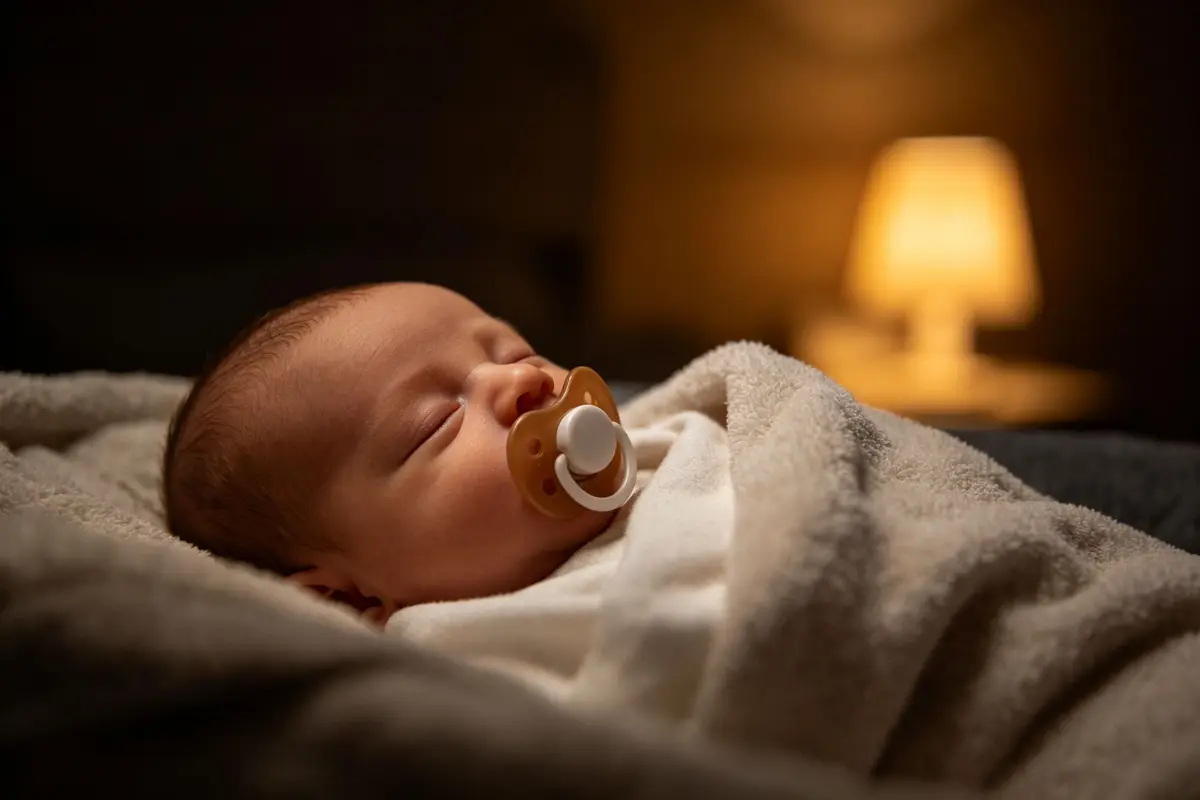
Summary: Pacifiers saved my sanity with all three of my babies — but they also caused their share of stress. Would they cause nipple confusion? Would they ruin my baby's teeth? How would I ever take it away? After three babies and a lot of research, here's what I've learned about pacifier use, safety, and weaning.
Should I Give My Baby a Pacifier?
This is one of the most debated topics in parenting, and the honest answer is: it depends. Pacifiers have both benefits and risks, and the decision is personal. Here's what the research says:
Benefits: The most significant benefit is that pacifier use during sleep is associated with a reduced risk of SIDS (sudden infant death syndrome). The AAP recommends offering a pacifier at naps and bedtime for the first year, even if it falls out after the baby falls asleep. Pacifiers also provide comfort and soothing, help babies fall asleep, and can be a useful distraction during painful procedures (like vaccinations). For parents, pacifiers can be a lifesaver — they give you a break from constant nursing or rocking, and they can soothe a fussy baby quickly.
Risks: The main concern in the early weeks is nipple confusion — some babies may have difficulty switching between a pacifier and the breast, which can interfere with breastfeeding. For this reason, many experts (and I) recommend waiting until breastfeeding is well-established (usually 3-4 weeks) before introducing a pacifier. Other risks include dental issues (if pacifier use continues past age 2-3, it can affect tooth alignment and the roof of the mouth), ear infections (some studies link pacifier use after 6 months to increased ear infections), and dependency (it can be hard to take away). I used pacifiers with all three of my babies, but I was mindful of these risks and followed safe use guidelines.
What Kind of Pacifier Should I Choose?
There are more pacifier options than I ever imagined. Here's what I learned:
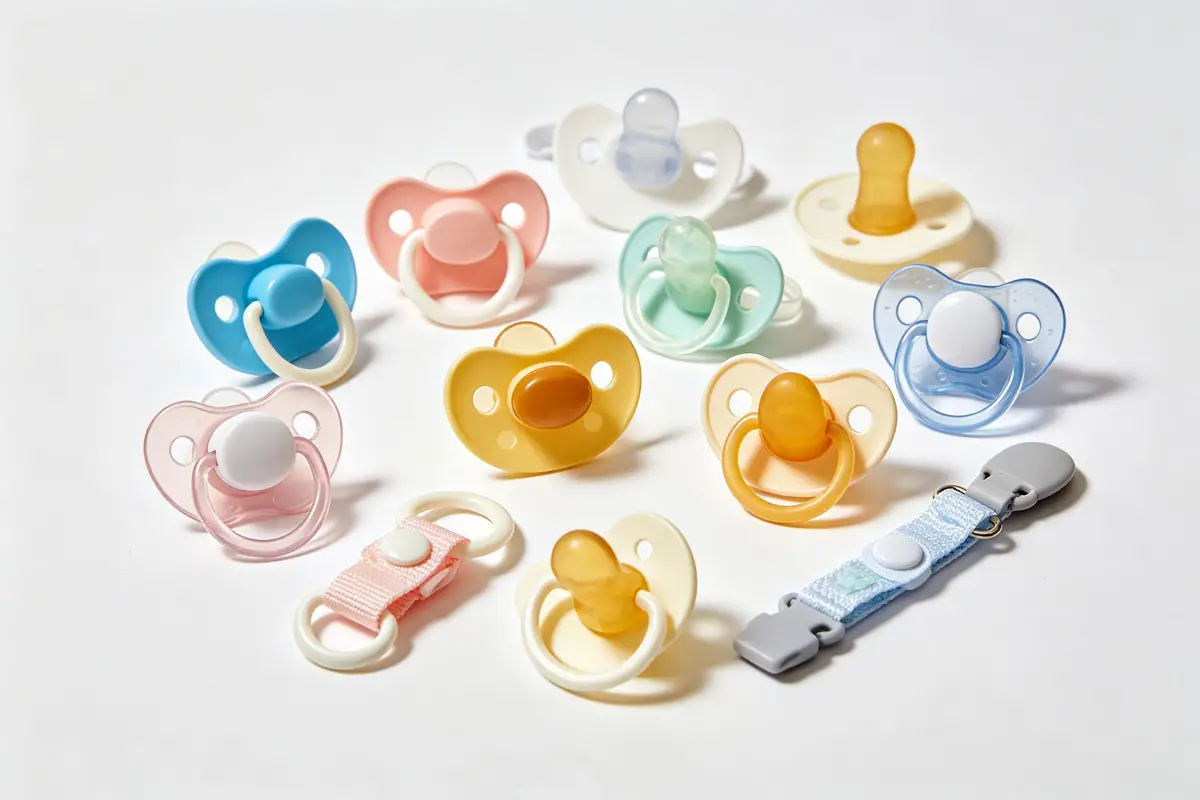
Nipple shape: There are two main shapes — orthodontic (flat on the bottom, rounded on top, designed to mimic the shape of the breast during feeding) and round/traditional (symmetrical, like a cherry). Orthodontic pacifiers are designed to be better for dental development, but research is mixed. What matters most is that your baby likes it and it fits well in their mouth. I tried both with each baby — my first preferred orthodontic, my second preferred round, and my third would take anything. Don't buy a big pack of one type until you know your baby likes it.
Material: Pacifiers are made of either silicone or latex (rubber). Silicone is firmer, more durable, easier to clean, and less likely to cause allergies. Latex is softer and more flexible, but it can break down faster, absorb odors, and some babies are allergic to latex. I preferred silicone for all three — it was more durable and easier to keep clean. If you choose latex, check it frequently for signs of wear (sticky, discolored, or cracked) and replace immediately.
Size: Pacifiers come in sizes by age — usually 0-6 months, 6-18 months, and 18+ months. Using the right size is important: a pacifier that's too small can be a choking hazard (the nipple can be pulled into the mouth), and one that's too big can be uncomfortable and interfere with breathing. I checked the size guidelines on the packaging and moved up a size when the shield started looking too small or my baby seemed to be struggling to keep it in.
Shield: The shield (the plastic part that sits against the face) should be at least 1.5 inches across (too small and it could be swallowed), and it should have ventilation holes (at least 2-3) to allow air circulation and prevent skin irritation. I always checked that the shield was large enough and had plenty of ventilation holes. I also preferred one-piece pacifiers (where the nipple and shield are molded as one piece) — they're more durable and have fewer parts that can break or come loose.
How Do I Use Pacifiers Safely?
1. Wait until breastfeeding is established. If you're breastfeeding, wait 3-4 weeks before introducing a pacifier to avoid nipple confusion. By then, breastfeeding should be well-established, and the risk of interference is much lower. I waited 4 weeks with all three, and none of them had any issues switching between breast and pacifier.
2. Offer at naps and bedtime. For SIDS prevention, offer the pacifier when putting your baby down to sleep. If it falls out after they're asleep, don't reinsert it — the benefit is from the sucking at the beginning of sleep. If your baby refuses the pacifier, don't force it — not all babies want one, and that's fine. I never forced it; if they spit it out, I left it out.
3. Never coat the pacifier. Never dip the pacifier in honey, sugar, juice, or anything sweet. Honey is dangerous for babies under 1 (risk of botulism), and sugar can cause tooth decay. I also never put medicine on a pacifier unless my pediatrician specifically told me to — it can change the taste and make the baby refuse the pacifier, and it's hard to control the dosage.
4. Keep it clean. Before first use, sterilize the pacifier by boiling it for 5 minutes or using a sterilizer. After that, wash it with warm soapy water before each use (for babies under 6 months) or rinse it thoroughly (for older babies). I kept a few pacifiers in a clean container, and I rotated them so I always had a clean one ready. I never "cleaned" a pacifier by putting it in my own mouth — that transfers bacteria from your mouth to the baby's.
5. Inspect regularly. Check the pacifier frequently for signs of wear: cracks, tears, sticky or discolored material, or loose parts. If you see any damage, throw it away immediately — a broken pacifier can be a choking hazard. I replaced pacifiers every 2-3 months (or sooner if they showed wear), and I always kept spares. I also checked that the nipple was securely attached — give it a gentle tug to make sure it doesn't come loose from the shield.
6. Use pacifier clips safely. Pacifier clips (which attach the pacifier to clothing) are convenient for preventing drops and loss, but they must be used safely. Never use a pacifier clip with a long cord or ribbon — it can be a strangulation hazard. Use clips with a short, wide strap (no longer than 7-8 inches) that attaches securely to clothing. Never attach a pacifier clip to a crib, playpen, or around the baby's neck. I used pacifier clips during the day when we were out and about, but I removed them at sleep time (pacifier clips should never be in the crib).
When and How Do I Wean My Baby from the Pacifier?
The AAP and most dentists recommend weaning from the pacifier by age 2-3 to avoid dental issues. I weaned my first at 18 months, my second at 2 years, and my third is still working on it. Here's what worked for us:
Gradual reduction (for younger babies): Start by limiting pacifier use to sleep time only (naps and bedtime), then gradually reduce to bedtime only, then eliminate completely. This works well for babies under 18 months who may not understand explanations. I started by taking the pacifier away during playtime and outings, then during naps, and finally at bedtime. Each step took 1-2 weeks.
Cold turkey (for older toddlers): For toddlers who can understand, some parents prefer to go cold turkey — collect all pacifiers and give them away (to a "pacifier fairy" or to a new baby), or simply stop offering them. This can be tough for a few days, but many toddlers adjust quickly. I did this with my second at age 2 — we had a "pacifier party" where she collected all her pacifiers and put them in a box to give to a new baby. She cried for two nights, but by day three she was fine.
Offer alternatives: Replace the pacifier with other comfort items — a lovey (security blanket or stuffed animal), a favorite song, a back rub, or a special bedtime story. I introduced a lovey to each of my babies before weaning, so they had something else to comfort them. I also spent extra time cuddling and reading at bedtime to make the transition smoother.
Be consistent: Once you start weaning, don't go back (unless there's a major stressor like illness or a move — it's okay to pause during difficult times). Consistency is key — if you give in sometimes, it will take longer and be harder. I told all caregivers (grandparents, daycare, babysitters) about the weaning plan so everyone was on the same page.
FAQ
Q: Will pacifier use cause nipple confusion with breastfeeding?
A: The risk is highest in the first 3-4 weeks, before breastfeeding is well-established. If you wait until breastfeeding is going well (baby is gaining weight, nursing comfortably, you're not having pain or latch issues), the risk of nipple confusion is very low. I waited 4 weeks with all three babies, and none had any issues. If you're concerned, talk to a lactation consultant — they can help you decide when and how to introduce a pacifier.
Q: My baby only wants the pacifier and won't breastfeed. What should I do?
A: If your baby is preferring the pacifier over the breast, it could be a sign of nipple confusion or a breastfeeding issue. First, make sure you're offering the breast before the pacifier — never use a pacifier to delay a feeding (hungry babies need to eat, not suck on a pacifier). If your baby is refusing the breast, check for latch issues, tongue tie, or low milk supply. I would stop using the pacifier temporarily until breastfeeding is back on track, and consult a lactation consultant or pediatrician.
Q: Is it safe for my baby to sleep with a pacifier all night?
A: Yes — offering a pacifier at bedtime is actually recommended for SIDS prevention. If the pacifier falls out during sleep, you don't need to reinsert it (unless your baby wakes and wants it). The benefit comes from the sucking at the beginning of sleep. Make sure the pacifier is in good condition (no cracks or loose parts) and that you're not using a pacifier clip or cord in the crib (strangulation hazard). I always checked the pacifier before bedtime and removed any clips or attachments.
Q: How many pacifiers should I have?
A: I recommend having at least 4-6 pacifiers — they get lost, dropped, and dirty constantly. I kept 2 in the diaper bag, 2 in the nursery, 1 in the living room, and 1 in the car. Having spares means you're never scrambling for a clean pacifier at 2 AM. I also bought a pacifier sterilizer container that I could use in the microwave — it made sterilizing multiple pacifiers quick and easy. Just make sure you have the right size and type for your baby's age.
Final Thoughts
Pacifiers are a personal choice — there's no right or wrong answer. If you choose to use one, follow safe use guidelines: wait until breastfeeding is established, offer at sleep time for SIDS prevention, keep it clean, inspect regularly, and wean by age 2-3 to avoid dental issues. If you choose not to use one, that's fine too — there are other ways to soothe your baby (rocking, singing, swaddling, skin-to-skin). What matters is that you and your baby are happy and healthy. And if the pacifier becomes a crutch (for you or the baby), it's never too late to wean — take it one step at a time, be consistent, and offer lots of extra cuddles. You've got this.