
2026-09-04 · Sarah Mitchell
Baby Separation Anxiety: A Mom's Guide to Coping & Helping Your Baby
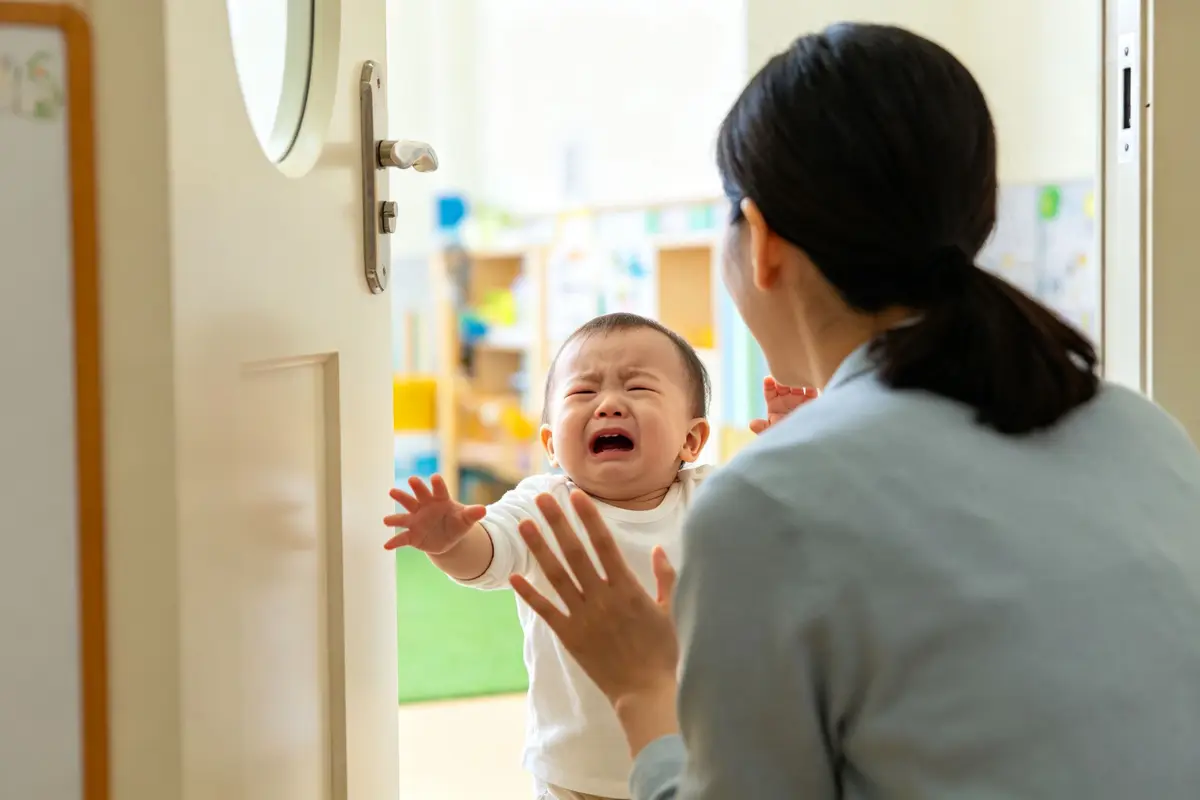
The first time my 9-month-old screamed as I walked out the door for a work meeting, I stood in the hallway with my hand on the doorknob, my own heart racing. I'd read about separation anxiety, but nothing prepares you for the sound of your baby crying like you've abandoned them forever. The babysitter later told me he stopped crying within 90 seconds of me leaving. Ninety seconds. It felt like an eternity from the other side of the door. If you're going through this, know that it's normal, it's temporary, and there are things that actually help.
What is separation anxiety and when does it start?
Separation anxiety is a normal developmental phase where babies become distressed when separated from their primary caregivers. It typically emerges around 8-10 months, peaks between 10-18 months, and gradually fades by age 2-3, though it can resurface at various stages (like starting preschool).
This phase is actually a sign of healthy development. It means your baby has formed a secure attachment to you and understands that you're a separate person who can leave. Before this age (around 4-7 months), babies don't fully grasp object permanence—the idea that things (and people) continue to exist when out of sight. Once they understand that you exist when you're not in the room, they also understand that you might not come back, which is scary for a little brain that can't yet understand time or predict your return.
Separation anxiety can show up in different ways: crying or screaming when you leave, clinging to you in new situations, refusing to be held by others, waking up at night crying for you, refusing to go to sleep without you, or becoming extra fussy or clingy throughout the day. Some babies go through it mildly, others intensely—and both are normal.
How is separation anxiety different from stranger anxiety?
They often happen around the same time but are slightly different. Stranger anxiety is when babies become wary or fearful of people they don't know, typically starting around 7-9 months. Your baby might bury their face in your shoulder, cry, or push away when a stranger (or even a relative they don't see often) tries to hold them. Separation anxiety is specifically about being apart from you, regardless of who's watching them.
They often overlap—a baby with separation anxiety may also be wary of strangers because the stranger represents "mom is leaving." Both are normal signs of cognitive and emotional development. My first child had intense stranger anxiety (he'd scream if my own mother looked at him too long), while my second was more bothered by me actually leaving. Every baby is different.
What can I do to help my baby through separation anxiety?
Here are the strategies that actually worked for me, backed by what pediatricians recommend:
1. Create a consistent goodbye ritual
This was the single most effective thing I did. A short, predictable goodbye routine helps your baby know what to expect and signals that you will come back. Ours was: a hug, a kiss, "I love you, I'll be back after snack time," and then I handed him to the caregiver with his favorite stuffed animal. Keep it short—prolonged goodbyes make it harder. Don't sneak out (this undermines trust and makes them more anxious the next time because they're constantly checking if you're still there). Always say goodbye, even if they're crying.
2. Practice short separations at home first
Start small. Leave your baby with a trusted caregiver for 5-10 minutes while you're in another room or just outside the door. Gradually increase the time. This helps your baby build confidence that you always come back. I started by stepping into the kitchen for 2 minutes while my husband watched the baby, then built up to going for a walk around the block, then an hour out.
3. Play peek-a-boo and hide-and-seek
These games reinforce object permanence in a fun, low-stakes way. Peek-a-boo teaches your baby that your face comes back when it disappears. For older babies, hide under a blanket or behind a door and call their name, then pop out with a smile. This builds the understanding that "gone" doesn't mean "forever."
4. Give them a comfort object
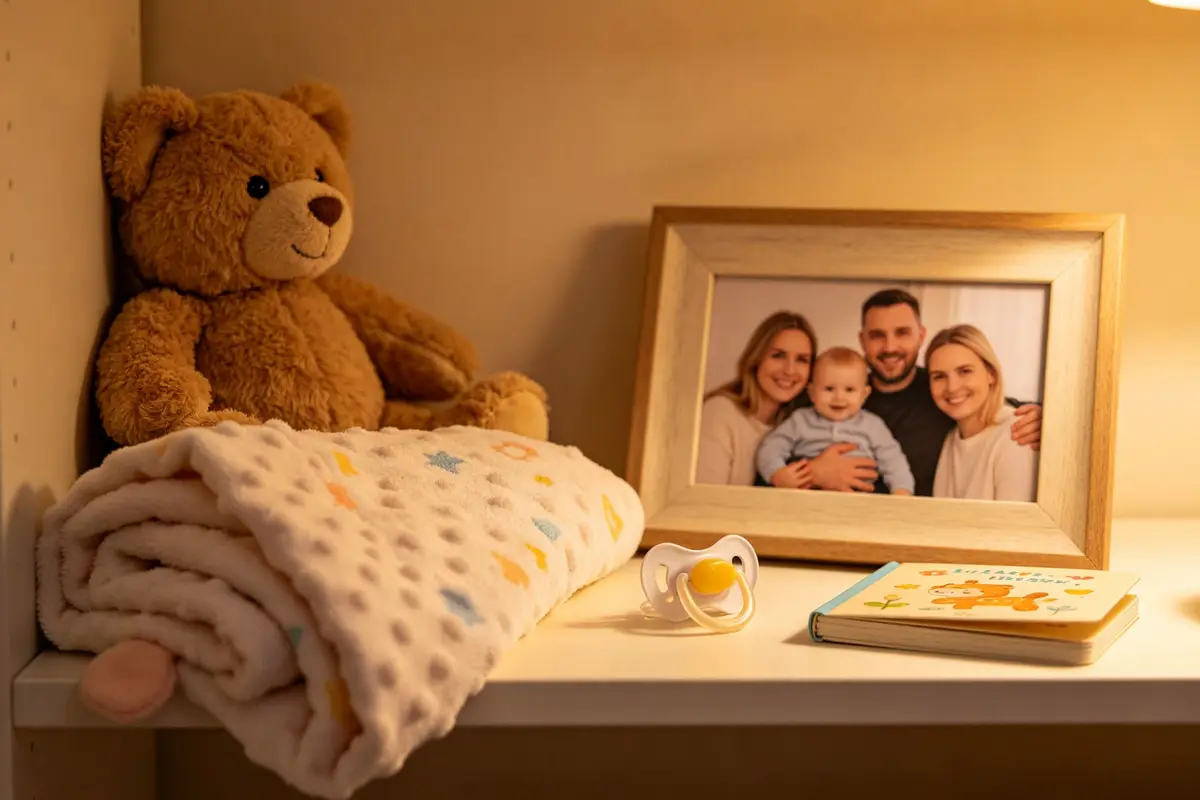
A lovey—stuffed animal, blanket, or even a piece of your clothing that smells like you—can provide comfort when you're not there. Make sure it's safe (no loose parts, appropriate for your baby's age). I slept with my son's stuffed bear for a few nights so it smelled like me, and it became his go-to comfort item at daycare and bedtime. You can also keep a soft, familiar blanket that smells like home for daycare naps.
5. Be consistent with caregivers and routines
Babies feel more secure when they know what to expect. Try to use the same caregiver(s) consistently rather than rotating between many different people. Keep daily routines predictable—same wake time, meal times, nap times, bedtime. When my son started daycare, I sent his familiar blanket, his stuffed bear, and a printed photo of our family. The teachers said having familiar items from home made the transition much easier.
6. Talk about your return in concrete terms
Babies and toddlers don't understand "I'll be back at 5 PM," but they do understand "I'll be back after nap time" or "after you eat your snack." Tie your return to something they know will happen in their day. At pickup, always reconnect warmly—get down to their level, give them a big hug, say "I came back! I missed you!" This reinforces the cycle of goodbye and return.
7. Don't show your own anxiety
Babies are incredibly attuned to our emotions. If you're stressed, tearful, or hovering at the door, your baby will pick up on that and become more anxious. I had to practice a calm, cheerful goodbye even when my heart was breaking. It gets easier—both for you and for them. I used to wait in the car for 10 minutes after drop-off, convinced he was crying the whole time. The daycare app showed me he was playing happily within minutes.
What about bedtime separation anxiety?
Separation anxiety often shows up at bedtime too. Your baby might cry when you leave the room, stand up in the crib calling for you, or wake up multiple times at night looking for you. Here's what helped us:
- Keep a consistent bedtime routine: Bath, book, lullaby, bed. The predictability is comforting.
- Do gradual check-ins: If your baby cries at bedtime, wait a few minutes, then go in, briefly soothe (pat, shush, "I'm here, it's sleep time"), and leave. Gradually increase the wait time. This is the Ferber method approach, and it worked for us within a few nights.
- Leave a comfort object in the crib: A lovey or pacifier can help them self-soothe when they wake.
- Don't rush in immediately: Give them a chance to settle themselves. Often they'll cry for a minute or two and then fall back asleep. I kept a baby monitor and learned to distinguish between "I'm upset" crying and "I'm going back to sleep" fussing.
- Keep night interactions boring: If they wake at night, keep lights low, voice quiet, interactions minimal. Feed/change if needed, then back to bed. Don't turn it into playtime.
When should I worry?
Separation anxiety is normal, but there are some signs that warrant a conversation with your pediatrician:
- The anxiety is so intense that it prevents your baby from doing normal activities (playing, eating, sleeping) for extended periods
- It persists beyond age 3 without any improvement
- Your baby is completely unable to be comforted by anyone other than you, even after extended time with the caregiver
- There's a sudden, dramatic onset of anxiety after a stressful event (move, new sibling, illness, loss) that doesn't improve over time
- Your baby shows signs of regression (losing previously acquired skills like walking or talking) alongside the anxiety
Most of the time, separation anxiety is just a phase. It means your baby loves you, trusts you, and is developing normally. It will pass—and in the meantime, you're building a foundation of security that will serve them for life.
Article Summary
Separation anxiety is a normal developmental phase starting around 8-10 months, peaking at 10-18 months, and fading by age 2-3. It's a sign of secure attachment and developing object permanence. Key strategies include: creating a short consistent goodbye ritual (never sneak out), practicing short separations at home, playing peek-a-boo to reinforce object permanence, providing a comfort object (lovey), maintaining consistent caregivers and routines, talking about return in concrete terms ("after nap time"), and managing your own anxiety at goodbye. Bedtime separation anxiety responds to consistent routines, gradual check-ins, and comfort objects in the crib. Consult your pediatrician if anxiety is severe, persistent beyond age 3, or accompanied by regression. This phase is temporary and a sign of healthy emotional development.
Frequently Asked Questions
Why does my baby get separation anxiety?
Separation anxiety is a normal developmental stage that typically begins around 8-10 months, when babies develop object permanence — the understanding that people and things continue to exist even when they can't see them. Before this, babies don't fully understand that you still exist when you leave the room. Separation anxiety peaks around 10-18 months and usually fades by age 2-3, though it can resurface during times of stress or change. It's a sign that your baby has formed a healthy attachment to you.
How can I help my baby through separation anxiety?
Practical strategies include: establish a consistent, short goodbye routine (a kiss, a wave, a special phrase) and then leave without lingering or coming back — coming back can make it harder; practice short separations at home first, gradually increasing the time; always say goodbye rather than sneaking out (sneaking out can increase anxiety because your baby doesn't know if you'll come back); leave your baby with familiar caregivers; and acknowledge your baby's feelings with empathy — 'I know it's hard when I leave, but I'll come back.' Reassure yourself that your baby will usually calm down within minutes of you leaving.
How do I handle toddler tantrums?
Tantrums are a normal part of toddler development, happening because toddlers have strong emotions but limited language skills to express them. During a tantrum: stay calm (your calm helps them regulate), ensure your child is safe (move them away from danger if needed), don't reason or negotiate during the peak (they can't process it), and don't give in to the demand that triggered the tantrum (this teaches them tantrums work). After the tantrum, offer comfort and connection, then briefly talk about what happened and better ways to express feelings. Prevent tantrums by ensuring your child is well-rested and fed, offering choices within limits, and giving advance warnings before transitions.
How can I support my baby's emotional development?
Support emotional development by: responding consistently and warmly to your baby's needs — this builds secure attachment and emotional security; naming emotions from an early age ('I see you're feeling frustrated,' 'You seem happy') helps babies learn to identify and understand feelings; validating all emotions (it's okay to be sad, angry, or scared) while setting limits on behavior; modeling healthy emotional expression yourself — babies learn by watching how you handle stress and strong emotions; reading books about feelings; and giving your baby plenty of love, attention, and secure physical contact. A strong emotional foundation in infancy supports mental health and social skills for life.
Frequently Asked Questions
At what age does separation anxiety typically start and how long does it last?
Separation anxiety typically begins around 8-10 months of age, peaks between 10-18 months, and gradually fades by age 2-3. However, it can resurface at various transition points like starting daycare or preschool. The onset coincides with babies developing object permanence (understanding that people continue to exist when out of sight) and secure attachment to primary caregivers. Some babies experience it mildly, others intensely—both are normal. If separation anxiety persists beyond age 3 without improvement, or is so severe that it prevents normal daily activities, consult your pediatrician.
Should I sneak out when my baby isn't looking to avoid the crying?
No—never sneak out. While it might seem easier in the moment, sneaking out undermines your baby's trust and actually makes separation anxiety worse over time. When babies learn that you can disappear without warning, they become hyper-vigilant and clingier because they're constantly checking if you're still there. Always say a clear, calm, short goodbye even if your baby is crying. A consistent goodbye ritual (hug, kiss, phrase like 'I'll be back after snack time') helps your baby predict the pattern and build trust that you always return. The crying usually stops within minutes of you leaving—ask your caregiver to send you a photo or update so you can see they're okay.
How can I help my baby adjust to daycare or a new caregiver?
Start with gradual transitions: do short visits (30-60 minutes) with you present first, then short separations (1-2 hours), building up to full days over 1-2 weeks. Send familiar items from home—a comfort object (stuffed animal or blanket), a family photo, and familiar bedding for naps. Maintain consistent morning and goodbye routines. Share your baby's schedule, likes, dislikes, and soothing techniques with the caregiver so they can respond in familiar ways. At pickup, reconnect warmly and talk about the day. Expect some crying at drop-off for the first 1-2 weeks—it usually improves as your baby builds trust with the new environment and caregivers.
Is separation anxiety a sign that my baby is insecurely attached?
No—quite the opposite. Separation anxiety is actually a sign of secure attachment. It means your baby has formed a strong emotional bond with you and sees you as their safe base. Babies with secure attachments are more likely to show distress when separated because they recognize and value your presence. Babies who are indifferent to separation (showing no preference for caregivers over strangers) can sometimes be a sign of attachment concerns, though temperament also plays a role. The intensity of separation anxiety varies widely by temperament—some babies are naturally more easygoing, others more sensitive. What matters is that your baby can be comforted, gradually adjusts, and trusts that you will return.