
2026-09-06 · Moni Happy Mom
Baby Swimming & Water Safety: A Mom's Guide to Pool Time, Swim Lessons & Drowning Prevention
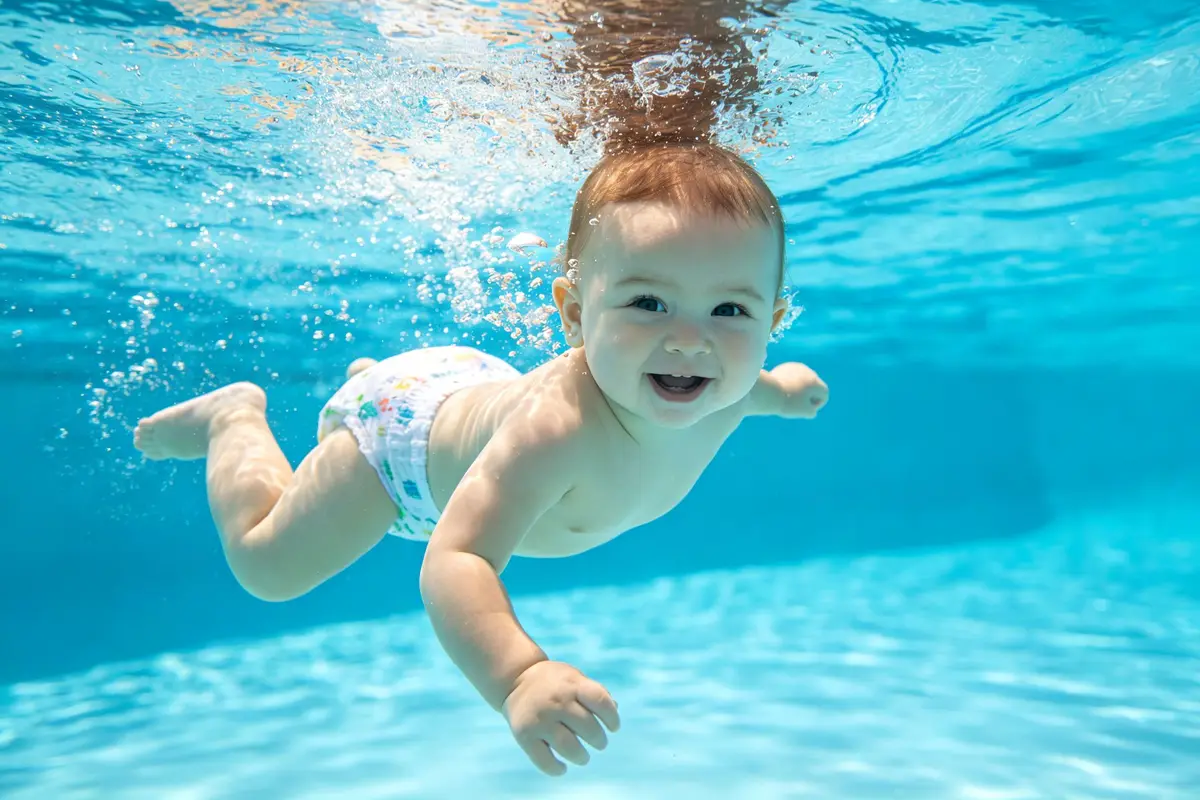
Summary: Living in Southeast Asia, swimming is a big part of life — but taking my babies to the pool for the first time was terrifying. Would they like the water? Would they get cold? How do I keep them safe? After three babies and countless pool trips, beach days, and swim classes, here's what I've learned about baby swimming and water safety.
When Can My Baby Go Swimming?
There's no official minimum age for taking your baby swimming — many parents take their newborns to the pool within the first few weeks. But there are a few things to consider before your first trip:
Wait until the umbilical cord stump falls off. For newborns, wait until the umbilical cord stump has fallen off and the area is fully healed (usually 1-2 weeks after birth) before submerging in a pool. This reduces the risk of infection. I waited until my babies were 6-8 weeks old for their first pool trip — by then, the cord was healed, they were past the newborn stage, and I felt more confident as a parent.
Check the pool temperature. Baby pools should be warm — around 32-34°C (90-93°F) for babies under 6 months, and around 30-32°C (86-90°F) for older babies. Standard adult pools (usually 26-28°C / 79-82°F) are too cold for babies — they can get cold quickly, and cold water can be a shock to their system. I always looked for pools with a dedicated baby pool or warm pool. If the pool felt cold to me, it was definitely too cold for the baby. I also limited pool time to 15-20 minutes for babies under 6 months, and 30 minutes for older babies, to prevent them from getting too cold.
Choose the right time. Avoid peak sun hours (10 AM - 4 PM) when the sun is strongest and the pool is most crowded. I preferred early morning (before 10 AM) or late afternoon (after 4 PM) — the sun was gentler, the pool was quieter, and the water was usually warm from the day's sun. I also avoided feeding immediately before swimming (wait 30-60 minutes after a feed to reduce the risk of vomiting).
What Do I Need for Baby Swimming?
Here's what I packed in my swim bag for each pool trip:
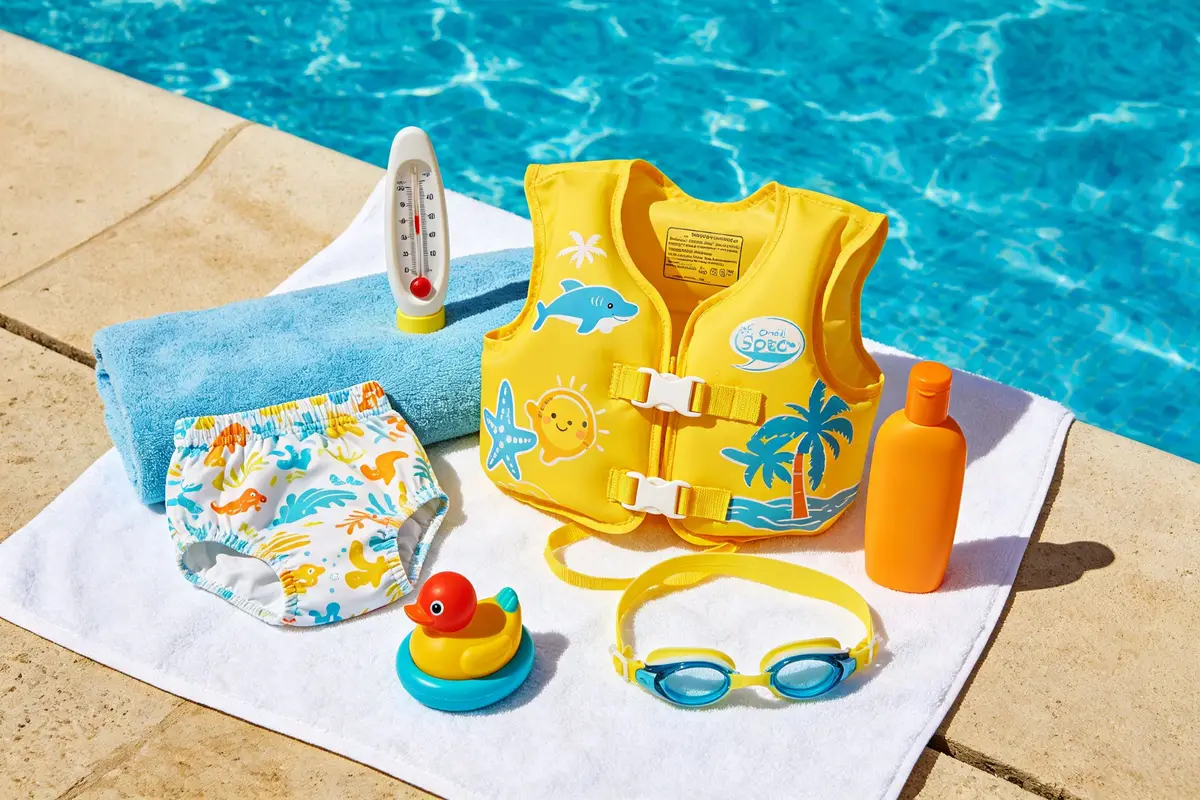
Swim diapers: Regular diapers absorb water and become heavy and saggy — they're not designed for swimming. Swim diapers are designed to contain solids (poop) without absorbing water, and they're a must for any pool trip. I used both reusable and disposable swim diapers. Reusable swim diapers (like Splash About or iPlay) are eco-friendly and can be washed and reused — I preferred these for regular pool trips. Disposable swim diapers (like Huggies Little Swimmers or Pampers Splashers) are convenient for travel or occasional use. I always packed an extra swim diaper — accidents happen, and you don't want to be stuck without one. I also made sure the swim diaper fit snugly around the legs and waist to prevent leaks.
Swimwear or wetsuit: For babies under 6 months or in cooler pools, a baby wetsuit (also called a warmer or swimsuit with built-in insulation) helps keep them warm. I used a neoprene baby wetsuit for all three babies — it provided warmth, sun protection (UPF 50+), and a little extra buoyancy. For older babies in warm pools, a regular swimsuit (with UPF 50+ sun protection) was fine. I always chose swimwear with built-in sun protection — it reduced the amount of sunscreen I needed to apply, and it didn't wash off in the water.
Sunscreen: For babies over 6 months, apply a water-resistant, broad-spectrum sunscreen with SPF 30+ 15-30 minutes before going outside. Reapply every 2 hours (or more often if they're in and out of the water or sweating). For babies under 6 months, the AAP recommends avoiding sunscreen and keeping them out of direct sun instead — use shade, protective clothing, a wide-brimmed hat, and sunglasses. I used a mineral-based sunscreen (zinc oxide or titanium dioxide) for my babies — it's gentler on sensitive skin and less likely to cause irritation. I also did a patch test on a small area of skin 24 hours before first use to check for reactions.
Hat and sunglasses: A wide-brimmed hat (with a chin strap to keep it on) protects the face, ears, and neck from the sun. Sunglasses with UV protection protect the eyes — babies' eyes are more sensitive to UV rays than adults'. I found that hats with chin straps were essential — my babies kept pulling hats off, and the chin strap kept them secure (as long as it wasn't too tight). For sunglasses, I looked for ones that wrap around the sides (to block UV from the sides) and have a strap to keep them on.
Towels and a change of clothes: I packed at least two towels — one for drying off immediately after the pool, and one for wrapping up while we got changed. A hooded baby towel is great — it keeps the head warm and makes it easy to wrap the baby up. I also packed a complete change of clothes (including a diaper and socks) — babies can get cold quickly after getting out of the pool, and warm dry clothes help them warm up fast.
Snacks and water: Swimming is tiring, and babies work up an appetite. I packed a snack (for older babies) and a bottle or water for after swimming. For breastfed babies, I nursed after swimming — it provided hydration, comfort, and a snack all in one. I also packed a pack of baby wipes for cleaning up before and after, and hand sanitizer for me.
How Do I Keep My Baby Safe in and Around Water?
Water safety is non-negotiable — drowning is a leading cause of injury death for children under 5, and it can happen silently and quickly (in as little as 20 seconds, in as little as 1 inch of water). Here's what I did to keep my babies safe:
1. Constant, active supervision. This is the most important water safety rule. When your baby is in or near water, you should be within arm's reach, watching them constantly — no phones, no distractions, no looking away for even a second. I designated one adult as the "water watcher" at all times (we took turns, so everyone got a break). The water watcher had no phone, no book, no conversations — just watching the baby. Even at baby pools with lifeguards, I never relied on lifeguards alone — lifeguards are watching many people, and your baby is your responsibility.
2. Never leave a baby alone near water. This includes bathtubs, buckets, kiddie pools, fountains, and even toilets. A baby can drown in as little as 1 inch of water. I never left my baby alone in the bath (even for a second to answer the door or grab a towel), I emptied buckets and kiddie pools immediately after use, and I kept bathroom doors closed and toilet lids down. I also used a bath seat for older babies (but never left them unattended — bath seats are not safety devices, and babies can slip out).
3. Use appropriate flotation devices. For babies who can't swim yet, I used a properly fitted infant life jacket (USCG-approved) for boating and open water (beach, lake). For pools, I sometimes used a baby float or floatation suit, but I never relied on them as a safety device — they can tip over or deflate, and babies can slip out. I always stayed within arm's reach, even when the baby was in a float. I also avoided inflatable neck floats (they can restrict breathing and have been associated with injuries and deaths).
4. Learn infant CPR and first aid. I took an infant CPR and first aid class before my first baby went swimming, and I refreshed my skills every couple of years. Knowing what to do in an emergency (drowning, choking, cardiac arrest) gives you confidence and could save your baby's life. Many hospitals, community centers, and organizations like the Red Cross offer these classes. I also kept a well-stocked first aid kit in my swim bag, and I knew the location of the nearest phone and emergency services at every pool we visited.
5. Be cautious at the beach. Beach swimming has additional risks: waves, currents (rip currents), cold water, and uneven surfaces. I only took my babies to beaches with lifeguards, and I stayed in shallow, calm water (no deeper than the baby's chest, even when I was holding them). I watched for waves — even small waves can knock a baby over. I also used a beach tent or umbrella for shade, and I reapplied sunscreen frequently (sunscreen washes off in water and wipes off with sand). I never let my baby play near the water's edge without holding their hand — waves can come in unexpectedly and knock them over.
Should I Take Baby Swim Lessons?
Baby swim lessons (also called parent-child swim classes or water familiarization classes) are a great way to get your baby comfortable in the water and teach basic water safety skills. I took all three of my babies to swim lessons starting around 6 months old. Here's what I learned:
What they teach: Baby swim lessons focus on water familiarization and safety, not actual swimming (babies can't truly swim until they're older). Skills include: getting comfortable being in the water, blowing bubbles, kicking, moving arms, floating on the back (with support), and entering and exiting the pool safely. Some programs also teach "self-rescue" skills (like rolling onto the back to float if they fall in the water). My babies loved the songs, games, and social interaction — and I loved watching them gain confidence in the water.
When to start: Many programs start at 6 months (some start as early as 4-6 weeks). I waited until 6 months — by then, my babies had better head control, they were past the newborn stage, and they could benefit more from the classes. The AAP supports water familiarization programs for children 1-4 years old, and notes that formal swim lessons can reduce the risk of drowning for children 1-4. For babies under 1, the focus should be on fun and familiarization, not formal swimming instruction.
What to look for: I looked for classes with small class sizes (4-6 babies), warm water (32°C+), qualified instructors (with experience teaching babies), and a focus on safety and fun. I also visited the pool before signing up to check the water temperature, cleanliness, and changing facilities. I preferred classes that were 30 minutes long (babies get cold and tired quickly) and had a consistent routine (songs, activities, and free play). I also made sure the class allowed me to be in the water with my baby (parent-child classes) — I wasn't comfortable leaving my baby with an instructor in the water at that age.
FAQ
Q: Can my baby get sick from swimming in a pool?
A: Babies can get sick from pool water if they swallow contaminated water (gastrointestinal illnesses like diarrhea are the most common). To reduce risk, make sure the pool is properly chlorinated and maintained, don't let your baby drink pool water, and don't take your baby swimming if they have diarrhea (wait 2 weeks after diarrhea stops to prevent spreading illness). I also changed my babies into clean diapers and clothes immediately after swimming, and I rinsed them off with clean water to remove chlorine. If your baby develops diarrhea, vomiting, or a fever after swimming, call your pediatrician.
Q: How long can my baby stay in the pool?
A: For babies under 6 months, limit pool time to 15-20 minutes (they get cold quickly). For babies 6-12 months, 20-30 minutes is usually fine. For toddlers, 30-45 minutes. Watch for signs of cold: shivering, blue lips, goosebumps, or fussiness — if you see any of these, get out of the pool and warm up. I always had a warm towel ready, and I wrapped my babies up immediately after getting out. I also offered a warm drink or feed after swimming to help them warm up from the inside.
Q: Is it safe to put my baby's face under water?
A: Some swim programs use submersion (briefly putting the baby's face under water) as a technique, but it's controversial. The AAP doesn't recommend forced submersion for infants — it can be frightening, and babies can swallow water or inhale it into the lungs. If your baby naturally goes under water (while playing or jumping), that's usually fine as long as they're supervised and you're right there. But I never forced my babies to go under water — I let them set the pace. If they wanted to put their face in, great; if not, that was fine too. The goal is to build confidence and a love of water, not to force skills before they're ready.
Q: Do I need to wash my baby's swimsuit after every use?
A: Yes — rinse swimsuits in clean water immediately after use to remove chlorine, salt, and sunscreen, which can damage the fabric and cause discoloration. Wash with mild detergent after every use (or at least every 2-3 uses) to remove bacteria, sweat, and sunscreen. I rinsed my babies' swimsuits in the shower after every pool trip, and I washed them with the regular laundry every 1-2 uses. I also hung them to dry (not in the dryer, which can damage elastic and fabric). For reusable swim diapers, I rinsed them immediately and washed them after every use (they come into contact with poop, so they need thorough cleaning).
Final Thoughts
Swimming is a wonderful activity for babies — it's great exercise, it builds confidence, and it's a fun way to bond. But water safety must always come first. Keep your baby within arm's reach, supervise constantly, use appropriate swim diapers and sun protection, and learn infant CPR and first aid. Start slowly, let your baby set the pace, and focus on fun and familiarization rather than formal swimming skills. With time and practice, your baby will learn to love the water — and you'll have peace of mind knowing you're keeping them safe. Happy swimming!