
2026-08-28 · Moni Happy Editorial Team
Baby Tape Diapers Distributor Southeast Asia Openings
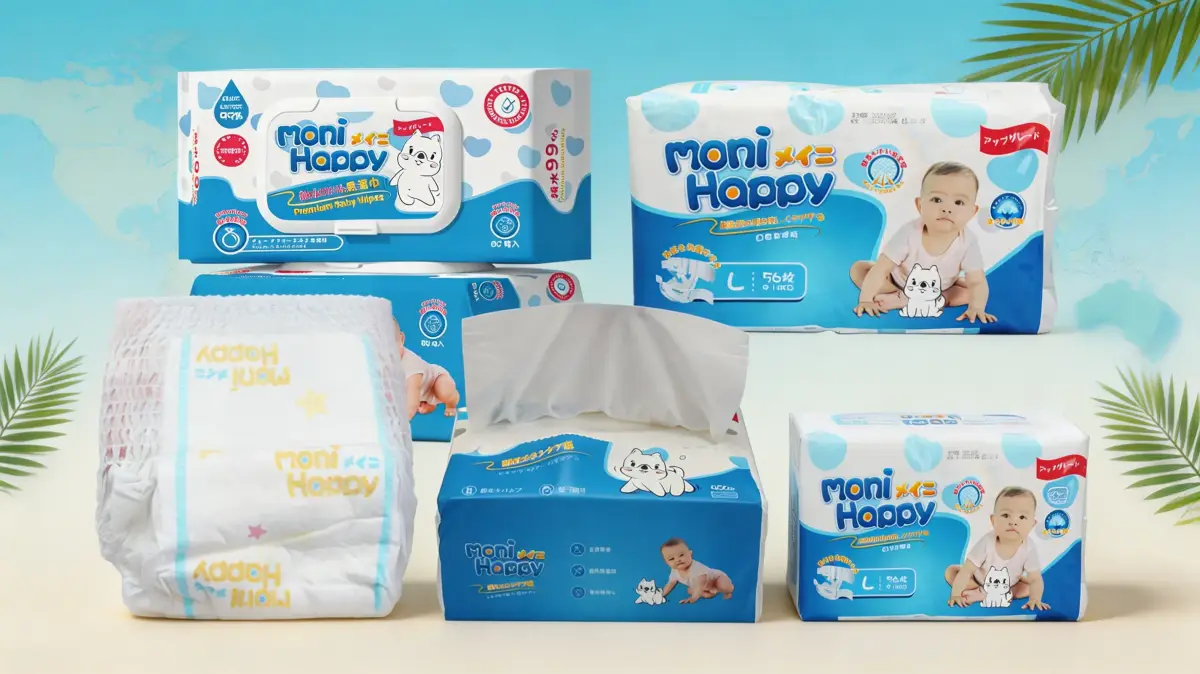
Moni Happy has opened a new round of partner applications for its newborn and infant taped-diaper line, inviting established channel operators across the region to apply as an authorized baby tape diapers distributor Southeast Asia partner. Applications open this month and will be reviewed on a rolling basis, with territory appointments confirmed market by market rather than in a single batch.
The move follows a year in which the brand's partner network reached six markets - Cambodia, Laos, Malaysia, Singapore, Thailand and Vietnam - each with a dedicated partner page and a named local contact. This round focuses specifically on the taped format: the fitted, adhesive-tab diaper that parents rely on from the delivery room through roughly the first eight months, before most babies graduate to pull-up pants.
Why the taped format deserves its own partner focus
Tape diapers and pull-up pants are often lumped together in trade planning, and that is a mistake. They serve different ages, sell through different shelf positions and move at different velocities. The taped format is bought by first-time parents at the most anxious, most brand-loyal moment of the entire category lifecycle. Whoever wins the newborn purchase usually keeps the household for the next two years.
Three regional shifts make this the right moment to build the network:
Hospital and clinic influence is rising. Maternity wards, midwives and paediatric clinics shape the first pack a family ever buys. Partners with existing institutional relationships convert that influence into repeat retail demand far faster than a pure marketplace seller can.
Pharmacy chains are expanding infant aisles. Modern-trade pharmacy across the region has moved from a two-facing token presence to full infant-care bays. That shelf space needs a reliable, well-branded taped range to fill it.
Parents are trading up on fit, not just price. Leak complaints in the newborn stage are overwhelmingly a fit problem - waistband gap, tab placement, back-pocket depth. A range engineered around newborn anatomy sells on demonstration, which rewards partners who can run in-store and in-clinic sampling.
What authorized partners receive
Every appointed partner works under a written agreement covering a defined territory and channel scope. The package includes:
- Exclusive or semi-exclusive territory rights, scaled to the partner's demonstrated coverage rather than promised coverage.
- Full branded assets - packaging artwork, shelf talkers, clinic leaflets, short-form video, product photography and localized copy in the market language.
- Structured pricing tiers with volume rebates and a protected margin band, so partners are not undercut by grey stock inside their own territory.
- Supply planning support, including rolling forecasts, agreed lead times and safety-stock guidance ahead of Ramadan, Lunar New Year and back-to-school demand peaks.
- Regulatory documentation for product registration and customs clearance, prepared per market rather than handed over as a generic file.
- Sales training covering the fit-and-leak demonstration, size-transition counselling and objection handling for pharmacy and clinic staff.
Partners are also given a named account manager and a quarterly business review. The review is not ceremonial - it sets the next quarter's forecast, reviews sell-through by SKU and adjusts the marketing budget split between trade and consumer activity.
Target markets in this round
Priority territories for the baby tape diapers distributor Southeast Asia round are Indonesia and the Philippines, the two large markets where the brand does not yet have a dedicated partner page. Both have high birth rates, deep modern trade and fast-growing live-commerce channels that suit a demonstration-led product.
Applications are also welcome from the six existing partner markets where a territory or a channel remains uncovered - for example a pharmacy-chain specialist in a market currently served only by a general-trade partner, or a provincial operator outside the capital region. Sub-territory appointments are possible where the incumbent partner's coverage is genuinely limited.
Who the brand is looking for
The screening standard for a baby tape diapers distributor Southeast Asia appointment is deliberately practical rather than a checklist of paperwork:
- Proven category experience in mother-and-baby, pharmacy, FMCG or healthcare distribution - at least two years of live trading history.
- Warehousing and last-mile capability appropriate to the territory, including humidity-controlled storage and batch-level stock rotation.
- A named sales team, not a single owner-operator relying on resellers.
- Clean compliance history with local registration and import authorities.
- Willingness to invest in demonstration selling - sampling, clinic detailing and in-store fit education, co-funded by the brand.
Applicants who cannot yet meet the warehousing standard are not automatically rejected. Where the commercial fit is strong, the brand will discuss a staged appointment beginning with a limited SKU range and a smaller territory.
How to apply
To be considered as a baby tape diapers distributor Southeast Asia partner, submit a short company profile through the contact form on the Moni Happy website. Include your registered entity, years in the category, current brand portfolio, channel breakdown by percentage, warehouse footprint and the territory you want to cover.
The review process runs in three stages: a documentation check within five working days, a video interview covering commercial terms and forecasts, and a trial shipment with agreed sell-through targets. Partners who clear the trial period move to a full annual agreement with territory protection.
Next step
The current round closes when territory coverage targets are met, and Indonesia and the Philippines are expected to move first. Channel operators who want a defined territory, a protected margin and a branded range built for the newborn stage should submit a profile now rather than waiting for the next intake.
Newborn Diaper Size Guide: NB, S, M by Weight
Choosing the right diaper size is essential for your baby's comfort and for preventing leaks. Diaper sizes are based on weight, not age, and every baby is shaped differently - some have chunky thighs, others have long torsos. Here's a general size guide to help you choose:
- Newborn (NB): 2-5kg (4-11 lbs) - for most babies in the first 2-4 weeks. Look for a cutout or fold-down waistband to protect the umbilical cord stump.
- Size S (Small): 4-8kg (8-17 lbs) - typically fits babies from 1-3 months. This is the size most babies use the longest in the early months.
- Size M (Medium): 6-11kg (13-24 lbs) - typically fits babies from 3-9 months. By this age, many babies transition to pull-up pants for easier changes.
Signs that a diaper is too small: red marks on the thighs or waist, difficulty fastening the tabs, frequent leaks, or the diaper barely covers your baby's bottom. Signs it's too big: gaps around the legs that cause leaks, the diaper rides up, or your baby seems uncomfortable. When in doubt between two sizes, size up - a slightly larger diaper is more comfortable and less likely to cause irritation. For more newborn care tips, read our complete newborn care guide.
Frequently Asked Questions
How many newborn diapers do I need?
Newborns go through 8-12 diapers per day. For the first month, stock up on 2-3 packs of newborn size (about 200-300 diapers). But don't buy too many - some larger babies skip newborn size entirely. Start with one pack and buy more as needed.
Tape diapers or pull-up pants for newborns?
For newborns, tape-style diapers are generally better. They're easier to put on a baby who can't stand yet, allow for a more customized fit, and make it easier to check for wetness without fully undressing. Pull-up pants are more convenient once your baby is active and mobile (usually 6+ months).
How often should I change a newborn's diaper?
Change your newborn's diaper every 2-3 hours, and immediately after bowel movements. Newborns have sensitive skin, and prolonged exposure to wetness can cause diaper rash. At night, you can use an extra-absorbent diaper to extend the time between changes, but don't let your baby sit in a soiled diaper for too long.
What causes diaper rash and how do I prevent it?
Diaper rash is usually caused by prolonged exposure to wetness, friction, and irritation from urine and stool. To prevent it: change diapers frequently, use breathable diapers with good air circulation, make sure the skin is completely dry before putting on a clean diaper, give your baby some diaper-free time each day, and use a barrier cream if rash develops. Moni Happy diapers feature millions of breathable micro-pores and a mildly acidic pH to help prevent diaper rash.
Find the Perfect Diaper for Your Newborn
Explore the full range of Moni Happy baby diapers - from newborn tape diapers to pull-up pants for active toddlers. Our diapers feature Japanese premium SAP, 3D cloud-soft topsheet, and ultra-breathable technology designed for Southeast Asia's hot and humid climate. Try our newborn trial pack today and feel the difference for yourself.
Related Reading
Frequently Asked Questions
How many newborn diapers do I need?
Newborns go through 8-12 diapers per day. For the first month, stock up on 2-3 packs of newborn size (about 200-300 diapers). But don't buy too many, some larger babies skip newborn size entirely. Start with one pack and buy more as needed.
Tape diapers or pull-up pants for newborns?
For newborns, tape-style diapers are generally better. They're easier to put on a baby who can't stand yet, allow for a more customized fit, and make it easier to check for wetness without fully undressing. Pull-up pants are more convenient once your baby is active and mobile (usually 6+ months).
How often should I change a newborn's diaper?
Change your newborn's diaper every 2-3 hours, and immediately after bowel movements. Newborns have sensitive skin, and prolonged exposure to wetness can cause diaper rash. At night, you can use an extra-absorbent diaper to extend the time between changes, but don't let your baby sit in a soiled diaper for too long.
What causes diaper rash and how do I prevent it?
Diaper rash is usually caused by prolonged exposure to wetness, friction, and irritation from urine and stool. To prevent it: change diapers frequently, use breathable diapers with good air circulation, make sure the skin is completely dry before putting on a clean diaper, give your baby some diaper-free time each day, and use a barrier cream if rash develops.