
2026-11-01 · Moni Happy
Which baby diapers core thickness and breathability tests should a diaper wholesale buyer run?
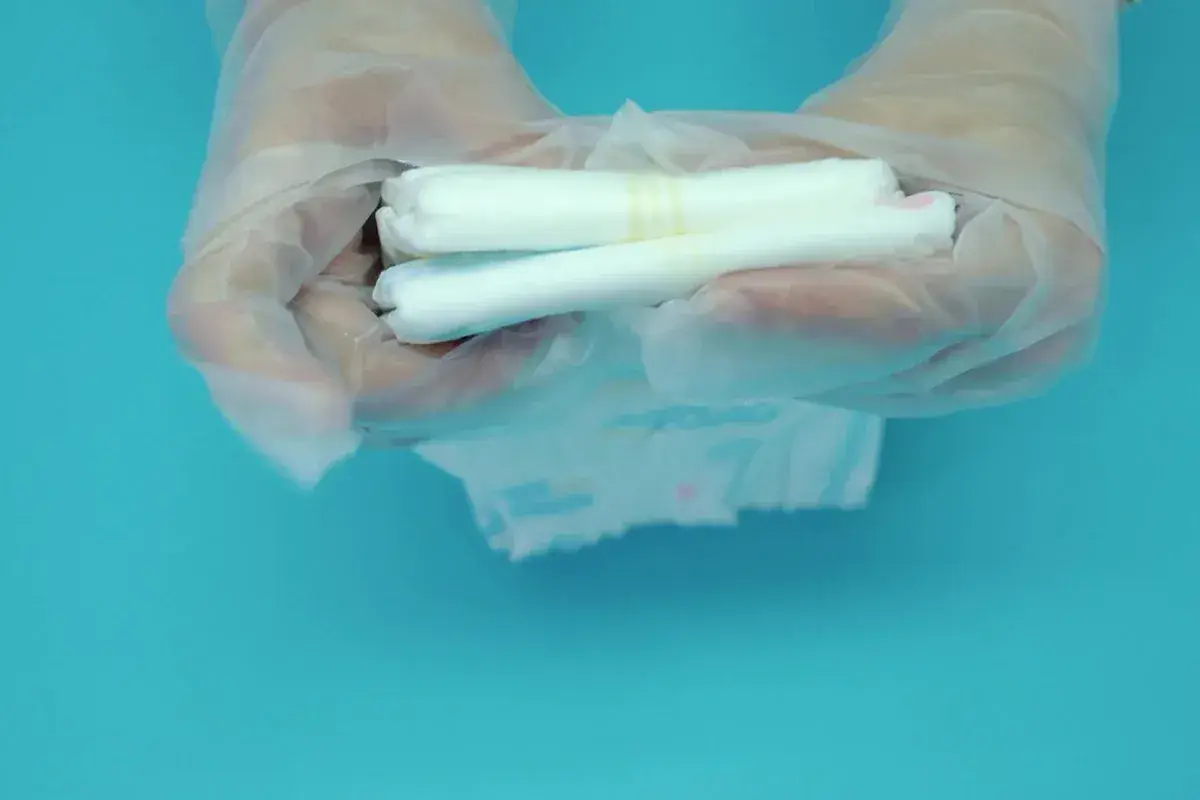
Measure two things and you have covered the most over-claimed part of a diaper wholesale specification. Thickness: a caliper reading under a fixed load, taken at several points on the core and reported as a median in millimetres. Breathability: a water-bubble test, where air pressed into a lower chamber either passes through the backsheet and rises as bubbles, or does not. Both are cheap, both are repeatable, and neither requires a laboratory.
On baby diapers they matter because they are the two claims a retail buyer will repeat to a consumer. A pack that says thin and breathable at a premium price has to survive a buyer putting a caliper on it, and a supplier who cannot supply the numbers is asking you to take the claim on faith.
How do you measure core thickness properly?
With a caliper under a defined load, at five points, on a diaper taken straight from a sealed pack. Thickness without a stated load is meaningless, because a soft core squashes.
- Condition the pack. Two hours at room temperature, still sealed, so the core is not compressed by handling.
- Define the load. Use the caliper's own spring foot or a fixed weight; write down which one you used.
- Measure five points — centre plus four quadrants — and record all five, not the average of a mental estimate.
- Report the median in millimetres to one decimal place, and state the load. "One point zero millimetres at this load" is a specification; "ultra thin" is not.
- Repeat after folding. Fold the diaper in thirds twice, unfold, wait a minute, measure again. The change is the compression set, and it predicts how the product behaves in a moving cot.
A 0.1 cm core measured at a defined load is in the ultra-thin class. What matters commercially is whether that number holds after folding and after a month in a hot warehouse, which is why the second measurement is worth the extra minute.
How does the water-bubble breathability test work?
Clamp the diaper over the outlet of a lower air chamber, fill the upper chamber with water above the backsheet, then press air into the lower chamber and watch for bubbles in the water.
- Seal the sample so air can only travel through the backsheet, not around the edges of the rig.
- Fill the upper chamber with a shallow layer of water, deep enough to see bubbles, shallow enough to keep the head pressure low.
- Apply gentle pressure to the lower chamber by hand or with a syringe, and start timing.
- Record the onset — how many seconds until the first steady stream of bubbles appears.
- Inspect the backsheet afterwards for wetting on the outside. A backsheet that breathes but wets through has failed a different test.
A backsheet built on micropore technology passes air quickly and stays dry on the outside; a plain film with micropore print but no micropore structure does neither. A solid film shows no bubbles at all, or only at a pressure high enough to distort the sample. The result is binary enough to be persuasive in a supplier conversation.
What do thickness and breathability actually do for the wearer?
They govern the micro-climate inside the diaper. If moisture and heat cannot leave, the skin stays damp and warm, and ammonia from decomposed urine sits against the skin for longer. Breathability is therefore not a comfort nicety but a skin-health variable, which is why it deserves a measured number rather than a phrase.
Thickness matters for a different reason: a thinner core changes how the product sits between the legs, which affects fit and how the pack merchandises on shelf. A thin pack at the same absorbency is a genuine premium position; a thin pack at reduced absorbency is a cost cut wearing the same words.
How should these readings enter a purchase specification?
As three lines with numbers and test conditions attached, ready to go into the diaper wholesale order: median thickness in millimetres at a stated load, bubble onset in seconds under a stated pressure procedure, and the post-fold thickness change as a percentage of the original.
Add a fourth line for delamination: after the fold routine, cut a diaper open and check whether the core layers have separated or shifted. A low delamination rate is what keeps the other three numbers stable in transit. Suppliers who publish delamination data are usually the ones whose cores survive a tropical warehouse.
Why is a thinner core not automatically a cheaper one?
Because thinness is bought with material science, not with less material. A 0.1 cm core that still holds absorbency requires higher-performance superabsorbent polymer, tighter distribution of the dose and a more precise conversion process — all of which cost money. A core that is thin because it contains less SAP will fail the rewet test the moment you run one.
That is the reason to run thickness and rewet together and never thickness alone. Thin plus dry is engineering; thin plus wet is a cost reduction.
When should a buyer test rather than trust the specification sheet?
Always at sample stage, and then on a sample from every production batch you have not seen before. The specification sheet describes intent; the batch describes output.
The practical routine for baby diapers is ten minutes per SKU: five caliper readings, a fold-and-remeasure, one bubble test, one cut-open inspection. Do it on the sample the supplier sends for approval and again on a piece pulled from the first container when it lands. If the two do not match, you have found the problem while the stock is still in the warehouse rather than after it is on a shelf.
How do these results change the commercial conversation?
They give you a defensible reason to accept or reject a price. A quote that is higher because the core holds one millimetre at a defined load and passes both a breathability rig and a bubble test in seconds is a different proposition from a quote that is higher for no stated reason — and a retail account will pay for the first and not the second.
For a distributor building a range, this is also how you avoid a race to the bottom: sell the measurable difference, not the discount. If you are still deciding which sizes and price points to carry, the first order mix analysis covers how reorder patterns differ by size, and the onboarding guide sets out the path from sample approval to a first purchase order.
Frequently asked questions
What load should I use when measuring thickness?
Whatever your caliper applies, stated in the record. Comparability comes from using the same instrument and the same procedure on every sample, not from matching someone else's load.
Are bubbles in the water test proof of breathability?
They are proof that air passes through the backsheet, which is the definition being tested. Pair it with a check that the outside of the backsheet stays dry, otherwise you have measured permeability, not a usable breathable barrier.
Does a 0.1 cm core absorb less?
Not necessarily. Absorption depends on SAP loading and core design, not on thickness alone. A thin core with high-performance SAP can outperform a thicker one, which is why the rewet test has to be run alongside.
Can I run these tests on a single diaper?
You can, but one piece tells you about one piece. Use at least three per SKU and report the median, keeping the outliers if they are consistent — a consistent outlier is a process signal.
Sources and further reading
- EDANA, edana.org — test methods and terminology for nonwoven and absorbent hygiene products.
- International Organization for Standardization, ISO catalogue — including ISO 9073 series methods for nonwoven thickness and mechanical properties.
- ASTM International, astm.org — ASTM E96 water vapour transmission methods, the reference behind moisture vapour ratings.
Bottom line: put a caliper on the core and a bubble rig under the backsheet before you sign a diaper wholesale order. Record the load, the number of points and the onset time, then require the same readings on the first production batch. Thin and dry is engineering; thin alone is a claim.
Moni Happy's JSK01 line uses a 0.1 cm breathable core with patented micropore backsheet technology. Distributors in Malaysia, Singapore, Thailand, Vietnam and Laos can request samples and the technical data sheet, or review the diaper range and pull-up pants before shortlisting. Minimum order quantities and pricing are confirmed per market, subject to formal quotation.
Frequently Asked Questions
What load should I use when measuring thickness?
Whatever your caliper applies, stated in the record. Comparability comes from using the same instrument and procedure on every sample, not from matching someone else's load.
Are bubbles in the water test proof of breathability?
They prove that air passes through the backsheet, which is the property being tested. Pair it with a check that the outside stays dry, otherwise you have measured permeability rather than a usable breathable barrier.
Does a 0.1 cm core absorb less?
Not necessarily. Absorption depends on SAP loading and core design rather than thickness alone. A thin core with high-performance SAP can outperform a thicker one, which is why the rewet test has to run alongside.
Can I run these tests on a single diaper?
You can, but one piece tells you about one piece. Use at least three per SKU and report the median, keeping the outliers if they are consistent — a consistent outlier is a process signal.
Distributor resources
If you are evaluating suppliers for your market, these are the pages that answer the commercial questions — in the order buyers usually need them.