
2026-08-15 · Moni Happy Editorial Team
Baby Vaccination Guide in Southeast Asia: Routine Shots & Travel Vaccines Explained
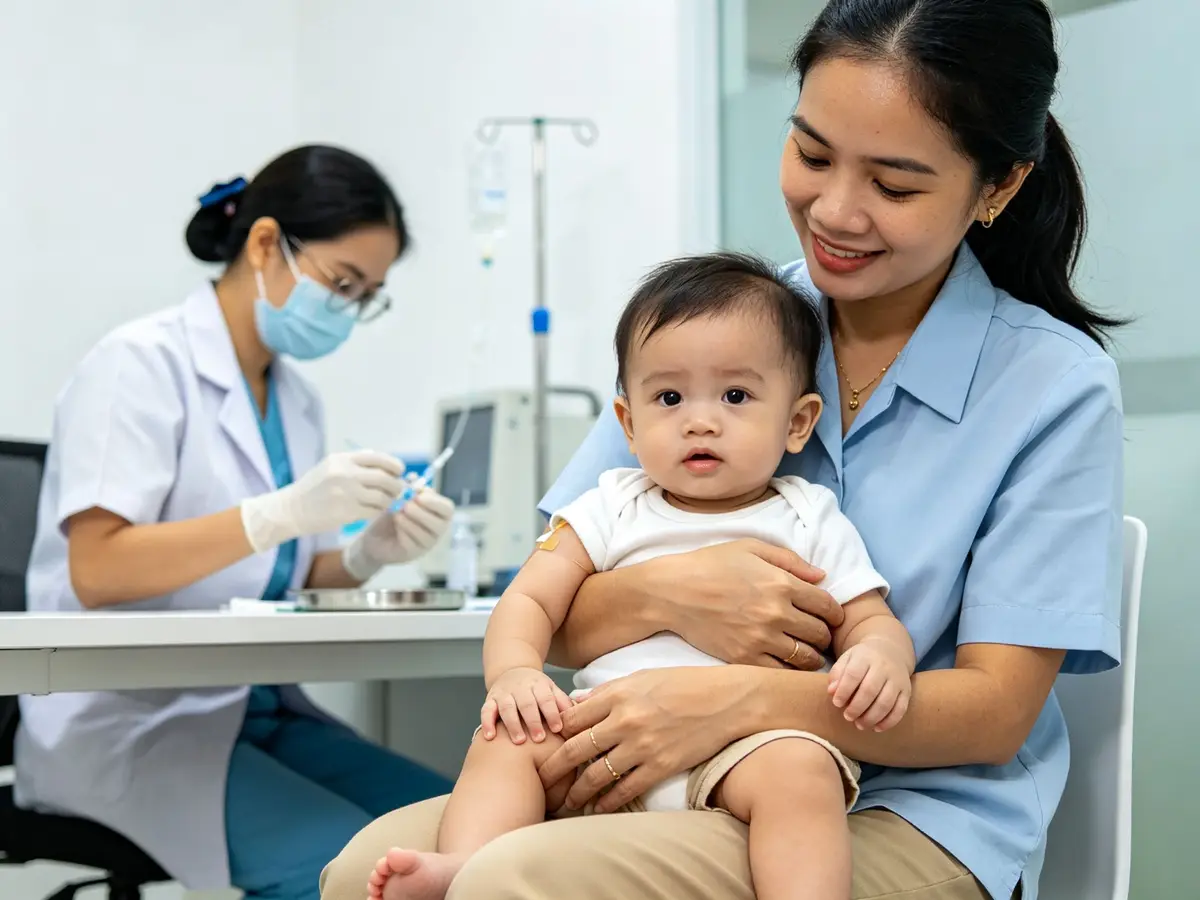
Vaccines—don't find it troublesome, and don't blindly follow trends
When my first baby was born, I studied the vaccine booklet for several days and was still confused. Thailand's vaccine schedule is different from China's and different from Singapore's. Plus there are various optional vaccines, travel vaccines—13-valent pneumococcal, pentavalent, rotavirus, hand-foot-mouth—it was all dazzling. Later I specifically consulted a pediatrician and researched a lot of information before gradually figuring it out.
By the time my second baby was born, I was much calmer. I got the routine vaccines on time, and didn't blindly follow trends for unnecessary ones. In this article, I'm sharing the Southeast Asia vaccination guide I compiled—including the routine vaccine schedules of major countries, common optional vaccines, travel vaccine recommendations, and some frequently asked questions. I hope it helps those of you currently anxious about vaccines.
Let me start with a big principle: routine vaccines must be given on time. Optional vaccines are chosen based on economic conditions and local prevalence. Travel vaccines are chosen based on destination. You don't need to blindly pursue "the more the better," and you don't need to be so anxious that you miss one or two doses—most vaccines can be caught up.
Routine vaccine schedules in major Southeast Asian countries
Every Southeast Asian country's National Immunization Program (NIP) is slightly different, but the core vaccines are mostly the same. I've compiled the routine vaccine schedules of several major countries for reference. Specifically, follow the advice of your local health department and pediatrician.
Thailand:
- At birth: BCG (tuberculosis), Hepatitis B dose 1
- 2 months: Hepatitis B dose 2, Pentavalent (DPT + Polio + Hib) dose 1, Rotavirus dose 1
- 4 months: Pentavalent dose 2, Rotavirus dose 2
- 6 months: Pentavalent dose 3, Hepatitis B dose 3, Rotavirus dose 3, Influenza (annually)
- 9 months: Measles-Rubella (MR) dose 1, Japanese Encephalitis dose 1
- 18 months: Pentavalent booster, Measles-Mumps-Rubella (MMR) dose 2
- 2-3 years: Japanese Encephalitis booster
Singapore:
- At birth: BCG, Hepatitis B dose 1
- 2 months: Pentavalent dose 1, Pneumococcal (PCV13) dose 1, Rotavirus dose 1
- 4 months: Pentavalent dose 2, PCV13 dose 2, Rotavirus dose 2
- 6 months: Pentavalent dose 3, Hepatitis B dose 3, PCV13 dose 3, Rotavirus dose 3, Influenza (annually)
- 9 months: MMR dose 1
- 12 months: Varicella (chickenpox) dose 1
- 15 months: PCV13 booster, MMR dose 2
- 18 months: Pentavalent booster
- 2 years: Varicella dose 2
Malaysia:
- At birth: BCG, Hepatitis B dose 1
- 1 month: Hepatitis B dose 2
- 2 months: Pentavalent dose 1, PCV13 dose 1, Rotavirus dose 1
- 3 months: Pentavalent dose 2
- 4 months: Pentavalent dose 3, PCV13 dose 2, Rotavirus dose 2
- 5 months: PCV13 dose 3
- 6 months: Hepatitis B dose 3, Influenza (annually)
- 9 months: MMR dose 1
- 12 months: Varicella dose 1
- 15 months: MMR dose 2, PCV13 booster
- 18 months: Pentavalent booster
- 2 years: Varicella dose 2
As you can see, the core vaccines in all three countries are similar, just with slightly different timing. If you move between countries, bring your vaccine booklet and let the doctor arrange subsequent vaccinations based on your previous records—most vaccines can be衔接.
These optional vaccines—I recommend getting them if you can afford it
Besides the free routine vaccines from the government, there are some optional vaccines that I personally recommend getting for your baby if you can afford it, especially in a place like Southeast Asia with many infectious diseases.
1. 13-valent Pneumococcal Conjugate Vaccine (PCV13)
This one I strongly recommend. Pneumococcus is the main pathogen causing pneumonia, meningitis, and ear infections in infants and young children. The 13-valent vaccine prevents the 13 most common serotypes. It's already included in the national immunization programs in Singapore and Malaysia, but it's still optional in Thailand. Generally, doses at 2, 4, and 6 months for the primary series, and a booster at 12-15 months. It's not cheap, but it's really worth it.
2. Rotavirus Vaccine
Rotavirus is the main cause of severe diarrhea in infants and young children. In Southeast Asia, where hygiene conditions vary, the infection rate is high. The rotavirus vaccine is oral, generally given at 2, 4, and 6 months, and must be completed before 8 months of age. This vaccine significantly reduces the risk of severe rotavirus diarrhea—I recommend it.
3. Influenza Vaccine
Influenza isn't the common cold. Infants and young children are a high-risk group for severe influenza. Influenza circulates year-round in Southeast Asia. I recommend that babies over 6 months get the influenza vaccine every year. The first time requires two doses, one month apart, then one dose annually after that. This vaccine isn't expensive and has high cost-effectiveness.
4. Varicella (Chickenpox) Vaccine
Chickenpox is extremely contagious. Although most cases aren't severe, it can cause serious complications. It's already included in the national immunization programs in Singapore and Malaysia, but still optional in Thailand. Generally, first dose at 12 months, second dose at 2-4 years. I recommend it.
5. Hand-Foot-Mouth Disease Vaccine (EV71)
Hand-foot-mouth disease is common in Southeast Asia, especially in daycare centers and kindergartens. The EV71 vaccine prevents severe hand-foot-mouth disease caused by the EV71 virus. Babies from 6 months to 5 years old can get it. This vaccine was developed in China and is available in some Southeast Asian countries—I recommend getting it if available.
6. Japanese Encephalitis Vaccine
Japanese encephalitis is a viral encephalitis transmitted by mosquitoes, common in rural areas of Southeast Asia. It's already included in Thailand's national immunization program. In other countries, it's recommended based on where you live and your travel plans. If you live in a rural area or frequently visit rural areas, I recommend it.
There are many types of optional vaccines—you don't need to get every one. Choose based on your baby's age, where you live, and economic conditions. When in doubt, ask your pediatrician for professional advice.
Traveling with your baby—prepare these vaccines in advance
For travel within Southeast Asia or to other countries, some vaccines need advance preparation. I've compiled several common travel-related vaccines:
1. Hepatitis A Vaccine
Hepatitis A is transmitted through contaminated food and water, and there's infection risk in areas with poor hygiene. It's recommended that babies over 1 year old get the hepatitis A vaccine before traveling to hepatitis A endemic areas. Generally requires two doses, 6-12 months apart. Protection develops 2-4 weeks after the first dose.
2. Typhoid Vaccine
Typhoid is also transmitted through contaminated food and water. Babies over 2 years old can get it. If traveling to areas with poor hygiene conditions, it's recommended to get it in advance. The typhoid vaccine protects for about 2-3 years and requires revaccination.
3. Rabies Vaccine
There are many stray dogs in Southeast Asia, and rabies is a fatal disease. If your baby will be visiting rural areas or areas with stray animals, it's recommended to get the rabies vaccine in advance as pre-exposure prophylaxis. Generally requires three doses, on days 0, 7, and 21. If bitten by an animal, regardless of vaccination status, seek medical treatment immediately.
4. Japanese Encephalitis Vaccine
If visiting rural areas in Southeast Asia, especially during the rainy season, the risk of Japanese encephalitis is relatively high. It's recommended to get the Japanese encephalitis vaccine in advance, generally requiring two doses, 28 days apart.
5. Cholera Vaccine
Cholera is relatively rare in Southeast Asia now, but it still occurs in natural disasters or areas with extremely poor hygiene. Generally not recommended for routine vaccination, but if traveling to high-risk areas, you can consider the oral cholera vaccine.
Travel vaccines are best prepared 4-6 weeks in advance, as many vaccines require multiple doses or need time to develop sufficient protection. Before departure, you can visit a travel medicine clinic or pediatrician to let the doctor give advice based on your destination and your baby's situation.
Before and after vaccination—pay attention to these things
Before vaccination:
- Bring your vaccine booklet and let the doctor verify your previous vaccination records.
- If your baby has a fever, severe eczema, or acute illness, tell the doctor and let the doctor decide if vaccination is possible. Generally, a mild cold without fever is fine for vaccination.
- Feed your baby well and let them sleep well before vaccination. Avoid vaccinating when your baby is very hungry or very sleepy to reduce fussiness.
- Wear loose clothes to make it easy to expose the vaccination site.
After vaccination:
- Observe at the vaccination site for 30 minutes before leaving, as a very small number of babies may have an allergic reaction, and the first 30 minutes is the peak period.
- The vaccination site may have redness, swelling, and pain—this is normal and generally resolves on its own within 2-3 days. You can apply a clean towel cold compress to reduce swelling.
- There may be a low-grade fever (below 38.5°C), fussiness, or decreased appetite—also normal, generally improving within 1-2 days. Drink more water, rest more, and use physical cooling.
- If the fever exceeds 38.5°C, you can give acetaminophen or ibuprofen to reduce fever, calculated by your baby's weight.
- You can bathe on the day of vaccination, but don't vigorously scrub the vaccination site.
- If there's persistent high fever, severe rash, difficulty breathing, lethargy, or severe redness, swelling, and pus at the vaccination site, go to the hospital immediately.
Common misconceptions about vaccines
Misconception 1: Vaccines cause autism
This claim has been disproven by countless studies. The original paper has been retracted, and the author has had his medical license revoked. Extensive scientific research shows there is no relationship between vaccines and autism. Get the vaccines your baby should get on time—don't delay because of this rumor.
Misconception 2: Optional vaccines are all unnecessary
Optional vaccines aren't "unnecessary"—it's that the government doesn't yet have the capacity to provide them all for free. Many optional vaccines prevent serious diseases, like pneumococcus and rotavirus. If you can afford it, I recommend getting them.
Misconception 3: Once vaccinated, you definitely won't get the disease
Vaccines aren't 100% protective, but they significantly reduce infection risk. Even if infected, symptoms will be much milder, and the risk of complications is greatly reduced. Don't skip vaccination just because it's not 100% effective.
Misconception 4: My baby has weak immunity and can't get vaccinated
On the contrary, babies with weak immunity need vaccine protection even more, because their risk of severe illness after infection is higher. Unless there's a clear vaccination contraindication (like severe immunodeficiency or severe allergy to vaccine components), they should be vaccinated on time. When in doubt, ask the doctor—don't decide on your own to skip it.
A few final words
Vaccines are one of the greatest inventions in human medical history, saving countless lives every year. Vaccinating your baby is the most basic health protection we can give them.
Don't get anxious because the vaccine schedule is complicated, and don't blame yourself for missing one or two doses—most vaccines can be caught up. Bring your vaccine booklet, find a pediatrician you trust, get vaccinated on time, and ask questions promptly when you have them—that's enough.
Wishing every baby grows up healthy and free from disease.
Related Products
At Moni Happy, we offer a complete range of premium baby care products to keep your little one clean, comfortable, and healthy:
- Baby Diapers & Tape Diapers — Designed for sensitive baby skin, ultra-soft and dermatologist-tested.
- Baby Wet Wipes — Designed for sensitive baby skin, ultra-soft and dermatologist-tested.
- Cotton Soft Towels & Face Towels — Designed for sensitive baby skin, ultra-soft and dermatologist-tested.
Frequently Asked Questions
Why are vaccinations important for my baby?
Vaccinations protect your baby from serious, potentially life-threatening diseases like measles, polio, whooping cough, hepatitis B, tetanus, and diphtheria. They work by stimulating the immune system to produce antibodies without causing the disease itself. Vaccines not only protect your individual child but also contribute to herd immunity, protecting babies who are too young to be vaccinated or people with weakened immune systems who can't be vaccinated. Following the recommended vaccine schedule is one of the most important things you can do to protect your baby's health.
What's the recommended vaccination schedule?
The standard vaccination schedule starts at birth with the hepatitis B vaccine. At 2, 4, and 6 months, babies receive combination vaccines covering diphtheria, tetanus, pertussis (DTaP), polio (IPV), hepatitis B, Hib, and pneumococcal (PCV), plus rotavirus vaccine. At 6 months, the flu vaccine is recommended (annually). At 12-15 months, babies receive MMR (measles, mumps, rubella), varicella (chickenpox), Hib, PCV, and hepatitis A. Always follow your country's specific schedule and your pediatrician's recommendations, as schedules may vary by country and region.
Are vaccines safe for my baby?
Vaccines are extensively tested for safety and effectiveness before they're approved, and they continue to be monitored after approval. Common mild side effects include soreness or redness at the injection site, mild fever, fussiness, and decreased appetite — these usually resolve within 1-2 days. Serious side effects are extremely rare. The risks of not vaccinating — contracting a serious, preventable disease — far outweigh the small risk of vaccine side effects. If you have concerns about vaccines, discuss them openly with your pediatrician, who can provide evidence-based information and address your specific questions.
Can my baby get vaccines if they're sick?
Mild illnesses like a cold, low-grade fever, diarrhea, or ear infection are generally not a reason to delay vaccines — your baby can still be vaccinated safely. However, if your baby has a moderate or severe illness with a high fever, your pediatrician may recommend waiting until they've recovered. Always tell your pediatrician about your baby's current health and any medications before vaccination. If your baby was premature or has a weakened immune system, the vaccine schedule may need to be adjusted — follow your pediatrician's guidance.
Frequently Asked Questions
What is the routine childhood vaccination schedule in Southeast Asia?
While specific schedules vary by country, most Southeast Asian nations follow the WHO-recommended Expanded Programme on Immunization (EPI) schedule, which includes: BCG (tuberculosis) at birth; Hepatitis B at birth, 1-2 months, and 6 months; DTP (diphtheria, tetanus, pertussis) at 2, 4, 6 months (with boosters at 18 months and 4-6 years); Polio at birth, 2, 4, 6 months (with booster at 18 months); Hib (Haemophilus influenzae type b) at 2, 4, 6 months (with booster at 18 months); Pneumococcal conjugate vaccine (PCV) at 2, 4, 6 months (with booster at 12-15 months); Rotavirus at 2 and 4 months (oral); MMR (measles, mumps, rubella) at 12 months (with booster at 4-6 years); Varicella (chickenpox) at 12-15 months (with booster at 4-6 years); Hepatitis A at 12-23 months (with booster 6-18 months later); and HPV (human papillomavirus) for girls at 9-13 years (2-3 doses). Singapore, Malaysia, and Thailand have more comprehensive schedules that include additional vaccines like PCV, rotavirus, and varicella in the national program, while Indonesia, Philippines, and Vietnam may offer some of these as optional or private vaccines. Always consult your pediatrician or local health department for the specific schedule in your country, and keep a vaccination record card.
Are vaccines safe for babies in Southeast Asia's tropical climate?
Yes, vaccines are safe for babies in Southeast Asia's tropical climate, and the climate does not affect the safety or effectiveness of vaccines. Vaccines undergo rigorous testing and are approved by regulatory authorities (such as the FDA, EMA, and WHO) before being made available to the public. Common mild side effects include: soreness, redness, or swelling at the injection site; mild fever (usually within 24-48 hours); fussiness or irritability; poor appetite; and mild rash (for some vaccines like MMR or varicella, which may appear 1-2 weeks after vaccination). These side effects are normal and usually resolve within a few days. To manage side effects: keep your baby hydrated; dress them in light, breathable clothing (especially important in tropical weather); use a cool compress on the injection site if needed; and if your baby has a fever or is uncomfortable, consult your pediatrician about giving fever-reducing medication (paracetamol/acetaminophen). Serious side effects are extremely rare. If your baby has a high fever (above 39°C/102.2°F), persistent crying for more than 3 hours, seizures, difficulty breathing, or any other concerning symptoms after vaccination, seek medical attention immediately. Always inform your pediatrician about any previous reactions to vaccines or any medical conditions your baby may have before vaccination.
What travel vaccines does my baby need when traveling within Southeast Asia?
When traveling within Southeast Asia, ensure your baby is up-to-date on all routine vaccines, as some diseases that are rare in developed countries may still be present in the region. Additional travel vaccines to consider (depending on destination, duration of travel, and activities) include: Hepatitis A (recommended for travel to most developing countries, including parts of Indonesia, Philippines, Vietnam, Cambodia, Laos, and Myanmar—can be given from 6 months of age); Typhoid (recommended for travel to areas with poor sanitation, especially if traveling to rural areas or eating street food—oral typhoid vaccine can be given from 6 years, injectable from 2 years); Japanese Encephalitis (recommended for travel to rural areas with rice fields and pig farms, especially during rainy season—can be given from 2 months of age, depending on the vaccine); Rabies (recommended for long-term travel or travel to areas with high rabies risk, especially if your baby will have contact with animals—can be given from birth); and Meningococcal (recommended for travel to areas with outbreaks or for Hajj/Umrah pilgrimage). For travel to Singapore, Malaysia, and major cities in Thailand, Indonesia, Philippines, and Vietnam, routine vaccines may be sufficient, but consult a travel medicine specialist or pediatrician 4-6 weeks before travel for personalized advice. Also ensure your baby is protected against mosquito-borne diseases (dengue, Zika, chikungunya, malaria) by using physical barriers (mosquito nets, long clothing) and baby-safe insect repellent.
How do I keep my baby's vaccination records when living in or traveling around Southeast Asia?
Keeping accurate vaccination records is important when living in or traveling around Southeast Asia, as different countries may have different schedules and requirements. Tips for maintaining records: keep the original vaccination record card (usually provided by the hospital or clinic) in a safe place; make photocopies or take clear photos of the card and store them digitally (in a secure cloud storage or on your phone); keep a separate, consolidated record that lists all vaccines received, dates, batch numbers, and the clinic/hospital where they were administered; if your baby receives vaccines in multiple countries or clinics, ensure all records are consolidated into one document; when traveling, carry a copy of the vaccination record with you (some countries may require proof of vaccination for certain diseases, such as yellow fever or meningococcal); if you are unsure whether a vaccine has been given or need to catch up on missed vaccines, consult a pediatrician who can review the records and recommend a catch-up schedule; and consider using a digital vaccination record app or portal if available in your country. If your baby's vaccination record is lost, contact the clinic or hospital where the vaccines were administered to request a copy—most clinics keep records for several years. For expat families, it is also helpful to have the records translated into English if they are in the local language, and to ensure they meet the requirements of your home country or international schools.