
2026-09-15 · Moni Happy Editorial
Best Baby Safety Gates 2026: Pressure vs Hardware vs Retractable Guide
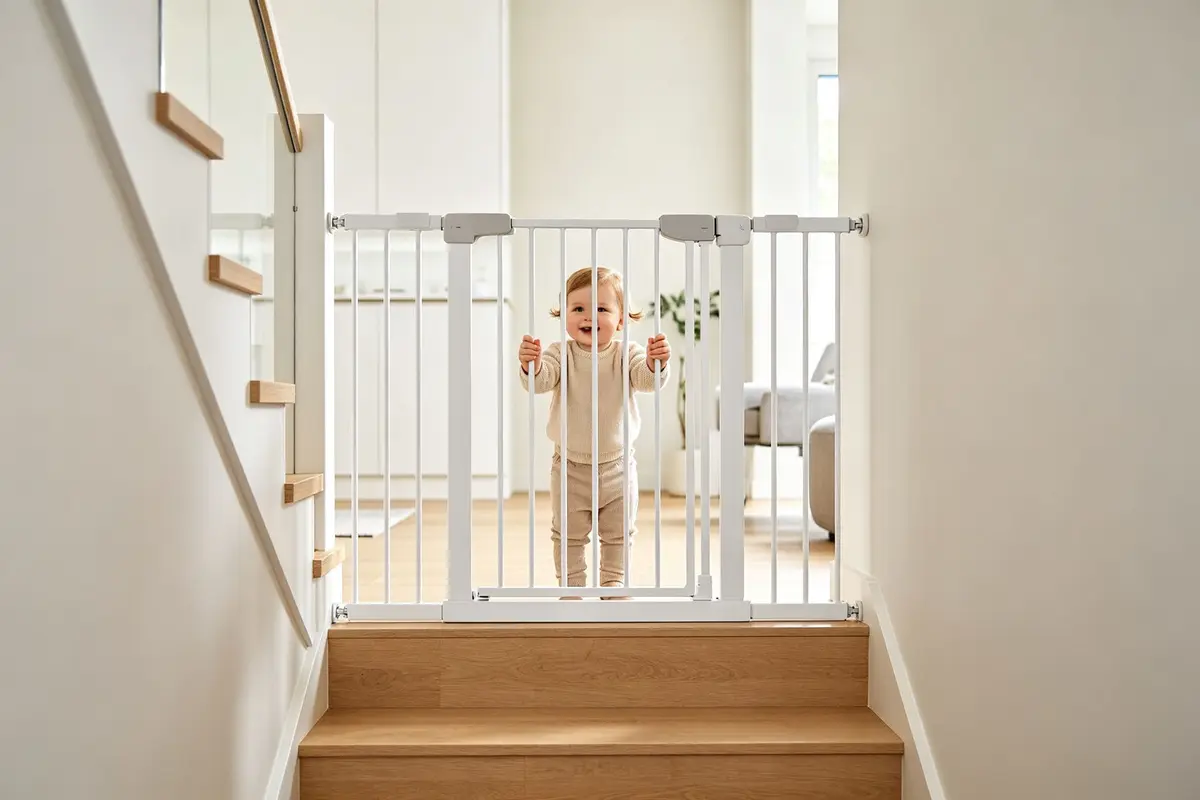
Once your baby starts crawling, your home transforms from a safe haven into a minefield of potential hazards. Staircases, kitchens, bathrooms, home offices — every room suddenly seems designed to injure a curious, mobile baby. Baby safety gates are one of the most effective tools for childproofing, allowing parents to block off dangerous areas while giving their little ones freedom to explore safe spaces. The global baby safety gate market is projected to grow at a CAGR of 6.7% through 2026. This article examines the market landscape, product types, key features, leading brands, and what parents should consider when looking to buy baby safety gates online in 2026.
Market Overview: Why Safety Gates Are a Childproofing Essential
Baby safety gates are one of the most important childproofing products a parent can buy. According to the American Academy of Pediatrics, falls are the leading cause of unintentional injury in children under 14, and stairway falls are a significant contributor. A properly installed safety gate at the top and bottom of stairs can prevent serious falls and injuries. The market is being driven by: the global increase in mobile babies and toddlers as birth rates remain steady in many regions; rising parental awareness of child safety and the importance of childproofing; the growing trend toward open-concept homes, which creates more areas that need to be blocked off; the increasing availability of innovative gate designs like retractable gates, auto-close gates, and extra-wide gates for open spaces; and the growing popularity of baby safety products through e-commerce platforms, making a wider range of options accessible. In Southeast Asia, where many homes have multi-level layouts, open kitchens, and outdoor areas, safety gates are particularly valuable. E-commerce platforms like Shopee and Lazada offer a wide range of options from budget basic gates to premium feature-rich models. The market is also being shaped by safety regulations and standards — in many countries, baby safety gates must meet specific safety standards for strength, stability, and opening mechanisms to prevent accidental opening by children or entrapment hazards.
Product Types: Pressure-Mounted, Hardware-Mounted, Retractable, and Play Yards
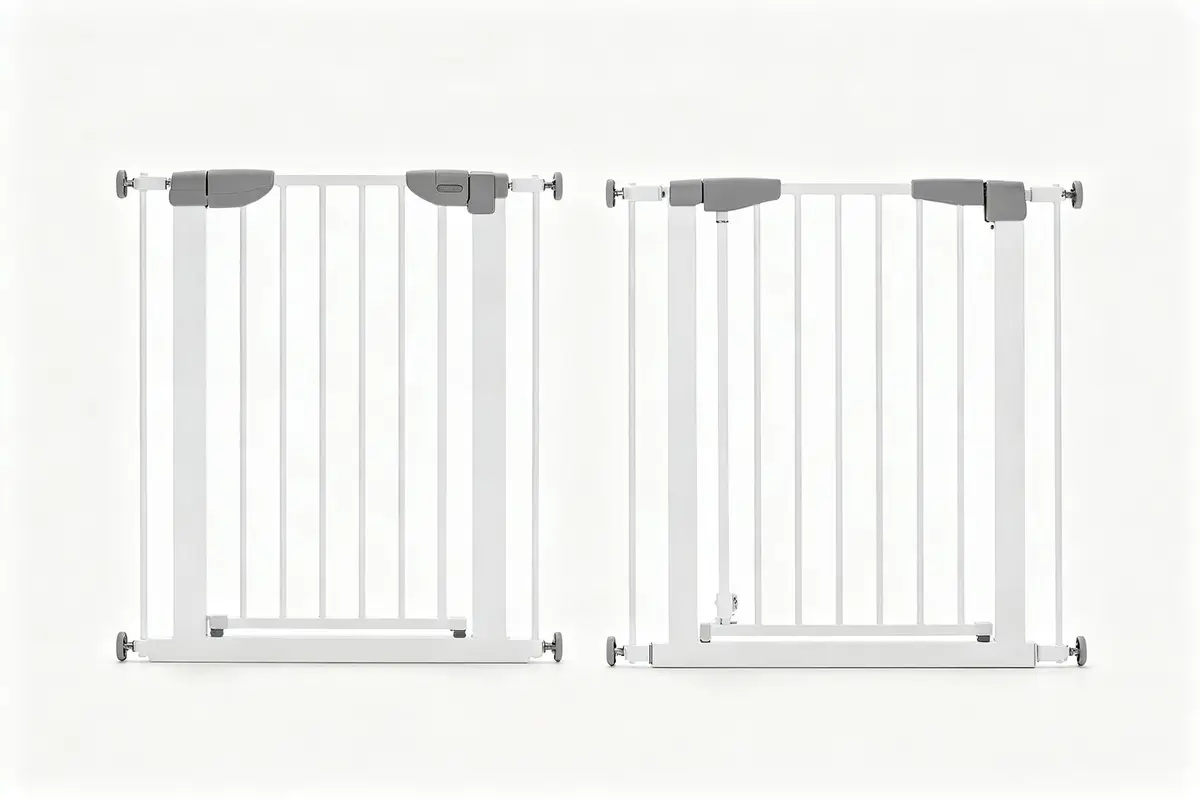
The baby safety gate market includes four main product types. Pressure-mounted gates are the most popular and easiest to install. They use tension to hold the gate in place between two walls or door frames, with no drilling or hardware required. They are ideal for use at the bottom of stairs, in doorways, and between rooms. Most pressure-mounted gates have a walk-through door that opens with one hand, and many feature an auto-close mechanism. Prices range from $20-60. However, pressure-mounted gates are NOT recommended for use at the TOP of stairs, as they can be dislodged with enough force. They are best for low-risk areas where a fall would not be serious. Hardware-mounted gates are screwed into the wall or door frame, providing a more secure and stable barrier. They are the safest option for the top of stairs, as they cannot be dislodged by a leaning or pushing toddler. They typically have a walk-through door and may feature an auto-close mechanism and a hold-open feature. Prices range from $25-80. The main drawback is that they require drilling into walls or door frames, which may not be suitable for renters or for walls with delicate surfaces. However, they are the gold standard for high-risk areas like stair tops. Retractable gates are the fastest-growing segment, with year-over-year growth of approximately 15%. These gates use a roll-up mesh or fabric panel that extends across a doorway or opening and retracts into a small housing when not in use. They are ideal for wide openings, irregular spaces, and areas where a traditional gate would be obtrusive. They are also great for travel, as they are lightweight and compact. Prices range from $30-70. However, retractable gates may not be as sturdy as hardware-mounted gates, and the mesh can be climbed by older, more adventurous toddlers. They are best for babies and younger toddlers. Play yards and freestanding gates are freestanding barriers that do not need to be attached to walls. They can be configured in various shapes (straight, L-shaped, circular) to create a safe play area or block off a large space. They are ideal for open-concept homes, outdoor use, and for creating a contained play area. Prices range from $40-120. However, they are not suitable for stair tops, as they can be moved or tipped over. When choosing a safety gate type, consider: where you need to install it (top of stairs requires hardware-mounted; bottom of stairs or doorways can use pressure-mounted); the width of the opening (some gates are extendable or come with extension kits); whether you need a walk-through door; whether you rent (pressure-mounted or retractable are better for renters); your budget; and the age and climbing ability of your child (retractable mesh gates may not be suitable for climbers).
Key Features, Brands, and Buying Guide
Key features to look for when buying a baby safety gate include: Installation type — Pressure-mounted gates are easy to install and remove without damaging walls, but are not safe for stair tops. Hardware-mounted gates require drilling but are the safest option for high-risk areas. Retractable gates offer flexibility and compact storage. Choose the right type for your specific location. Width adjustability — Look for a gate that fits your specific opening width. Many gates are adjustable within a range (e.g., 29-37 inches), and some come with extension kits for wider openings. Measure your opening carefully before buying, and check the gate's minimum and maximum width. Walk-through door — A gate with a walk-through door is much more convenient than one you have to step over. Look for a door that opens in both directions (or at least the direction you need), opens with one hand, and has a secure latch that a toddler cannot open. Some doors have an auto-close mechanism that closes and latches automatically. Auto-close and hold-open — An auto-close feature ensures the gate closes and latches automatically after you walk through, reducing the risk of it being left open. A hold-open feature keeps the gate open when you need it (e.g., when carrying groceries or during playtime), which is convenient but should be used with supervision. Safety latch mechanism — The latch should be secure enough that a toddler cannot open it, but easy enough for an adult to operate with one hand. Common mechanisms include dual-button release, lever release, and sliding release. Avoid gates with latches that a child could figure out. Height — The gate should be tall enough that your child cannot climb over it. A minimum height of 30 inches is recommended, and taller gates (36+ inches) are better for taller or more adventurous toddlers. Make sure the gate extends high enough that your child cannot reach the top and pull themselves over. Slat spacing — The slats should be close enough together (no more than 2-3 inches apart) to prevent a child's head from getting stuck. Avoid gates with wide openings or decorative cutouts that could be used as footholds for climbing. Sturdiness and durability — The gate should feel solid and well-constructed. Metal gates are generally sturdier than plastic or mesh gates. Check for sharp edges, loose parts, and weak points. The gate should not wobble or flex excessively when pushed. Easy to clean — Gates can get dirty from little hands, food, and spills. Look for a gate with a smooth, easy-to-wipe surface. Mesh gates may be harder to clean than metal or plastic gates. Compliance with safety standards — Look for gates that meet recognized safety standards (such as ASTM F1004 in the US or EN 1930 in Europe). These standards ensure the gate has been tested for strength, stability, opening mechanisms, and entrapment hazards. Safety tips for using baby gates: install hardware-mounted gates at the TOP of stairs (pressure-mounted gates are not safe for stair tops); use gates at both the top and bottom of stairs; check the gate regularly to ensure it is secure and functioning properly; do not use gates with horizontal slats that a child could climb; never leave a child unattended near a gate; and remove gates once your child can climb over them or open the latch. Leading brands include: Regalo (known for its affordable, easy-to-install pressure-mounted gates, a best-seller on Amazon), Summer Infant (known for its wide range of gates including multi-use extra-tall gates and walk-through gates), Evenflo (known for its versatile, easy-to-install gates and play yards), Munchkin (known for its stylish, design-forward gates including the Loft and Vava gates), Perma Child Safety (known for its premium, durable hardware-mounted gates), and North States (known for its versatile freestanding play yards and superyard gates). In Southeast Asia, Regalo and Evenflo are available on Shopee and Lazada, while budget brands are available for $10-25. For parents looking to buy baby safety gates online, prioritize safety (hardware-mounted for stair tops), proper width fit, a secure latch, adequate height, and compliance with safety standards. For a complete range of baby safety and care products, parents can also explore Moni Happy's product range, and businesses interested in distribution can learn more at Moni Happy's partner page.