
2026-10-26 · Moni Happy
How do I supply baby diapers to confinement centres in Singapore?
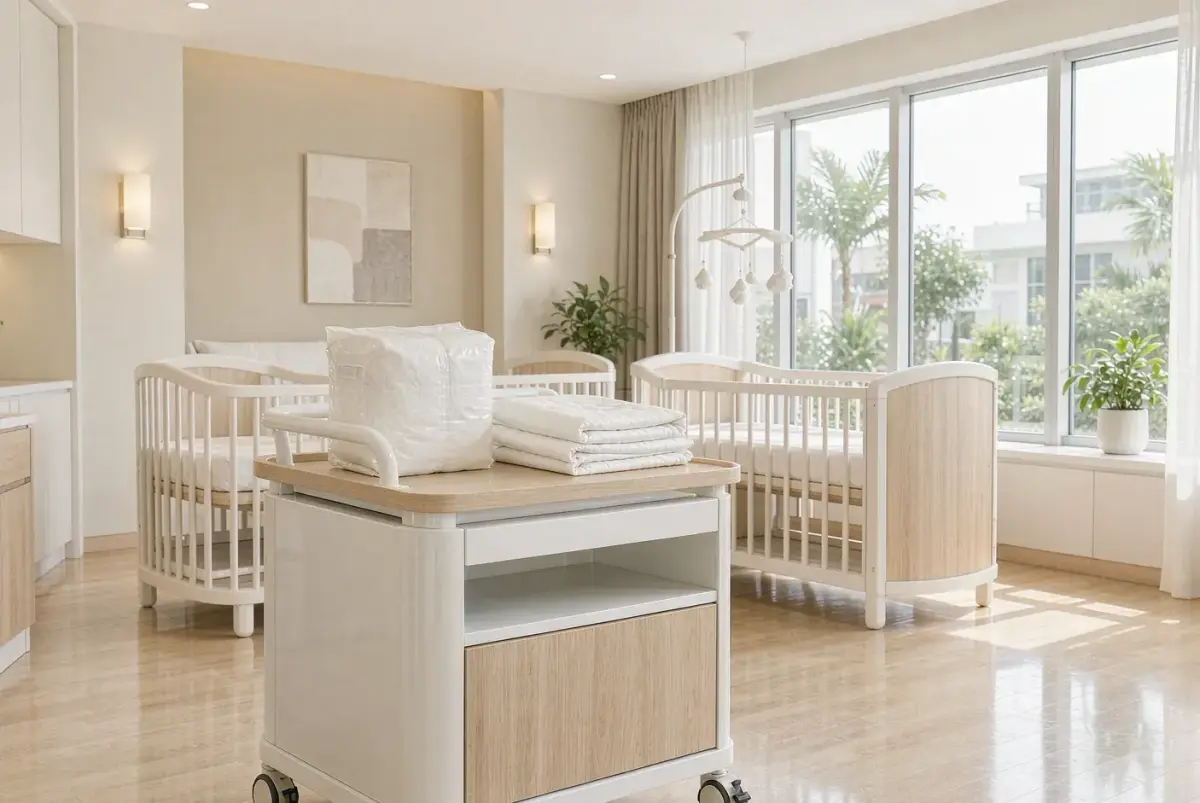
Do Singapore confinement centres buy diapers directly?
Yes. Most confinement centres buy consumables directly at centre level, in small and frequent drops rather than by the container, which makes them a realistic first account for a new distributor of Singapore baby products.
The order profile is narrow and predictable: newborn and S sizes dominate, wipes move at the same rate as diapers, and the decision maker is usually the centre manager or operations lead rather than a group buying office. A centre with 20 rooms will not place a pallet order; it will place a repeat carton order, weekly.
What does a confinement centre actually order?
Four lines cover most of the basket: newborn tape diapers, S-size tape diapers, 99% water wipes and cotton dry wipes, with facial tissue as a supporting line.
Some centres stock a single brand for the whole house; others let parents bring their own and keep a house brand for backup. That difference decides your newborn diaper supply model. House-brand centres want consistency and a fixed reorder point; parent-choice centres want small packs and visible branding so a parent can repeat the purchase after discharge.
What do I need in place before I can invoice a Singapore centre?
Five things, and only one of them is about the product.
- A registered entity: either your own ACRA-registered company or a local distributor who invoices on your behalf.
- Product documentation: safety and test reports that answer a centre's duty-of-care question, such as Dermatest or SGS results.
- Product liability insurance, because centres handle claims from parents and want a supplier behind them.
- A delivery window they can plan around, with the same driver and the same time slot each week.
- GST readiness: registration is compulsory above S$1 million of taxable turnover, and e-invoicing through InvoiceNow is increasingly expected by finance teams.
What commercial terms are normal in this channel?
Thirty-day wholesale payment terms on a consolidated monthly invoice, a per-drop minimum in cartons, and no listing or slotting fee, because you are dealing with the operator rather than a chain's buying committee.
Returns are usually limited to unopened cartons with a damaged-pack claim raised within seven days. Consignment is sometimes requested by a new centre; treat it as a pilot concession with a fixed end date rather than as a permanent term.
How do I price for this channel without breaking retail price?
Price at a modest premium to your modern trade wholesale price and hold it. Centres are buying convenience and reliability, not a discount, and a centre price that undercuts the nearby pharmacy invites a price complaint from your own retail accounts.
Bundle instead of discounting. A care pack that combines a newborn pack, a wipes pack and a cotton dry wipe keeps the unit price intact while raising order value. All figures should be quoted as a range and confirmed subject to formal quotation, with your target margin kept inside a 15-25% band.
How do I win the first three accounts?
Approach with a sample box, not a catalogue. Deliver newborn and S packs, wipes and cotton dry wipes, and include a one-page spec sheet the centre can show a parent.
- Offer a 20-minute staff briefing on the change routine so the product is used correctly from day one.
- Supply a parent take-home care pack with a QR code that leads to the retail listing, converting a discharge into a retail sale.
- Set a reorder trigger in writing, for example a WhatsApp message when the house stock falls below two cartons.
- Review after 30 days on stockouts, complaints and parent requests, then convert to a standing weekly order.
What kills a confinement centre account?
Stockouts, late deliveries and size mismatches, in that order. A centre cannot run out of newborn diapers mid-week, and one missed delivery usually ends the trial regardless of price.
Size mismatch is the quiet killer. Centres hold very little buffer, so if your S-size runs small against the brand they used before, staff compensate by double-diapering and consumption spikes. Send a size comparison sheet with the first delivery.
The onboarding sequence behind a first account - sample request, first size curve, payment terms and territory discussion - is set out in the distributor onboarding guide.
How long does the sales cycle take?
Four to eight weeks from first approach to first invoice, with a one-month pilot before a standing order. Centres rarely sign an annual contract; they simply keep reordering.
That makes the channel cheap to enter and cheap to lose. Treat the weekly delivery as the contract, and keep a named contact rather than a general inbox.
Frequently asked questions
- Do I need a Singapore company to supply confinement centres?
Not always. A registered local distributor can invoice on your behalf, but centres prefer a local entity with GST status and a local delivery contact because it simplifies claims and payment. - How much stock does a typical centre hold?
Very little - usually one to two weeks of newborn and S stock. That is why the reorder trigger and delivery reliability matter more than the opening order size. - Can I sell direct to parents from a centre?
You can, through a take-home pack or a QR code, as long as the retail price does not undercut the centre's own recommendation. Keep the retail and centre price lists separate and documented. - Is there a listing fee in this channel?
Normally no. Unlike chain retail, confinement centres negotiate supply directly, so the cost of entry is samples, staff time and delivery reliability rather than slotting fees.
Sources and further reading
- Enterprise Singapore - company registration and licences
- Inland Revenue Authority of Singapore - current GST rate
- Singapore Customs - import procedures
Get pricing and free samples for a Singapore centre pilot, or ask for the newborn and S-size starter mix that fits a 20-room house.
Get pricing & free samples, or start your distributor application with Moni Happy.
Frequently Asked Questions
Do I need a Singapore company to supply confinement centres?
Not always. A registered local distributor can invoice on your behalf, but centres prefer a local entity with GST status and a local delivery contact because it simplifies claims and payment.
How much stock does a typical centre hold?
Very little - usually one to two weeks of newborn and S stock. That is why the reorder trigger and delivery reliability matter more than the opening order size.
Can I sell direct to parents from a centre?
You can, through a take-home pack or a QR code, as long as the retail price does not undercut the centre's own recommendation. Keep the retail and centre price lists separate and documented.
Is there a listing fee in this channel?
Normally no. Unlike chain retail, confinement centres negotiate supply directly, so the cost of entry is samples, staff time and delivery reliability rather than slotting fees.