
2026-11-12 · Moni Happy
How does a diaper distributor win a second facing at a Singapore baby chain?

A second facing at a Singapore baby chain is won at the quarterly planogram review, not in a negotiation. The number that carries it is sales per facing per week against the category average for that store cluster, supported by on-shelf availability under 5% and a range wide enough to fill two positions.
Most new diaper distributors approach this backwards. They ask for two facings at the listing meeting, argue for them again after the first quarter, and then wonder why the chain allocates the space to a competing brand that never asked. The chain is not withholding space. It is running a planogram with a fixed number of positions per store, and it moves those positions on measured productivity, on a calendar that starts before the first carton is delivered.
What actually decides a second facing at a Singapore baby chain?
Three measured inputs and one judgement call. The inputs are sales per facing, on-shelf availability and range width. The judgement call is whether the category as a whole is growing fast enough to justify a wider block.
Singapore is a concentrated market. A national listing with a baby specialist chain covers far fewer doors than the same chain would carry in Malaysia or Thailand, so a single weak store is a visible share of your total volume rather than a rounding error. That cuts both ways: a strong facing is also visible quickly, which is why the second position can be earned in two quarters here and takes much longer elsewhere.
What the buyer is protecting is the productivity of a fixed block of shelf. Every position allocated to a new brand is taken from something else, and the buyer has to defend that trade at the next review. Give them the numbers to defend it with, and the conversation becomes administrative.
Which three numbers does the buyer pull up at the planogram review?
Sales per facing, availability, and the share of the range that is actually selling. All three are computed per store and then aggregated, so an average that hides two broken stores will not survive the meeting. Together they are the shelf productivity case, and the buyer weights them differently by cluster.
- Sales per facing per week. Your sell-out in a store divided by the number of positions you occupy, compared with the category average for the same store cluster. This is the headline number, and it is the one you can move fastest by getting the wrong size out of the planogram.
- On-shelf availability. The share of store visits where your size was in stock on the shelf. Not the share where it was in the back room. Chains in Singapore check this with store audits, and a figure above 8% is usually the reason a facing is cut rather than the reason it is granted.
- Range productivity. Sell-through by size. A distributor holding four sizes where two do 80% of the volume is occupying shelf with dead widths, and the buyer sees that as a reason to reduce, not to expand.
None of these requires a data platform. A weekly sell-out sheet by store by size, kept from the first shipment, is enough. The distributors who lose the review are usually the ones who could not produce it.
Why does on-shelf availability matter more than sell-in volume here?
Because sell-in measures what the chain bought and availability measures what the shopper could actually buy. The chain is judged on the second one.
A diaper distributor can push volume into the chain with a launch allowance and show a strong sell-in quarter. That number looks good on the invoice and bad in the planogram review, because the chain's own audit shows the shelf empty on Wednesdays. Empty shelf on a fast-moving size is the clearest possible signal that the position is underused, and the fix the buyer reaches for is to give the space to a brand that can keep it filled.
The practical answer is replenishment discipline, not more stock. Singapore stores are small and back rooms are smaller, so the replenishment cycle matters more than the order size. A 48 to 72 hour replenishment commitment to store level, honoured across two quarters, is worth more at the review than a bigger opening order. If your current supply chain cannot hold that promise, fix it before you ask for space, because the second facing will be measured against it immediately.
How wide should the range be before I ask for a second facing?
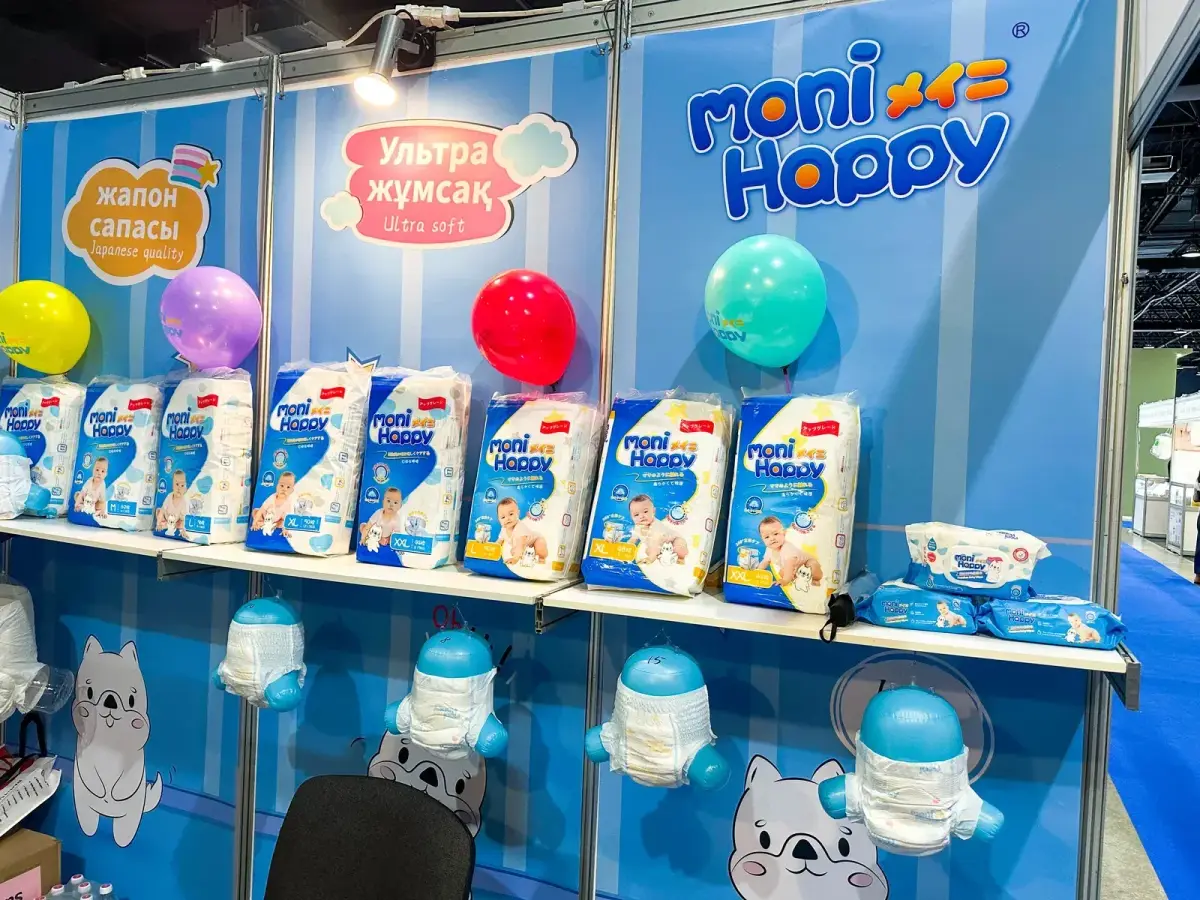
Two sizes that both sell, and ideally two formats. A tape diaper covering newborn and small, plus a pull up pants for large and extra large, is the combination that most often justifies two positions.
The mistake is to treat the second facing as extra depth for the best-selling size. Chains allocate facing by width of assortment, not by depth of one SKU, because a wider assortment serves more shoppers per metre. Two positions filled with one size signals that you have run out of range, and the buyer will note it.
Two formats also change who buys. Tape diapers serve the newborn to toddler stage where a caregiver is still dressing a lying baby; pull up pants serve the stage where the child dresses standing. Carrying both is not a merchandising nicety, it is the reason a single brand can hold two positions without cannibalising itself. If you are still choosing the second format, the pull up pants range is the one that pairs with tape diapers in this market.
What does the listing fee actually buy?
The right to be considered for a position on the planogram, and the administrative cost of putting your SKU into the chain's system. It does not buy the position, and it is not refundable when the position is cut.
Treat it as a fixed cost recovered over twelve months, not as an investment in space. Budget it per SKU per store, add the cost of the first price promotion and the shelf talker, and check that the total is recoverable from the margin on the volume you realistically expect in the first year. If it is not recoverable, the listing is a marketing expense without shelf productivity behind it and should be approved as one.
Where the fee is genuinely wasted is a listing taken before the range is ready. A single slow size in two stores will not generate the data a second facing needs, and the following year's listing fee buys the same single position again.
How do I present the case in a 15 minute review?
One page, three charts, and a specific request. That is the format that survives a review where six brands are presenting.
- Chart one: sales per facing per week, your brand against the cluster average, by quarter. Two quarters minimum.
- Chart two: on-shelf availability by store, with the two weakest stores named and the fix already implemented.
- Chart three: sell-through by size, showing which size you would delist to make room.
- The request: one additional facing in a named cluster of stores, with the sales uplift you expect and the review date you propose to be measured on.
Naming the size you would delist is the part that most distributors leave out, and it is the part that makes the request credible. It tells the buyer you are managing the block with them rather than asking them to absorb the cost of your range.
If you are not yet listed and want the entry sequence before the review cycle, the distributor onboarding guide covers the documents and the first meeting. To start with the range that supports two positions, request pricing and a range sheet for the Singapore market and we will send the size and format mix that most often clears a planogram review.
Frequently asked questions
What is the single number that wins a second facing?
Sales per facing per week relative to the category average for that store cluster. A brand earning 1.3 times the cluster average has a defensible case; one earning 0.9 times will lose the position it has.
Does paying a higher listing fee buy the extra facing?
No. The fee buys the right to be considered for the position, not the position itself, and fixture space is reallocated on productivity at the next review.
How wide must the range be for two facings?
At least two sizes that are both selling, usually a tape diaper for newborn and small plus a pull up pants for large and extra large. Two positions filled by one slow size gets both cut.
How early should a diaper distributor start building the case?
At the first shipment. The review looks at two consecutive quarters of store level data, so the evidence window opens the day the first carton lands.
Sources and further reading
- Competition and Consumer Commission of Singapore (current): the fair trading rules that govern listing terms, slotting arrangements and supplier-retailer conduct in Singapore.
- Health Sciences Authority (Singapore, current): the product notification and labelling framework a baby care range has to clear before retail listing.
- Singapore Department of Statistics (current): household and retail trade data used to size store clusters and category demand.
Bottom line
A second facing in a Singapore baby chain is a productivity decision taken on a quarterly calendar, and the case is built from store level sell-out data that starts with the first shipment. Sales per facing, on-shelf availability and range width are the three numbers that carry it; the listing fee only buys the right to be measured. Arrive with one page, three charts and the size you would delist, and the extra position stops being a negotiation.
Frequently Asked Questions
What is the single number that wins a second facing?
Sales per facing per week relative to the category average for that store cluster. A brand earning 1.3 times the cluster average per facing has a defensible case; one earning 0.9 times will lose the position it already has before the review starts.
Does paying a higher listing fee buy the extra facing?
No. The fee buys the right to be considered for the position, not the position itself, and in Singapore it is charged against a store network small enough that a weak facing is visible within one quarter. Fixture space is reallocated on productivity.
How wide must the range be for two facings?
At least two sizes that are both selling, usually a tape diaper for the newborn and small sizes plus a pull up pants for the larger sizes. Two positions filled by one slow size is the fastest way to have both positions cut at the next review.
How early should a diaper distributor start building the case?
At the first shipment. The review looks at two consecutive quarters of store level data, so the evidence window opens the day the first carton lands. Data that starts one month before the review is not a case.
Distributor resources
If you are evaluating suppliers for your market, these are the pages that answer the commercial questions — in the order buyers usually need them.
